Idun’s LX-Party

A big day was approaching, Idun’s 60th anniversary. Unbelievable! The number of years is starting to get high, but the alternative is much worse, so a celebration had to be done. But how? Where? What theme could make the party unforgettable?
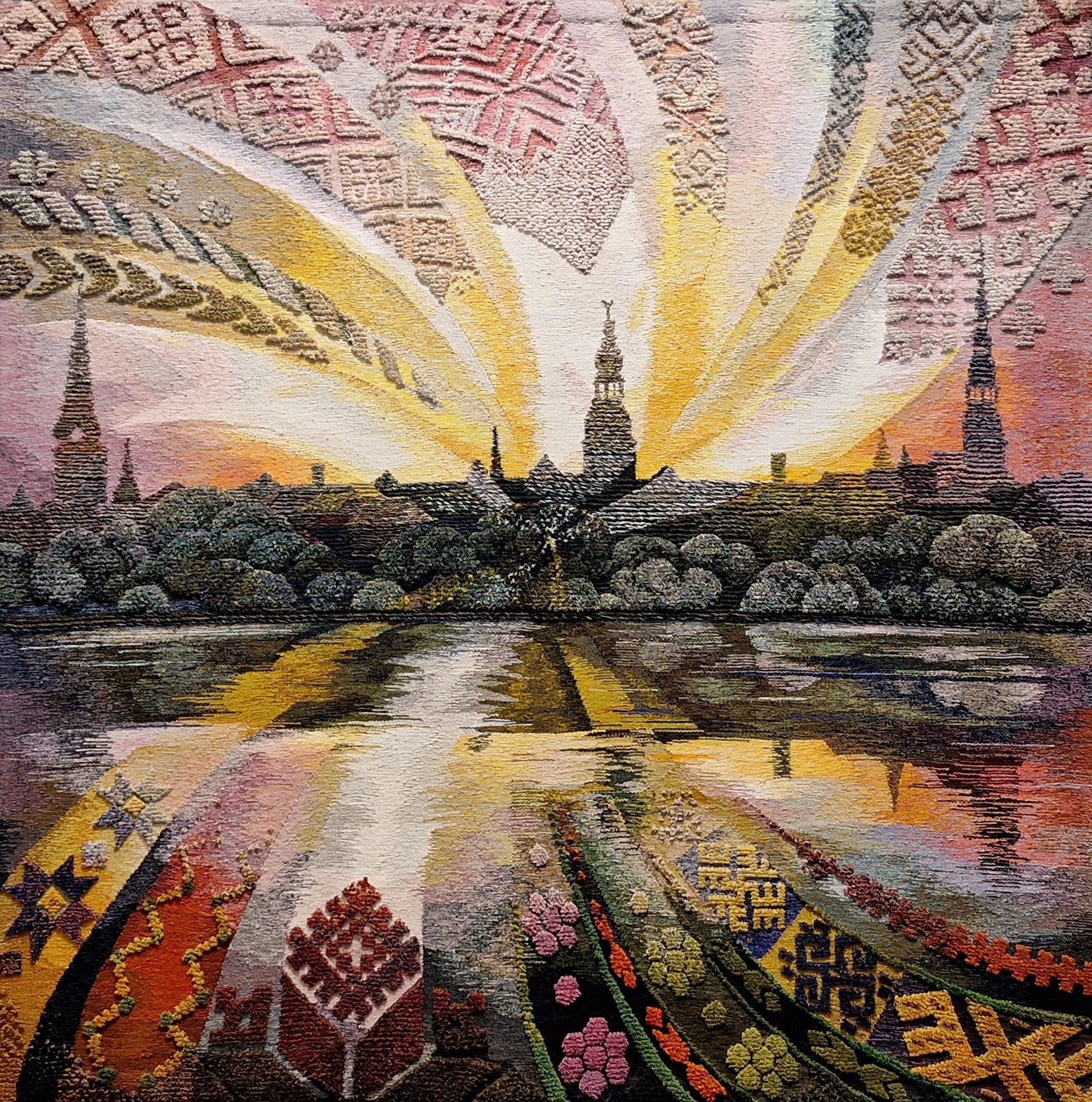
Riga, ‘Kad saule lec‘ (When the sun rises) seen through Maija Grīnfelde’s textile eyes. From the Riga City and Maritime Museum.

We landed in the highly illogical Riga! This had to be the best opportunity for us to:

  • Visit a beautiful city
  • Celebrate Idun for several days in a row
  • Meet friends and family
  • Be together for several days in a row
  • Remember Idun’s mother Kari Herje
  • Pilgrimage swim to the wreck of the concrete ship Lady Kathleen
  • Think about how many people would not have been born if Kari had died during the sinking of Lady Kathleen

Idun’s LX-Party. The logo.

What a response! Even with some illness dropouts just before departure, we ended up with 38 people in the Birthday Group. People came and went to Latvia quite a bit out of sync, and it was necessary to do several city walks. This was solved smoothly with these two very untrained local guides:
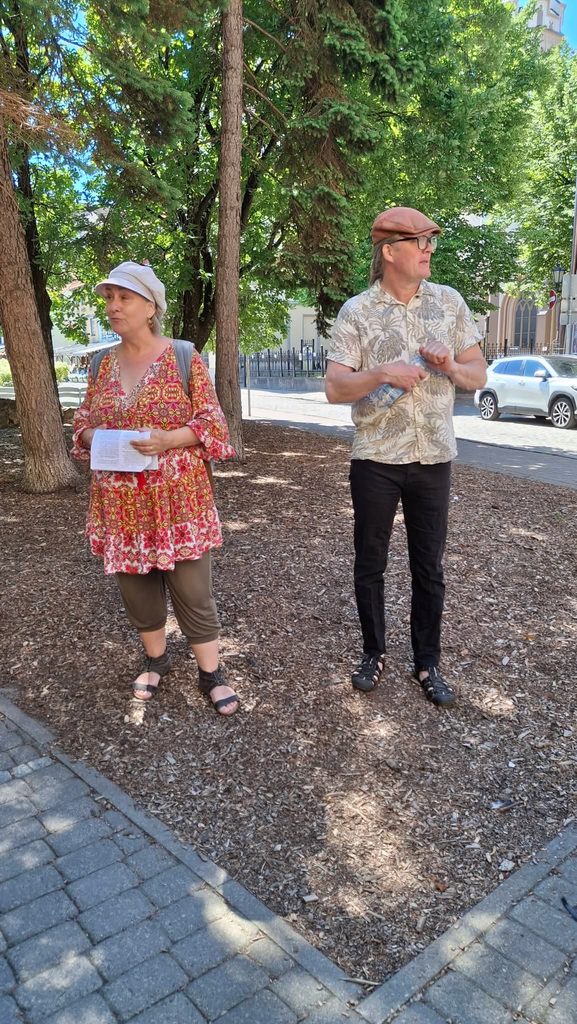
City tour in Riga with very unlocal guides. Photo: Jorunn Løwø Hestø

One highlight that fell out of the program for practical reasons was the street address of the embassy of one of our (Latvia’s and Norway’s) common neighboring countries. One block of Antonijas iela was renamed ‘Independence Street of Ukraine‘ in March 2022. How cool isn’t that? Just imagine the ambassador’s business card…
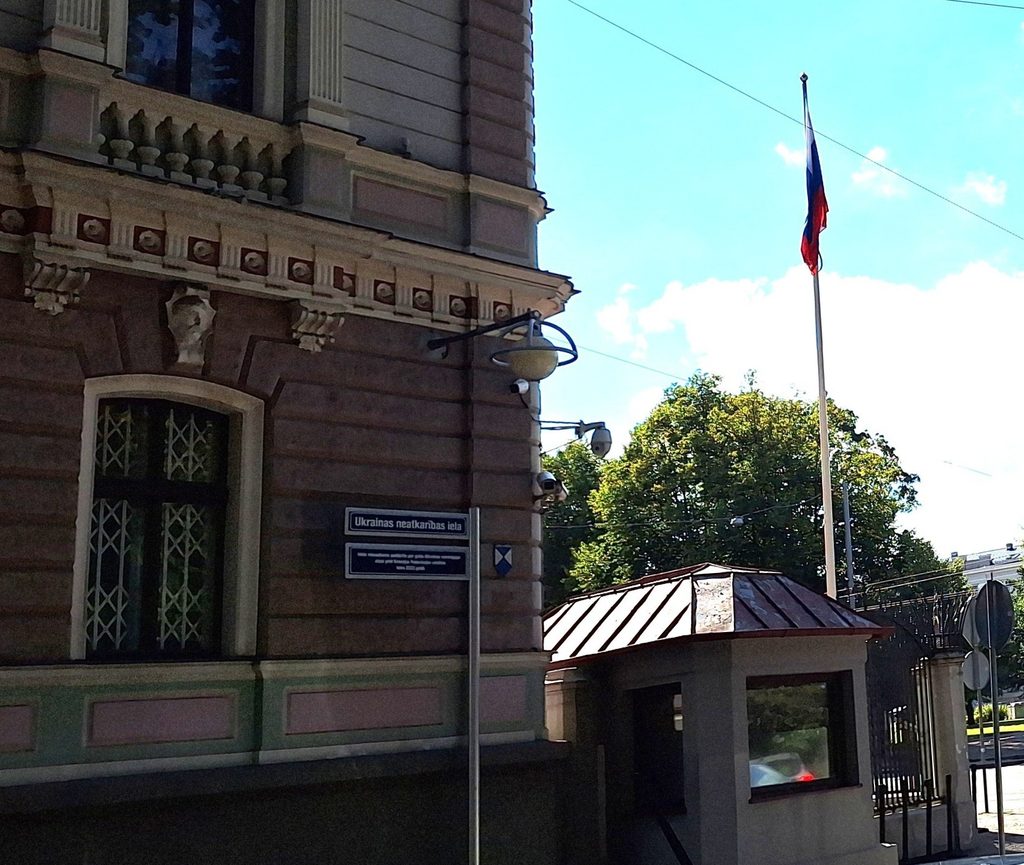
Street sign with meaning, on the embassy wall.

…and this is the view from the same embassy:
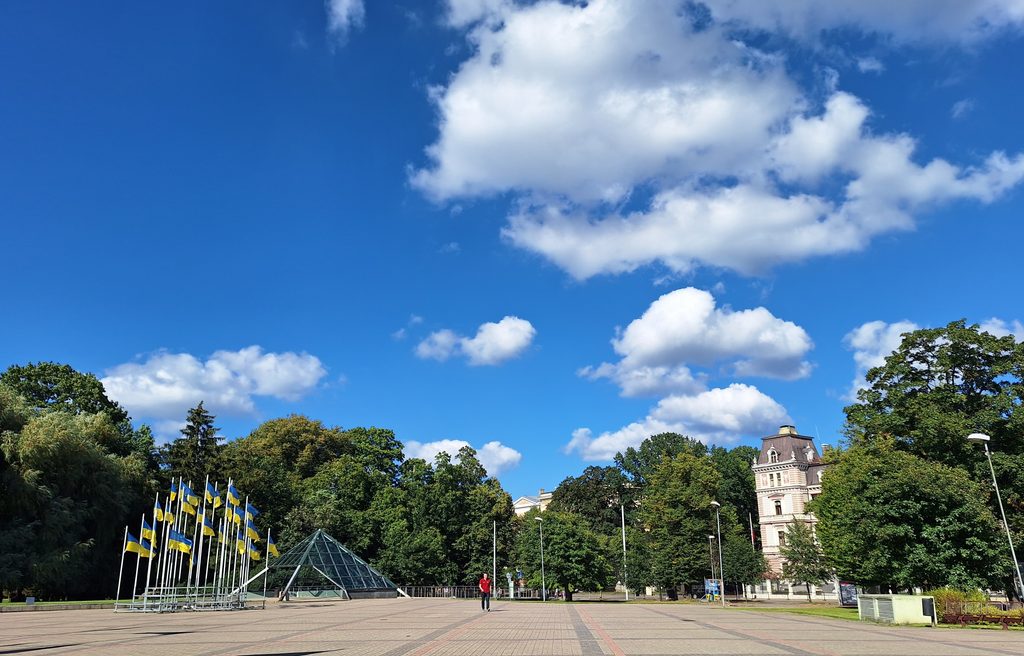
Flag parade outside ‘Ukraine’s neatkarības iela‘ number two.

The party started on Friday in a pub with a cozy gathering including the World Cup match Norway-France and a Community Quiz with questions about everyone in the LX-party group (the most popular answer option: What would PA like to do on the weekends? “Pula lite i trädgården med sin fru/Foolin’ around in the garden with his wife”).

Saturday morning it was time for the ‘big big birthday picnic’. The trip took place by bus to the Gulf of Riga, on the eastern side of the mouth of the Daugava River. On November 30th, 2026, it will be 75 years since the concrete boat Lady Kathleen ran aground on a sandbank and sank (ref bad ‘Lady Kathleen’s destiny’). That’s something to celebrate, indeed! If Idun’s mother had died there, none of her 5 children would have been born, nor would the 15 grandchildren and (so far) 18 great-grandchildren. As Knut pointed out: This would have been a very awkward celebration for the rest of us!
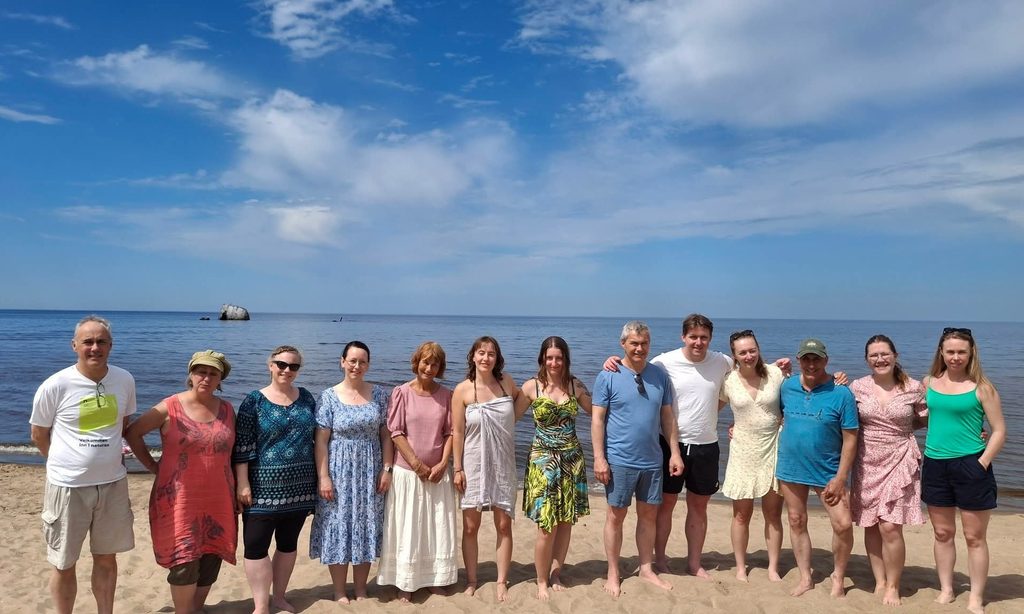
13 direct descendants of Kari Herje, with the wreck in the background. Photo: Jorunn Løwø Hestø

It was time to visit the Lady up close. The weather was fabulous (the only summer heat that Trøndelag, northerners and westerners in Norway would experience in the summer of 2026, as it turned out to be the chillest Norwegian summer in decades). The water was dark and cool, like last time (ref bath ‘The Hunt for Lady Kathleen’), but few were stopped by that fact. This is what a pilgrimage swim looks like:
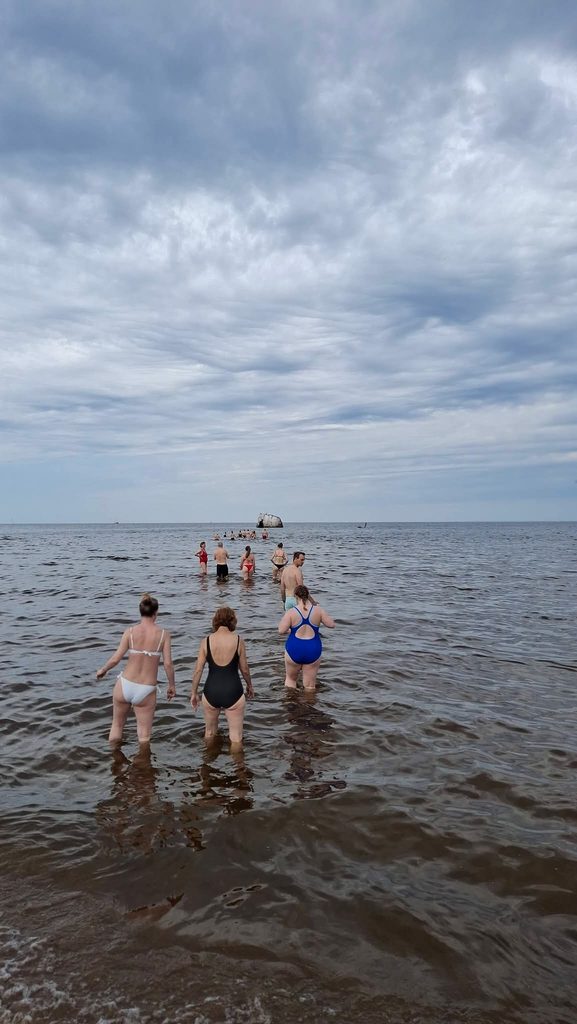
A very special atmosphere when a bunch of people are going to swim out to the same wreck.

A great experience! Just touching Lady Kathleen is powerful in itself. Knut and Peter took a longer swim to look for more wreckage, which is not easily spotted in the dark waters of the Gulf of Riga. The wreckage turned out to be a fishing net, which fortunately, by a little effort, they managed to sneak out of. And after the swim, time was just perfect for a picnic on the beach.
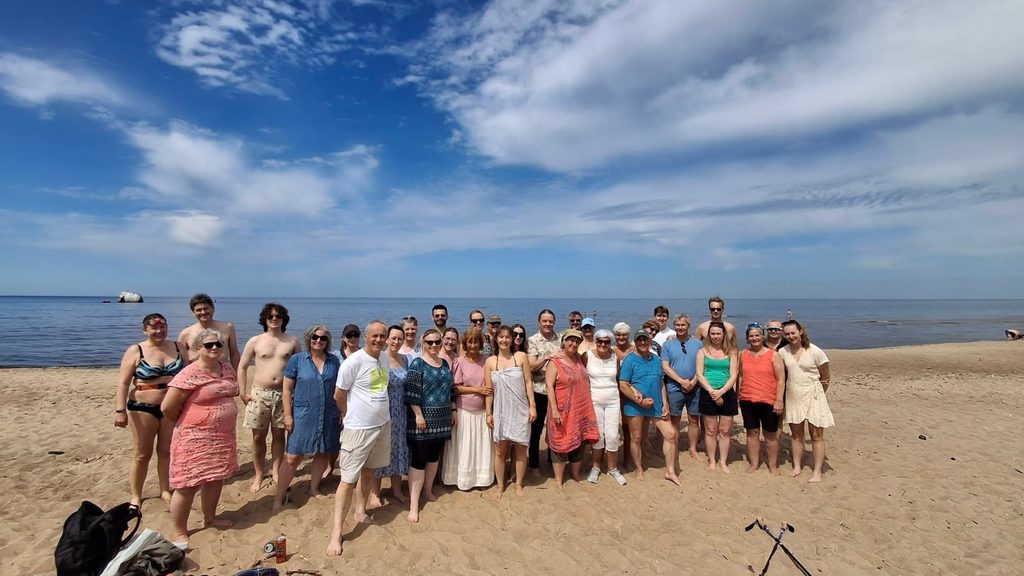
The LX-gang gathered on the beach – with 4 ladies in focus: From the older generation – Idun’s aunt Ingrid Herje, the 60th birthday celebrant Idun, Lady Kathleen in the background and Idun’s mom Kari in mind.

The 60th birthday evening celebration started with bubbles and the birthday hymn ‘Hurra for deg’ on Riga’s rooftop: The Skybar at the SAS hotel. From there, we walked as a group through Riga’s magnificent Art Nouveau district. The finest Art Nouveau buildings are located on the streets Alberta iela and Elizabetes iela. Architect Kjerstin was the guide for the occasion, she had even made a booklet for all the LX-ers, with an architectural summary of the tour.
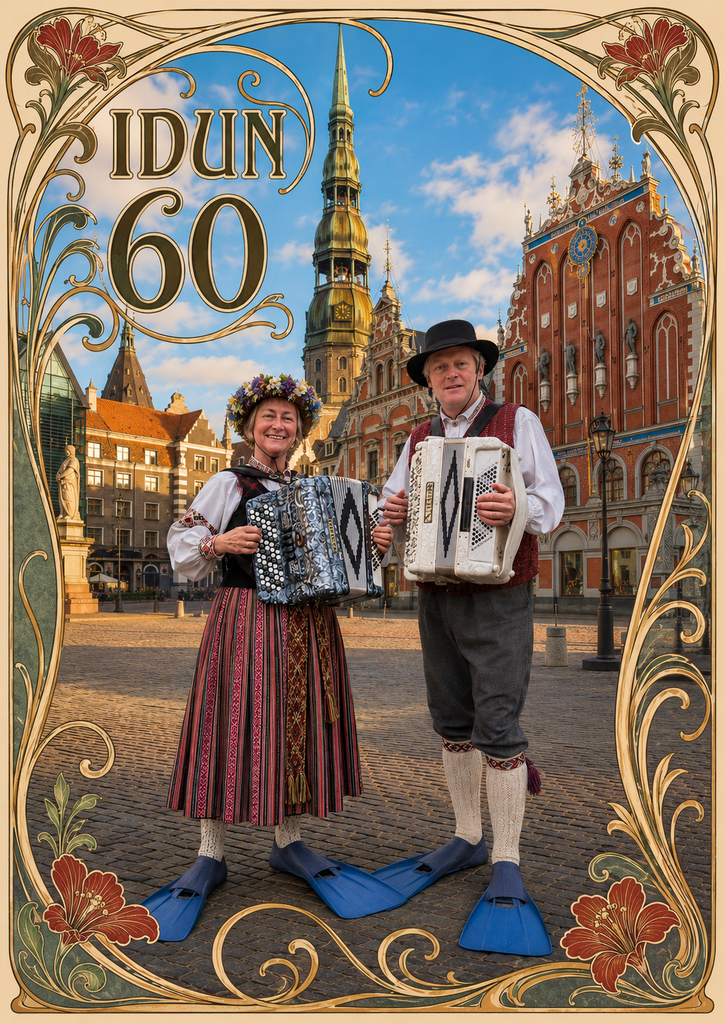
(Bilde to be replaced) Nice people in Riga! Photo: Kjerstin Moseid Bryhni

At the end of the walk, we passed the house Elizabetes iela 2. Here, in 1951, there was a hotel called ‘Hotel Daugava‘ – where the crew of the Lady Kathleen were interned after the sinking.
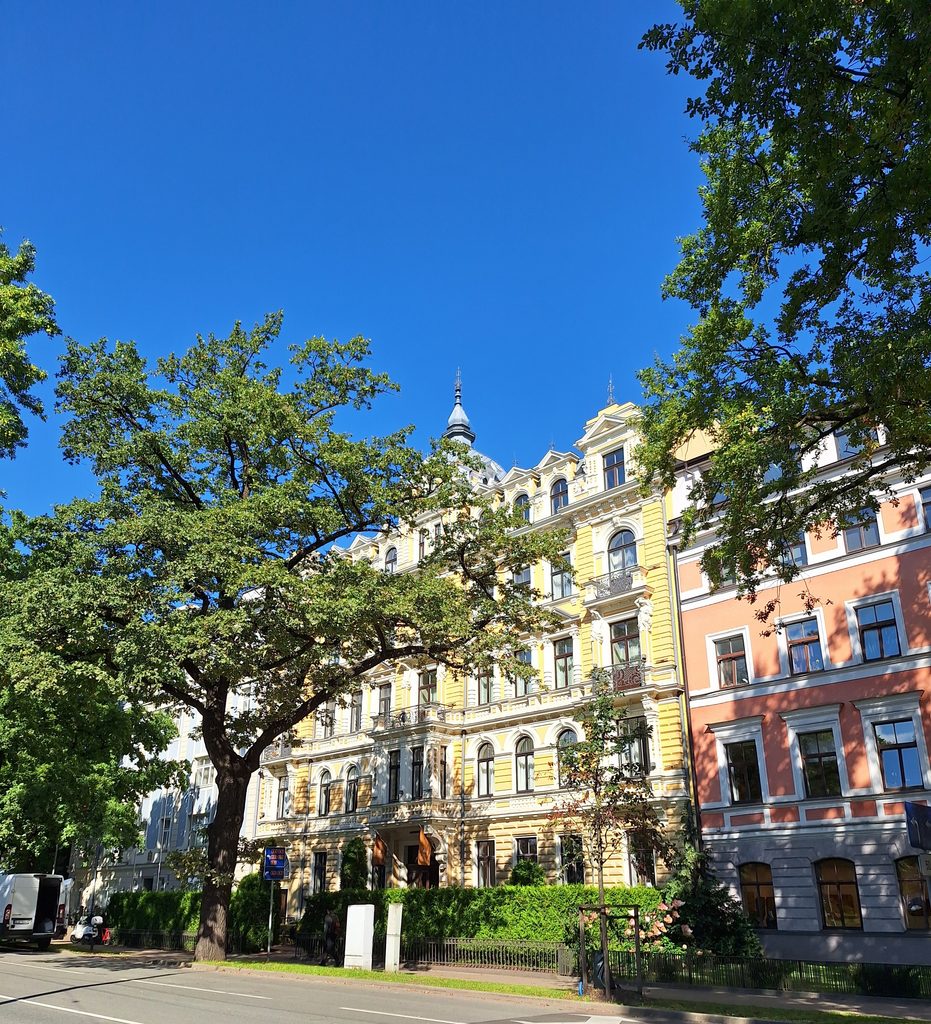
Hotel Daugava is now (2026) a high status apartment complex.

The celebration dinner took place at an Italian restaurant on the riverbank, a few hundred meters from Elizabetes iela 2. A perfect place, we thought: Next to Hotel Daugava, by the river bank, Italian flavors, plenty of space (our own room) and actually a dedicated swimming pool! A restaurant with swimming pool facilities? Yes, absolutely true!
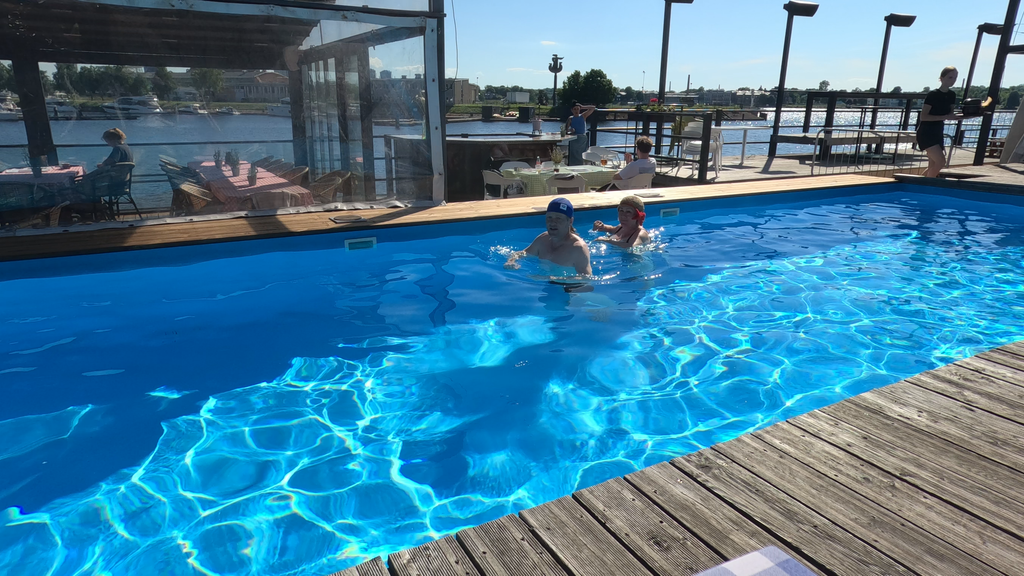
From the test swim a week before the party.

Was there any swimming at the party? NO! It was a party of Tocelebrateornottocelebrate, toquizornottoquiz, to eatornottoeat, totoastornottotoast, totalkornottotalk and tosingornottosing. There was no time for swimming at all, and no time for Norwegian Folk Dance either. We had brought our accordions the whole long way from Trondheim to HomeExchange in Riga, to the SAS hotel, the Skybar, via an architecture walk (thanks for carrying, Larsen!) to the restaurant. Time flew, the service was very timeconsuming, both when it came to food and drinks, and the Idun quiz was longer than long. But a nice evening? Yes, absolutely great!
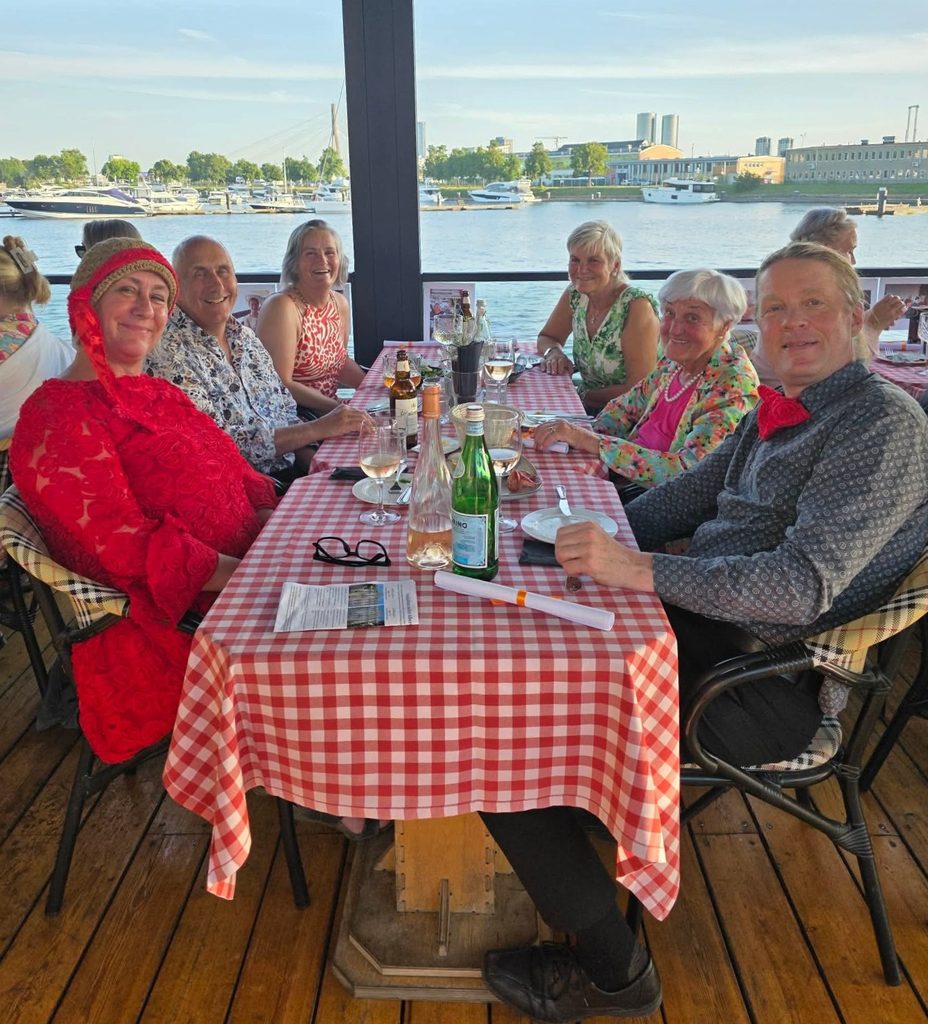
From the LX-party dinner by the Daugava. Thank you for the great speeches, great atmosphere and singing! Photo: Kjerstin Moseid Bryhni

Thus the celebration was complete – not just one but a triple jubileum: ​​

  • Idun 60 years
  • The shipwrecking of Lady Kathleen 75 years
  • Tobatheornottobathe almost finished post number 250

Imagine that!
Published
Categorized as Latvia, Riga

Old Old Riga

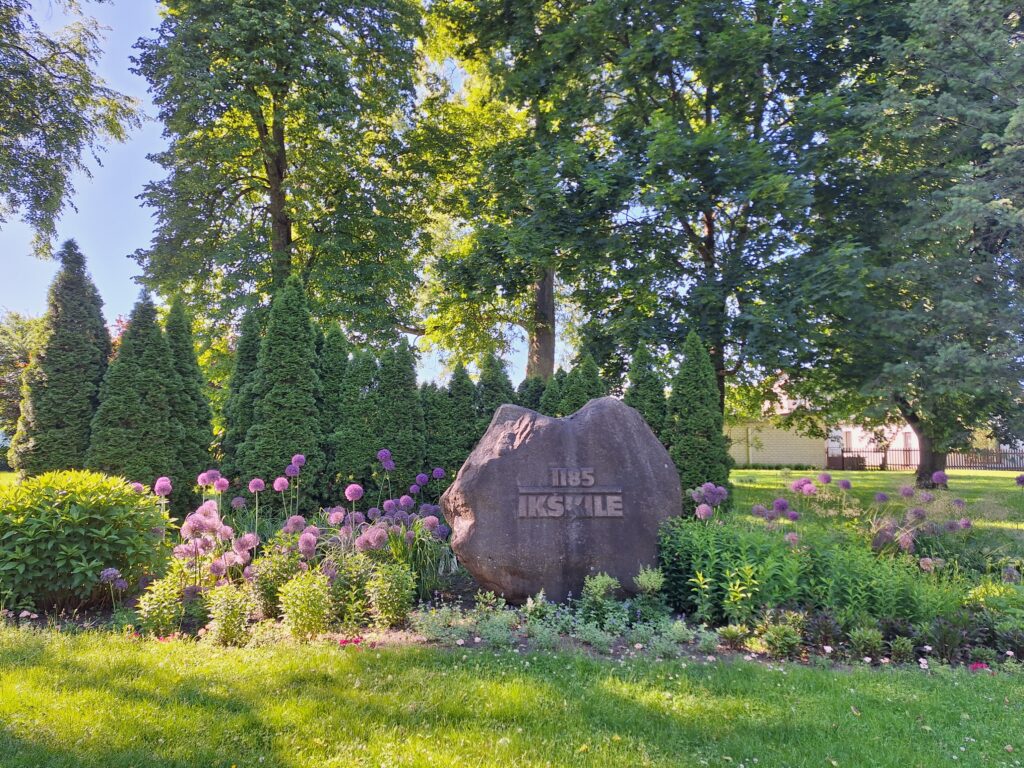
Ikšķile memorial stone.

The Daugava River with all its water (the name actually means ‘a lot of water’) is a perfect place to build a city. There is easy access to the Baltic Sea and most of Europe’s coastlines, and there is a large inland producing goods for sale. Riga, the capital of Latvia, was founded in 1201 on the eastern bank of the Daugava, about 20 km from its mouth in the Baltic Sea. Before that, however, the capital was located another 30 km further up the river, in Ikšķile.

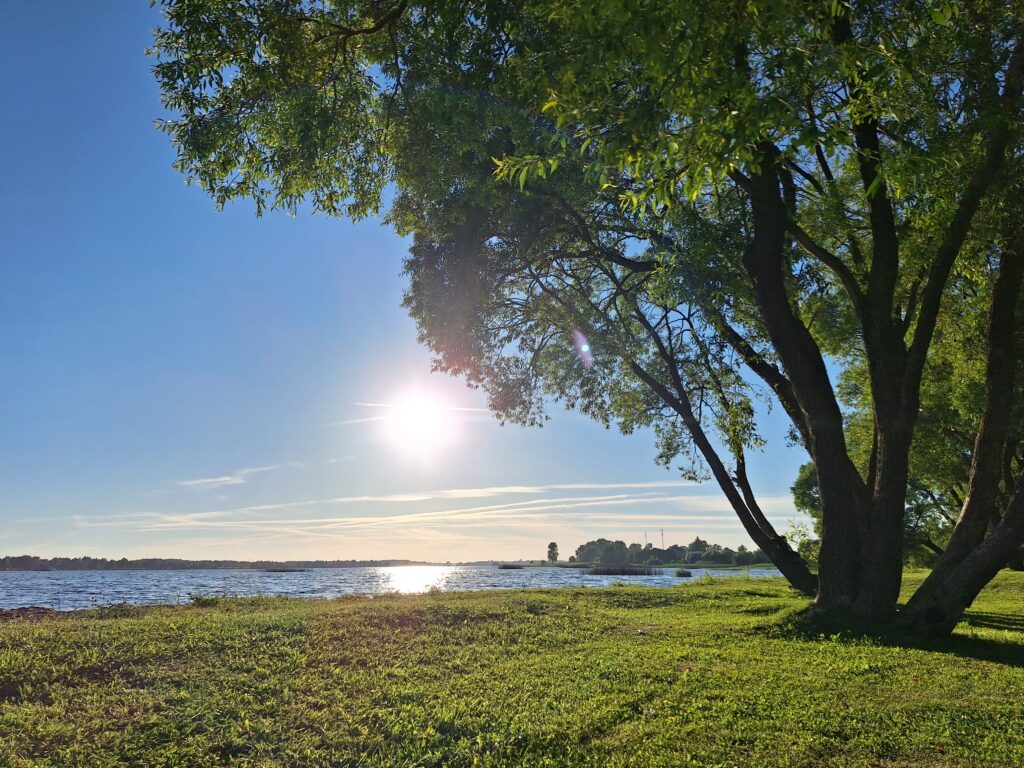
A lot of water in the Daugava, yes, but here the river was helped by a dam (power development in the 70’s), so that it appears more like a lake.

The founders of Ikšķile, Latvia’s first capital, in 1185 were German crusaders. They had been ravaging the Middle East and were looking for closer battlefields, and the not-yet-Christian Baltics were a much more practical target. Latvia was not united into one kingdom, it consisted of a multitude of chiefdoms and was therefore an easy prey for German occupation. The name Ikšķile looks a bit strange from an Indo-European point of view, and of the two possible explanations, both come from Livonian (ref. the not-bath ‘Cape Kolka’). The simplest theory is that ‘ikš’ comes from Livonian (Finno-Ugric) and means one and that ‘kīla’ means village, i.e. ‘a village’ – plain and simple, and this village already existed in the Viking Age.

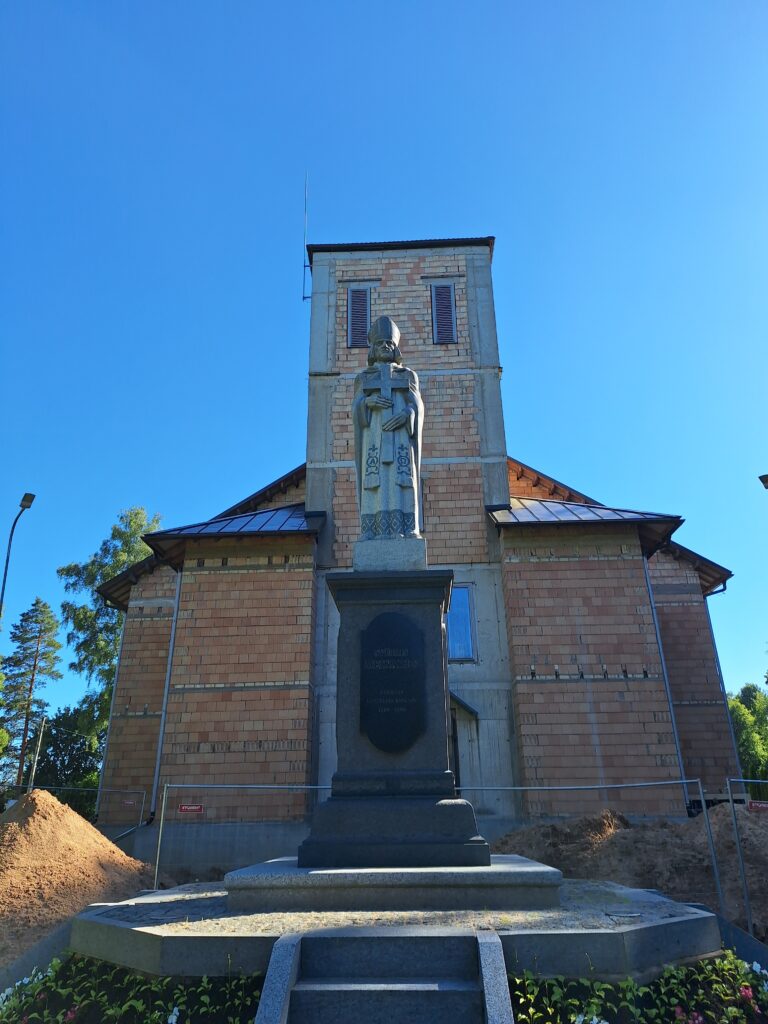
The new church in Ikšķile is almost finished, with the statue of Bishop Meinhard in the foreground.

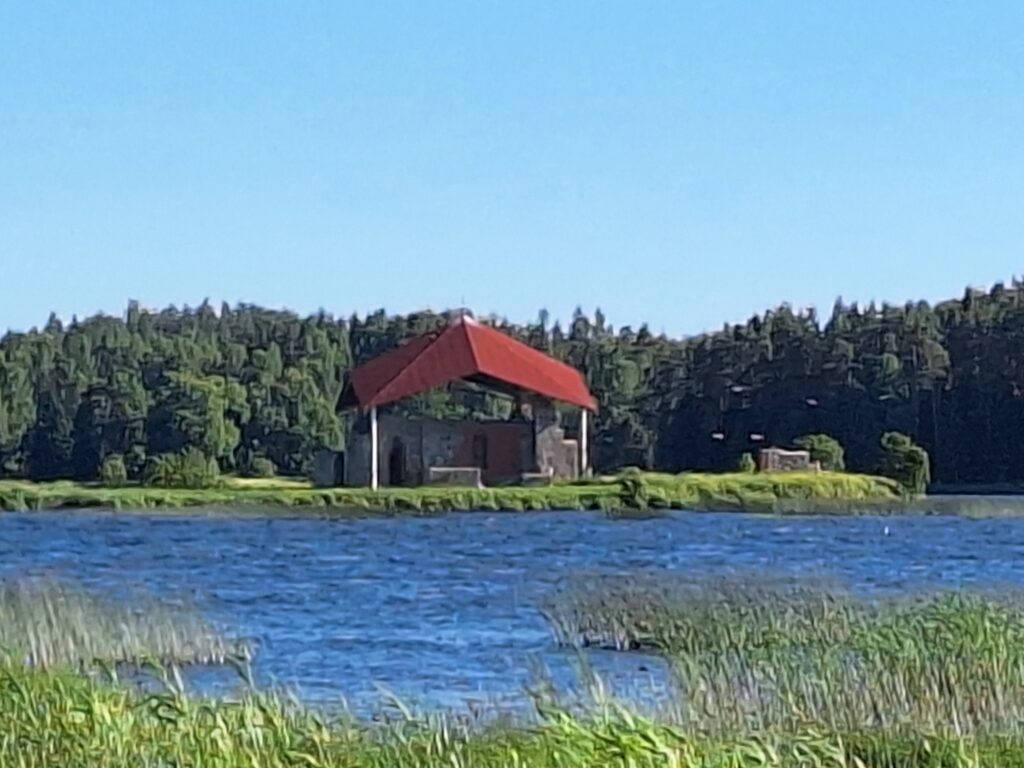
The monk Meinhard of Seegeberg was appointed the first bishop of Latvia, and with the help of stonemasons from Gotland, he built a castle and a church in Ikšķile, which became the capital of the ‘German Order‘ in Latvia. The castle ruins still exist, but due to the damming of the Daugava, the hill on which the castle stands has become a small island. We wanted to swim there!

Ikšķile Castle. Once a year, the water level is dropped so much that you can walk to the island on the old road. But not on Midsummer 2026!

As Midsummer approached, it dawned to us that this celebration is big throughout the Baltic Sea region, and not just in Sweden. Tobatheornottobathe are always ready for both bathing and partying, and we wondered if this could be combined. Googleing, consulting AI, and checking various daily programs, we found out that in Riga in 2026 there were no less than 3 large folk festivals in different parks, with live music, dancing, food, and drinks. Definitely something to consider! However, the conclusion from AI was that the traditional Midsummer celebration is best experienced in small places. ‘Go out of town and join a village party!’ was the call.

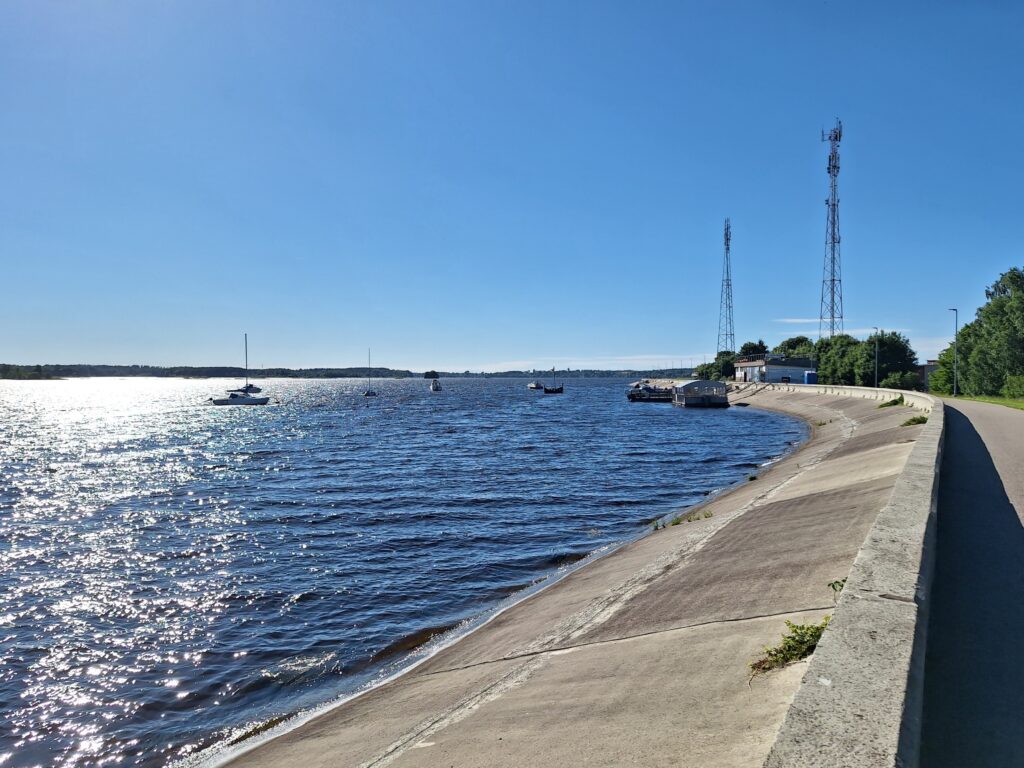
A beautiful place it is, where the river becomes a lake.

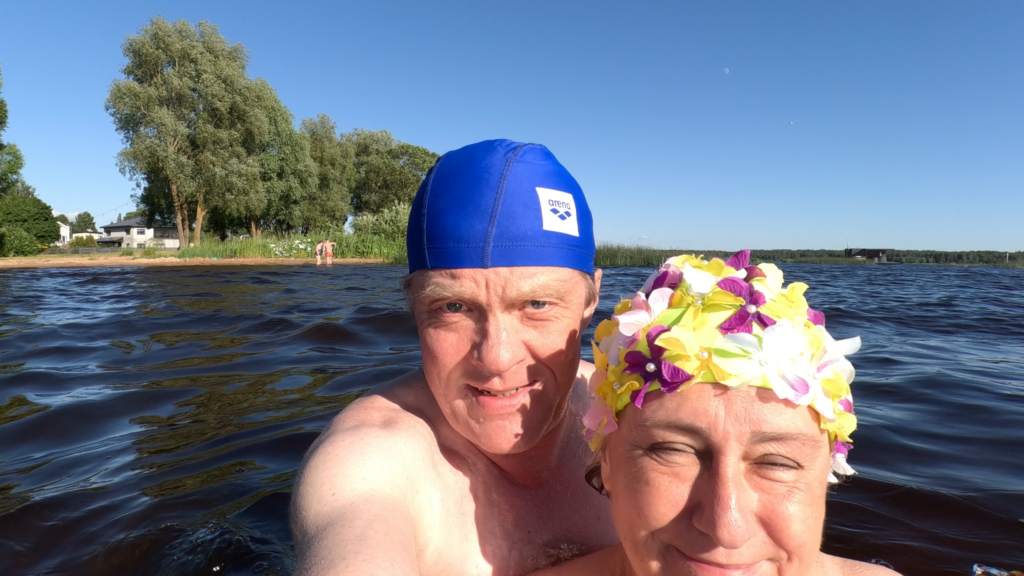
So, Tobatheornottobathe took the train to Ikšķile, with its 7,000 inhabitants that should be small enough? Ikšķile was small enough, yes, but it turned out there hasn’t been a public celebration for many years. Fools errand? Yes, with the party in mind, but swimming? Not far from the old road to Ikšķile Castle is a charming little beach, and we had a swim, of course.

Lovely conditions at Ikšķile beach. A bit shallow, though.

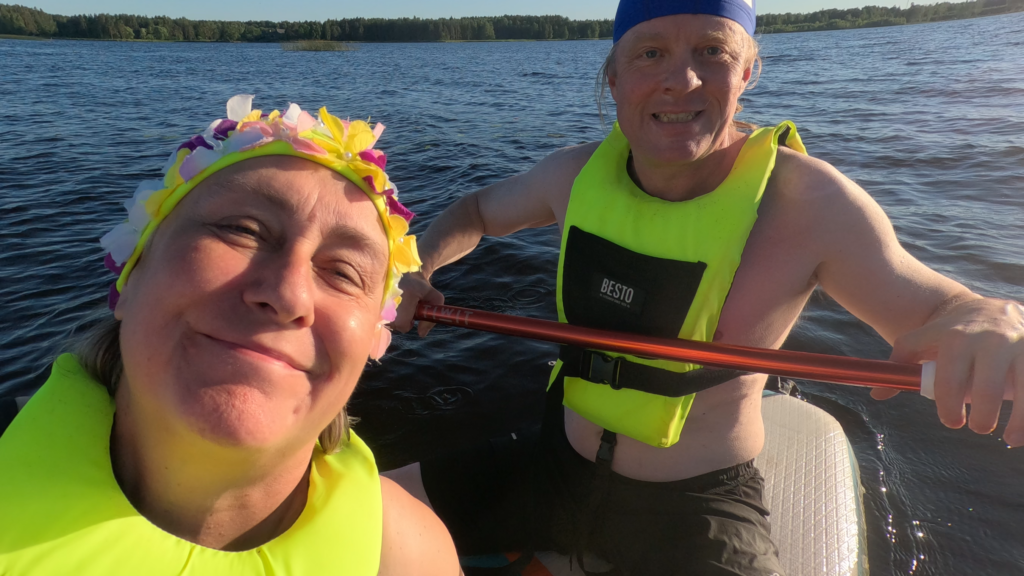
That was that – on Midsummer Eve? Oh no. We still hadn’t swam to Ikšķile Castle. Idun was a little skeptical. ‘This is technically a river. What if we get swept away by the current?‘ But the solution was close. Right by the beach there was a box where you could rent Stand-up Paddle Boards using an app! As said, so done. The box opened and we got a board, an oar, a waterproof bag and life jackets for only a small fee. Fabulous!

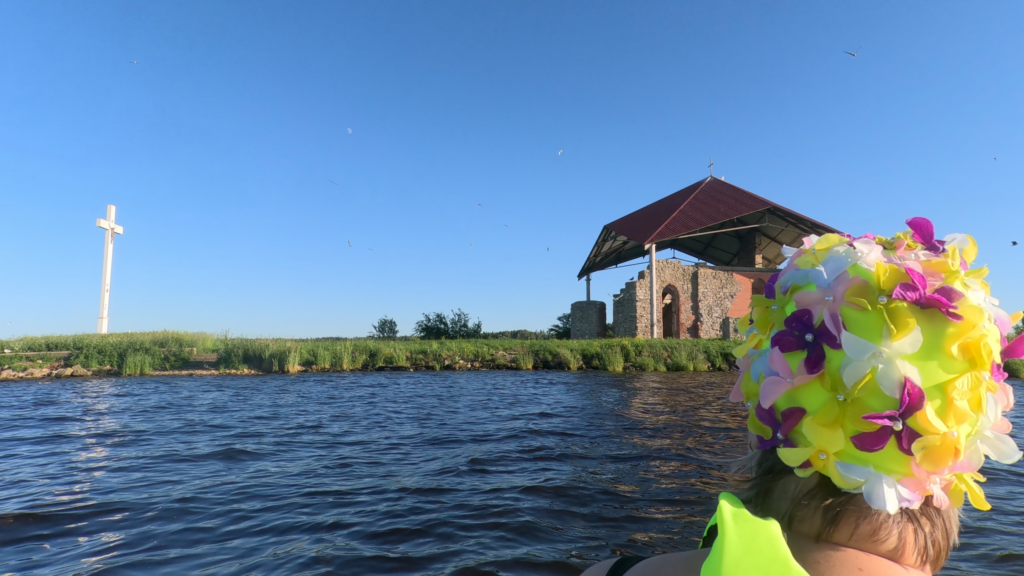
And the island? Densely populated by birds, including very disgruntled gulls and angry terns. It was a short visit, but still fun to take a closer look at the ruin from 1185.

Big cross, but the mini version of Jesus was a bit awkward, we think.

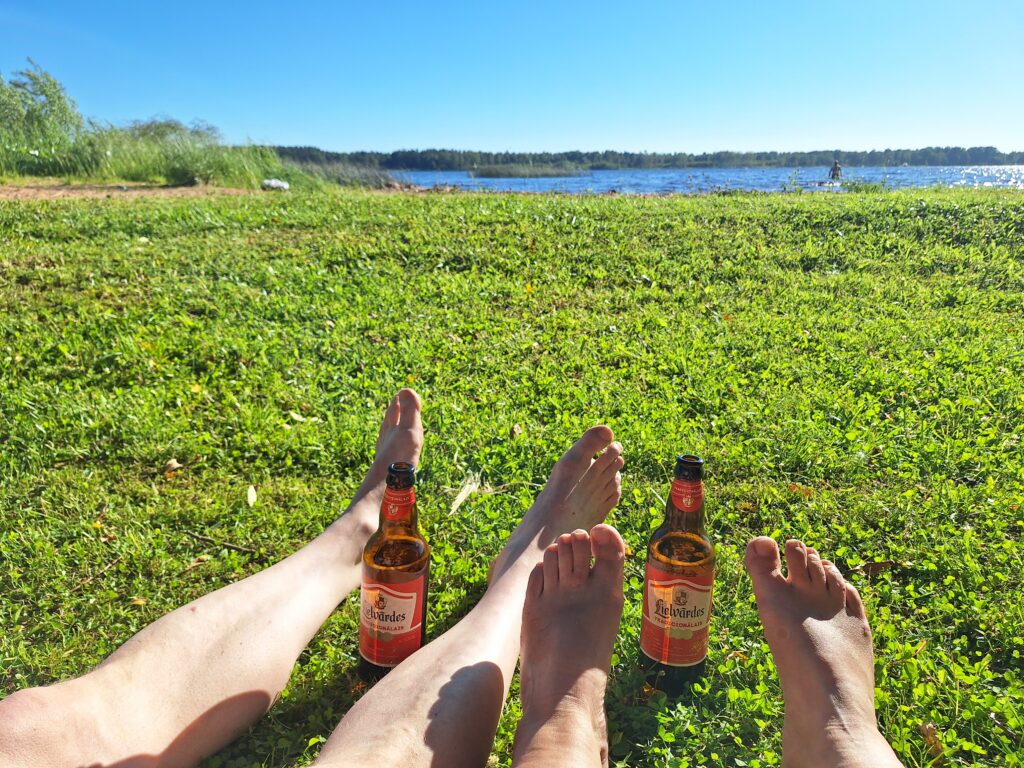
That was that, was that? Well, there was no big party after the swim, but we could treat ourselves to a beer on the beach, since we actually had been so foresighted as to bring a couple of bottles in our backpack.

Nice chill after both swimming and SUP trip. What lacked was some lunch. All the cafes and restaurants were closed because of midsummer!

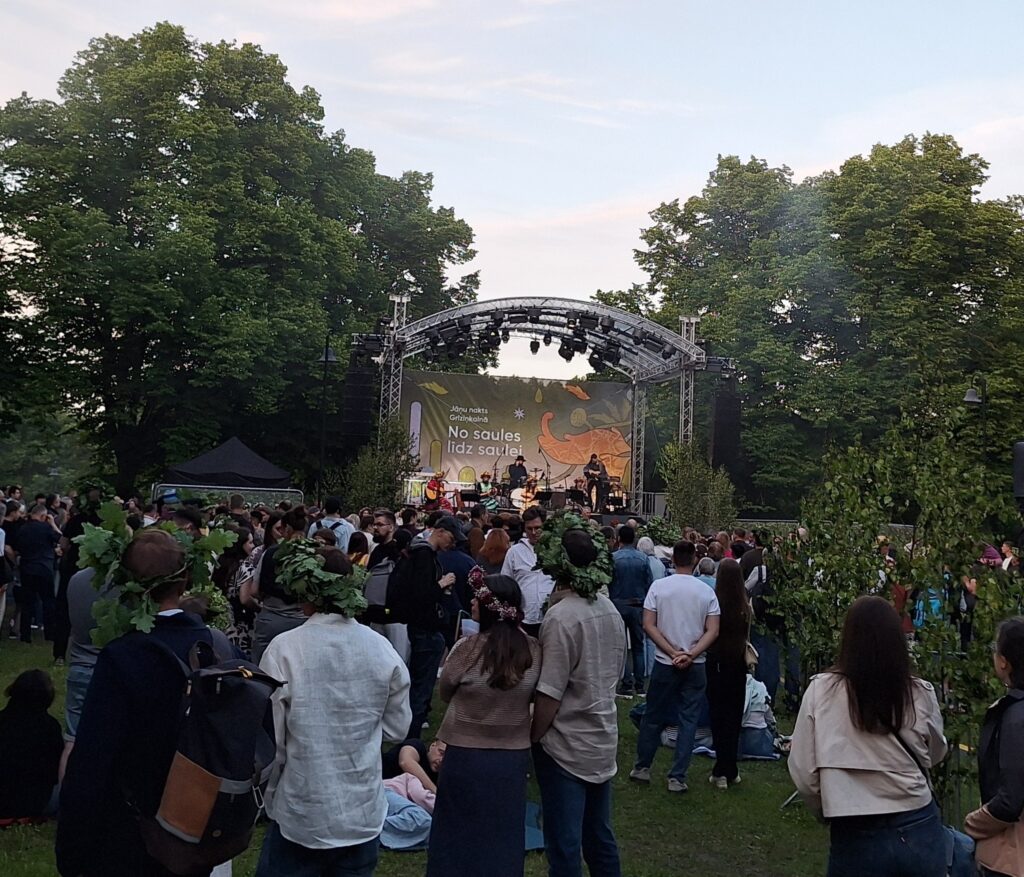
That was that was that was that? Oh no. We had seen quite a few gatherings of people in private gardens in Ikšķile, all with bonfires and barbecues. But there was no invitation through the hedge, so there was only one thing to do: Go back to the big city and check out Riga. We had seen the impressive program, and were looking forward to it. In Latvia, they distinguish between Līgo (Midsummer) on June 23rd and Jāņi (St. John’s Day) on June 24th (Both days there is free public transport. Just as well, since everyone is drunk on Līgo and has a hungover on Jāņi…). The party starts in the evening on the 23rd and lasts until the sun rises at 5-6 am the next morning. The next day is a public holiday, but in Riga many restaurants and bars are closed on both days because the employees are going out and partying themselves… The women either have a flower wreath in their hair or a bouquet of flowers in their hand or both, and many men also have wreaths in their hair – made of oak, birch or linden leaves.

Līgo on its way to becoming Jāņi. Everyone named Jānis (Latvian for John) has a ‘name day’ on St. John’s Day, and at some point they go on stage wearing a wreath of leaves in their hair – to be celebrated in a special way.

Yes, Midsummer in Latvia is highly recommended! But – check the program where you are going first. If you can’t find a program – go somewhere else. For Tobatheornottobathe it turned out to be a short party. It was the lack of food… Yes, there were barbecues at the festival, but the queues were miles long, so we went home instead. Therefore: Bring your own food, or plan to queue, and you might have an absolutely excellent Midsummer party – even in the big city of Riga.

Published
Categorized as Latvia, Riga

Daugava beach

In the western part of Russia, about midway between Novgorod and Moscow, there are some heights called the Valdaj heights. There you can find the source of three big rivers: Volga, Dnepr and Daugava (also called Eastern Dvina).

Read and white are the colors of Latvia.

Daugava is over 1000km long and flows through Russia, Belarus and Latvia before ending in the Riga Bay in the Baltic Sea. There are three power plants in the river. Construction of a fourth has been stopped after massive protests.

The railroad bridge over Daugava. Riga’s old town to the right (east).

The most important Latvian town was always at the river. Previously it was Ikšķile, 50km further upstream of Riga. The city Riga was founded in 1201, as the capitol of Livland, belonging to the german order. German was the city’s only official language until 1891.

Daugava. The TV-tower in the background.

We were in Riga for Knut’s last filming days of the movie ‘Sulis’. So of course we had to ask if Riga has any good places for a bath? The access to water obviously wasn’t any problem. The question was if it really was suited for bathing. We got rather diverging answers to that question. Most people simply said: ‘No! It’s too cold!’. Some recommended nearby lakes. But the tourist office could inform us: Yes, there are bathing places at Daugava – which you can use in the summer (the month of may probably not included as “summer” in her mind). So off we went. As should be obvious, water temperature is no concern og ours if we want a bath.

Plenty of space for people and bicycles on the bridge Salu Tilts.

From the old city there is a nice promenade along the river, ever so often with warning signs of ‘No swimming’. We crossed the Daugava on the bridge Salu Tilts. This has a nice concept: Pedestrians and bicyclists have their own level underneath the bridge, separated from the cars. That gives a very relaxed space, although with view only in one direction.

After crossing another small branch of the river, we arrived at Peldvieta Lucavsalas līcis. This is a nice bathing spot with golden sand. Not too crowded at this time of year, either. We spotted one fisherman and one homeless guy as we arrived.

One of several bathing spots along the Daugava.

It was a great bath. Sunny, no wind and the water seemed very nice for a river that runs through one of the largest cities in Northern Europe.

There was some company in the water as well.

This was definitely a good time for a bath in Daugava!

Nice bath in Daugava.

After the bath is a good time for dinner. We can recommend the restaurant ‘The Good Father’, in the old city.

The old city in Riga is very nice – and on UNESCO’s World Heritage List.

In ‘The Good Father’ you will find good food and lot of fun stuff to play with. Not for the faint hearted, though, be warned!

Say that again!
Published
Categorized as Latvia, Riga