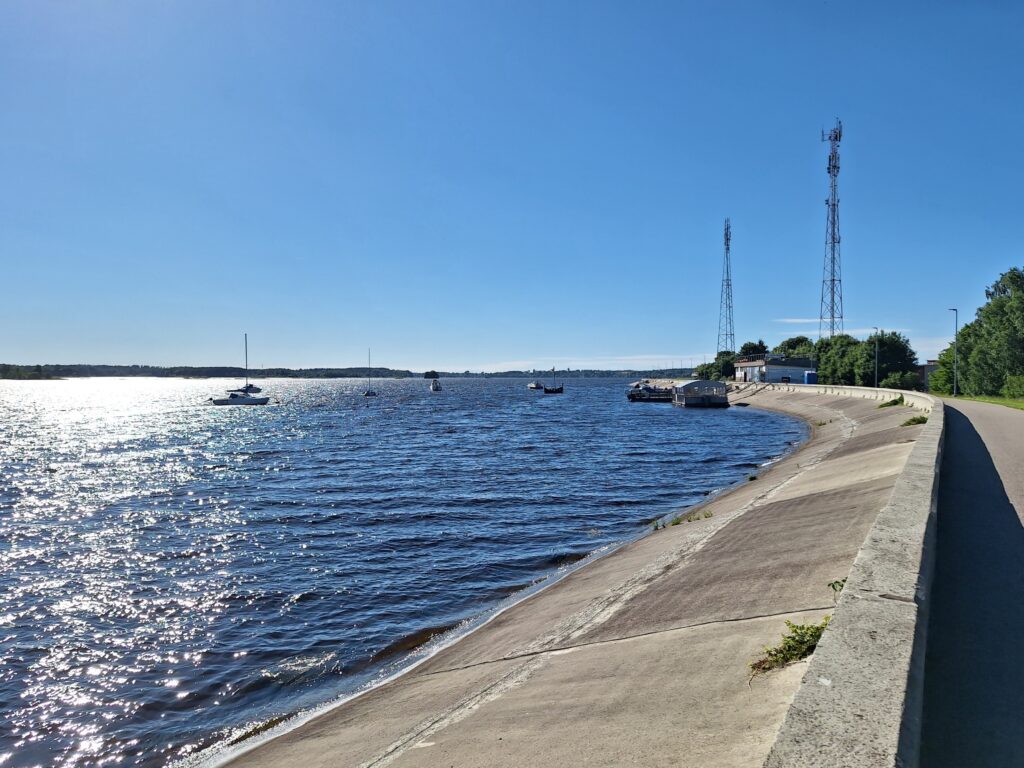
The Daugava River with all its water (the name actually means ‘a lot of water’) is a perfect place to build a city. There is easy access to the Baltic Sea and most of Europe’s coastlines, and there is a large inland producing goods for sale. Riga, the capital of Latvia, was founded in 1201 on the eastern bank of the Daugava, about 20 km from its mouth in the Baltic Sea. Before that, however, the capital was located another 30 km further up the river, in Ikšķile.
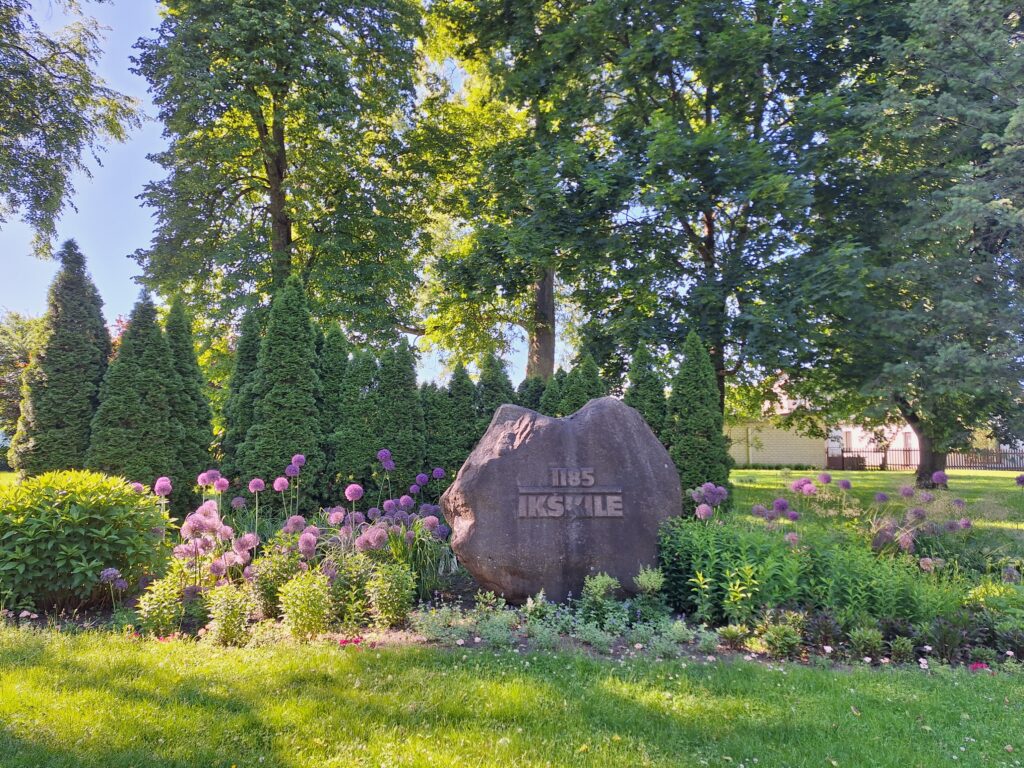
The founders of Ikšķile, Latvia’s first capital, in 1185 were German crusaders. They had been ravaging the Middle East and were looking for closer battlefields, and the not-yet-Christian Baltics were a much more practical target. Latvia was not united into one kingdom, it consisted of a multitude of chiefdoms and was therefore an easy prey for German occupation. The name Ikšķile looks a bit strange from an Indo-European point of view, and of the two possible explanations, both come from Livonian (ref. the not-bath ‘Cape Kolka’). The simplest theory is that ‘ikš’ comes from Livonian (Finno-Ugric) and means one and that ‘kīla’ means village, i.e. ‘a village’ – plain and simple, and this village already existed in the Viking Age.
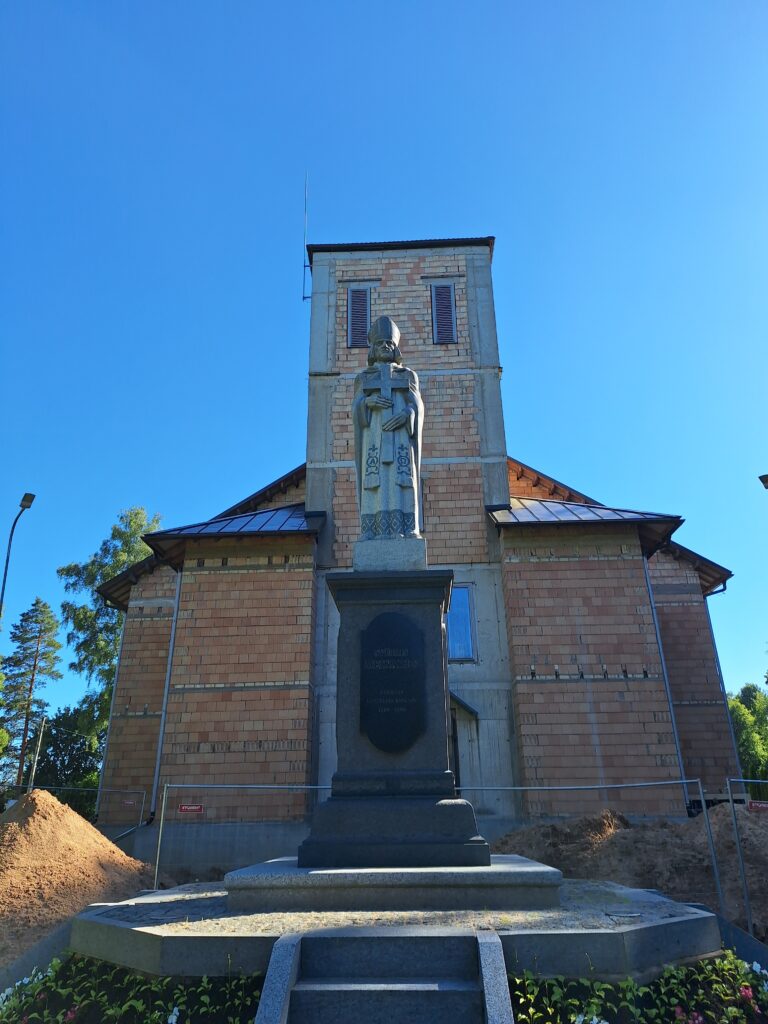
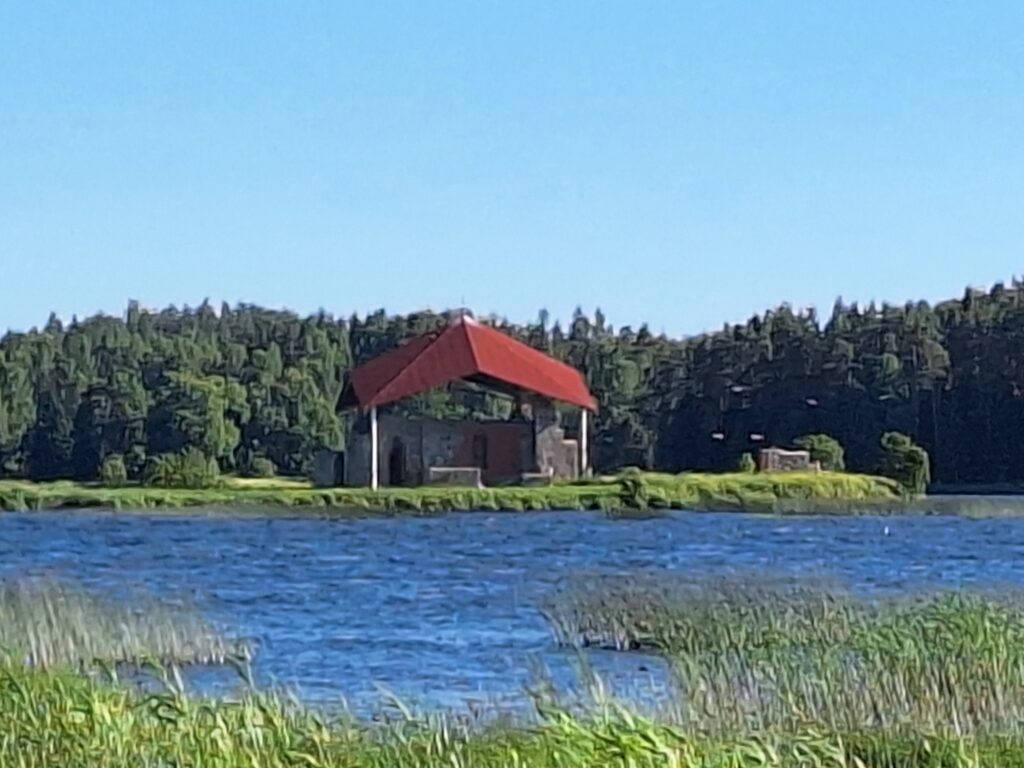
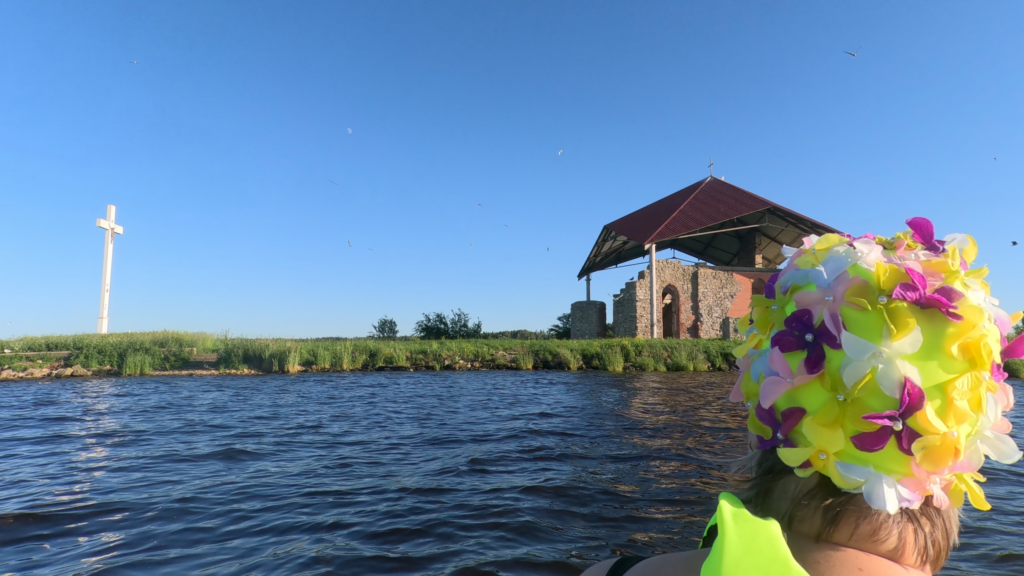
The monk Meinhard of Seegeberg was appointed the first bishop of Latvia, and with the help of stonemasons from Gotland, he built a castle and a church in Ikšķile, which became the capital of the ‘German Order‘ in Latvia. The castle ruins still exist, but due to the damming of the Daugava, the hill on which the castle stands has become a small island. We wanted to swim there!
As Midsummer approached, it dawned to us that this celebration is big throughout the Baltic Sea region, and not just in Sweden. Tobatheornottobathe are always ready for both bathing and partying, and we wondered if this could be combined. Googleing, consulting AI, and checking various daily programs, we found out that in Riga in 2026 there were no less than 3 large folk festivals in different parks, with live music, dancing, food, and drinks. Definitely something to consider! However, the conclusion from AI was that the traditional Midsummer celebration is best experienced in small places. ‘Go out of town and join a village party!’ was the call.
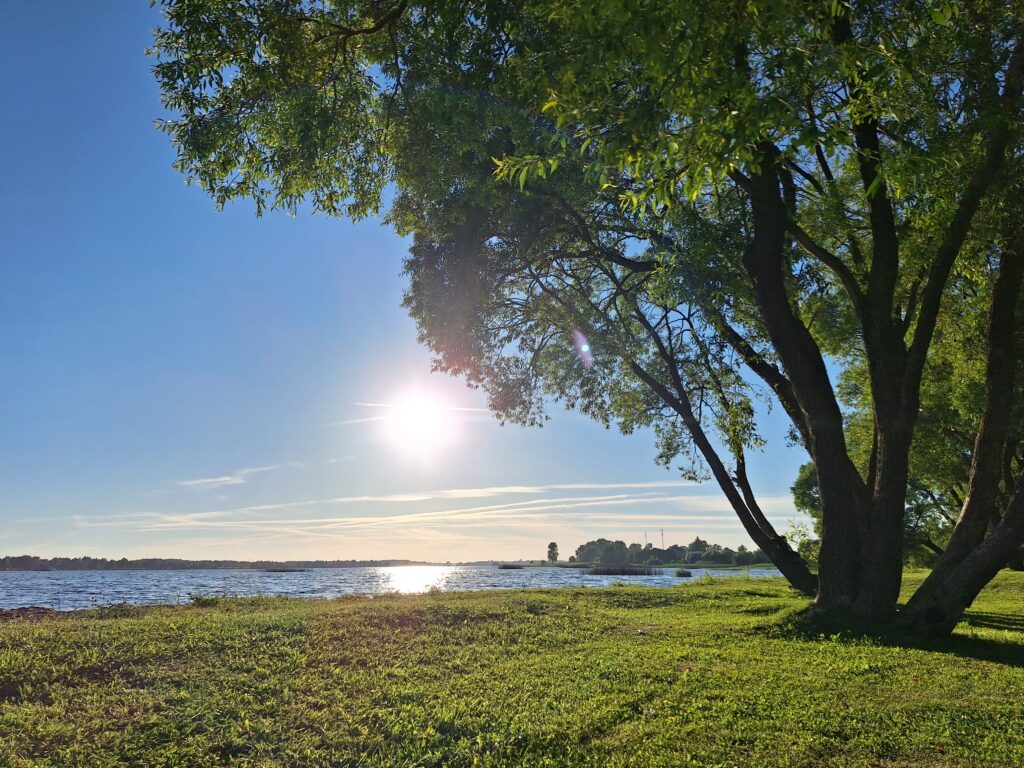
So, Tobatheornottobathe took the train to Ikšķile, with its 7,000 inhabitants that should be small enough? Ikšķile was small enough, yes, but it turned out there hasn’t been a public celebration for many years. Fools errand? Yes, with the party in mind, but swimming? Not far from the old road to Ikšķile Castle is a charming little beach, and we had a swim, of course.
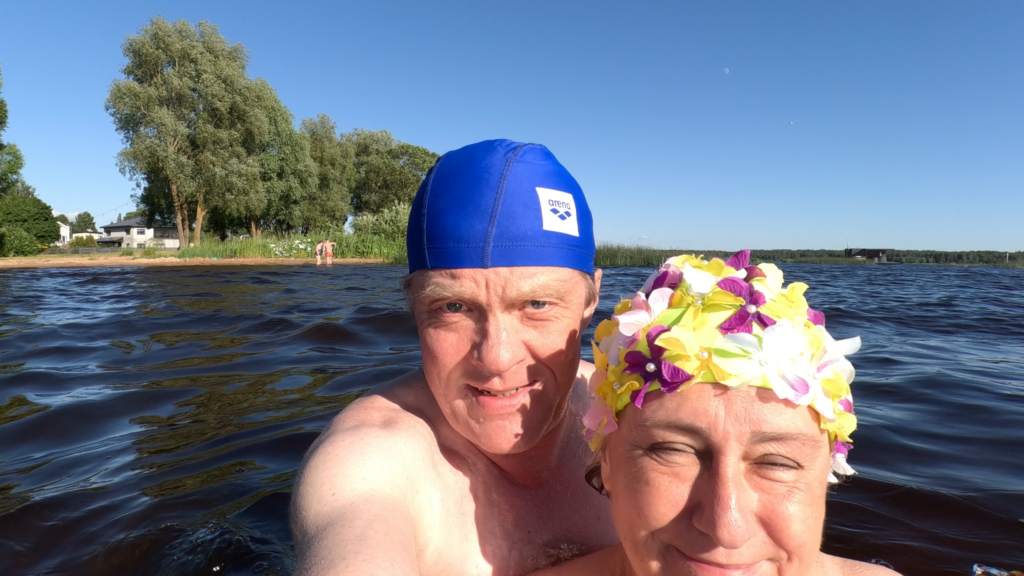
That was that – on Midsummer Eve? Oh no. We still hadn’t swam to Ikšķile Castle. Idun was a little skeptical. ‘This is technically a river. What if we get swept away by the current?‘ But the solution was close. Right by the beach there was a box where you could rent Stand-up Paddle Boards using an app! As said, so done. The box opened and we got a board, an oar, a waterproof bag and life jackets for only a small fee. Fabulous!
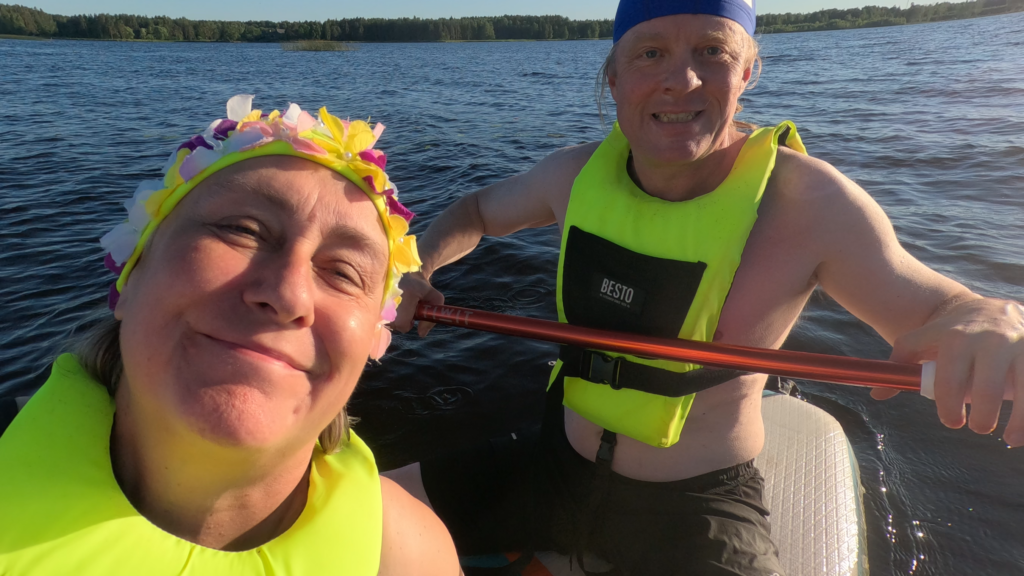
And the island? Densely populated by birds, including very disgruntled gulls and angry terns. It was a short visit, but still fun to take a closer look at the ruin from 1185.
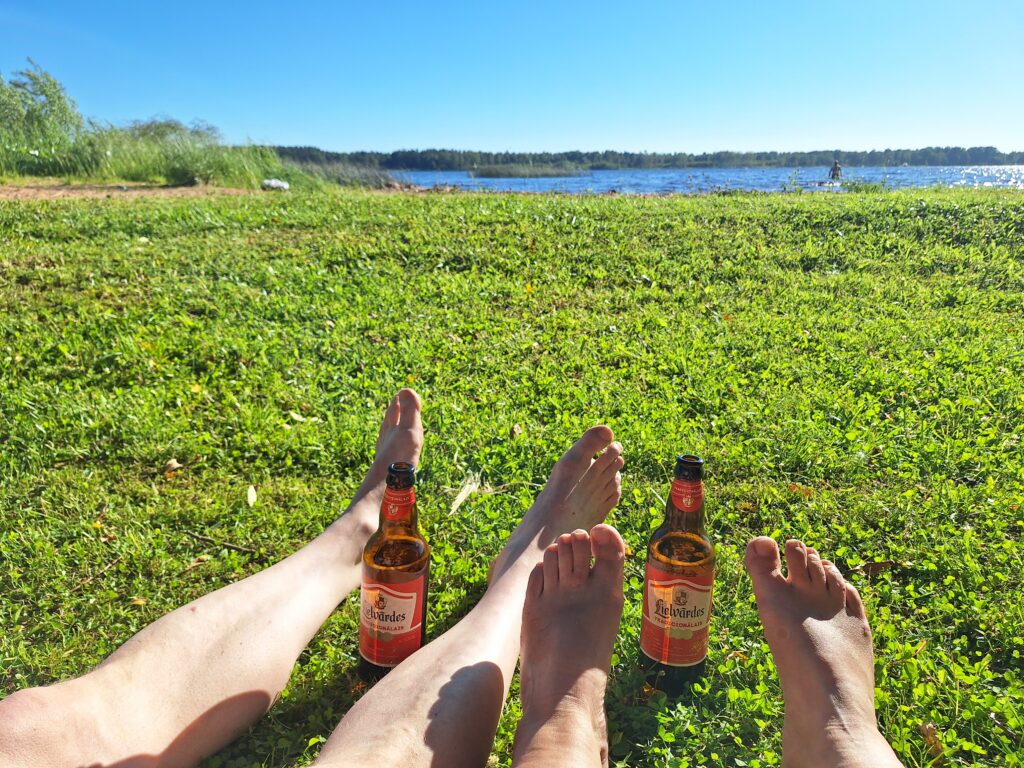
That was that, was that? Well, there was no big party after the swim, but we could treat ourselves to a beer on the beach, since we actually had been so foresighted as to bring a couple of bottles in our backpack.
That was that was that was that? Oh no. We had seen quite a few gatherings of people in private gardens in Ikšķile, all with bonfires and barbecues. But there was no invitation through the hedge, so there was only one thing to do: Go back to the big city and check out Riga. We had seen the impressive program, and were looking forward to it. In Latvia, they distinguish between Līgo (Midsummer) on June 23rd and Jāņi (St. John’s Day) on June 24th (Both days there is free public transport. Just as well, since everyone is drunk on Līgo and has a hungover on Jāņi…). The party starts in the evening on the 23rd and lasts until the sun rises at 5-6 am the next morning. The next day is a public holiday, but in Riga many restaurants and bars are closed on both days because the employees are going out and partying themselves… The women either have a flower wreath in their hair or a bouquet of flowers in their hand or both, and many men also have wreaths in their hair – made of oak, birch or linden leaves.
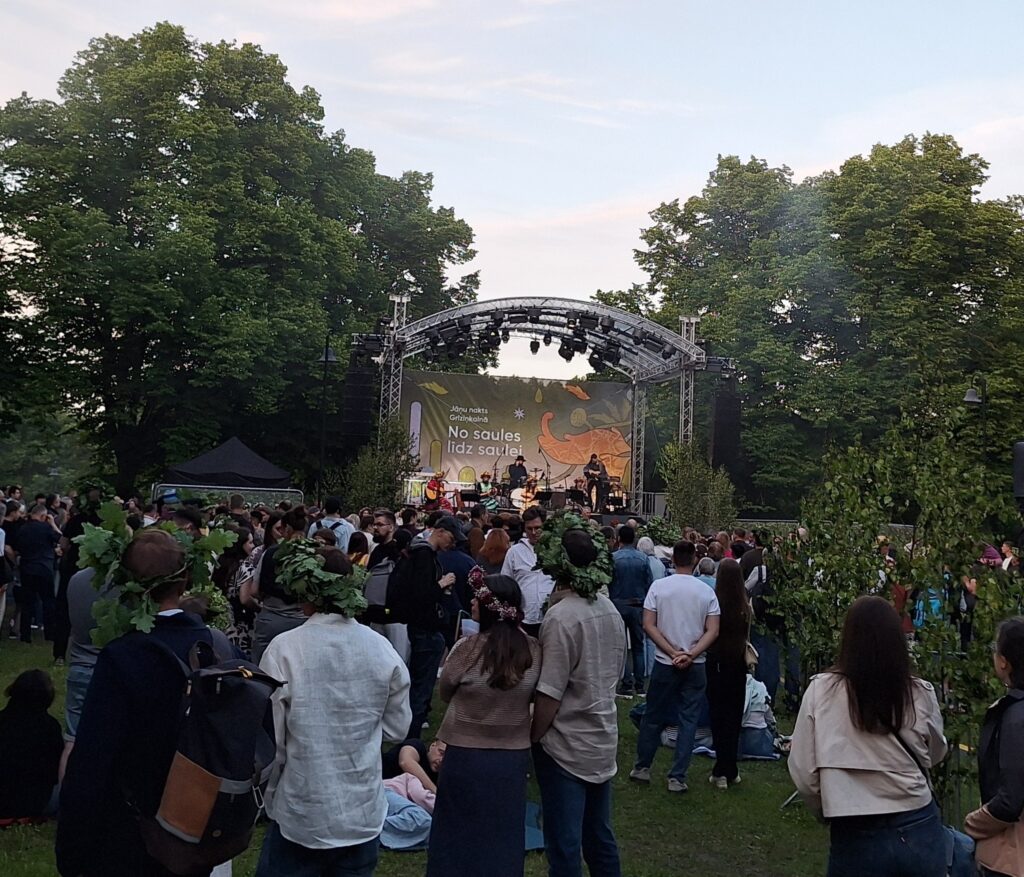
Yes, Midsummer in Latvia is highly recommended! But – check the program where you are going first. If you can’t find a program – go somewhere else. For Tobatheornottobathe it turned out to be a short party. It was the lack of food… Yes, there were barbecues at the festival, but the queues were miles long, so we went home instead. Therefore: Bring your own food, or plan to queue, and you might have an absolutely excellent Midsummer party – even in the big city of Riga.