In the fall of 2024, we were on a kind of pilgrimage in Scotland. We wanted to follow in the footsteps of Robert Burns. Burns is Scotland’s national poet and known pretty much all over the world. Who hasn’t sung along to ‘Auld Lang Syne‘? His birthday is marked by a bigger celebration than Scotland’s national day, St. Andrews Day. With his beautiful poetry, from everyday things like beer brewing and mice, to the most sensitive love poems; Burns describes Scotland and its inhabitants in a way that touches us deep in our hearts.
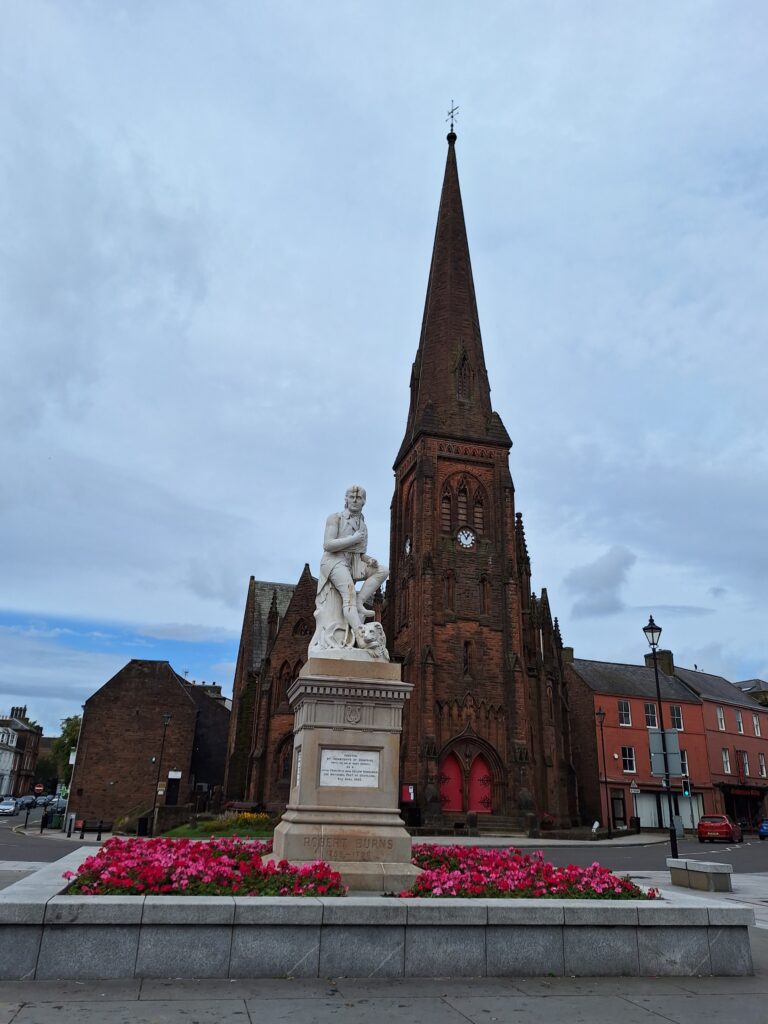
Dumfries is a small Scottish town 40 miles from the border with England, nicknamed the ‘Queen of the South’. The name has been interpreted in many ways, from Gaelic, Brittanic, Norse. The simplest explanation is from the Gaelic ‘Dùn Phris’, ‘The Thicket Fort’. The town is situated on the river ‘Nith’ and has been a trading post and hub since Roman times. Robert Burns moved here with his family in 1791, after giving up farming at Ellisland Farm 10 km further upstream.
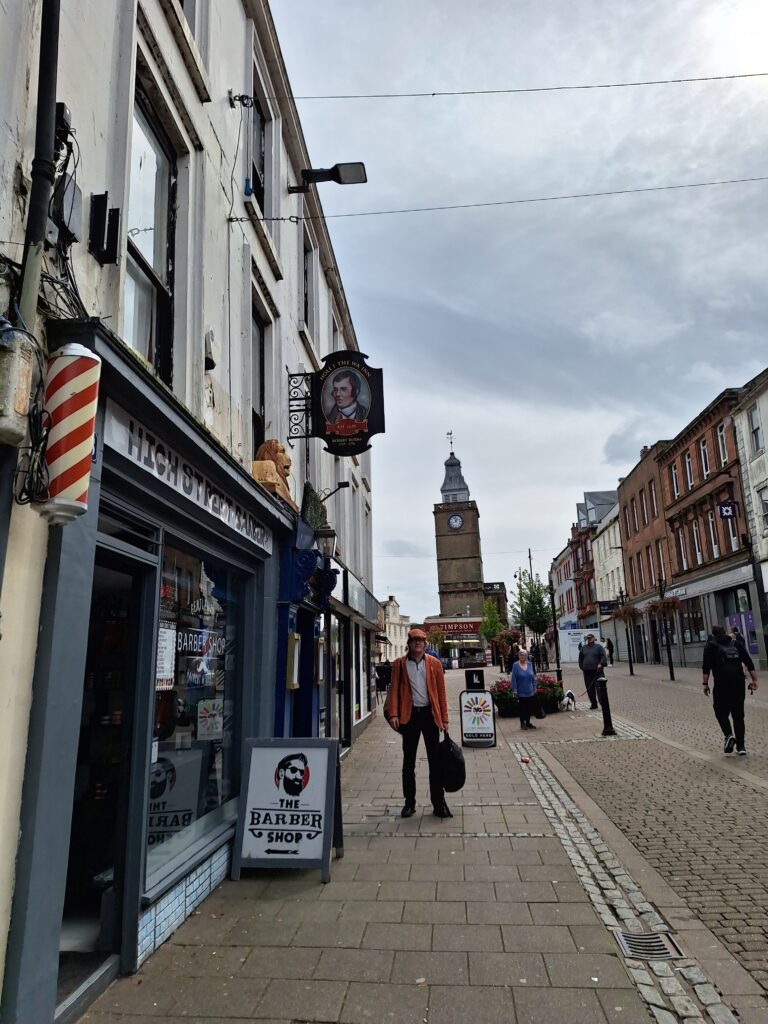
The poems ‘Auld Lang Syne’, ‘Tam o’ Shanter’ and ‘The Banks o’ Doon’ were all written at Ellisland Farm. There he also wrote a love poem to the river Nith, which we would like to reproduce here. We actually live by a river with the same name: the Nidelva in Trondheim! But then we would have to replace the Cummings/Comyns, who fought for Scottish independence from England, with our kings Olav, who fought against Danish rule in Norway. The name ‘Nith’ is interpreted from Brittonic/Celtic in the meaning of new/fresh. ‘Nid’ as in the Nidelven comes from the Old Norse ‘nið’ = to flow. Different origin of the name, unfortunately, but the poem is beautiful anyway.
The Banks of Nith
The Thames flows proudly to the sea,
Where royal cities stately stand;
But sweeter flows the Nith to me,
Where Comyns ance had high command.
When shall I see that honour’d land,
That winding stream I love so dear!
Must wayward Fortune’s adverse hand
For ever, ever keep me here!
How lovely, Nith, thy fruitful vales,
Where bounding hawthorns gaily bloom;
And sweetly spread thy sloping dales,
Where lambkins wanton through the broom.
Tho’ wandering now must be my doom,
Far from thy bonie banks and braes,
May there my latest hours consume,
Amang the friends of early days!
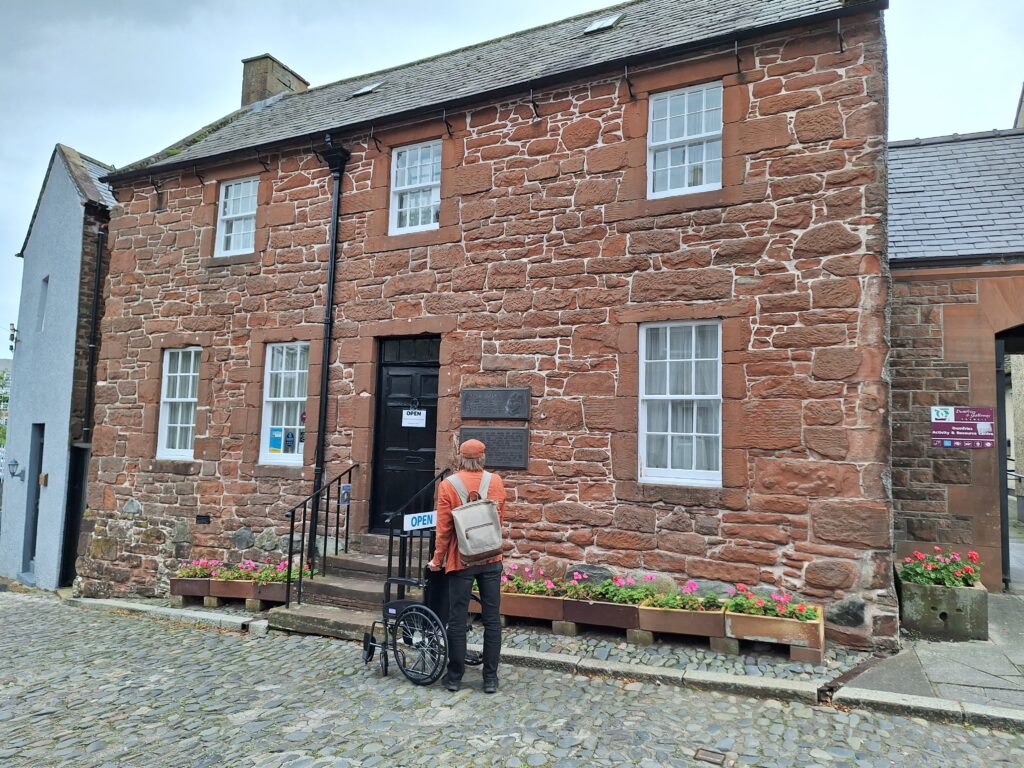
Many of Burns’ famous poems date from these last years of his life, living in Dumfries, including ‘A Man’s a Man for A’ That‘, ‘Scots Wha Hae‘ and ‘Ae Fond Kiss‘, and we can imagine him sitting in his office:
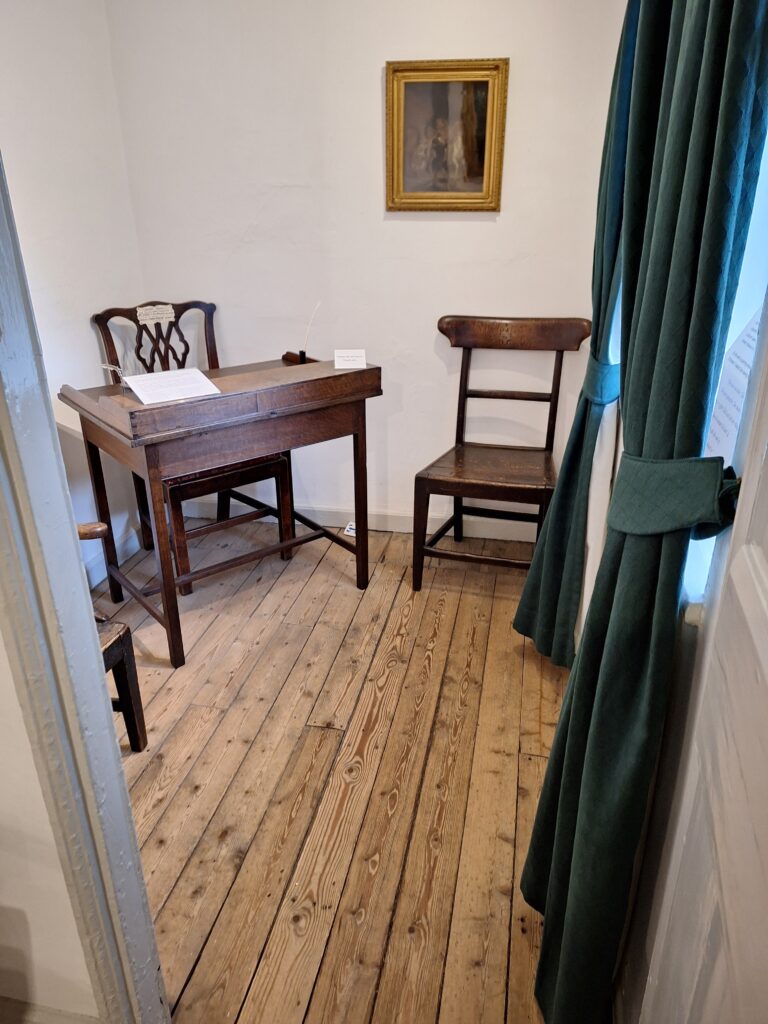
What does bathing have to do with Robert Burns, you might wonder? Quite a lot, it turns out. Burns was ill in the last years of his life, and when you suffer from chronic pain, rheumatic fever and a failing heart, is it really a bright idea to recommend cold baths? As a last attempt to heal, Burns traveled to the ‘Brow Well‘ simple spa, by the mouth of the River Nith. This is today a Ramsar site/bird sanctuary that houses Svalbard’s entire population of barnacle geese every winter. And that’s a lot. In 1948, there were 300 breeding barnacle geese on Svalbard – but conservation in both places have increased the number to over 30,000. In this tidal area (Solway Firth), Burns – on the doctor’s recommendation – repeatedly went into the sea until it reached his armpits, in order to be healed. Unfortunately, the effect of this harsh treatment was the opposite of what was desired. Burns returned home after 2 weeks, and died three days later.
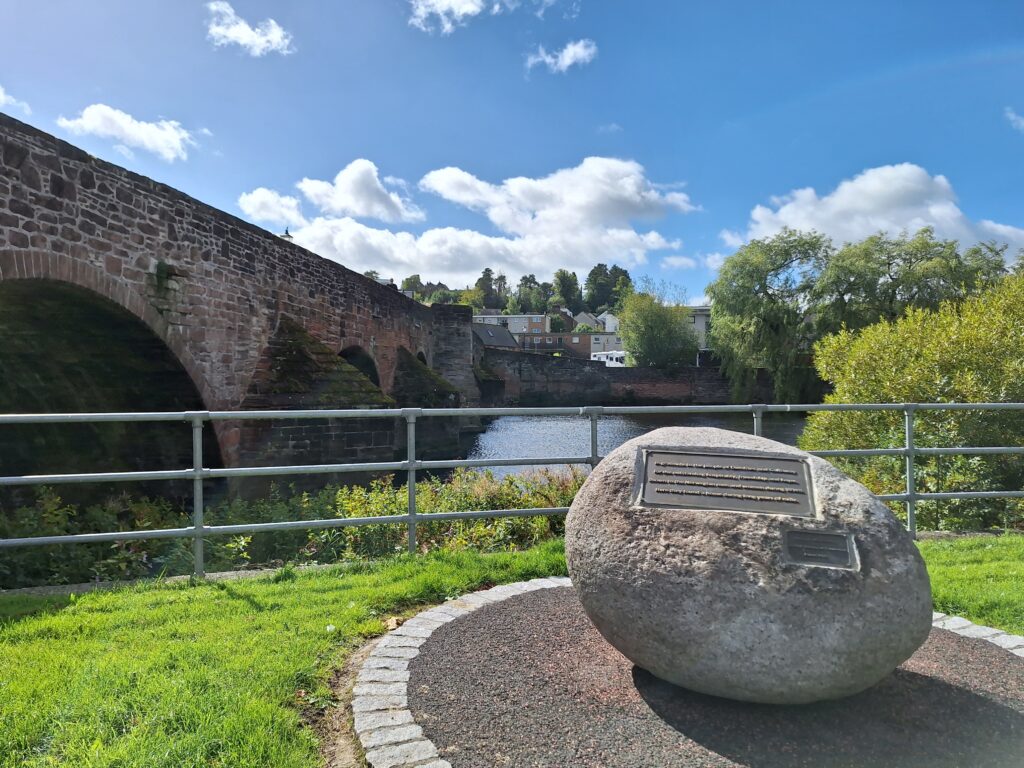
While at Brow Well, Burns met a woman, Maria Riddell, who later wrote that she saw him marked by death. Burns himself must have understood that the end was near, as he asked her the following question: “Well, Madam, have you any commands for the other world?”
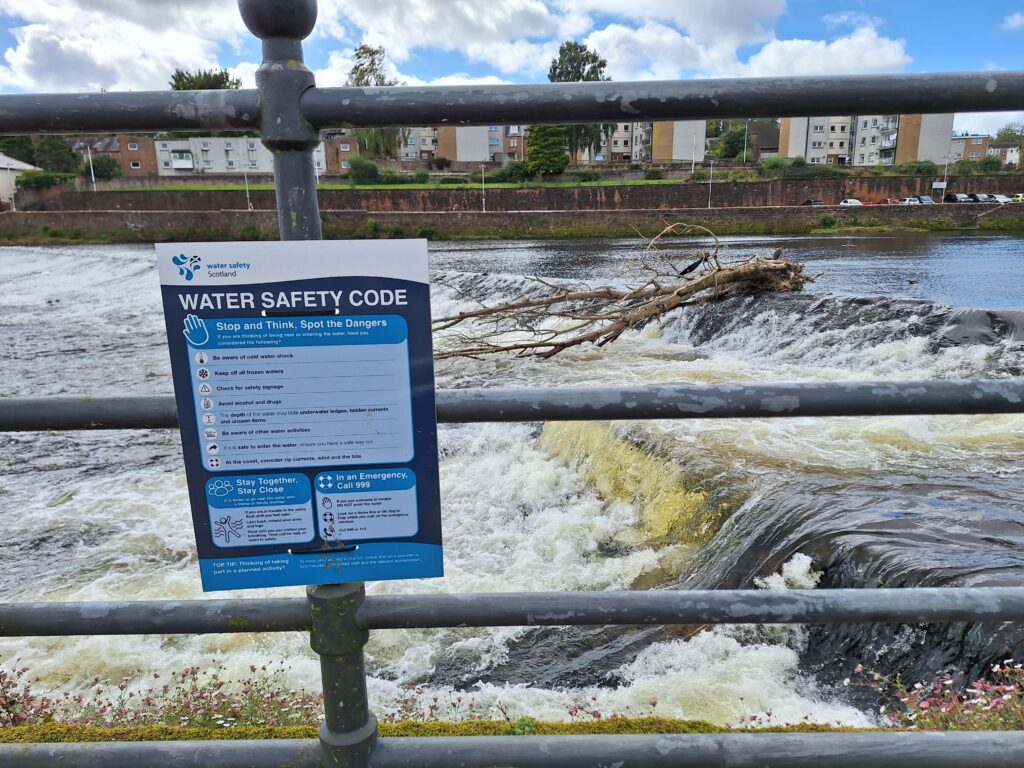
Tobatheornottobathe really likes this type of sign. Both warnings and good advice are given here – but there is not actually a ban on swimming! We asked around at the hotel, and learned from a gentleman that he had bathed a lot in the River Nith as a child. So we thought we would just go for it!

After some exploration , we found a tiny tiny beach on the banks of the River Nith, perfect for Idun, who had a bad knee and sat in a wheelchair this holiday. There is no evidence that Burns bathed in the Nith River, though. He loved the river, walked along it, but his bathing seances happened in the sea.
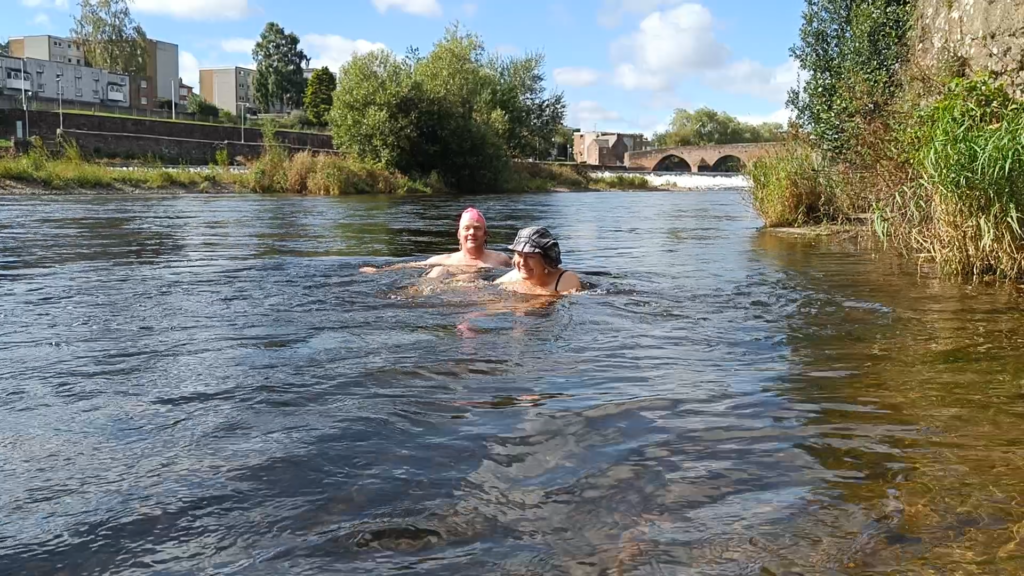
For ice bathing, we would basically recommend that bathers are in good health, especially the heart should be in good shape, as cold baths are stressful for the body. But afterwards! You’ll have a really good feeling for a long time. We just love it!
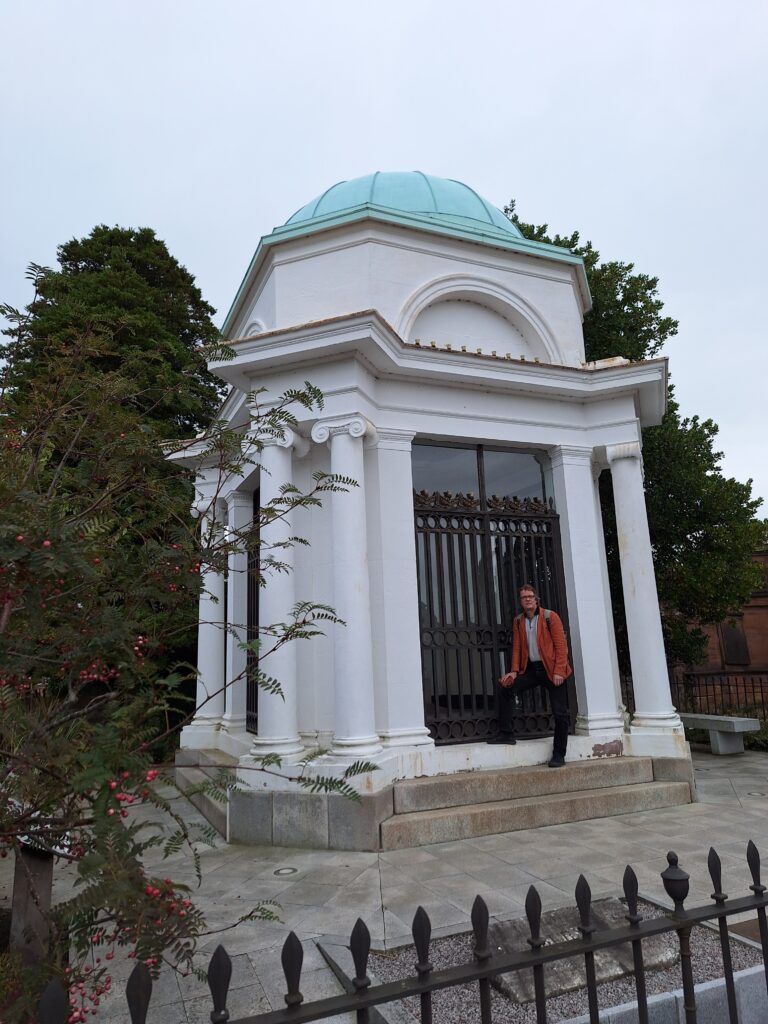
Today we celebrate Burns’ birthday every year – Burns Supper – around January 25th. So just fetch your Tam O’Shanter, kilt and accordeon to get ready for the Ceilidh.
Happy Birthday, Robbie!