The Armada Beach

In the late summer of 1588, the Spanish Armada, mobilized by King Philip II, sailed into the English Channel. The purpose was partly to restore Catholicism in the British Isles (the Protestant Queen Elizabeth I had taken over from her Catholic half-sister “Bloody” Mary), partly to stop English privateering in South America and to end English support of the rebels in the Spanish Netherlands.
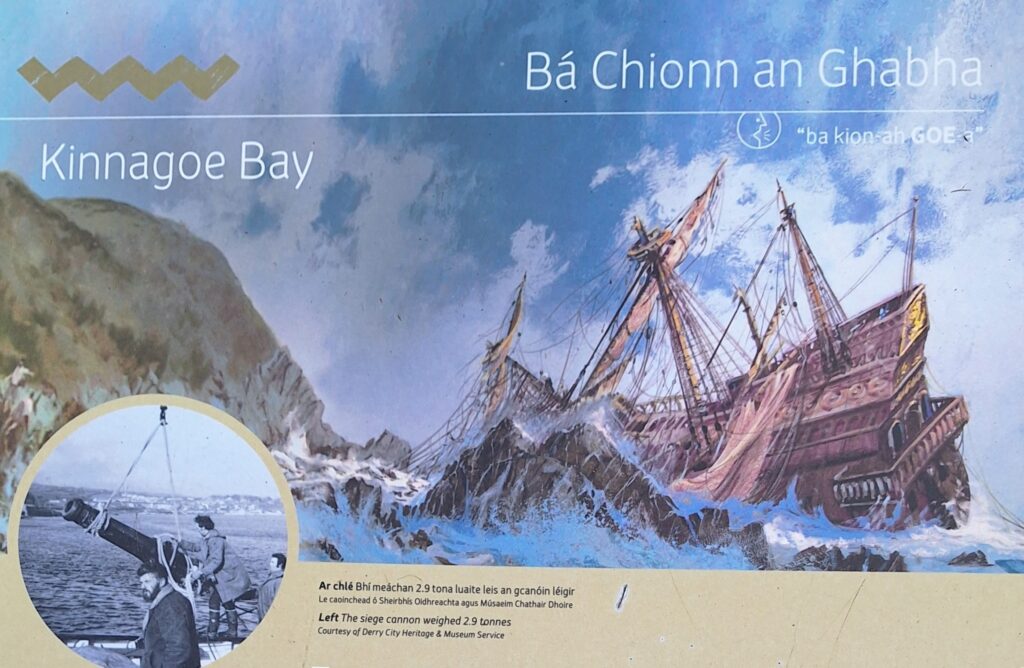
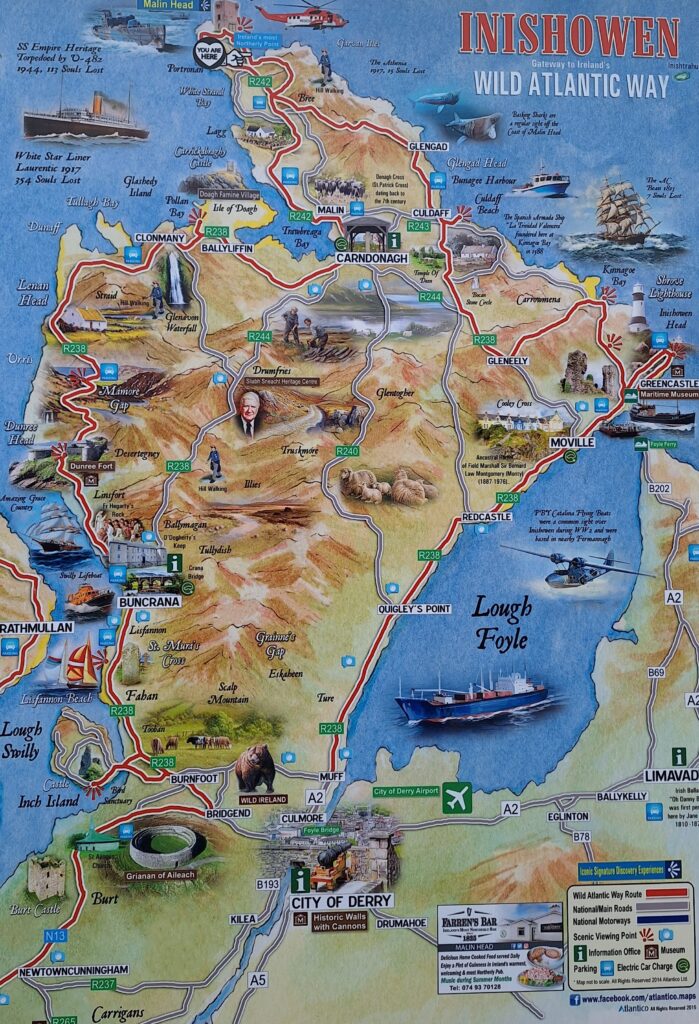
Photo of the information board at Kinnagoe Bay.

After skirmishes at Plymouth and the Isle of Wight, there was a battle at Gravelines north of Calais. The Spanish Armada, known in Spanish as the ‘Grande y Felicísima Armada’ (the Great and Fortunate Armada), soon felt the sting of misfortune. At Gravelines, north of Calais, the English sent burning boats towards the armada, and in the panic that followed, the Spanish ships cut their anchor chains and scattered. A strong onshore wind almost drove them ashore in Flanders, but then the wind changed and they sailed northwards with the English in their wake.
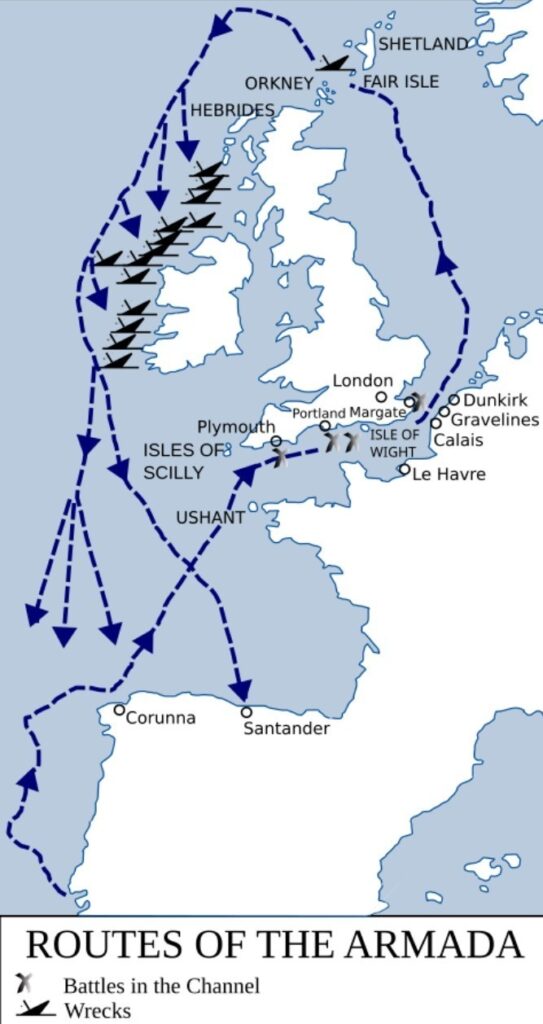
The sailing route of the Spanish Armada. Photo: Wikipedia

The Gulf Stream and southwesterly winds forced the ships eastwards, although they tried to sail west and into the open sea to return to Spain by sailing around the British Isles and Ireland. 24 ships sank in Irish waters due to stormy weathers, some of them already damaged, many missing anchors, large parts of the crews being sick, and they were starting to run out of food and water. Queen Elizabeth I gave clear instructions that no mercy should be shown to the Spanish crews or to any Irishmen who might come to their aid if they landed on the British Isles or Ireland.
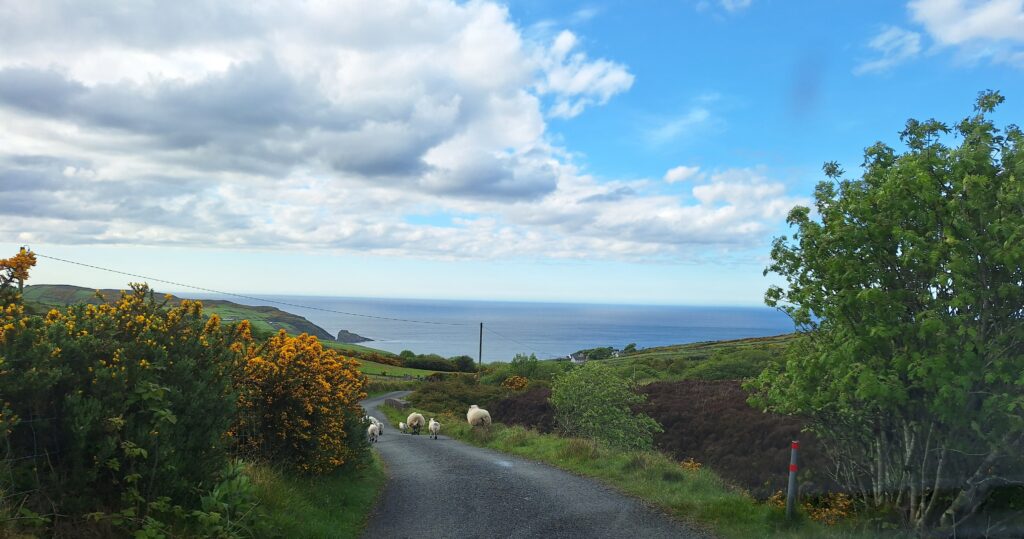
On the way to Kinnagoe Bay. The ‘Armada of Sheep‘ leaves the path.

Kinnagoe Bay from Irish ‘Bá Chionn an Ghabha’ = ‘The bay at the blacksmith’s headland’ is located in the north of the Inishowen peninsula in Ireland. It is incredibly beautiful here! The drive is not for the faint of heart, here it is steep, narrow and winding, with the danger of meeting sheep. After several years of searching, the diving club ‘Derry Sub Aqua Club’ in 1971, found the wreck of the Spanish Armada ship ‘La Trinidad Valencera’, and four years later they were able to lift a 2.5 tons cannon from the seabed. Tobatheornottobathe have tried to visit the Inishowen Maritime Museum in Greencastle twice, but it has been closed both times. We have therefore not seen artifacts from the Spanish Armada with our own eyes, unfortunately. Next time!
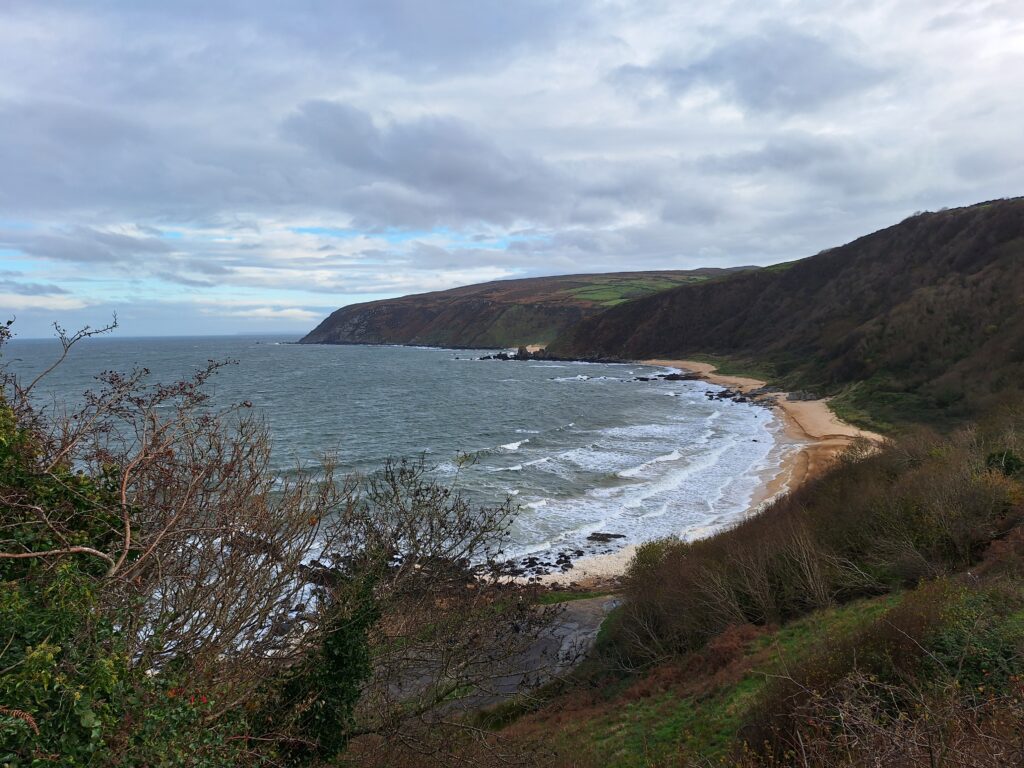
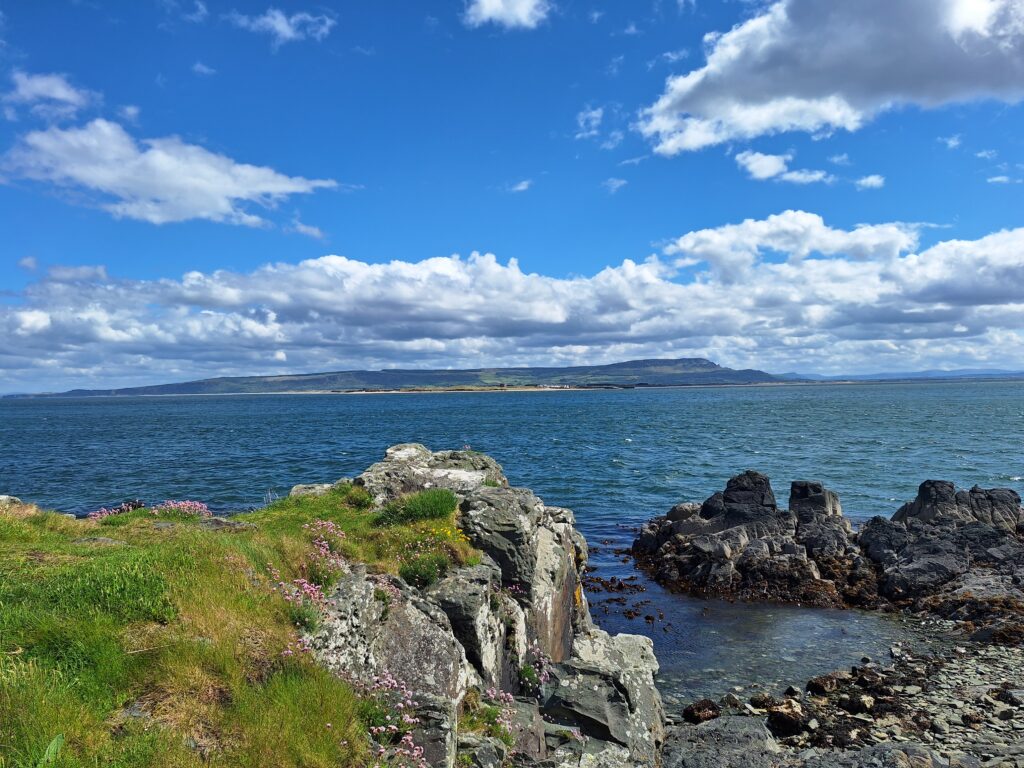
Kinnagoe Bay. It should be possible to sail safely ashore here, but in a full storm and without anchors it obviously wasn’t that easy.

‘La Trinidad Valencera’ was damaged already as she sailed northwards through the English Channel, and she was further damaged by storms on her way around Scotland. On arrival at Inishowen she was leaking and sank on September 14th while attempting to anchor on the beach. In addition to her own crew, she carried 264 survivors from the ship ‘Barca de Amburgo’. Most of the crew managed to get ashore before the ship sank, and the survivors were helped by the local O’Doherty clan. However, this did not help much, as they were later slaughtered by pro-English mercenaries just outside Derry.
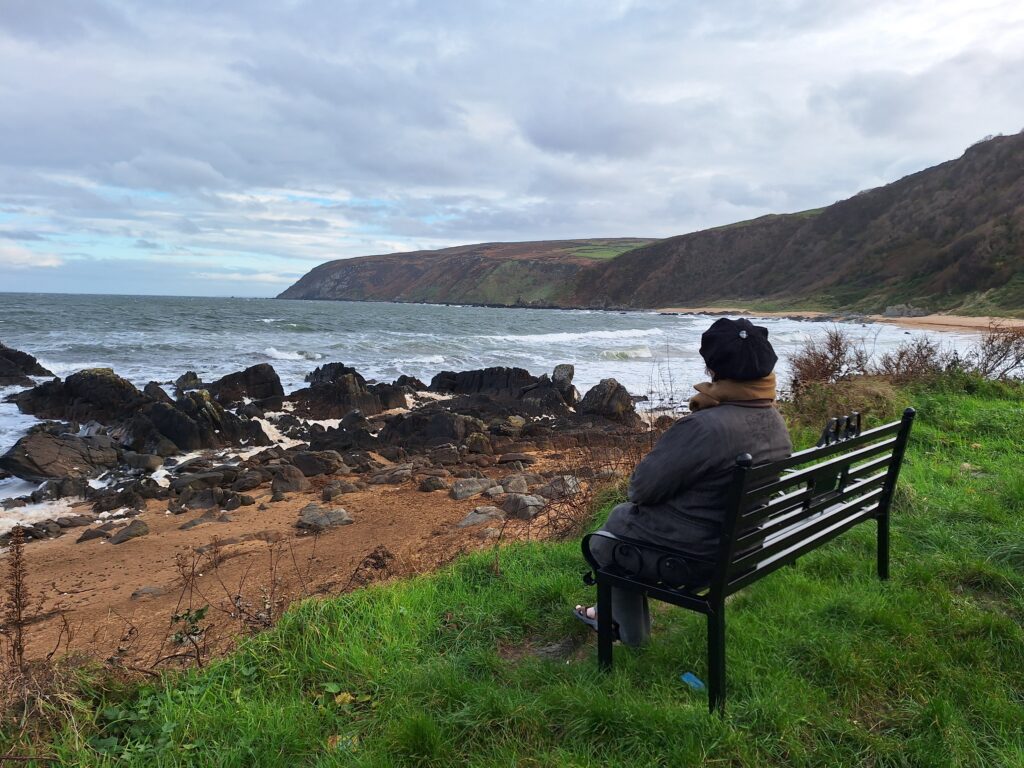
On our first visit to Kinnagoe Bay, it was November and so windy that Tobatheornottobathe gave up swimming. One could easily understand how dramatic it must have been to land a large, damaged sailing ship in these rough waters.

Our second visit to Kinnagoe Bay was friendlier. What a lovely place! We had checked the weather forecast and the water was calm, clear and fresh. It can be difficult to find parking here in the summer, they say. But in May there was no queue. In fact we were the only ones swimming here on this very, very nice day.
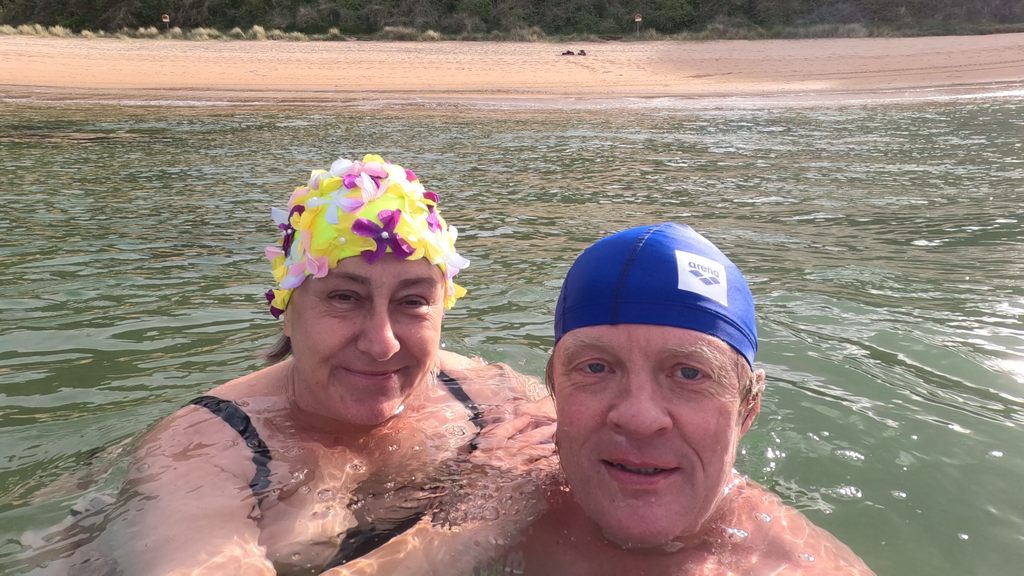
One of the most beautiful beaches we have ever visited! But for the Spanish Armada, it was no luck to be stranded here.

Old Éire

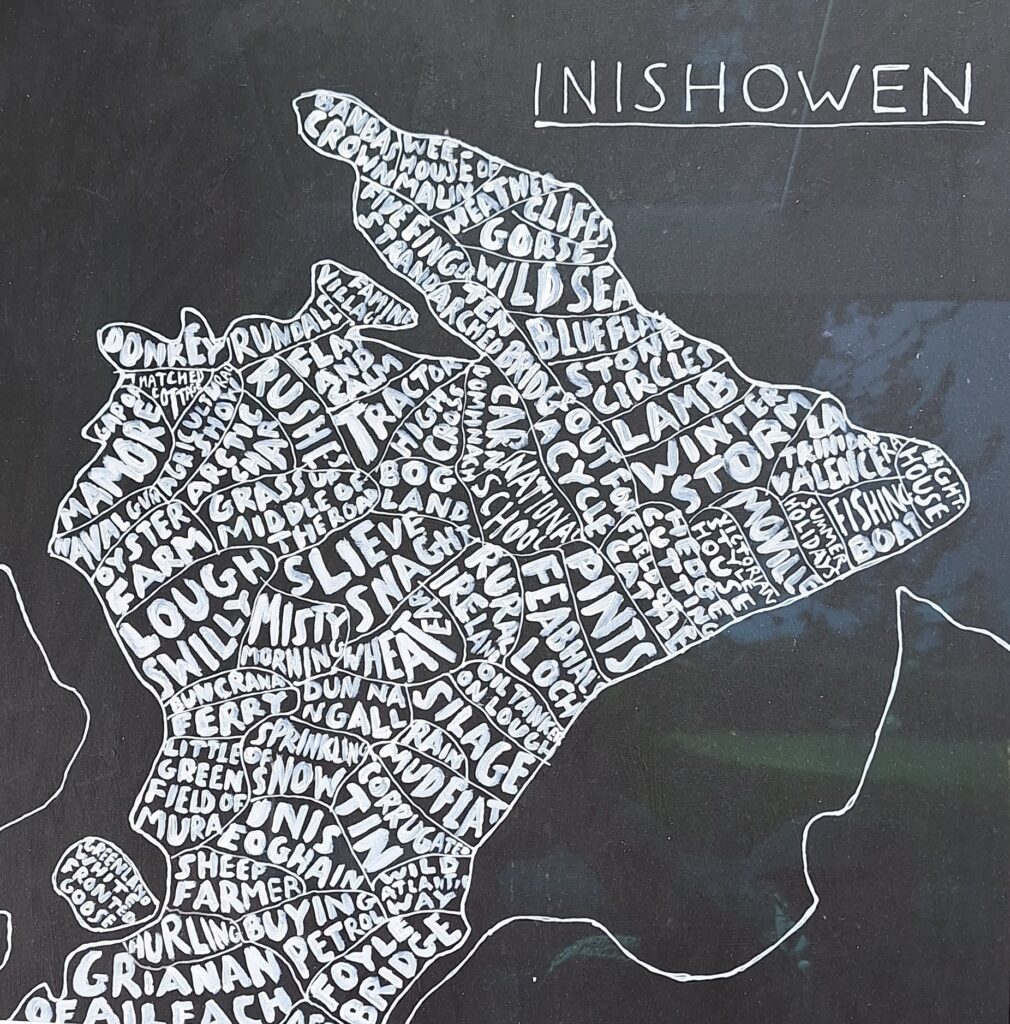
The Inishowen peninsula (from Irish: King Eoghain’s island) in Donegal is a swimmer’s paradise!

When you look at the map of the Republic of Ireland, there is a piece sticking up to the west (and north!) of Northern Ireland, namely County Donegal. The name comes from the Irish ‘Dún na nGall’ = ‘Fort of the Foreigners‘. The border with Ireland (in the south) is 9 km long, while the border with Northern Ireland in the east is 100 km, and they also call themselves: ‘The Forgotten County‘.

Where to have a swim? Just follow the signs for ‘The Wild Atlantic Way’!

Inishowen has many beautiful beaches, but also a lot of really old ancient monuments. At the end of the last ice age (some 12,000 years ago), a wave of immigrants came to Ireland from the Iberian Peninsula. These were nomads who used stone tools. Agriculture, however, started about 4,000 years ago by another group of people, from Britain. They brought with them livestock (cows, sheep, goats), grains (wheat, barley), new tools and a sedentary lifestyle. The first settlers were partly displaced by and partly assimilated by the new settlers.

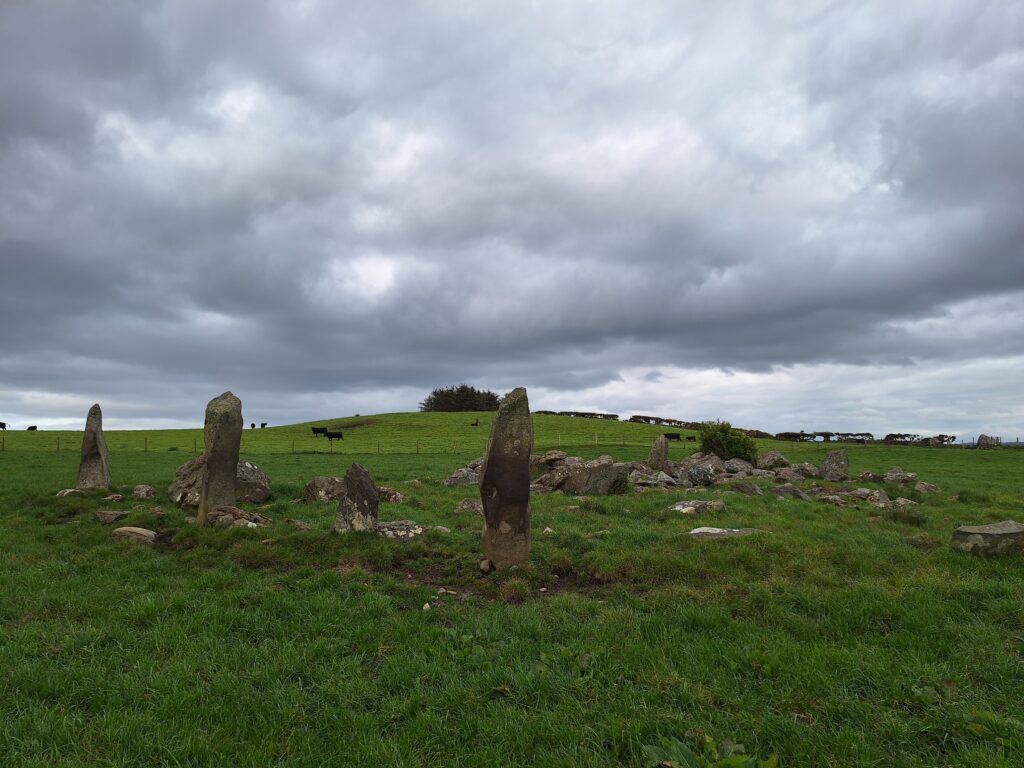
The ‘Bocan Stone Circle’ is a 4-5,000 year old temple complex in Donegal. Two of the stones mark the entrance, while two others may mark a burial site. It is believed to have had a stone superstructure in the past.

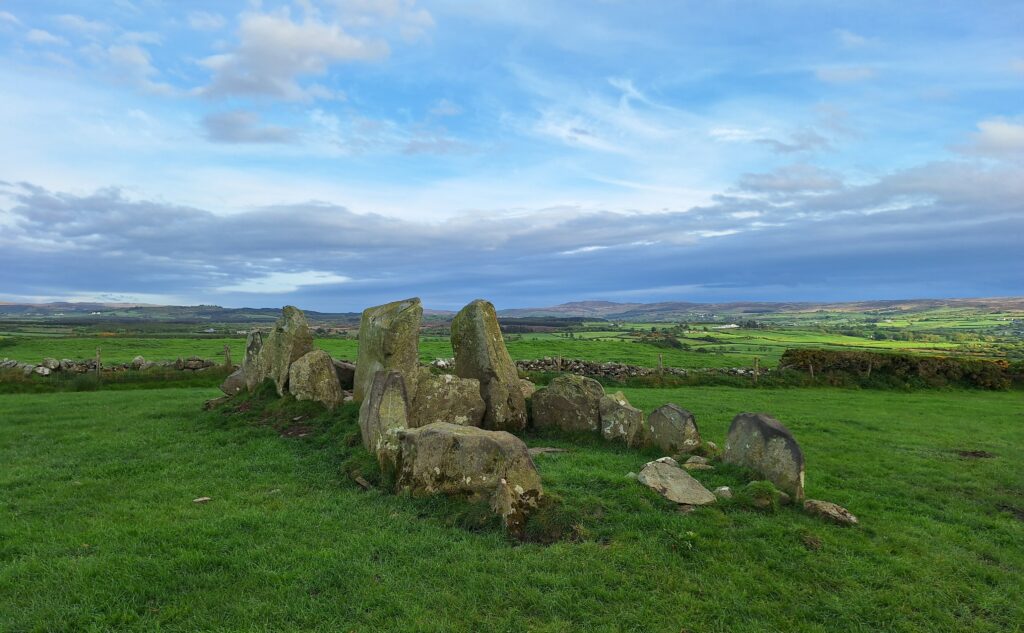
A few hundred metres from the ‘Bocan Stone Circle’, on the other side of the road, lies another, slightly younger monument, The ‘Temple of Deen’, which is not a temple at all, but certainly a burial site. Earlier map-makers have misinterpreted this as a Druid temple, and the name has stuck ever since. This tomb is 3,500 years old.

The Temple of Deen. Well located in fertile agricultural land.

A splendid trip back in time should be celebrated with an equally great swim in the present. The nearest beach is ‘Culdaff Beach‘ – a gem! Well, to be more precise, there are two beaches: A small one, surrounded by cliffs, and a large beach where there are good conditions for walks with and without the dogs – and long swimming sessions.

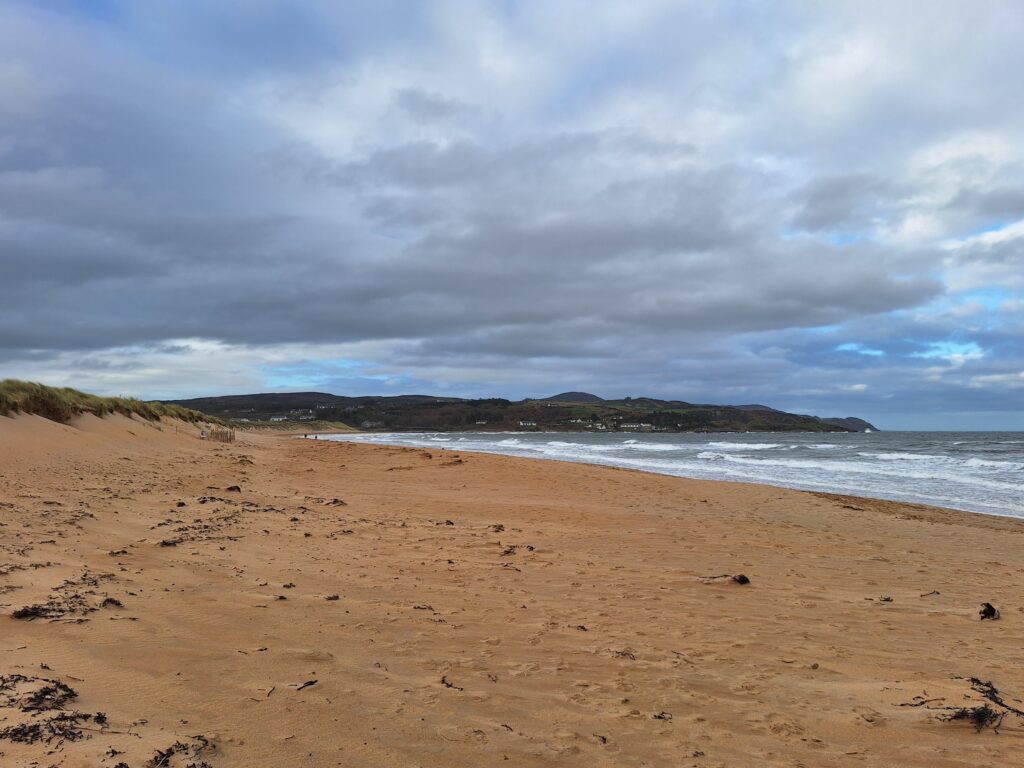
The main beach at Culdaff. On our first visit, it was so windy and the swells so big that we refrained from swimming. Really!

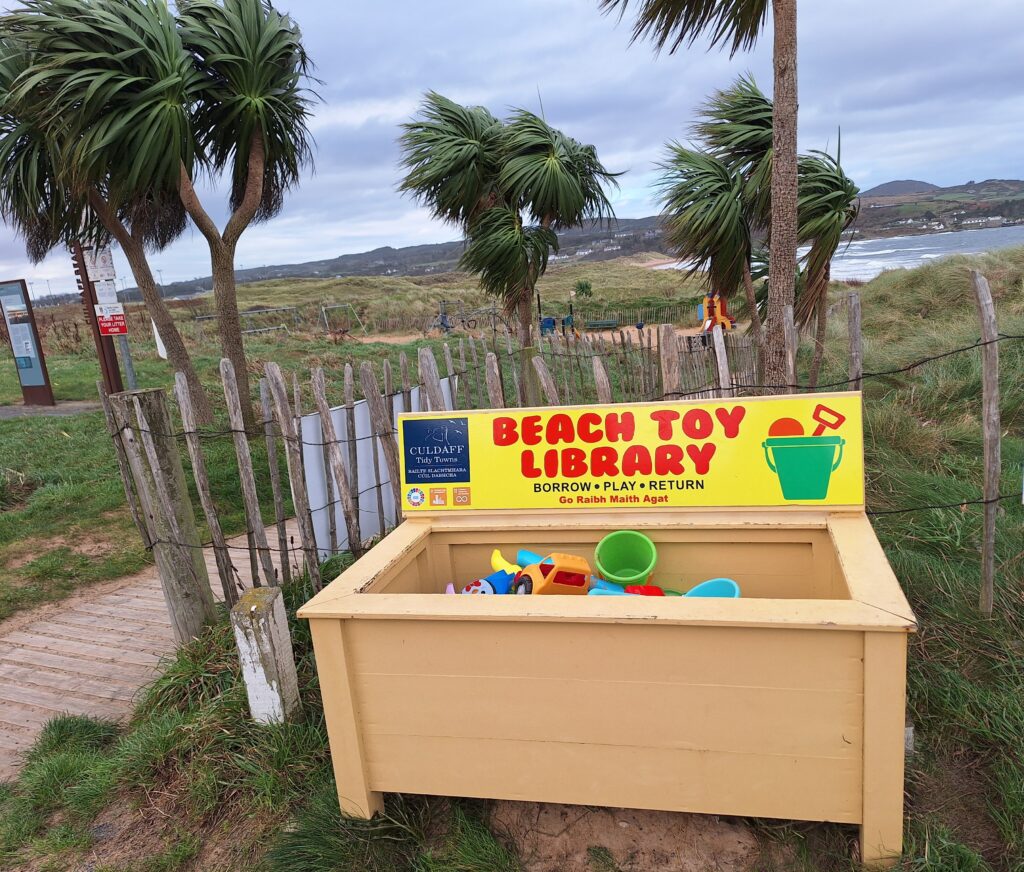
Culdaff comes from the Irish Gaelic ‘Cúil Dabhcha’ = ‘the Nook by the Pool’. This has been a good harbour in former times. At the car park you are greeted by a box of beach toys. A really friendly welcome!

The toy library at Culdaff Beach.

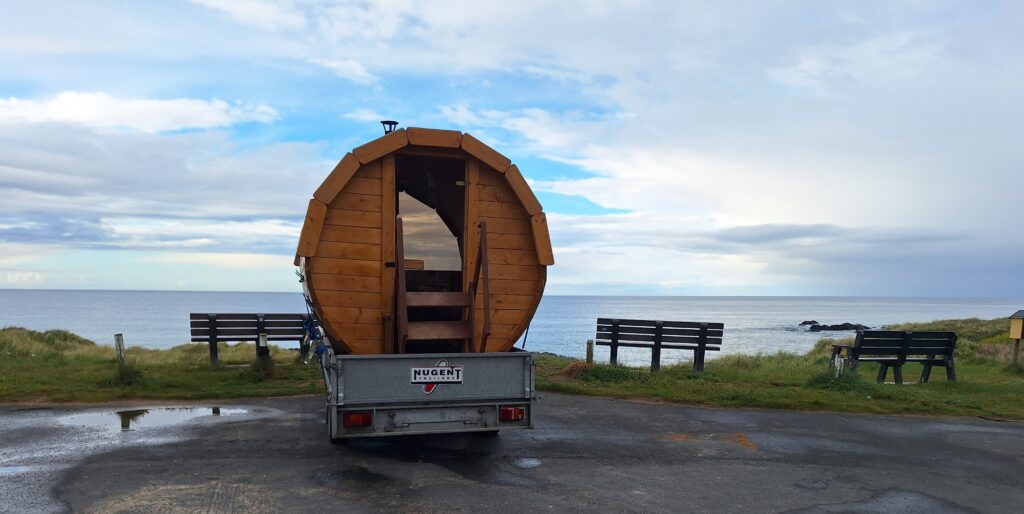
At Culdaff Beach there is a mobile sauna well situated. Tobatheornottobathe tried to book a place, but it was impossible all week. Sauna culture is getting more and more popular in Ireland also.

The sauna at Culdaff Beach.

On the third visit, we finally had a swim at Culdaff Beach. It was an absolutely fantastic evening with a beautiful sunset.

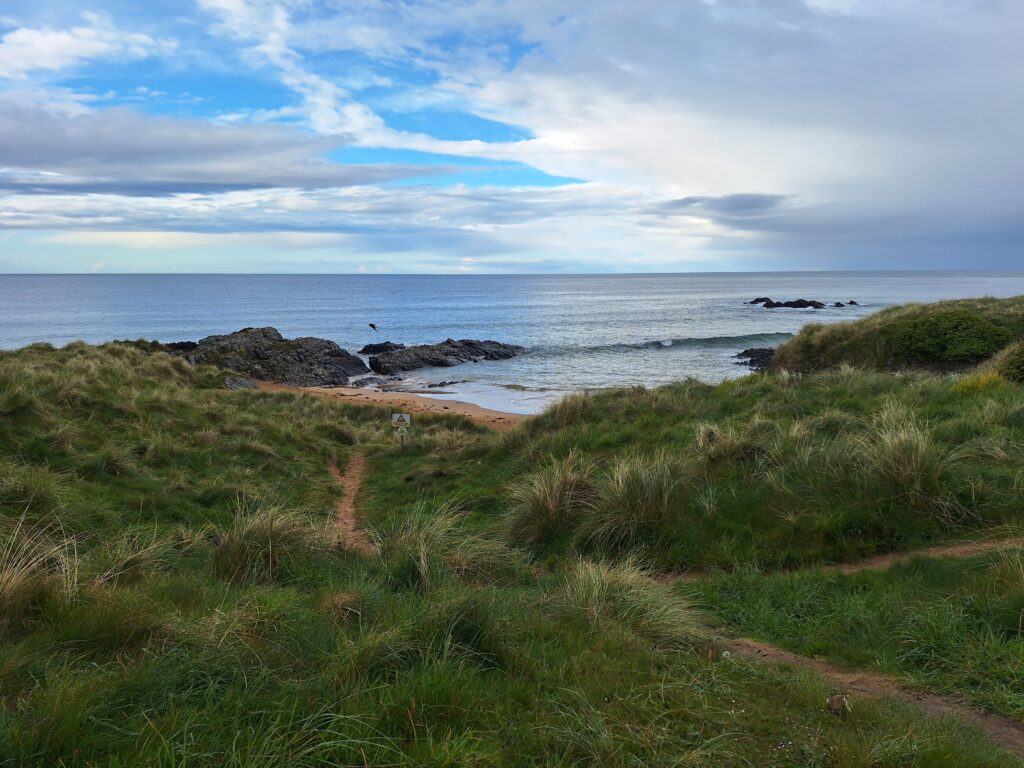
Culdaff’s wee beach.

Despite the warning signs, we chose the small beach. The swells hit well between the rocks, and there is probably a bit of current there too. But since the warning was ‘Be careful – there is no lifeguard here!’ (and not a prohibition sign), we took the chance of a wee swim within the islets. A great bath from an absolutely wonderful beach!

To swimmers and a bird.

Greencastle

Simply said: The Inishowen peninsula has a lot to offer.

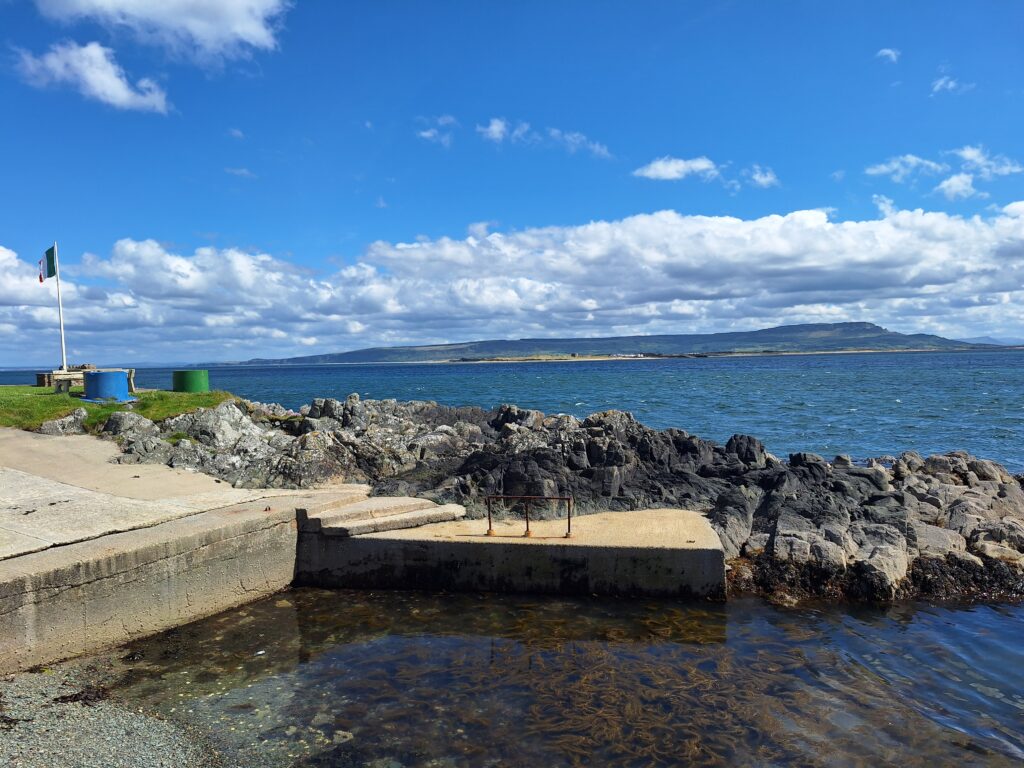
Driving northwards from Derry, along the east coast of the Inishowen peninsula, you first pass Redcastle, of which there are no visible ruins left, before arriving at Greencastle, which lies opposite Magilligan Point, at the narrowing of Lough Foyle, the fjord north of Derry.

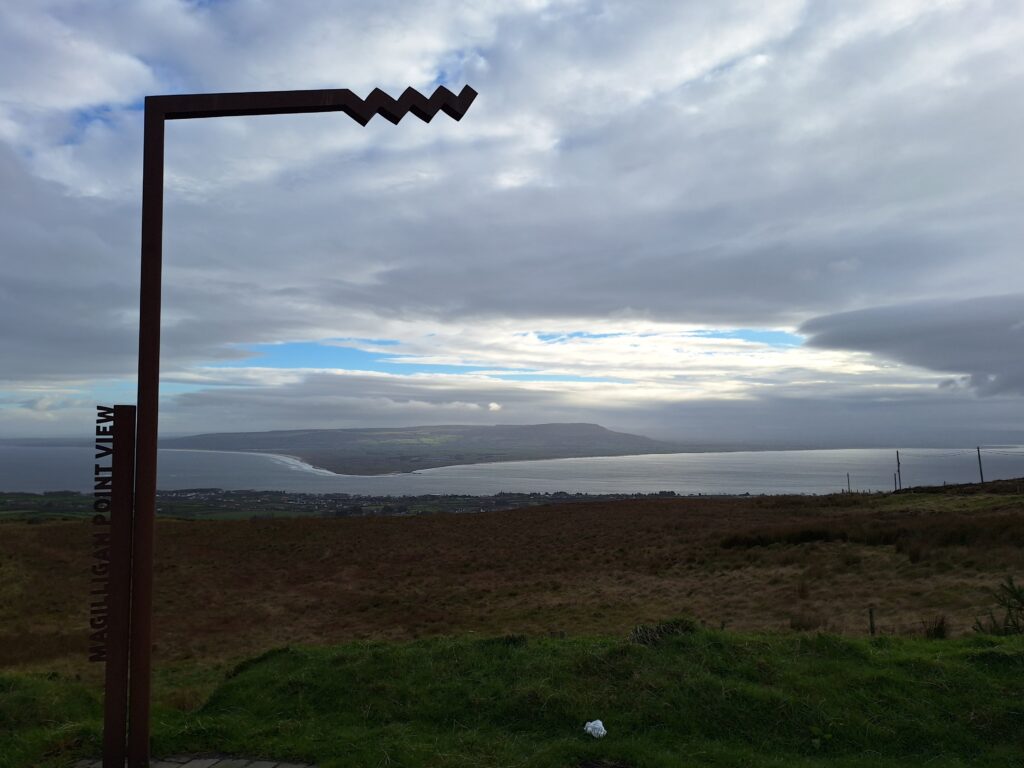
The old ferry dock in Greencastle. Magilligan Point in the background.

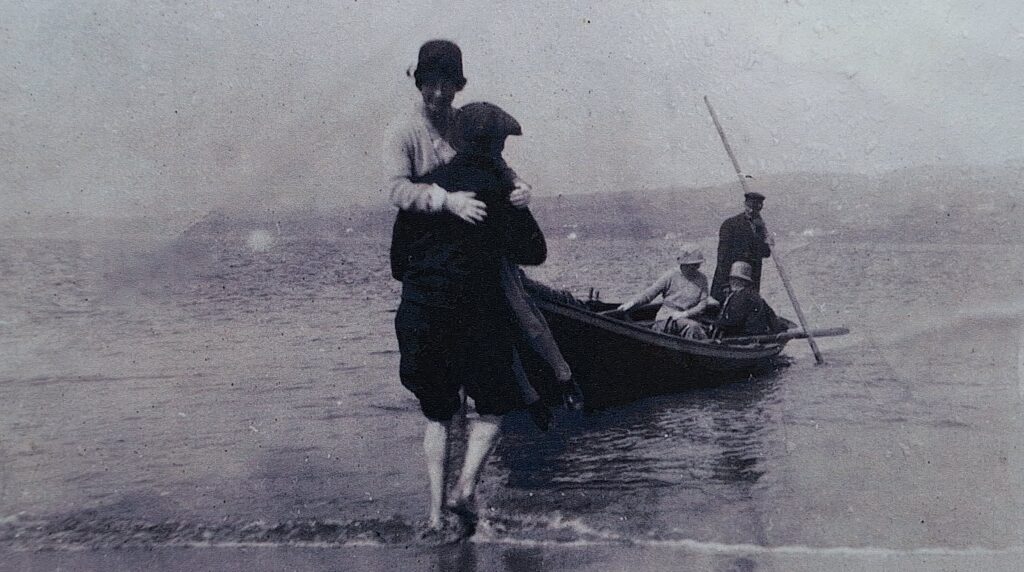
During the summer season, there is a ferry between Greencastle and Magilligan Point, but we haven’t taken it, because every time we’ve been in the area it’s been out of season.

Simple conditions in old-time ferry traffic.

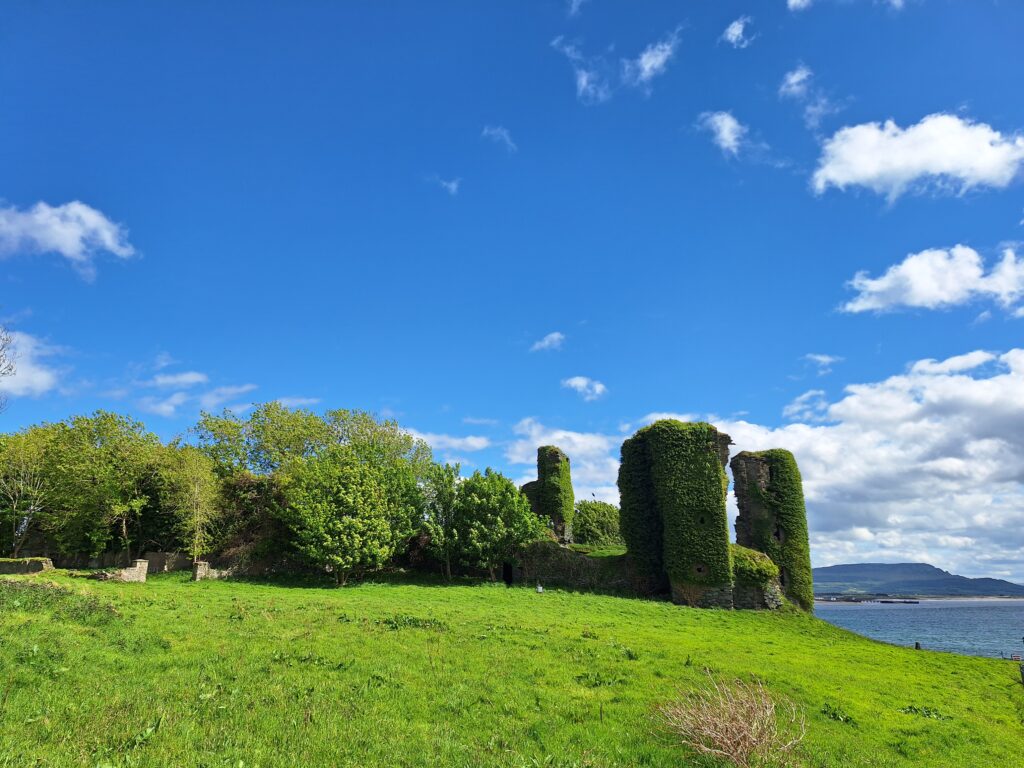
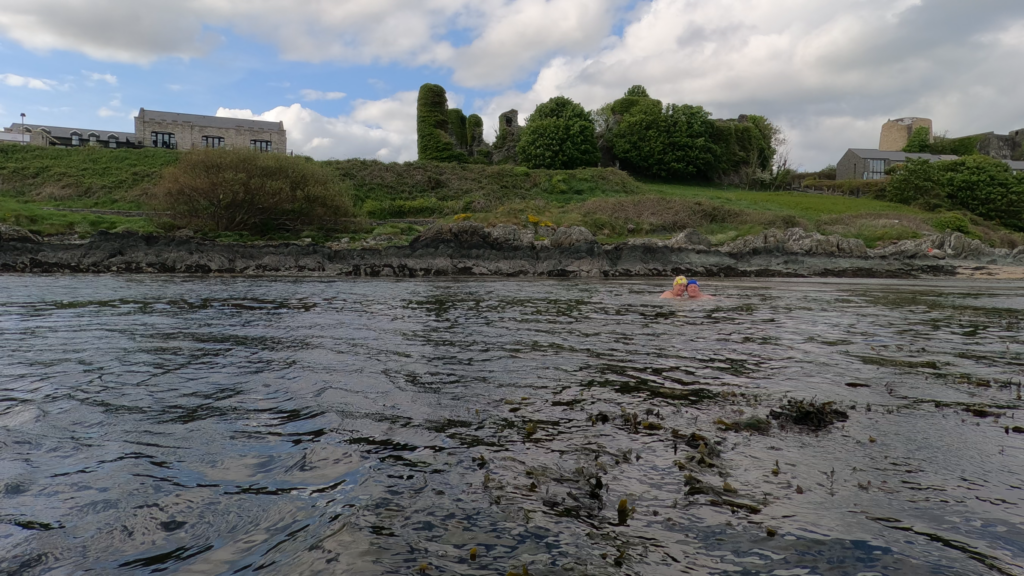
Greencastle Castle, also known as Northburg Castle, was completed in 1305, built by Richard Óg de Burgh, 2nd Earl of Ulster. Its location is no coincidence – it was from here that shipping traffic to and from Lough Foyle and Derry could be controlled.

Greencastle Castle. The ruins are beautifully verdant in their ivy covering. However, the name comes from the greenish colour of the sandstone from which it is made.

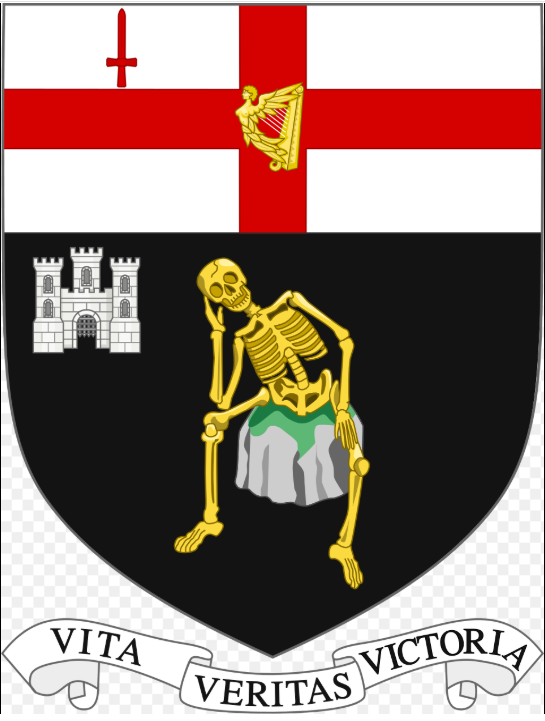
In 1331, Richard’s grandson (3rd Earl of Ulster), William Donn de Burgh, had his own cousin, Walter Liath de Burgh, imprisoned in the castle. Walter died there, of starvation, in February 1332. Cozy family relations, one must say… A reminder of this can be found in Derry City’s coat of arms in the form of a skeleton. After William’s death, the castle became a stronghold for the O’Doherty family.

Derry’s coat of arms with Walter’s skeleton.

Greencastle has been the fastest growing town in Donegal in the 2000s, but the population is still only just over 1,000 people. The fishing port has been the mainstay of the economy, and at low tide, cruise tourists land here – instead of Derry Harbour further into the fjord. A nice walking path runs northwards along the shore, and there are many swimming spots, whether you want to take a beach bath or jump from the rocks. Tobatheornottobathe chose both!

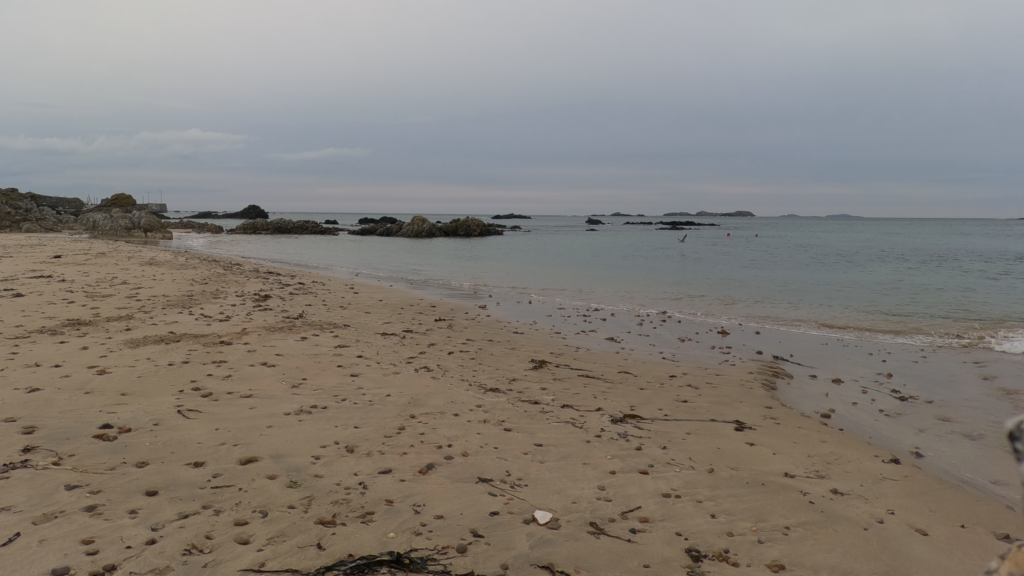
One of several charming coves at Greencastle.

It was a nice swim in the rising sea. Idun went out from the beach facing south, only to discover the logical but still a bit strange thing that the current in the bay went northwards, while the current just outside headed south.

A bath by Greencastle was just right!