Minilla

The village Nerskogen is located at approximately 700 m above sea level in Rennebu municipality in Trøndelag. Nerskogen had less than 150 inhabitants in 2020, but considerably more cabins, so spare time activities are the essence here. The name Nerskogen means dense forest. It is said that there were an abundance of large trees at Nerskogen back in the old days, and the ‘Rennbyggen’ = a person from Rennebu, could collect timber and firewood here. And; there has been mountain farm cottages on Nerskogen several hundred years. Permanent settlement began with the Samis Nils Brandfjell and Ole Nilsson Kant who brought reindeer to Trollheimen in 1889. They lived in Minilldalen for many years: Winter at Rokkones-setra and summer in a samic tent (gamme). Today, Trollheimen sijte consists of five shares with a winter herd of a total of 1,600 reindeer.
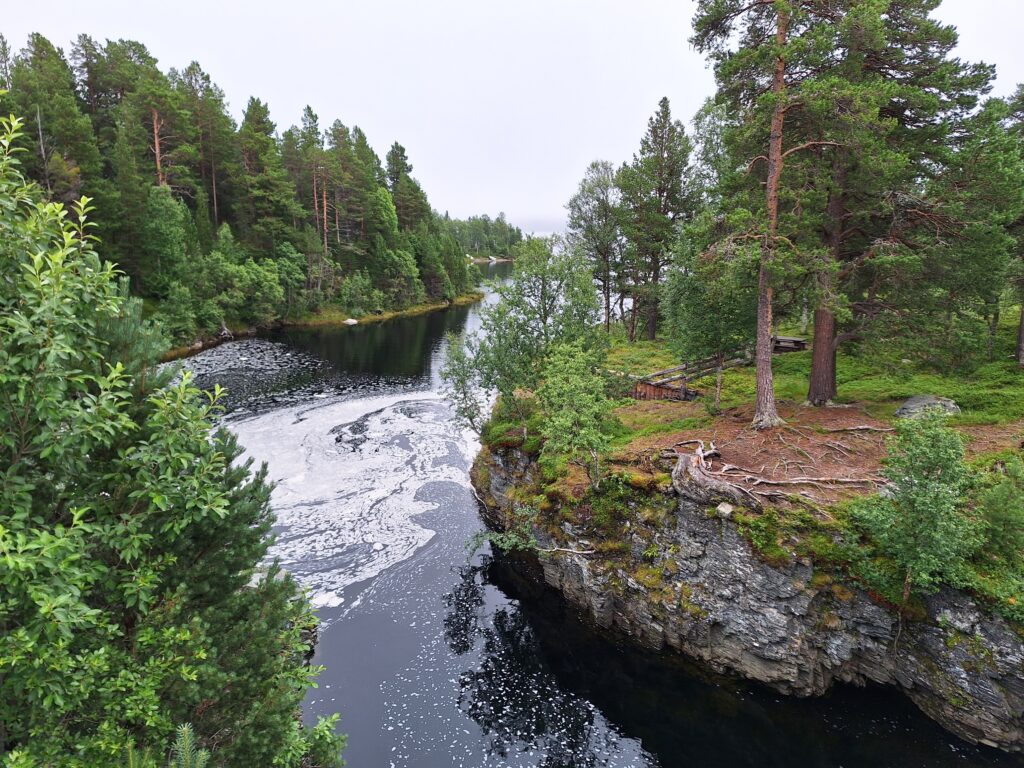
The estuary where river Minilla flows into Lake Granasjøen.

Tobatheornottobathe was on its way home to Trondheim after an absolutely fantastic barn party in Rennebu (2023). Thank you so much for inviting us, Solveig and Erik!
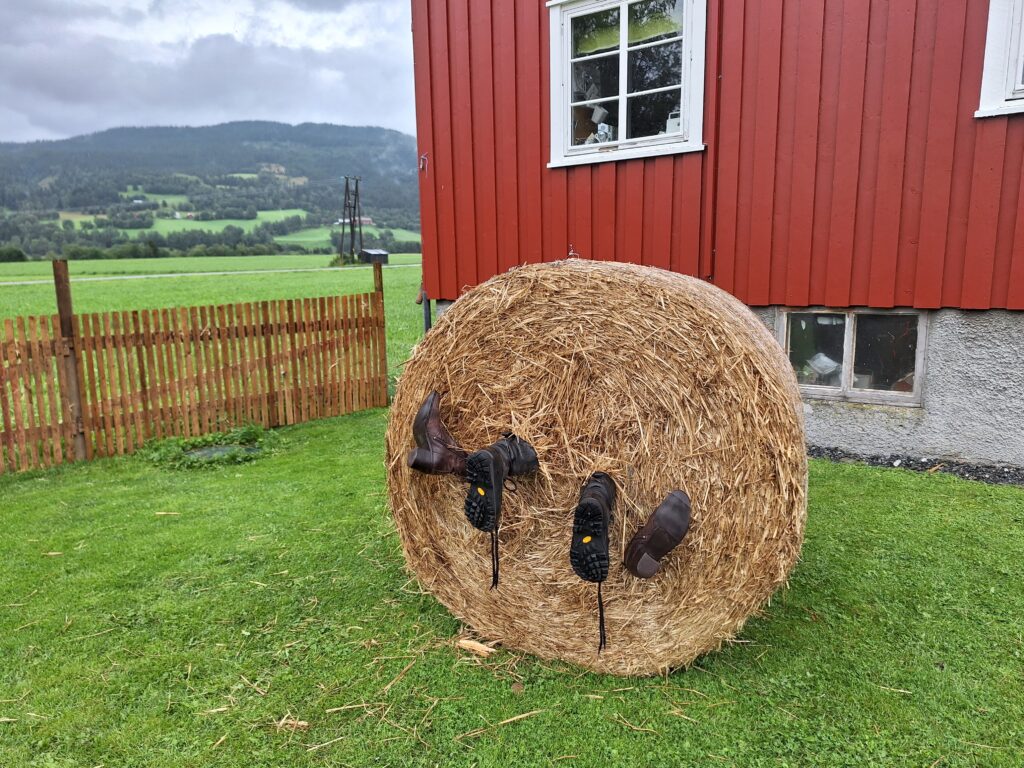
Inspired guests even before the party started.

On every visit anywhere, Tobatheornottobathe asks the one and only essential question: ‘What is the best swimming spot around here?‘ In Rennebu the answer was in unison: ‘Minilla‘!
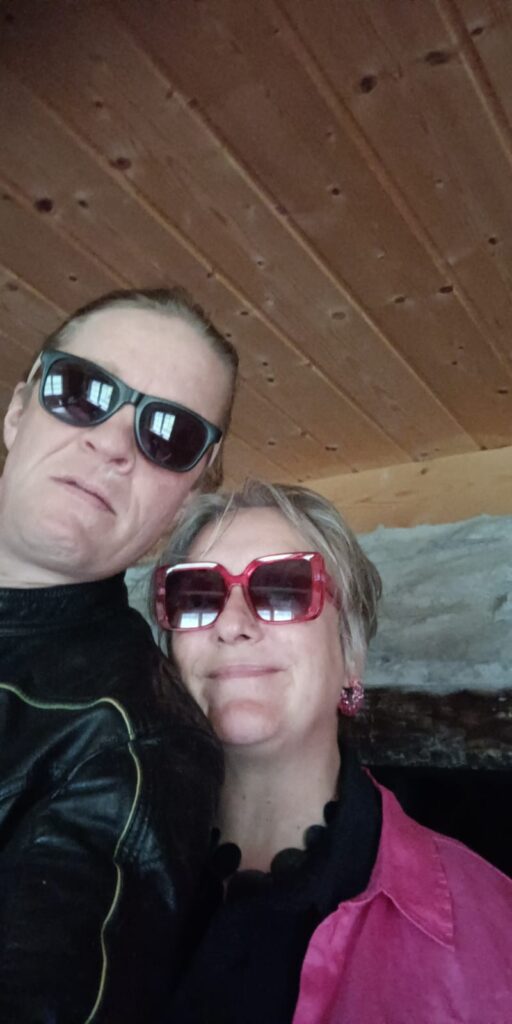
Tobatheornottobathe at a barn party in Rennebu with a 60’s theme (or was it actually the 50’s?)

After a good breakfast the next day, including a somewhat lost Spanish cyclist on his way from Trondheim to Santiago de Compostela (he had misinterpreted the big ‘Diner’ sign on the barn roof to mean that food was actually sold on the farm – the answer was a flat ‘NO – but you can have breakfast for free!’), it was time to depart.
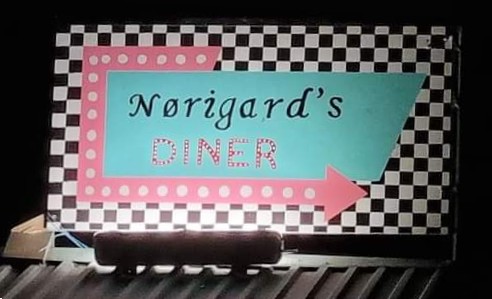
Behind a good barn party lies many hours of preparation.

The name Minilla is not completely explained, but it may come from the Sami Mïene/Mïenje meaning journey, road or direction, or Minill meaning estuary or a small valley.
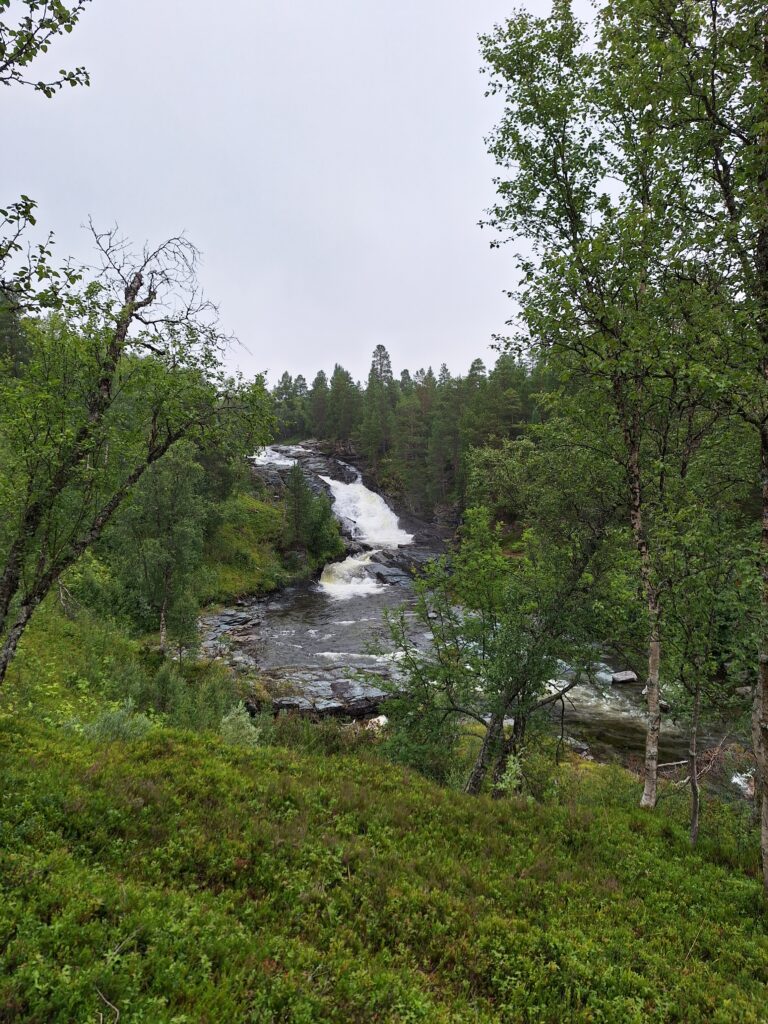
Minilla has several beautiful rapids and waterfalls.

River Minilla is 22 km long and runs through the Minilldalen valley towards Granasjøen. We started exploring Minilla by following the hiking trail uphill from the estuary, but had to turn around after a few hundred meters since Idun was barely able to walk after 12 hours of wild dancing (the barn party started at 4 pm the day before…).
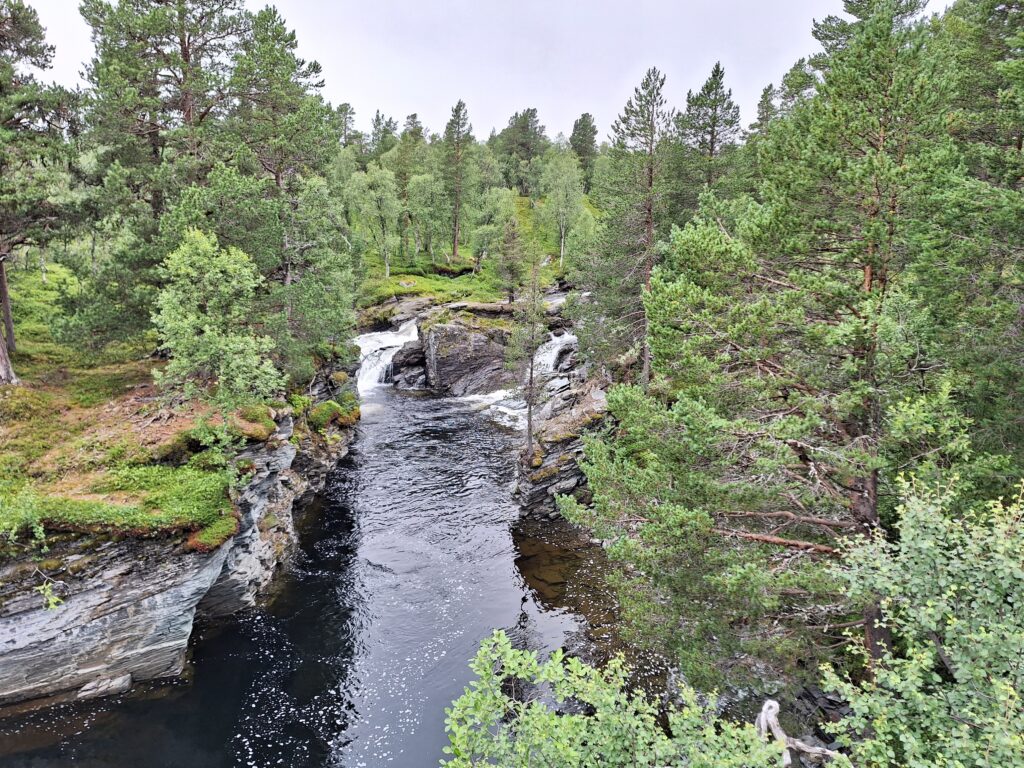
The lower part of Minilla has it all: Waterfalls, cliffs, beaches etc.

This estuary has everything: A great barbecue area with a gazebo, sandy beach, calm flowing water, cliffs to jump from and a waterfall. You can really spend a good time here!
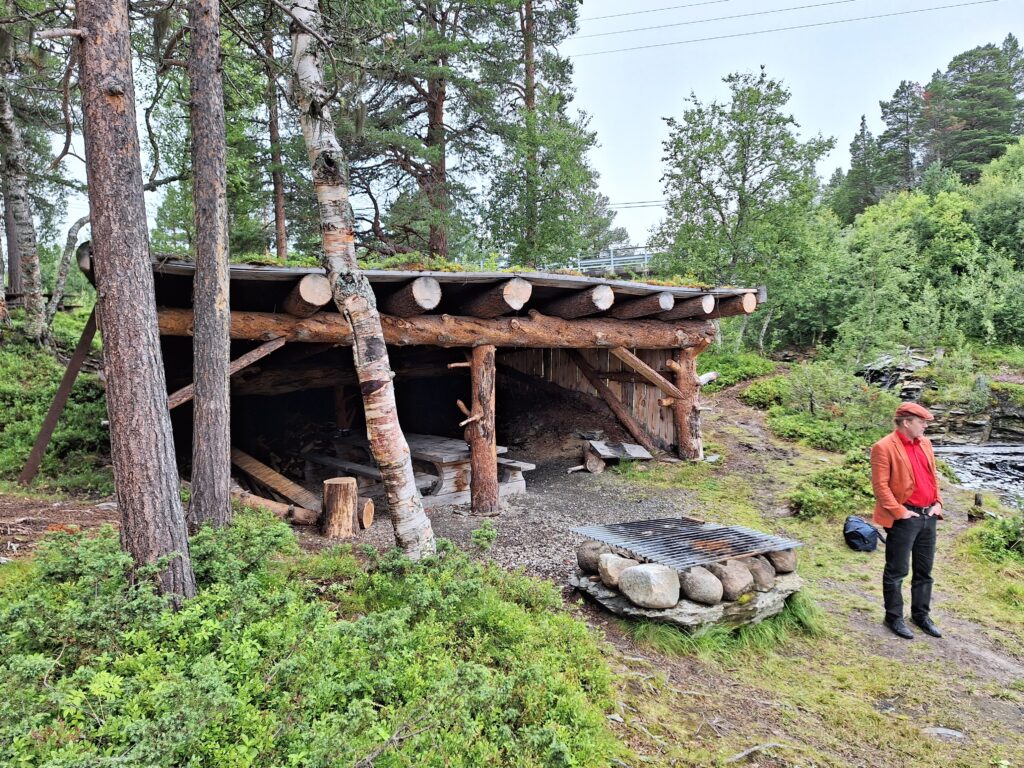
The mouth Minill is a good place to be!

Minilla ends its way in Granasjøen, an artificially made lake completed in 1982 after major protests against the hydro power project. For those of us who don’t know what Nerskogen looked like before the dam was built, it looks rather idyllic now. But the lake is large, and over 6 km² land has been submerged.
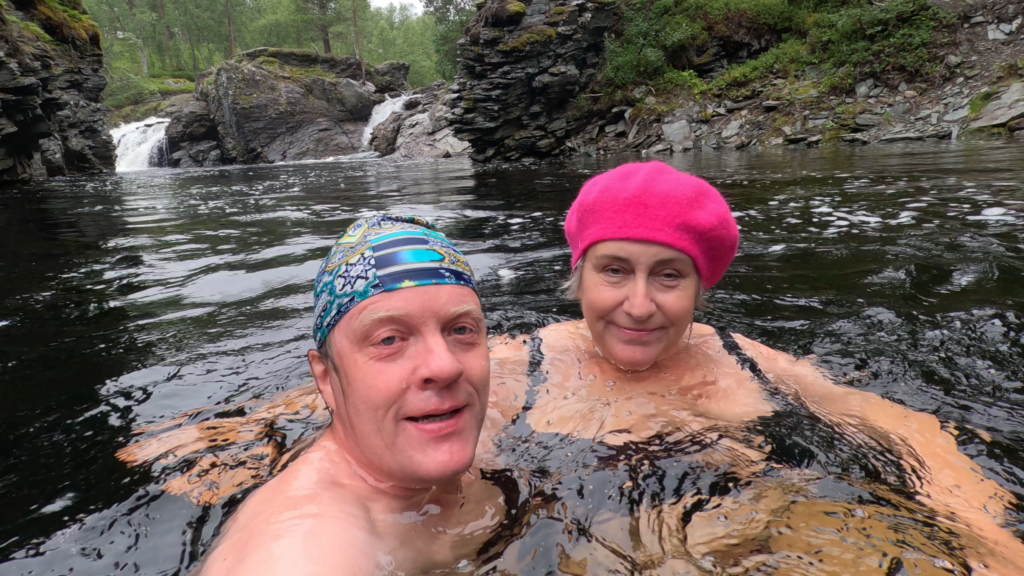
A bath in the mouth of Minilla is just right!

For Tobatheornottobathe, the big question came down to the simple: ‘To jump or not to jump – from the cliff?’ Idun, with an angry knee, chose to pass that challenge, while Knut did it all.
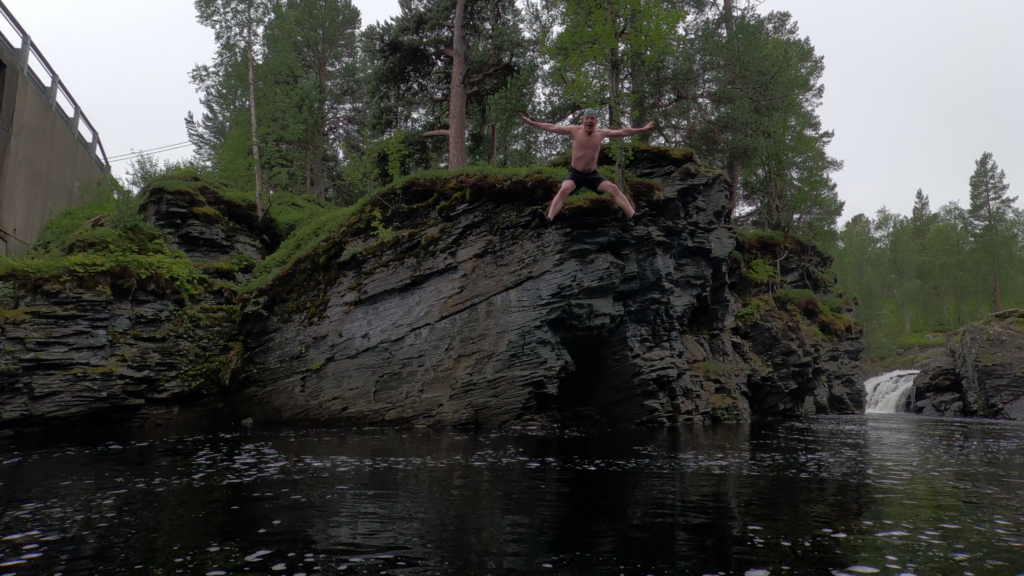
Knut jumps right into it.

How was the knee afterwards? The summer holiday trips to Scotland, Ireland, Germany and Sicily were done using crutches and a wheelchair. It was a bit troublesome, but good exercise for Knut at least, pushing his wife around in a wheelchair. And voila, after half a year, the knee was suddenly healed. Quote from Knut’s sister Brit: ‘Everything will be ok in the end. And if it’s not ok, it’s not the end!‘.
Orkla

We have bathed in Orkla before, at the outlet in Orkanger. There, Orkla is flowing peacefully (actually overflowing when we were there, after the storm Gyda’s ravages). Now we wanted to see if the river had other qualities for bathing pleasures. Orkla is Norway’s 11th longest river, 172 km from Orkelsjøen in Oppdal municipality to the Trondheimsfjord. There are 5 power plants in Orkla. Tobatheornottobathe has developed a fascination for waterfall bathing, and before we go for a trip we always check if there are any places on the road with ‘foss’ (waterfall) in their name. And yes, there are waterfalls in Orkla, with scenic names such as Storfossen and Litjfossen (the Big and Small Waterfall).

Storfossdammen.

We stopped by Litjfossen, but it was a bit confusing, all the while the dam there was called Storfossdammen. Big or small waterfall? Where are they, these two? Anyway, this was obviously not a good bathing place for Tobatheornottobathe. Even the salmon must have trouble here, as there wasn’t a drop of water in the salmon ladder. At Nåvårdalen, however!

Unbelievable? This is actually the Orkla river!

It was a both refreshing and relaxing bath in Orkla. Not much reminiscent of the name meaning ‘the digging river‘. Instead it was tempting to call this gem ‘the Little Orkel Sea’.

Nåvårdalen. Swimming shoes may be an idea in Orkla, as the stones are quite sharp.

In Nåvårdalen you will find the beautiful remains of Nåvårdalen’s smeltery, which came into operation in 1653. This was the only smeltery of the Kvikne copper mine that was in operation after the ‘Storofsen‘ flooding in 1789. The purpose of the smeltery was to remove as much sulfur as possible from the copper ore.

Nåvårdalen smeltery. Kvikne Kobberverk started up in 1630 as one of the first, larger copper mines in Norway. The oven in the picture is from the 19th century.

King Christian IV strongly encouraged mining, but for the local farmers it was not necessarily an advantage to report the finding of new ores. Mining meant compulsory labor for the local population, and they could earn more by digging and farming on their own. It is said about the copper ore at Kvikne, that it was discovered by ‘Old Nils’, but that he later forgot where it was…

Remains after Nåvårdalen’s smeltery.

On the other side of Rv 3 we saw a truly beautiful waterfall. Nameless on Google Maps, so we choose to call it Nåvårdalsfossen. We wanted to have a bath there!

Knut inspects the waterfalls’ pools.

But no. The pools were just not deep enough, and a bath just wasn’t right. After all, we run a blog called ‘To bathe or not to bathe’, and not ‘To dip or not to dip’!