A Nordic Paradise Beach

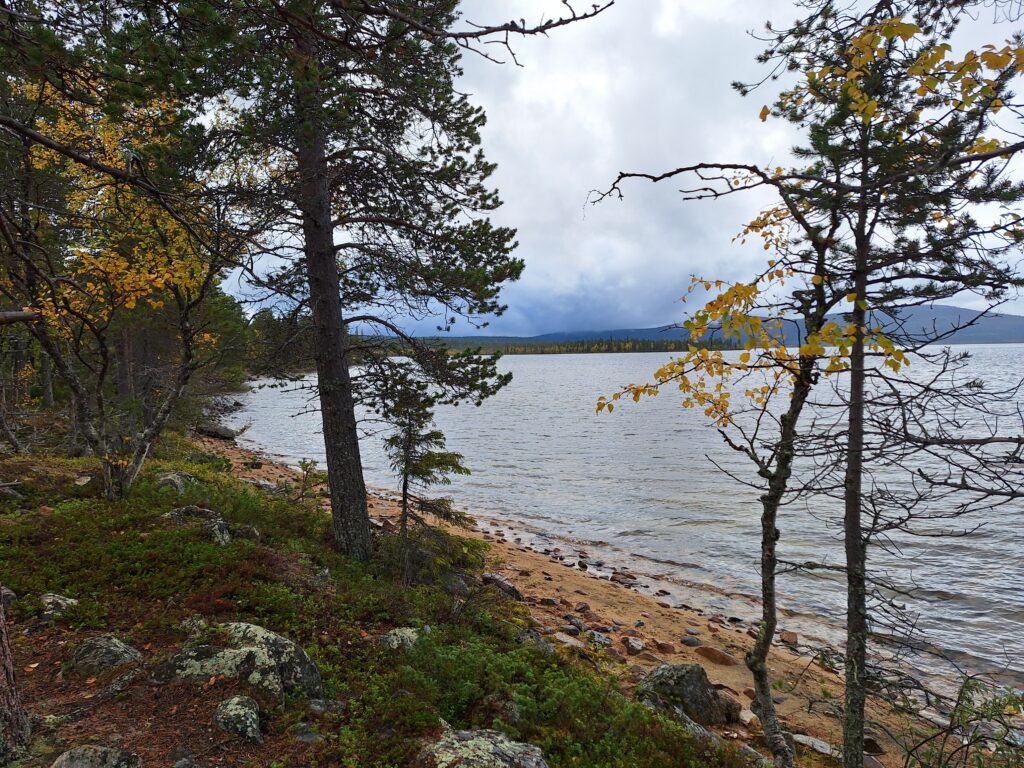
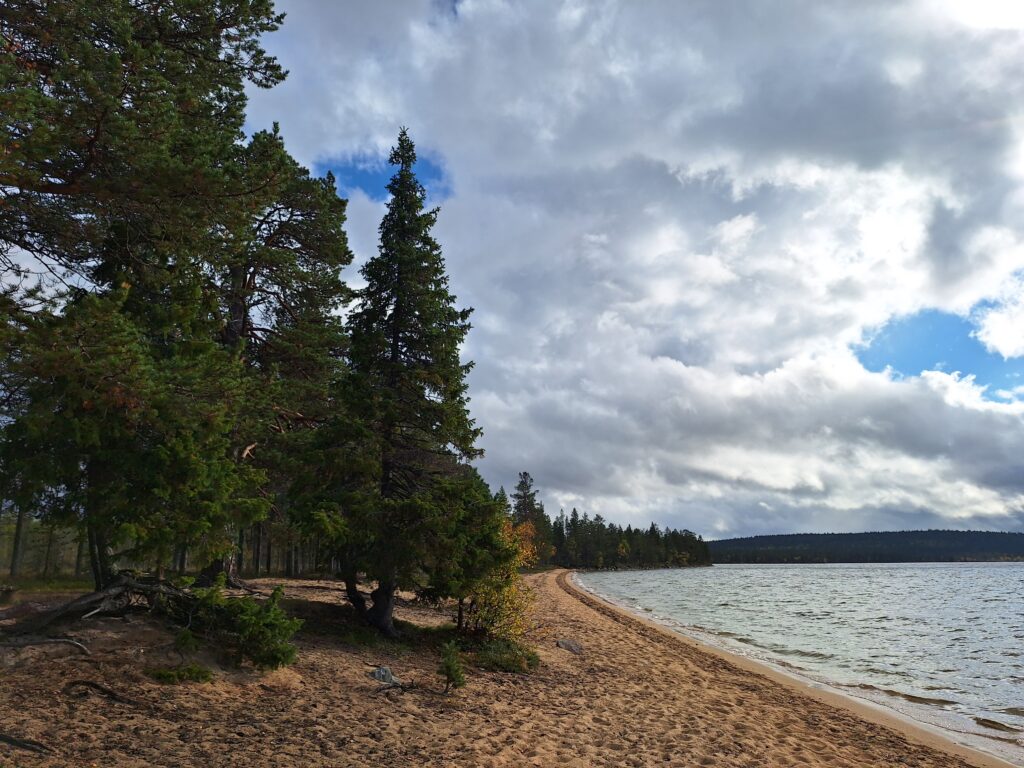
16 km northwest of Raattama lies a lake, Hietajärvi, with a fabulously beautiful sandy beach. We have now reached the far northwest of Finland, where we are in the municipality of Enontekiö. The landscape is dominated by the Scandinavian mountain range (Kjølen/Skandit). All Finnish mountains over 1000 meters are located in this municipality, including Finland’s highest point, Halti, rising to 1324 meters.
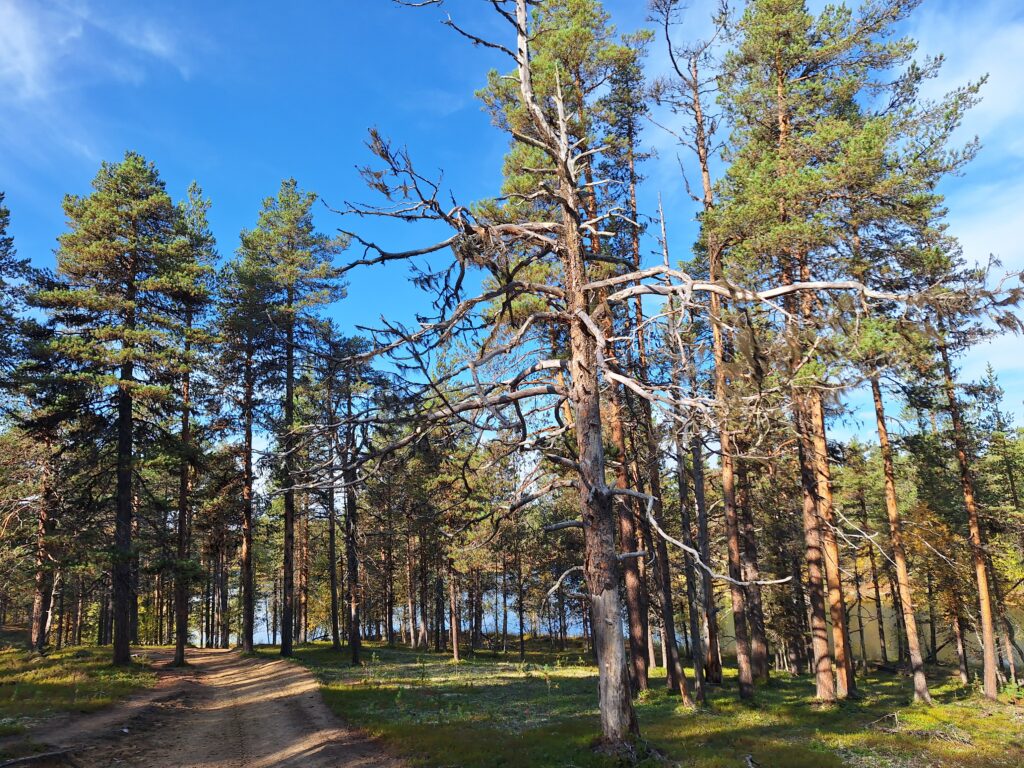
On a trip to Enontekiö we found great hiking trails, which are also well suited for cycling.

Enontekiö forms the “Finland maidens” right arm, wedging in between Norway and Sweden. Enontekiö is therefore often called Käsivarsi, meaning “The Arm”.
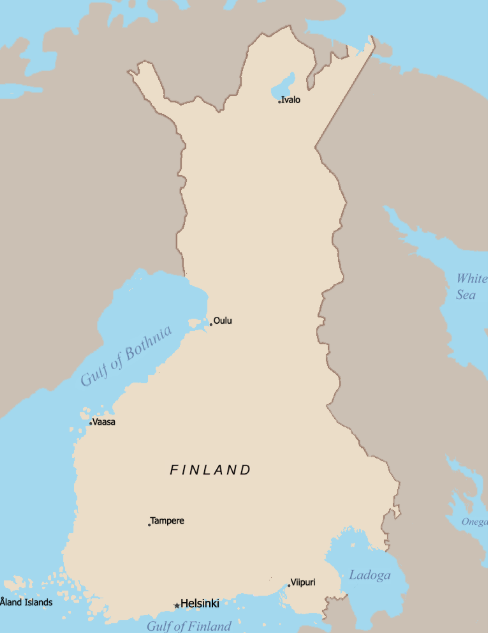
Finland’s maiden, Suomi-neito, is a personification of Finland. With a little goodwill, one can see that the map of Finland is in the shape of a girl in a dress. The maiden had 2 arms between 1920 and 1940, but the eastern one disappeared (along with Karelia) during the wars against the Soviet Union 1940-45.

The name Enontekiö comes from the Sami word for (large) river, and is interpreted in Finnish as “Where the rivers are formed“. Almost half of the area in the municipality is rivers or lakes. Enontekiö is sparsely populated, and of the population of just over 1,700 people, almost half live in the village of Hetta. There is plenty of space here, great hiking areas, fresh air and long, stable winters.
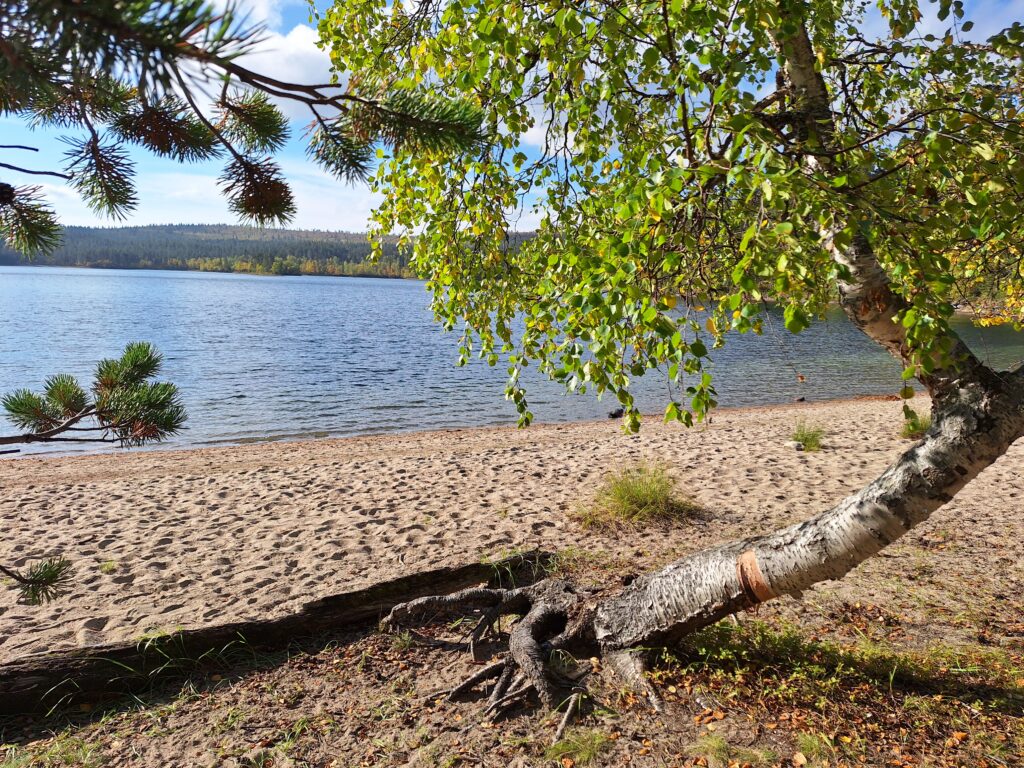
The beaches in the north can be more splendid than beaches in warmer countries far south!

Hietajärvi means Sand Lake. In Finnish Wikipedia, close to 20 sand lakes are mentioned – but not ‘our’, one of several located in the Pallas-Yllästunturi National Park.
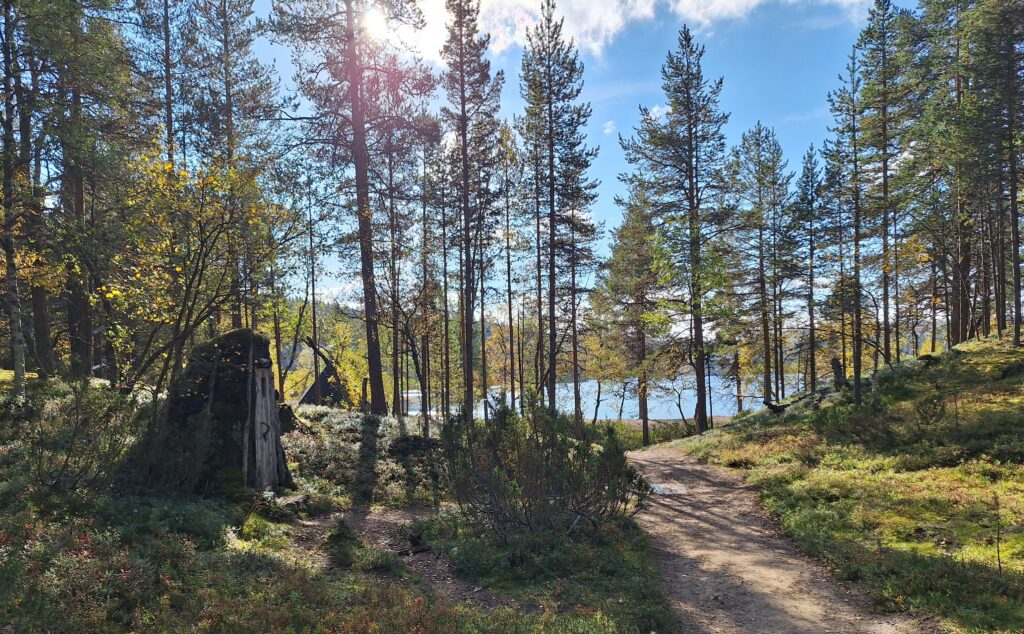
The cabin system in Lapland is standardized, and the old toilet is no longer in use.

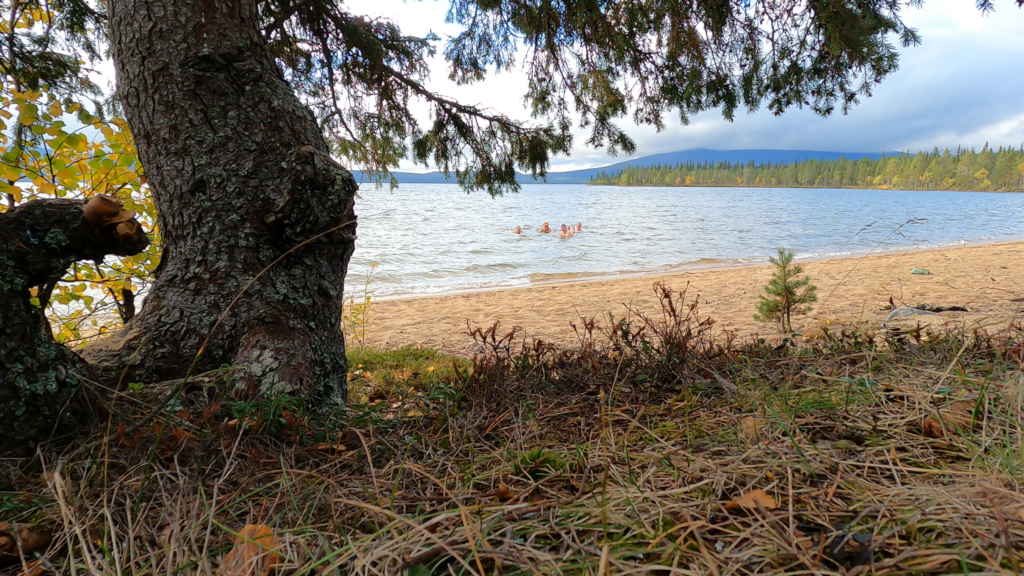
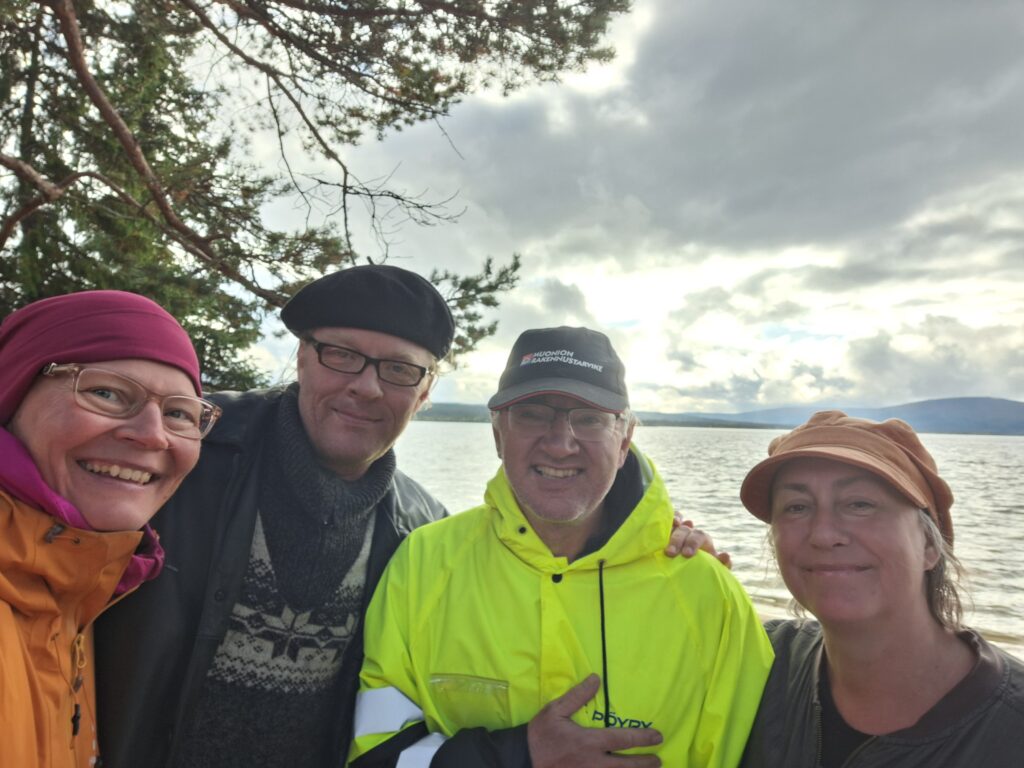
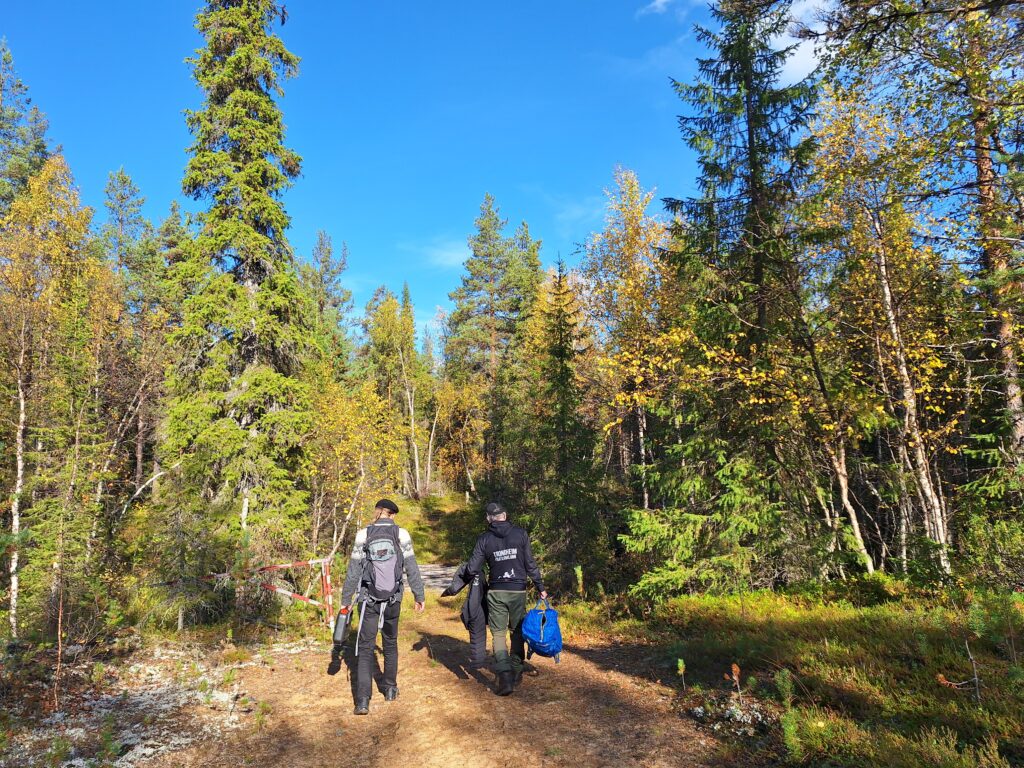
After a 3 km nice walk on beautiful trails, it was time for a refreshing swim. What can we say, other than that it was great?
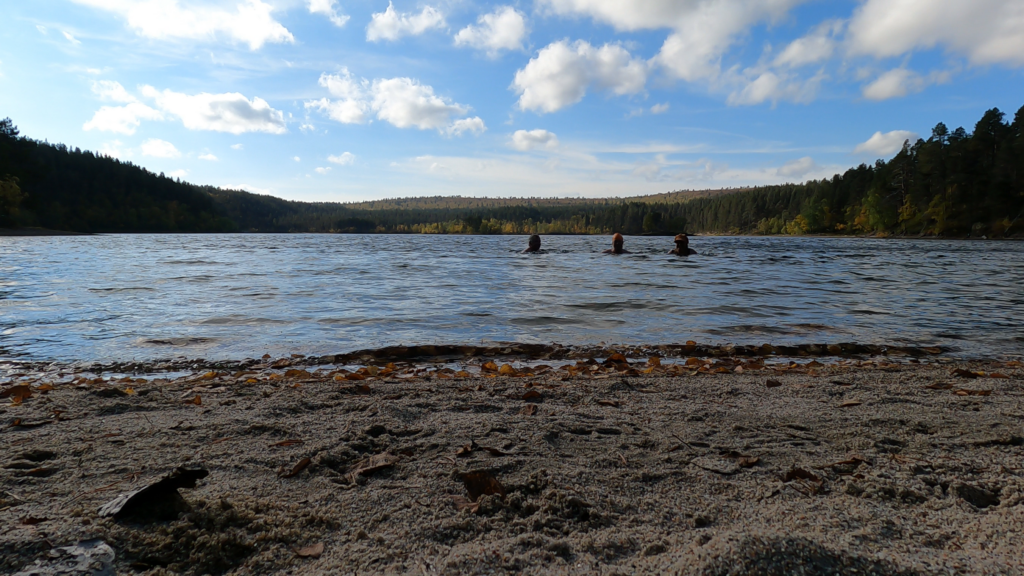
A little shallow, but nice!

The only problem with bathing from the most beautiful beach is – sand. It’s no fun with sand in your panties, even if you love swimming! Well done with the dress, Idun thought, letting her feet dry a bit before she put on the rest. She gathered her bag and clothes and went up to the lavvo by the water – just to put on her panties there. No one noticed the older couple sitting in the semi-darkness of the lavvo, peacefully grilling sausages, but two surprised looks clearly showed that they didn’t expect to observe dressing activity while eating. Well, that’s how the days are passing in Lapland.
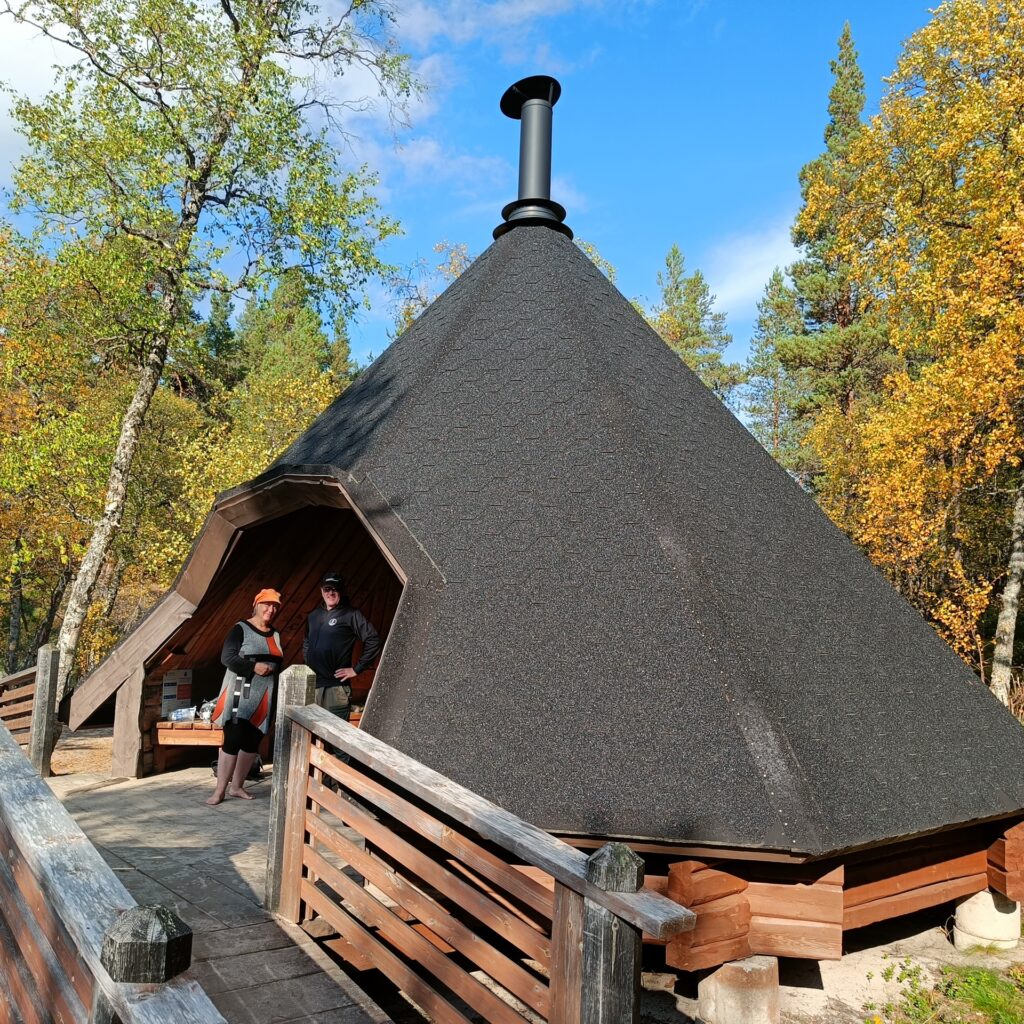
At Hietajärvi you are not necessarily alone, and the best place to get dressed is by the lake. Or at least check if someone is in the lavvo before changing there!

After a refreshing bath, it can be accompanied by both food and drink. Grilled sausages are never to be despised, plus perhaps a ‘Wee one‘. Badebade fell for this local variant with both a fresh taste and a refreshingly funny pun.
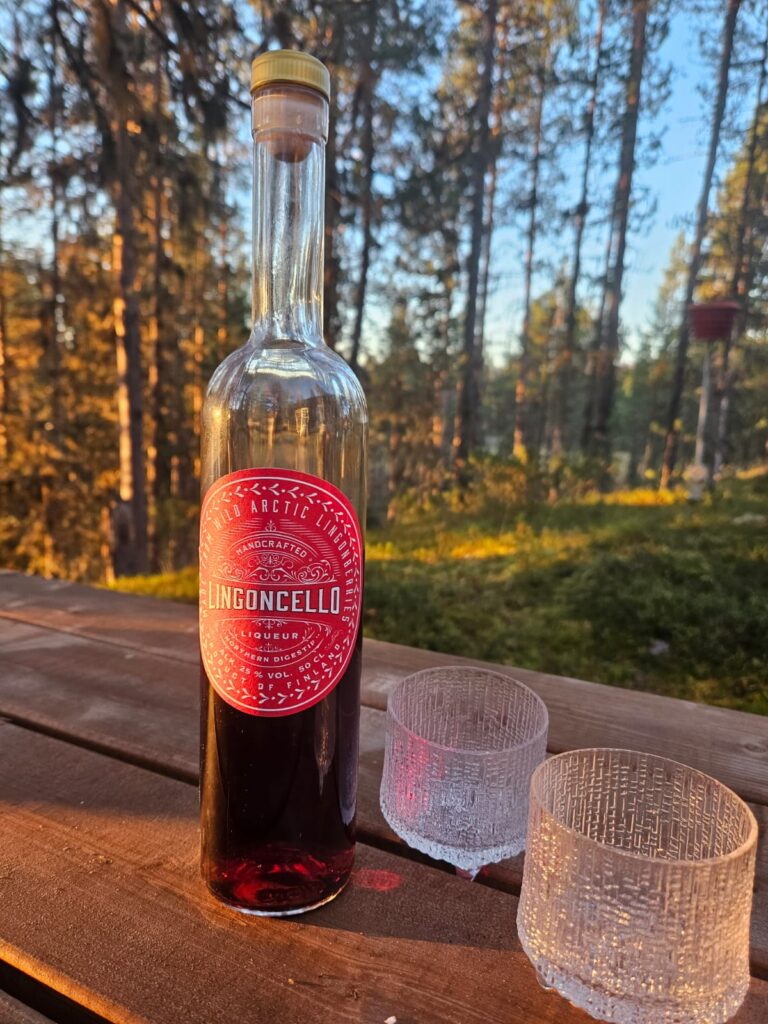
Lingoncello – just as fresh and good as its namesake, and any Lapland bath. Lingon is a red berry.

Pallas

In the northwest of Lapland there is a mountain range called Pallas. This quickly draws the mind south to Greece, since Athene’s full name is Pallas Athene in Greek mythology. But the word pallas in finnish can mean a big rock, so it’s uncertain what the mountain is named after.

The mountains are rounded peaks from a 3 billion year old fold mountain range, today about 100 kilometers long.

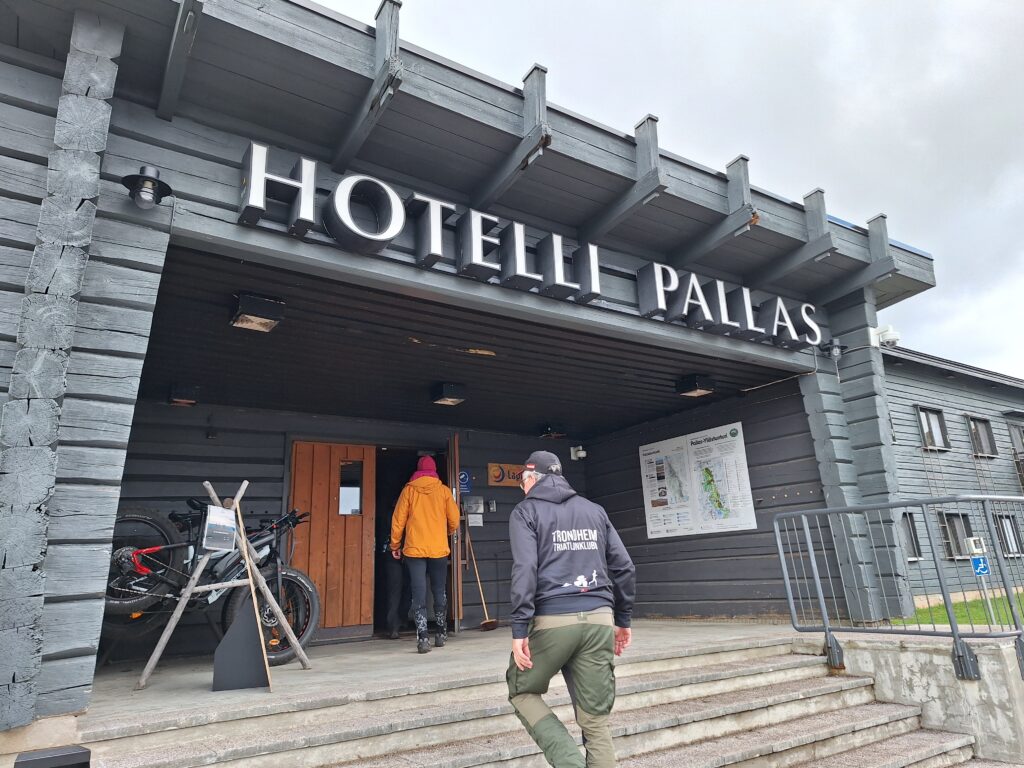
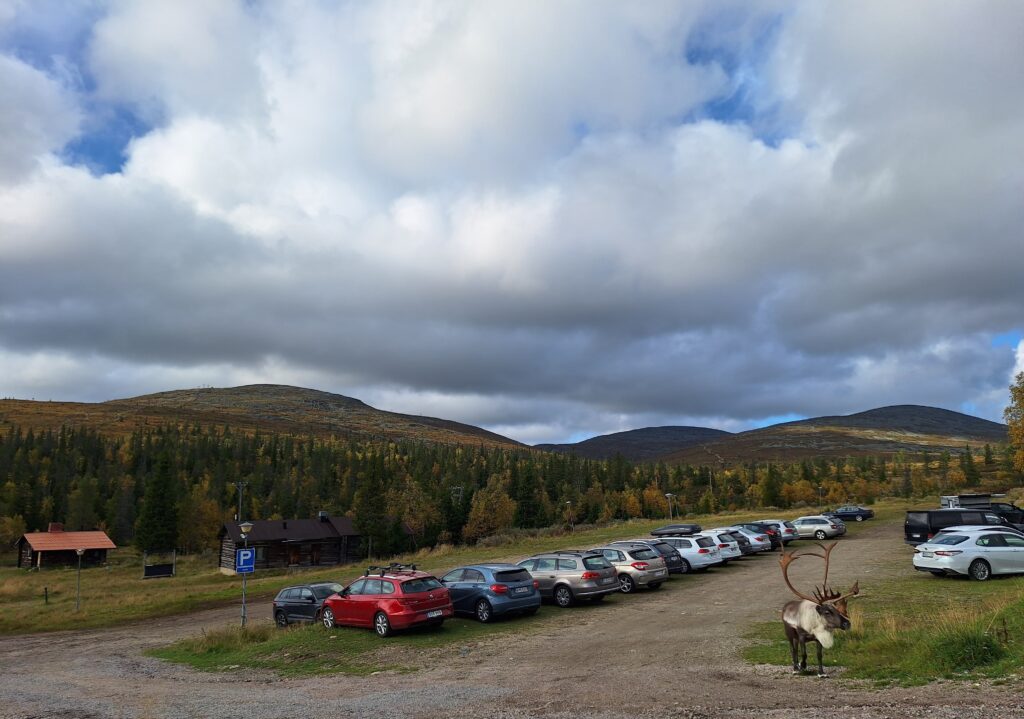
At the back of Hotelli Pallas we saw mountains, cars and reindeer in beautiful harmony.

Pallas-Yllästunturi National Park covers an area of ​​more than 1000 km2 and has become a very popular tourist destination since the first hiking trails were established in the 1930s. Stable winters with lots of snow attract a loads of ski enthusiasts, including Virpi and Peter, who like to go skiing long distances.

Virpi and Peter on their way to Hotel Pallas, where they celebrated their wedding 6 years ago. The first Pallastunturi hotel was blown up by German forces during the Lapland War in 1944, only 6 years after it opened.

Today’s goal, however, was not a hotel vacation, but swimming in Pallasjärvi itself (Lake Pallas). Here you can find a lot of untouched nature and fresh air, the Finns can boast the world’s cleanest air in the national park. So clean air that they actually used to sell it in cans for a while.

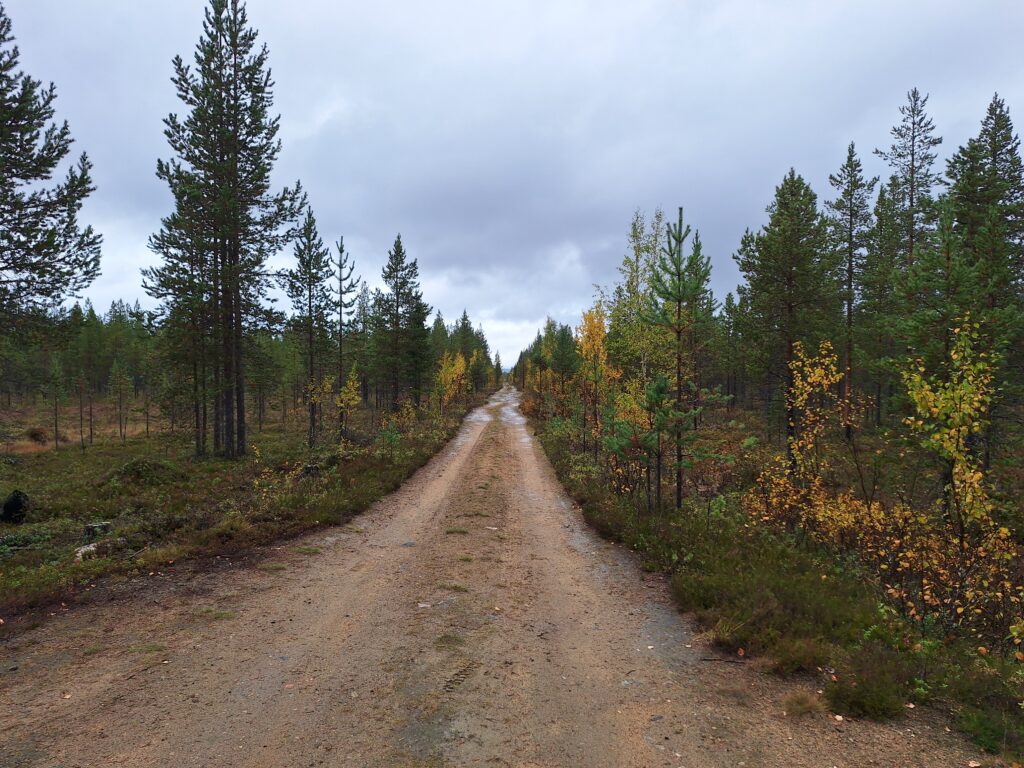
On the way to Pallasjärvi, we passed an Instagram-friendly beach with a road all the way to it, but we wanted to walk a bit this day.

Pallasjärvi is a 17 km2 lake with a maximum depth of 36 meters. Finnish lakes are generally quite shallow, as it is otherwise a flat country. Traces of people have been found by the lake dating back 7,000 years. It has not been concluded 100 percent whether the first people came from the north or the south.

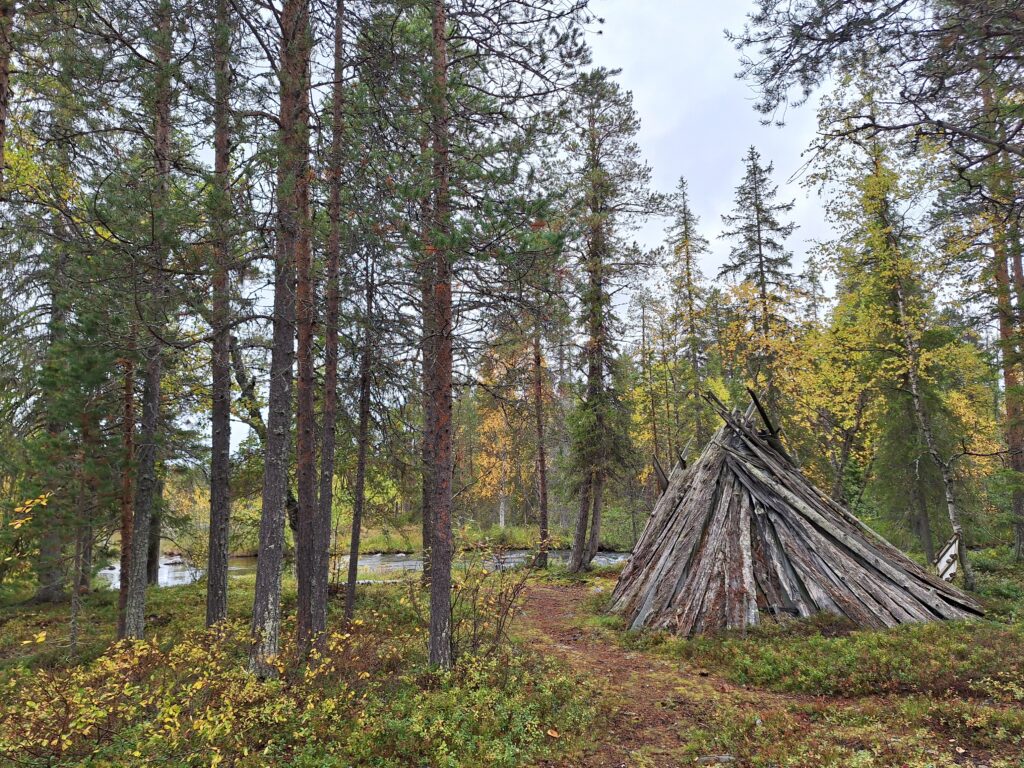
Reindeer herding is a relatively large industry in Lapland, in addition to tourism and mining. The woodpile on the right in the picture is a lavvo.

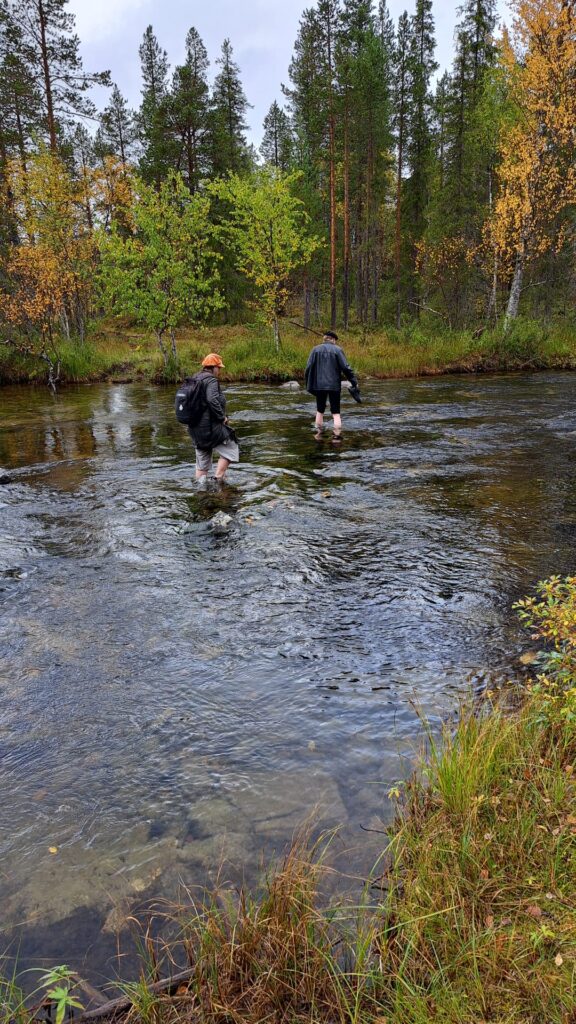
After a short walk, we crossed the Kivijoki (??) River. Idun waded across happily with her touring sandales on, while Knut chose the barefoot style.

Wading ongoing. Photo: Peter Kling

From the river, a path leads northwards along Pallasjärvi. There is fine sand everywhere here, and it wasn’t long before we passed beach number two.

Beach number two.

All good things come in 3’s, and beach number 3 was truly wonderful. This reminded us of when we stayed 3 months at ‘Terza spiaggia’ at Sardinia in the spring of 2002.

Kolmas ranta (Third beach). You’ll have to search hard to find a more beautiful beach!

At Kolmas ranta (Hietalahti) there is a so-called deserted hut (day trip hut). The cabins are standardized, so the capacity here is far beyond the need – the difficult access (read: the not exactly dramatically complicated wading) means that people choose the Instagram friendly beach ‘Punainenhiekka‘ instead. That was fine with us, since we now could visit the place alone.

The sun breached just as we were about to have our bath. Nice, oh yes! Just a little shallow…

After a refreshing swim in Pallasjärvi, it was lunch time. Virpi brought home-grown carrots (the longest ones were 5 cm), simply delicious!

That’s how happy you become on a bathing trip to Hietalahti. Thank you for a splendid day!

Crossing over Ounasjoki

We were in Lapland visiting Virpi and Peter. In addition to the log cabin in the forest, they have invested in a cabin on the banks of the Ounasjoki River.

On the way to the little cabin by the big river.

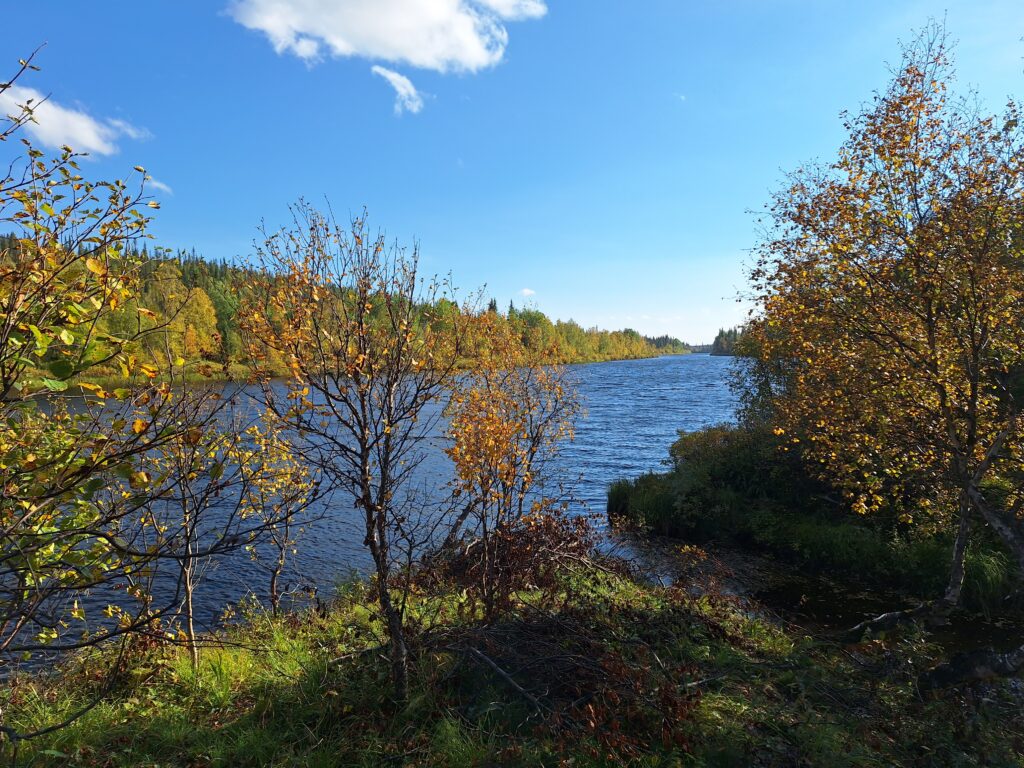
Ounasjoki is a large river, with an average width of 150 meters. It flows from Lake Ounasjärvi for 300 kilometers before flowing into the Kemijoki River near Rovaniemi. People have lived here for 8,000 years. The river was the basis for rich fishing, and good hunting in the surrounding forests. The name Ounas comes from the Sami outa, which means forest. The king of Sweden had banned Finnish immigration to the area, but when the ban was lifted around 1600, Finnish immigration and the transition to agriculture began.

Ounasjoki. Peter’s cabin is located on the other side of the river.

When the forestry industry was started in the 19th century, the rapids in the Ounasjoki were leveled to make it easier to float timber, but the more than 30 rapids have been partially restored since 1990. The biggest intervention, however, occurred when the Isohaara power plant in Kemijoki was completed in 1948. From an annual catch of 360,000 kg, the salmon completely disappeared from the Ounasjoki. Disaster! Several salmon ladders have been built to remedy this, new salmon have been released, but the results have not yet been achieved, and solutions are still being sought. The Ounasjoki itself is protected from hydroelectric development by a special law.

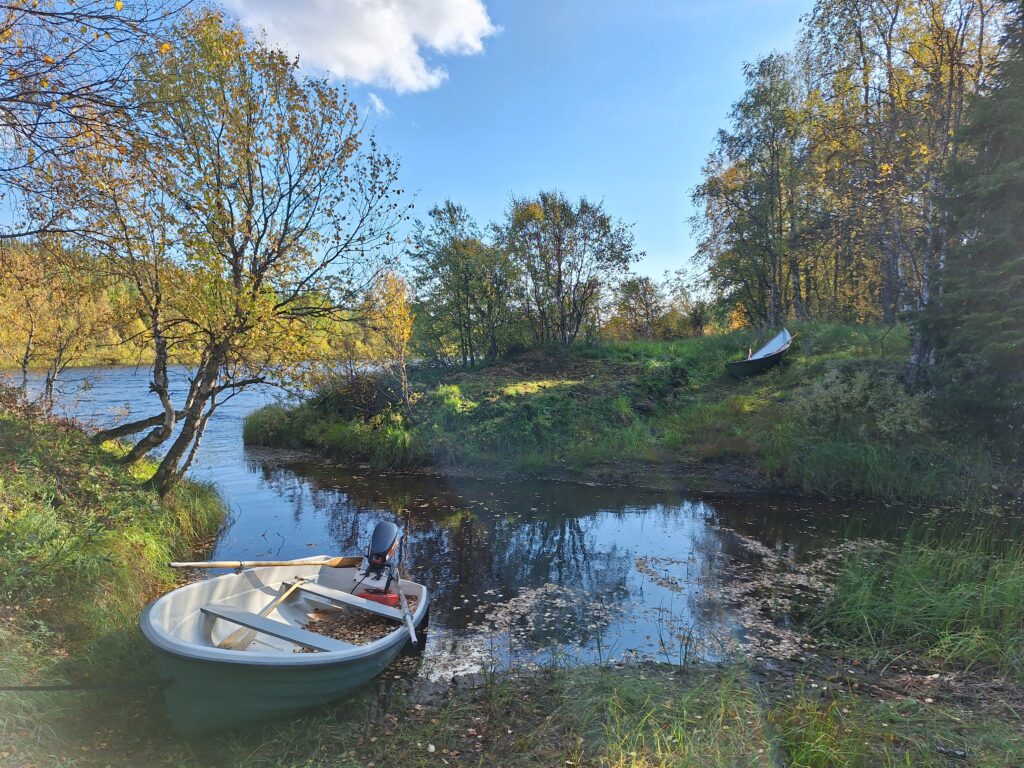
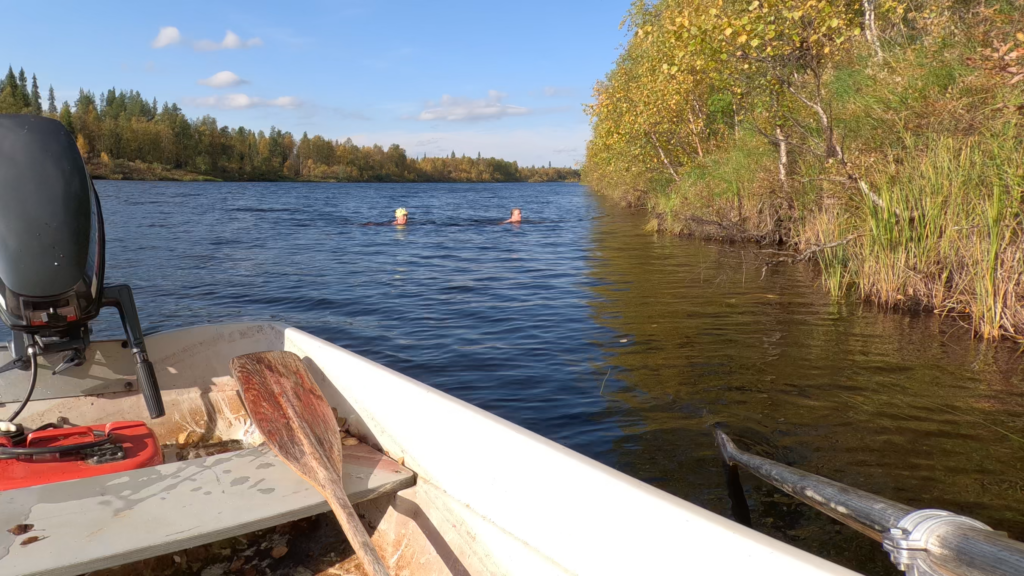
Perfect boat parking by a bay in the river.

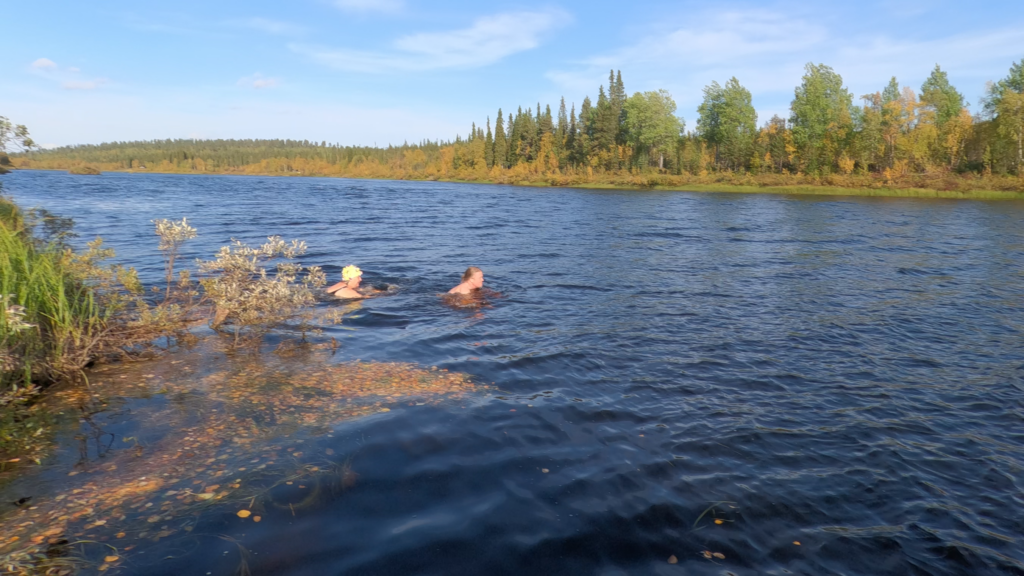
To get to the cabin you have to cross the river by boat, and Tobatheornottobathe’s challenge was of course to swim across the river instead! It was a bit exciting before the start. How strong would the current really be? Wind and current were going in opposite directions – would there be unpleasant waves because of that?

No rapids in sight so far.

It went great. A few waves, but no stress, and we managed to get across to the other side.

Safely across.

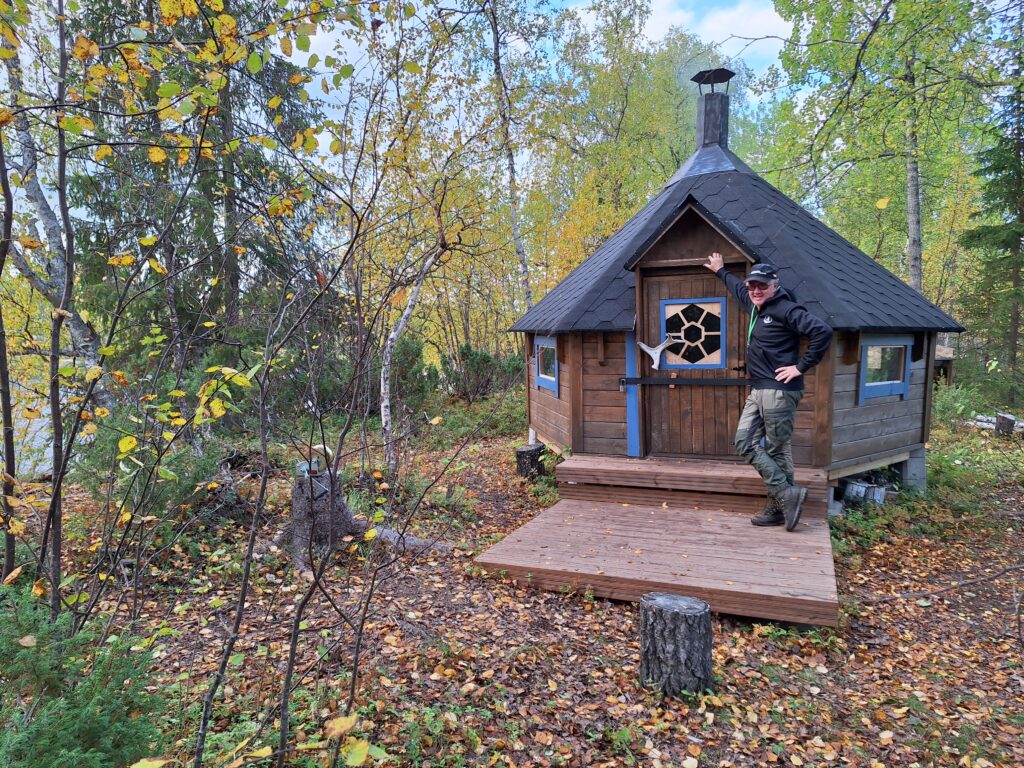
Once there, we lit the fire in the firepit inside the cabin, and of course also in the sauna stove. In Finland, even the smallest cabins have a sauna, you know!

Bastukåta (kåta – cabin). At the back of the small cabin there is a not-so-small sauna.

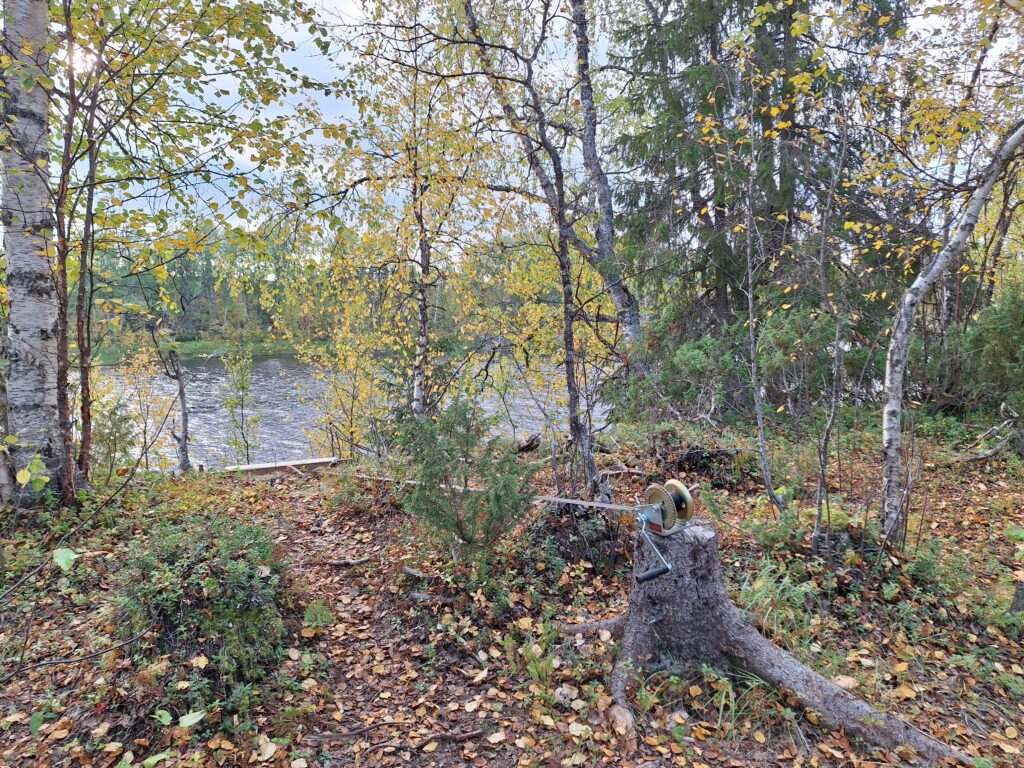
Access to the cabin was not that easy, because the river bank is steep. However, Peter has strapped up a staircase to make climbing up the embankment easier. Elegant! The staircase can easily be tilted up when the river is in flood in the spring. With flooded marshes on the other side, the plot becomes an oblong island every spring. So then it was just a matter of ‘Just bathing in the sauna’ – with a cold bath nearby.

Tilting ladder attached to the root with straps. As easy as that.

Crossing and cold rip-off – Ounasjoki is a brilliant swimmingbathing river!

Lappland

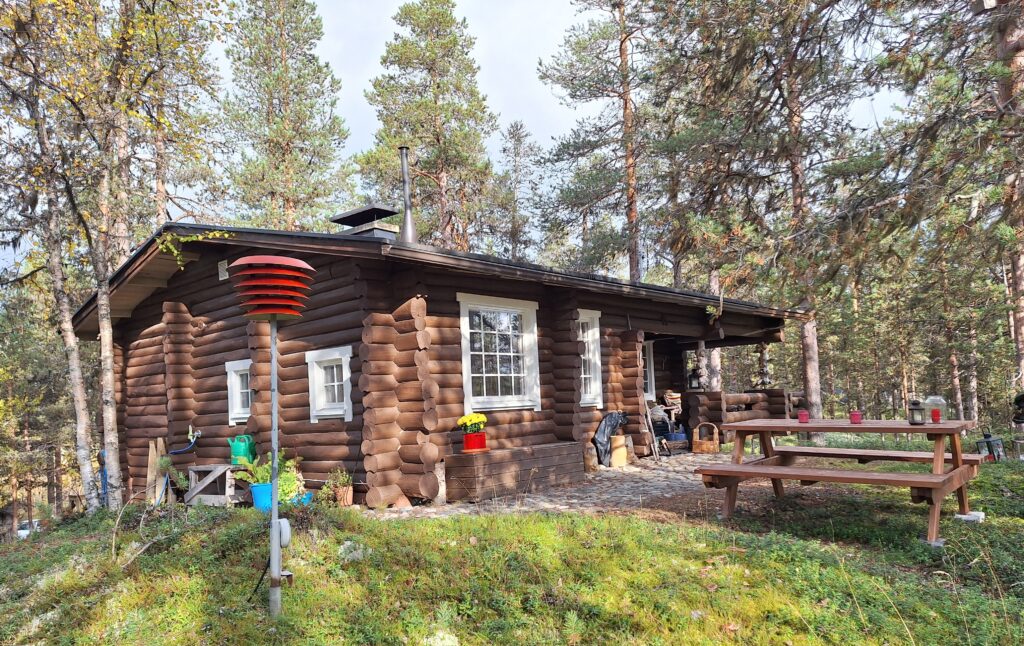
Knut’s Finnish “brother” Peter has several cabins in the archipelago outside Helsinki, which we have visited many times with great pleasure (ref baths). But that hasn’t stopped him (with strong help from his wife Virpi) from buying a cabin in Lapland too. Well, well, cabin and cabin, it’s actually a (several) log house. This autumn (2025) finally suited for a visit, thank you very much for that!

Log cabin in the forest, by the lake – Finnish Lapland at its best!

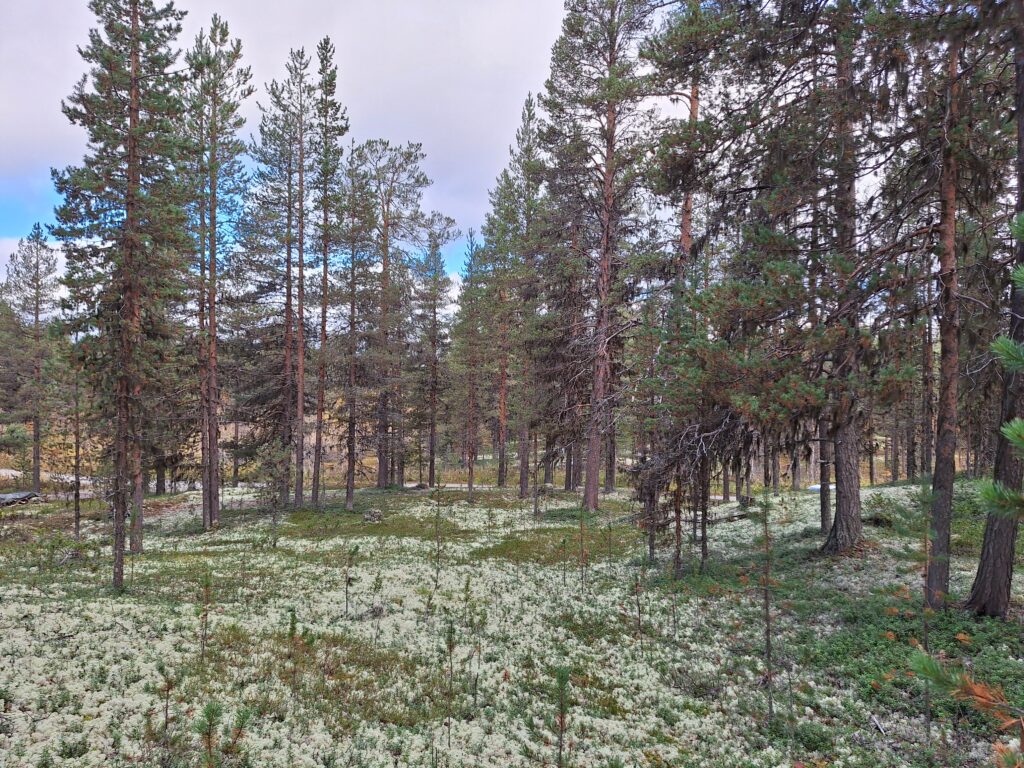
The northern part of Finland consists of just over 100,000 km2 of forest, mountains and lakes and borders Troms and Finnmark in Norway, Sweden and Russia, almost all to the north of the Arctic Circle. The area has been inhabited since the Stone Age, primarily by the Sami people, hence the name Lapland. Immigration of Finnish farmers began in the 1560s, increased from 1749 (after a royal decree), and the Sami are today a minority. Lapland came under Russian rule in 1809. The cabin we visited is located in Enontekiö municipality, about 3 hours’ drive northwards from the regional capital Rovaniemi.

There is a glimmer of water behind the forest. This is typical Lapland, but where are the reindeers?

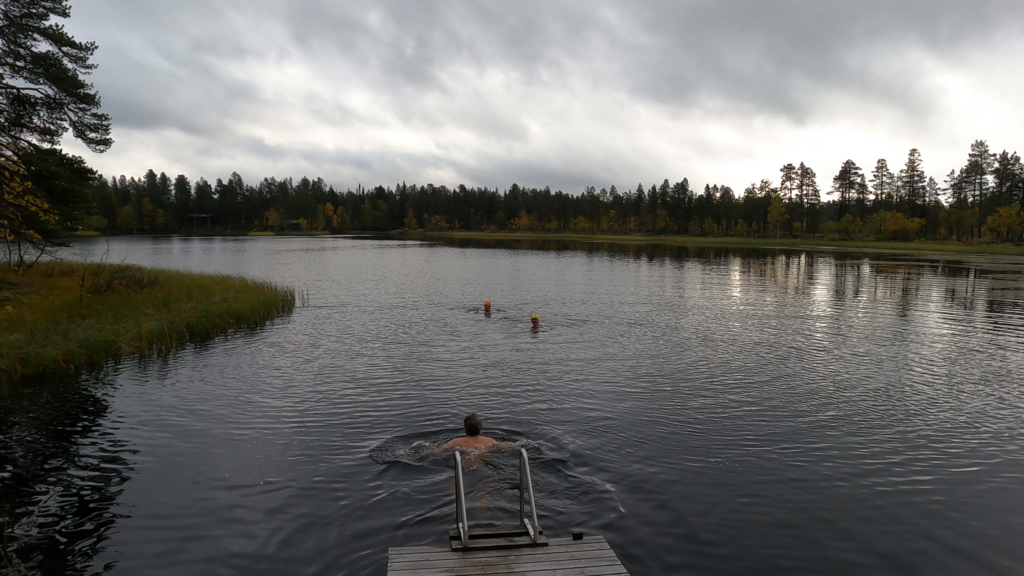
Before starting the day in Lapland, a morning bath is the best plan!

Morning bath in the little lake Uulantto.

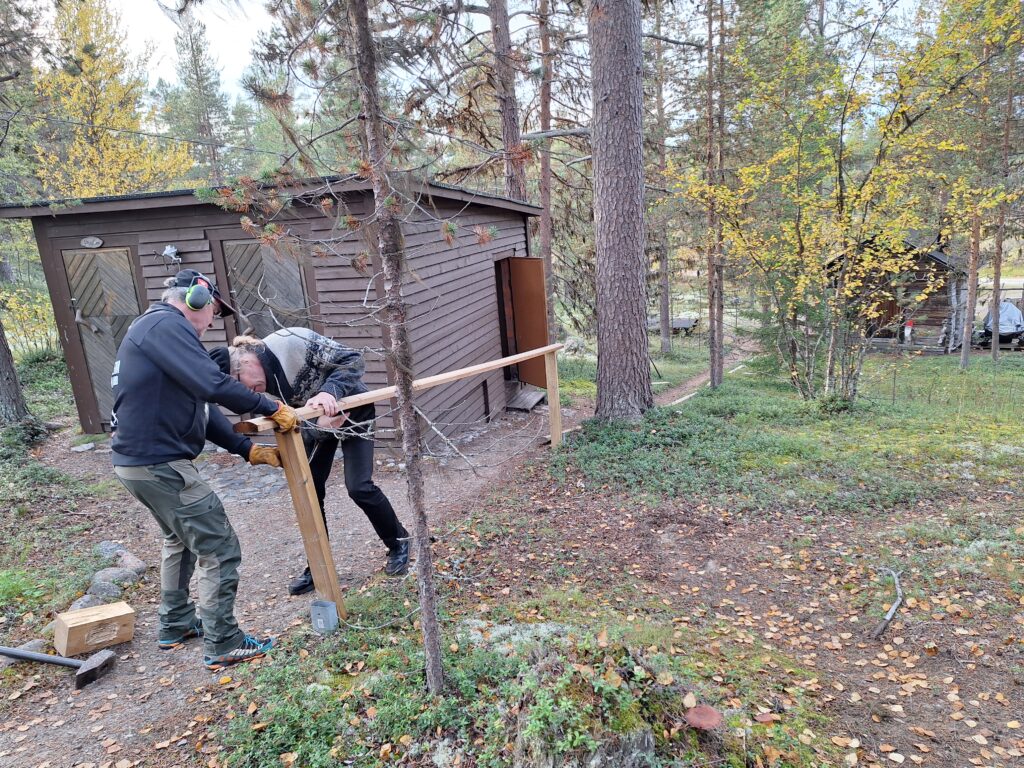
After the morning bath, you should contribute doing something. Business before pleasure! And Knut, being very inspired, threw himself into the job to build railings along the path up to the cabin – it gets slippery there in winter time.

Good mood while the Gutta Boys are making railings.

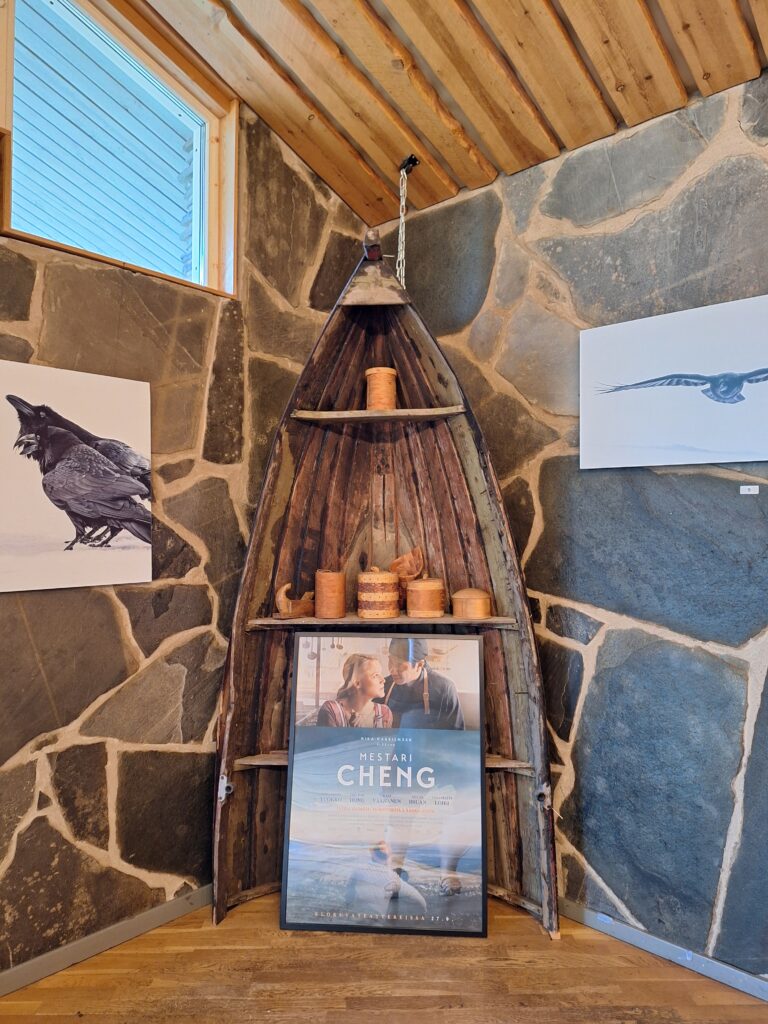
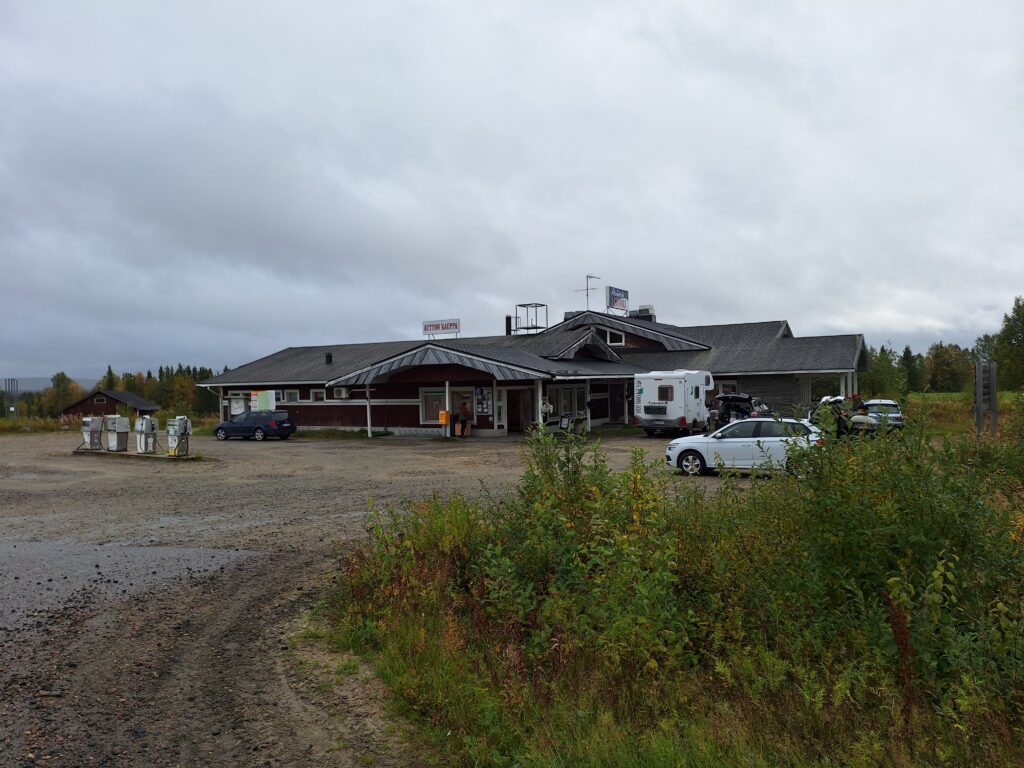
The nearest town is called Raattama (formerly Kyrö) and has 120 inhabitants. The atmosphere there is easily recognizable to all Kaurismäki enthusiasts, who have of course already seen the film ‘Mestari Cheng’ from 2019. This is definitely a film after Tobatheornottobathe’s taste: Interesting characters, a little funny, a little sad – and great bathing scenes!

Master Cheng has put the Ravintola Loimu into the map. And yes, there were at least as many strange characters at the inn when we were there as in the movie.

Raattama is otherwise known for being one of the few settlements in Lapland that was not burned down during the Lapland War, which started in September 1944. The population was then 150,000, and the number of German soldiers was 200,000. Finland had committed itself (for the Soviet Union) to chase the German soldiers out. When the Germans came to Raattama, the Finns did a clever little ‘Tordenskjiold’s soldier trick’, where they fired like crazy with all their weapons, which made the Germans believe that the resistance would be very fierce, and they dropped the attack on Raattama.

Ravintola Loimu (Restaurant Loimu).

However, the enemy left behind a mine-strewn landscape with almost no infrastructure left. In total, Finland lost just under 1,000 men in the Lapland War, while German losses were 4,500.

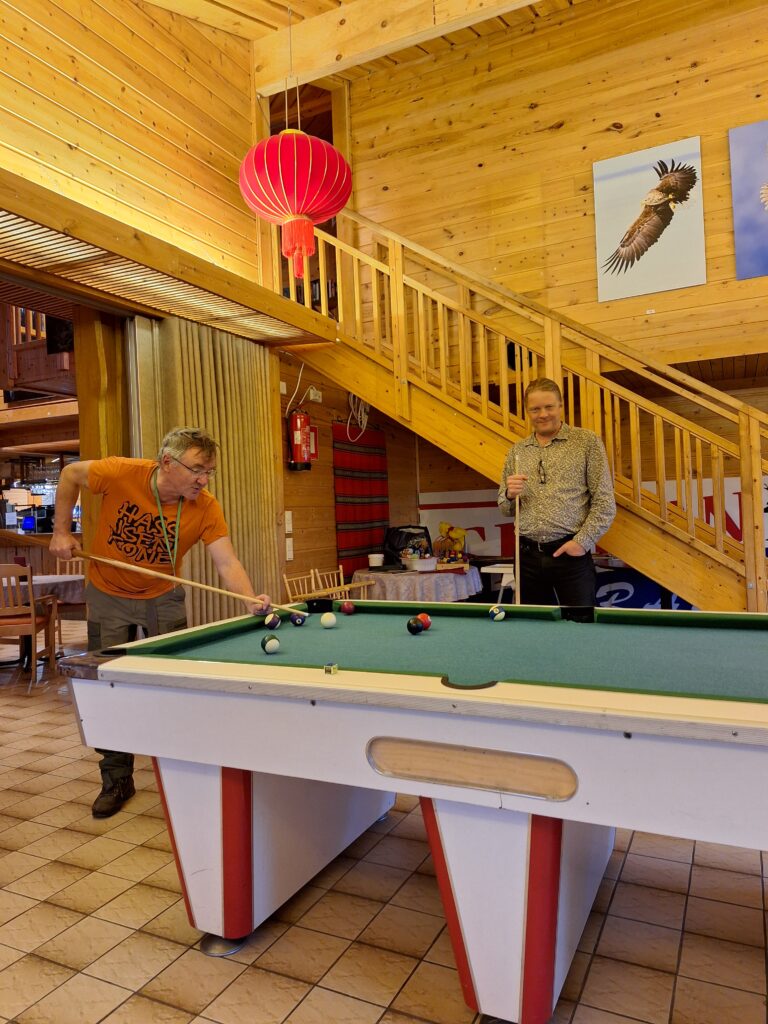
Peter and Knut enjoy a round of billiards under the Chinese lanterns in Raattama. Friday and Saturday both karaoke and pizza are served at the pub. The Finns kept a mostly melancholic tone during the song selection (including Åge Aleksandersen’s ‘Lys og varme’ with Finnish lyrics), while Tobatheornottobathe tried to pick up the pace with the ESC songs ‘Bara bada badstu‘ and ‘Cha cha cha‘. Funny? Oh yes!

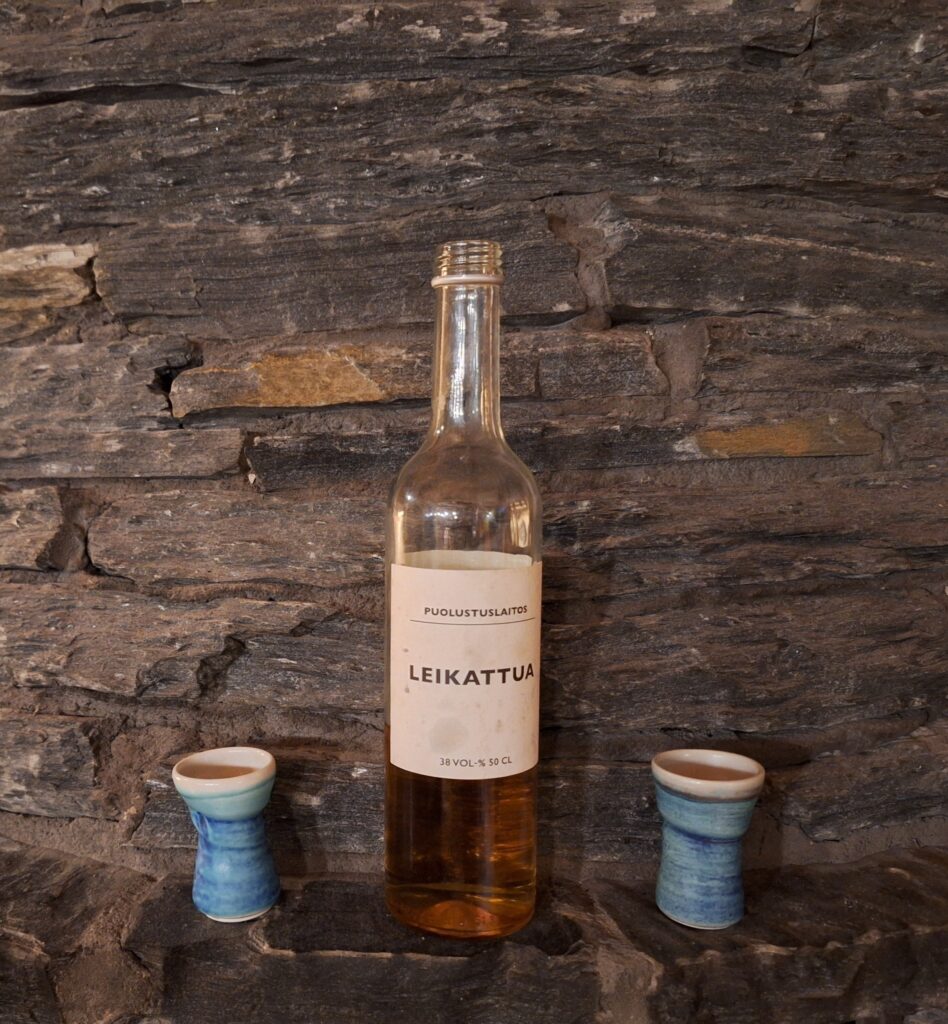
After karaoke at the pub, a night bath in the oldfashioned jacuzzi could be a good idea. When in Lapland, we swim 24/7. In memory of the soldiers’ feat at Raattama, a ‘Night cup‘ could also be a good idea. It’s important not to drink too exclusive liquors. It’s only officers who drink cognac (while the soldiers consume moonshine). This is well illustrated in the Finnish film ‘Unknown Soldier‘, but that movie should preferably be watched at Finland’s National Day on December 6th.

Recommended liquor in memory of the unknown soldier.

In Lapland, swimming is possible both day and night, it’s simply the best bathing paradise!