The Tidal Mill

In the north of the Trondheimsfjord lies Børgin (Borgenfjorden), a fjord that is connected to the rest of the Trondheimsfjord via an S-shaped, beautiful strait. There is current here! The locals refer to this as one of Northern Europe’s strongest tidal currents, and the strongest maelstrom in Norway after Saltstraumen. Wikipedia, on the other hand, does not have the current in Straumen on the list at all! Can ‘Someone’ do anything about it? By the way, what is the definition of ‘strongest’? Is it the one that goes the fastest? The most water per second? The one that has the most dangerous eddies? We wonder. It was very tempting to let ourselves be carried through Straumen, but we did not find any locals who would recommend it. No one. Strange.
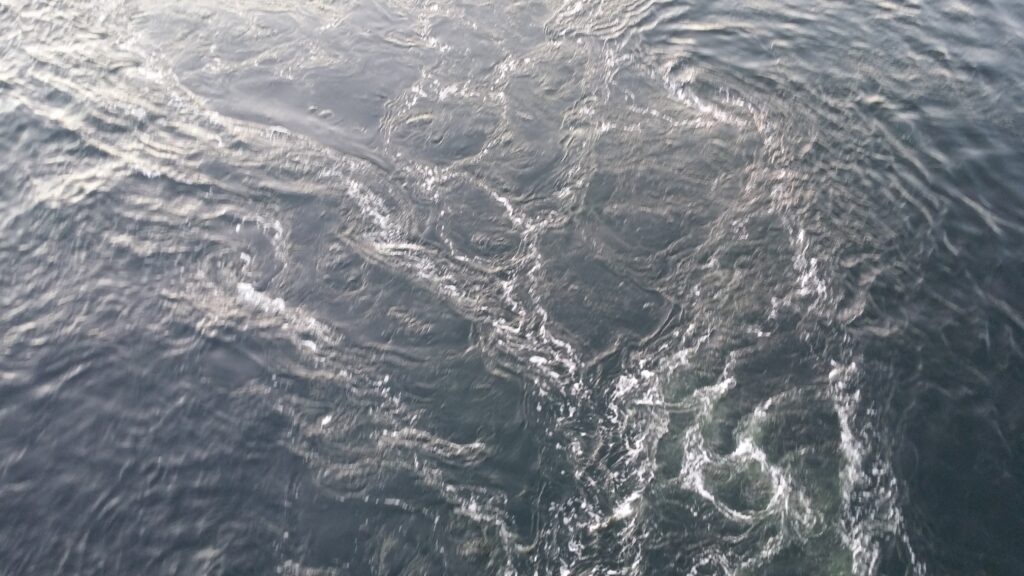
Strong current in Straumen – there is no doubt about that.

The town of Straumen is the administrative center of Inderøy municipality and was in the Middle Ages the center of the ‘Øynafylket’ at the innermost part of the Trondheimsfjord. It is a cozy place with barely 2000 inhabitants – Straumen was voted ‘Norway’s most attractive town’ in 2020.
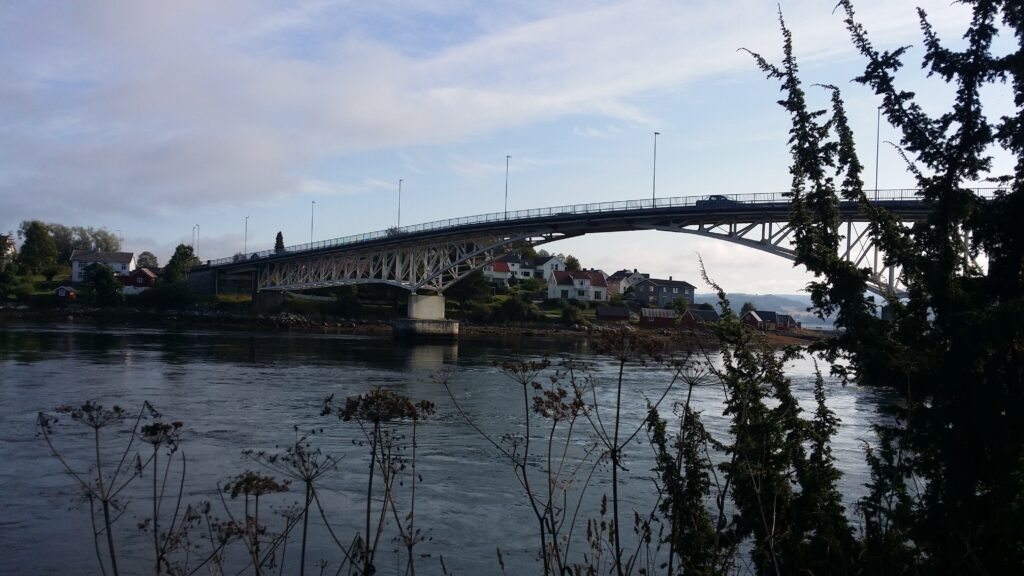
The bridge over the stream to Straumen.

On the headland in the middle of the picture above are the remains of something as rare as a corn mill powered by tides! In England, they have been making tide mills since the 12th century, but in Norway this is quite unique. It was architect Johan Martin Helgesen who, after starting a tide-powered sawmill, had the tide mill built on the farm Sundfær in Straumen. The mill was only in operation from 1885 to 1892, and it is not known why the mill was closed down after such a short time. Here you can see the foundations that remain. There was a mill wheel between these walls.
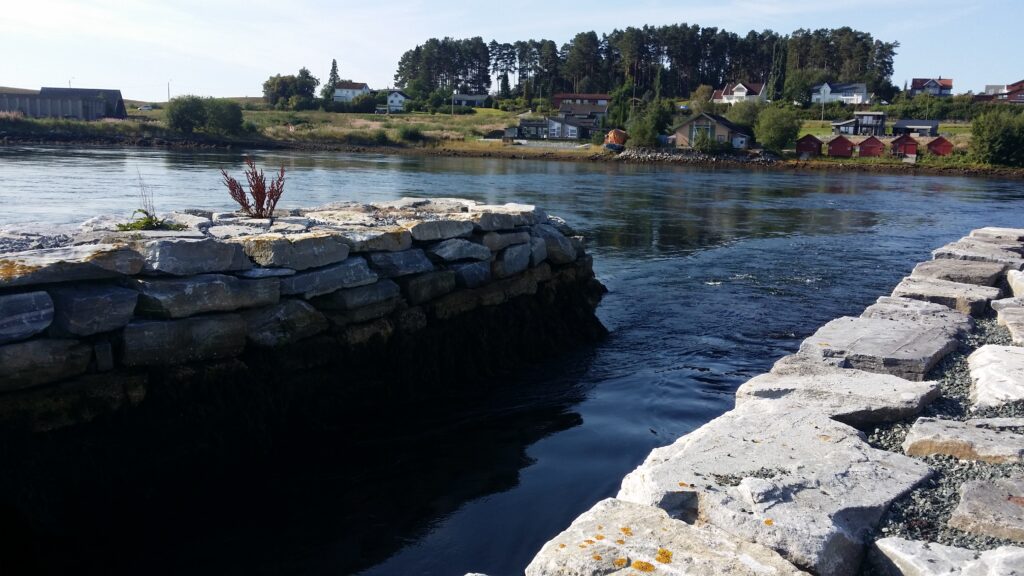
The remains of the tidal mills.

When the tide is high, the difference in height on each side of Straumen can be up to 1.5 meters. The water becomes a roller coaster! It was actually easy for us to see the downhill slope – imagine being able to start downhill there…

Local enthusiasts have made a model of the tidal mill. Interesting stuff! The mill wheel had to be able to follow the tide up and down and also change direction. The millstone itself should go the same way whether the water was going in or out.
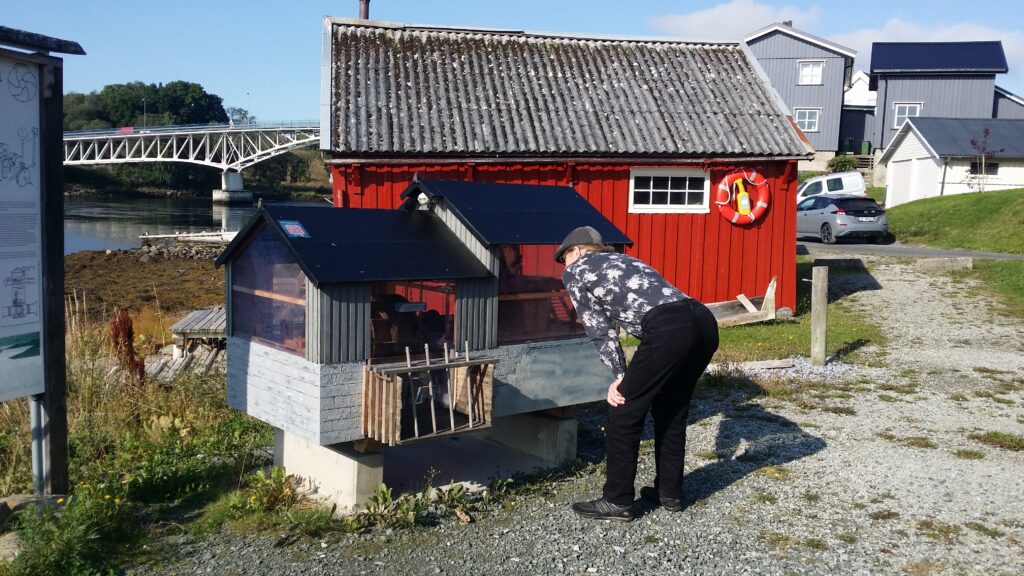
Knut is studying the tidal mill model.

In the background of the photo above you can see the protected Straumen Bridge from 1958. From ancient times, transport across the strait was a good source of income, hence the name Sundfær. The first bridge over Straumen was completed in 1861, but only lasted 9 years before it was destroyed by pileworms and ice. It was a folding bridge, unpopular with fishermen because it was believed that it scared the fish! Maybe it was more about the difficulty of navigating the narrow passage in strong currents?
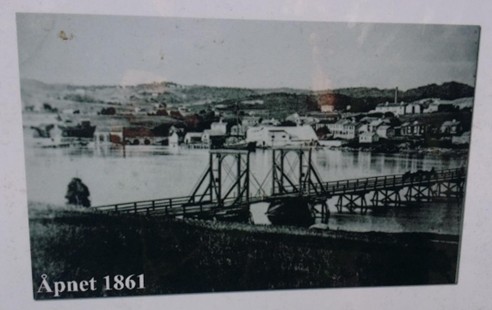
Old Straumen bridge. The picture is from the information poster at today’s bridge.

A telegraph line was installed on the bridge – which was cut every time the bridge opened to let a boat through. Smart with the joint operation – but be aware of possible interruptions in the conversation!
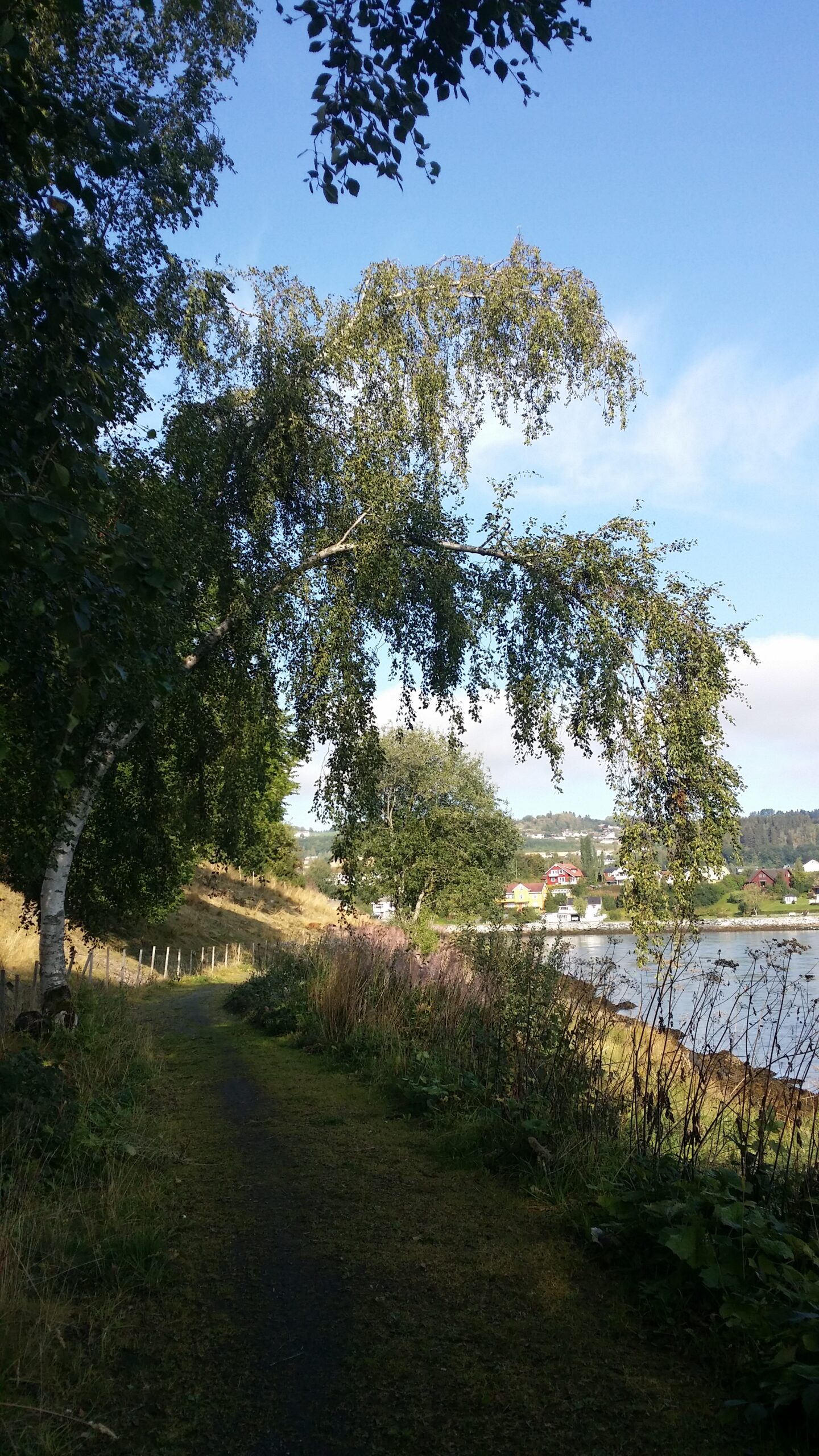
Hiking by Straumen.

The path ends in a nice park area with benches, a barbecue and a gazebo. From here you can continue along the shore, and then you will come to Sundssand, a great beach with all the facilities you need – even a shower.
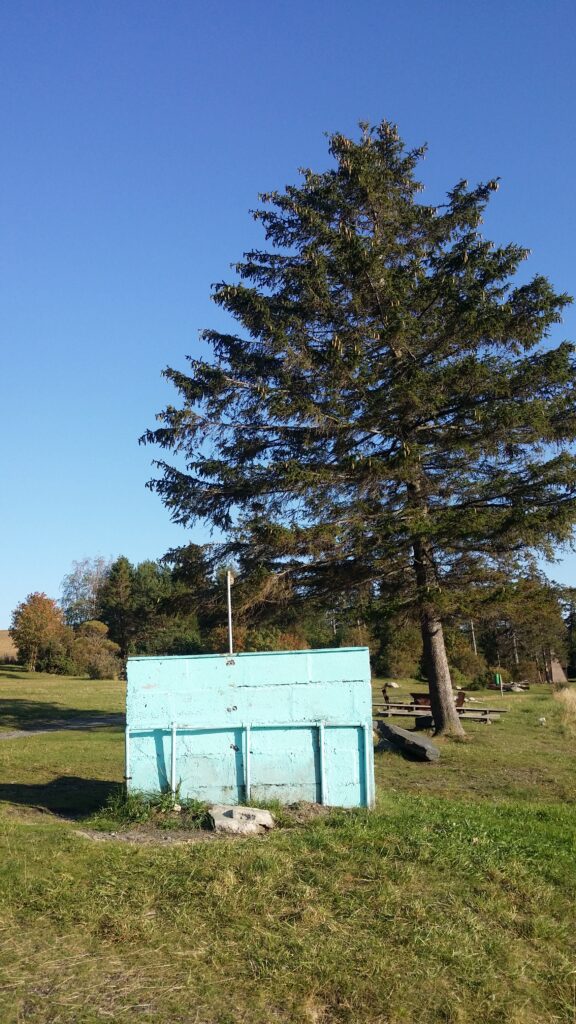
The Sundsstranda shower.

We wanted to swim there! At Sundssand you can both swim and have a bath. To practice ‘Open Water Swimming’ you can either swim back and forth to the floating pier a few times, or along the buoys that protect the swimmers. Nice view of the fjord in the background.
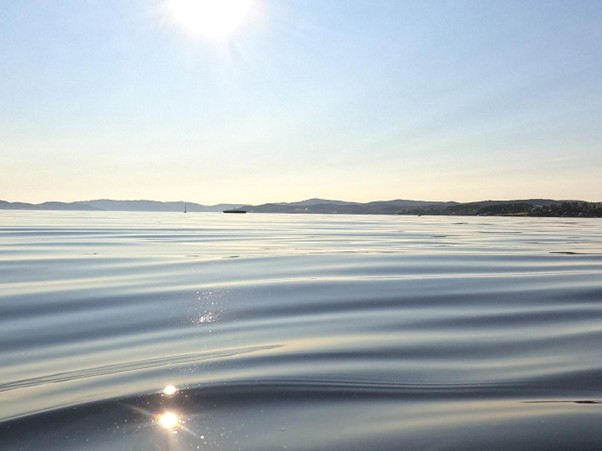
Silent sea in the inner Trondheim fjord.

This day Idun put her hat on the raft and took a round of butterfly.
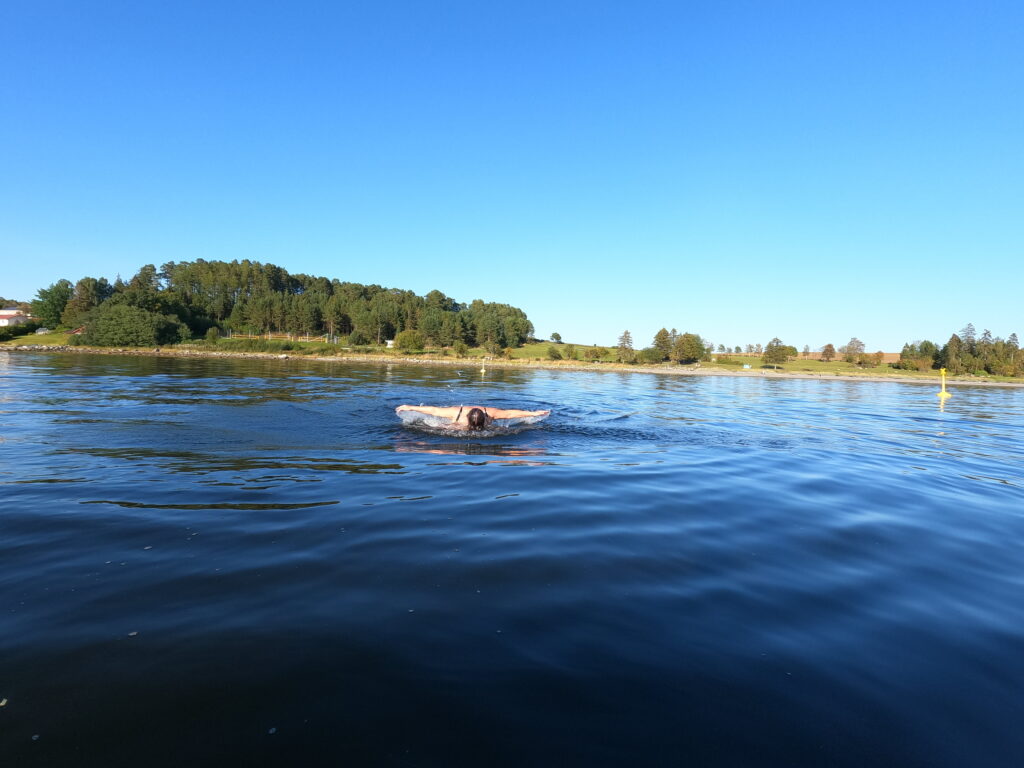
Butterflies don’t wear hats.

…but Knut would rather practice death diving. He hasn’t registered for the World Cup yet.
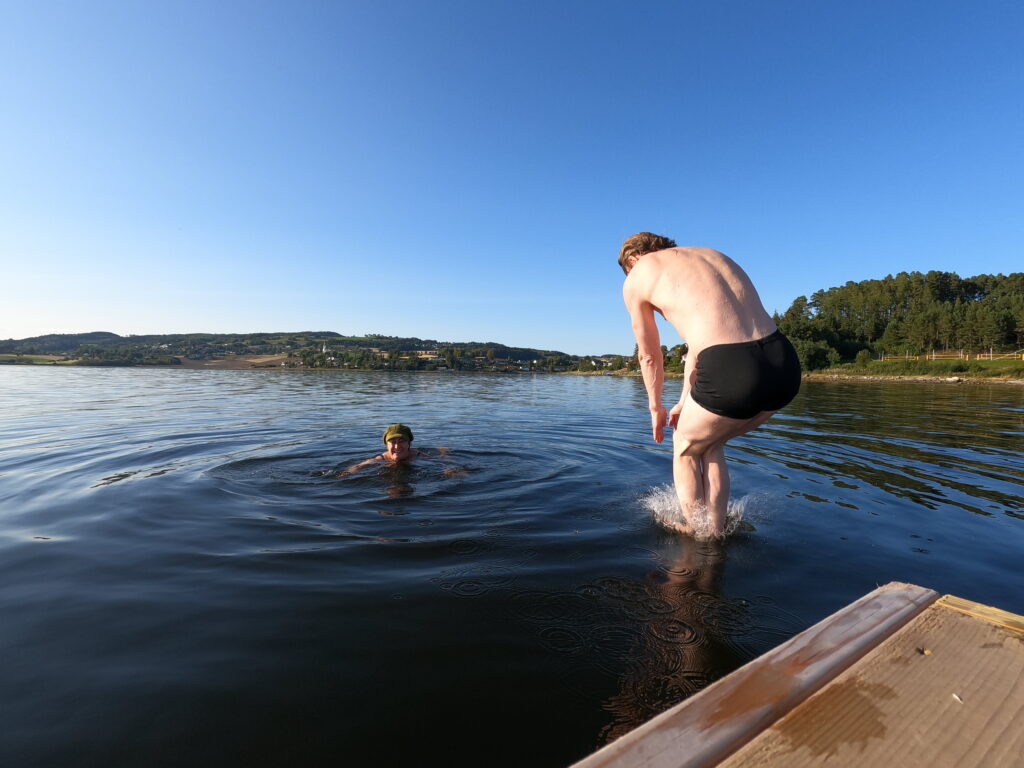
Knut in full speed.

A great bath in glorious August weather!
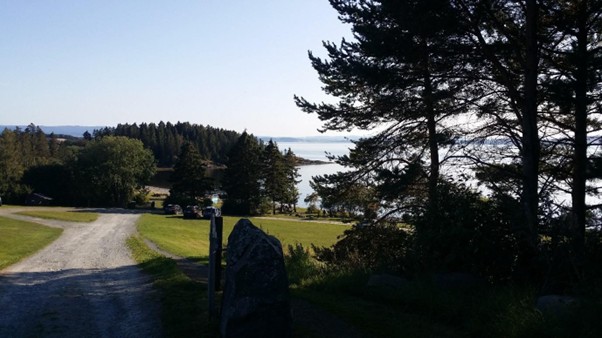
Large and nice park area at Sundssand. Sure, with 3 S’s, according to most of the signs.

The Golden Detour

To entice car tourists to leave the E6 route, the brand ‘The Golden Detour’, which runs via Inderøy, has been successfully established. The argument is that it takes only 8 minutes more to drive county road 761 via Røra instead. But that is of course not enough, the point is to experience much more. There are 20-30 companies that collaborate on ‘The Golden Detour’, and this includes accommodation, catering, locally produced food and drink, art, culture and shops.

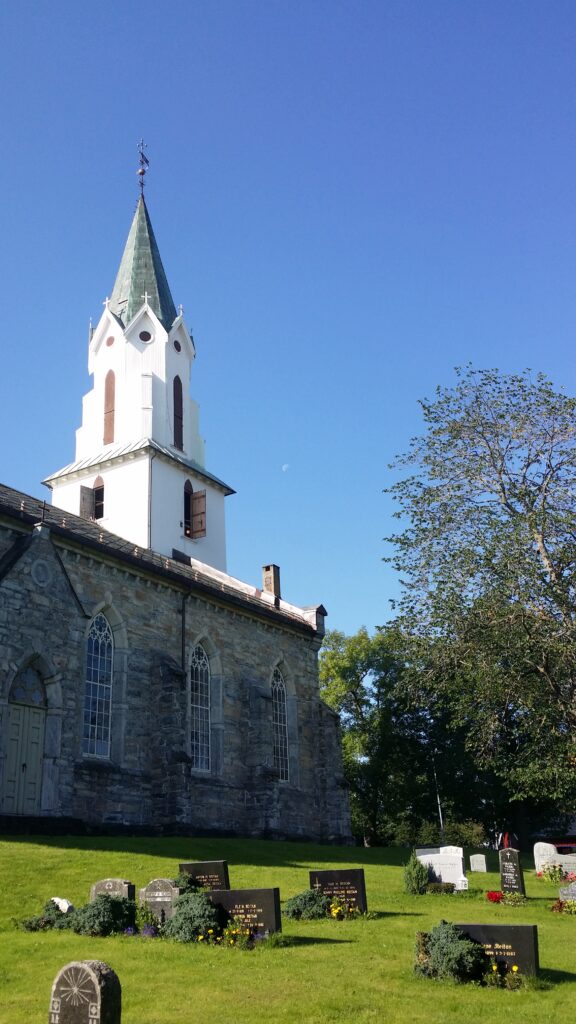
Idun wanted to start by ‘taking a church’, and at Sakshaug near Straumen she could take no less than two.

Sakshaug Church is a large and beautiful stone church with a tall wooden tower. Far too tall to be photographed really. But the moon next to it was nice at least.

Sakshaug kirke.

When this new church was completed and consecrated in 1871, the old Sakshaug church was demolished, the woodwork was torn down, and the inner walls were given to the historical society as a gift.

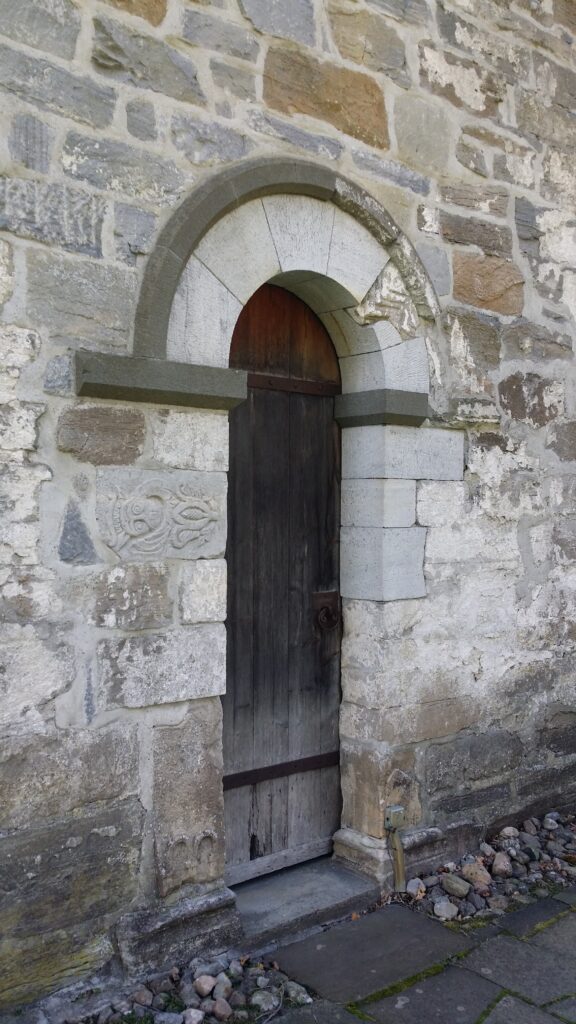
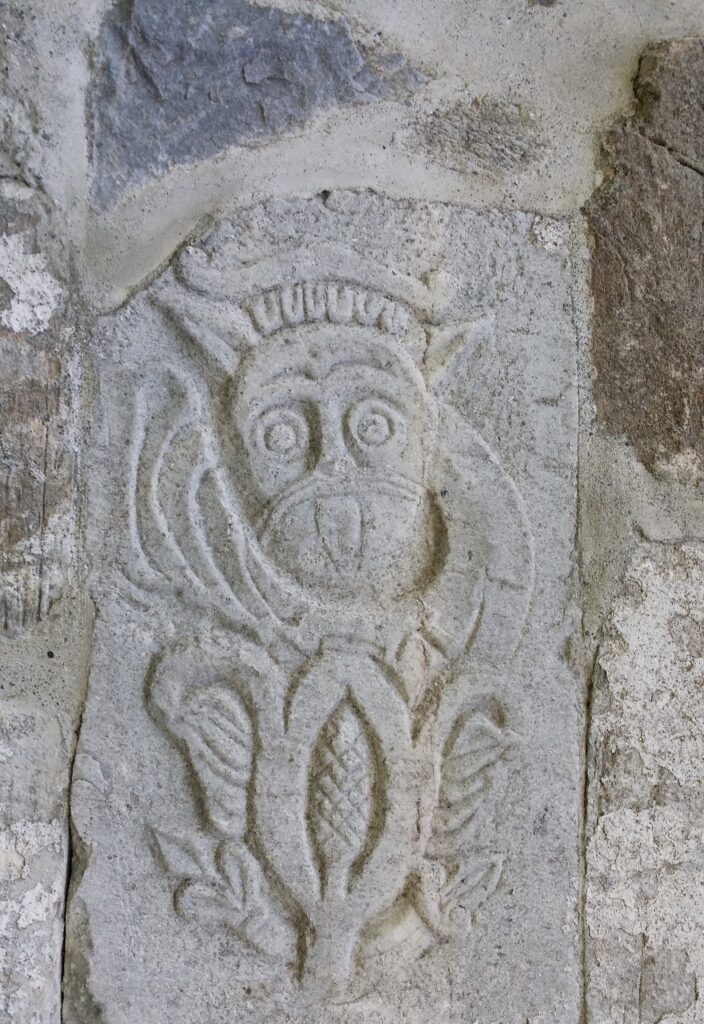
Of course it wasn’t many years passing before they decided to restore the old church, and now you have 2 stone churches just over a kilometer apart. Sakshaug has been a rich church, the main church in Øynafylket in ancient times. The first church was completed as early as 1184 and was consecrated by Archbishop Øystein Erlendsson. Both chevron-style decoration, sculptures of the type ‘Sheela na gig‘ (women unveiling their secret parts!) and common stonemason marks link the church to the stonemason community at the Nidaros Cathedral. In Sakshaug’s old church you will find this Sheela na gig in the north portal:

Sheila na gig in Sakshaug old church.

Sheela na gig comes from Irish and possibly means “Sile i n-a giob” – “Sheela on the crouch”. These sculptures are found in churches and other medieval buildings, primarily in Ireland and England. The origin of the Sheela na gig sculptures has been attempted explained in several ways. They may have been the continuation of an older fertility cult, as protection against evil powers (!), or a warning against the lust of the flesh. Here is a closer picture of Inderøy’s Sheela na gig – with a pinecone-shaped womb!

Pine cone vomb.

Funny with the big mustache, though. I wonder if they could have developed the term ‘hen’ already in the Middle Ages?

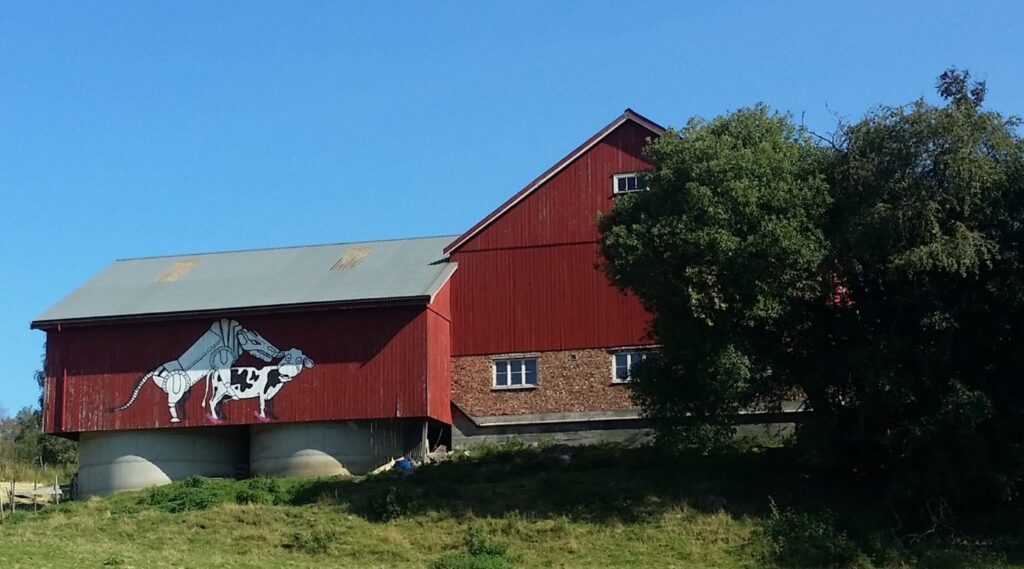
As we continued the golden detour, we came across another funny piece of art with a related theme:

‘No need to look so surprised. You can’t expect anything else when you’re a cow and wearing pink pumps, right?’

There might be a wordplay in play here: “Låve” in Norwegian means a barn and is pronounced like “Love” only with an e (as the “e” in “edit”) at the end. Also notice the wood stack art on the wall to the right! They have enough heating for a while…

After two stone churches and one barn art experience, a bath seemed to be a good idea. Northwest of the Inderøy peninsula, at Stornes, there are great swimming opportunities. Here you will find a football field, beach volleyball court, gazebo, barbecue and benches. There is a lovely beach for small children, good snorkeling conditions for older children, and a great place to hang out on bright summer nights.

Shield north on Inderøy.

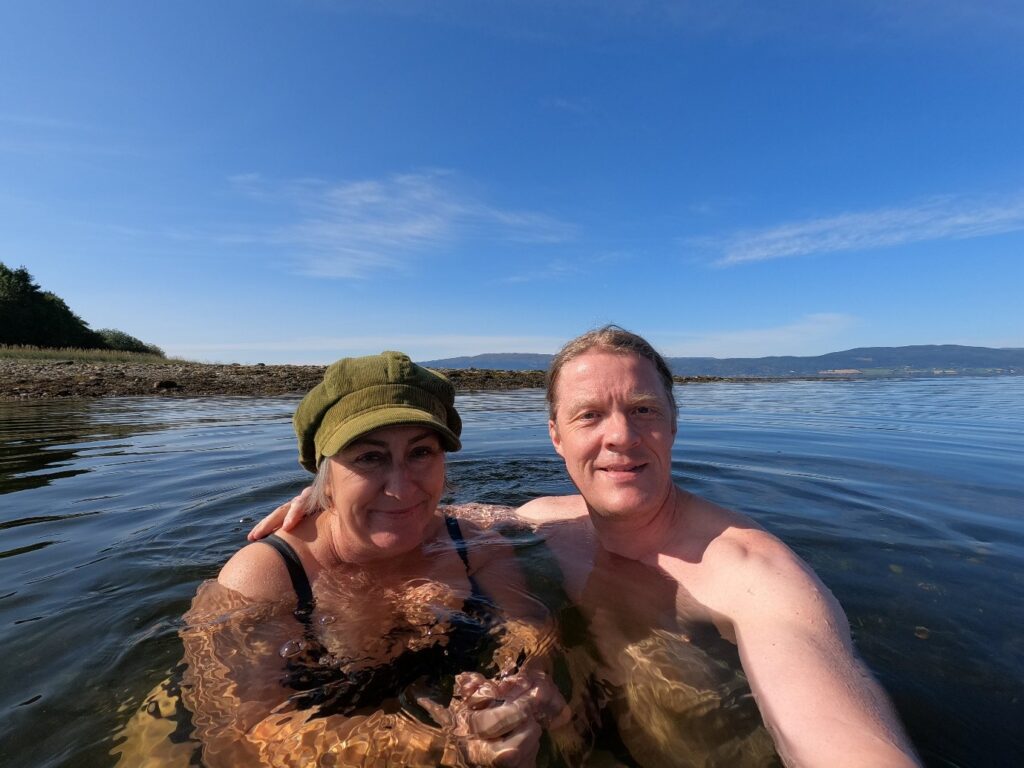
We swam in the Midtøra area, and there were lots of small fish doing the same. Knut was hoping for a massage a la Thai skin-eating fish, but they weren’t that close, just almost.

Almost a ‘to-be-eaten‘ experience at Inderøya.

A beautiful afternoon with splendid weather and calm sea. Far far away: Views northwards to Steinkjer.

Inner Trondheimsfjord in fabulous weather.

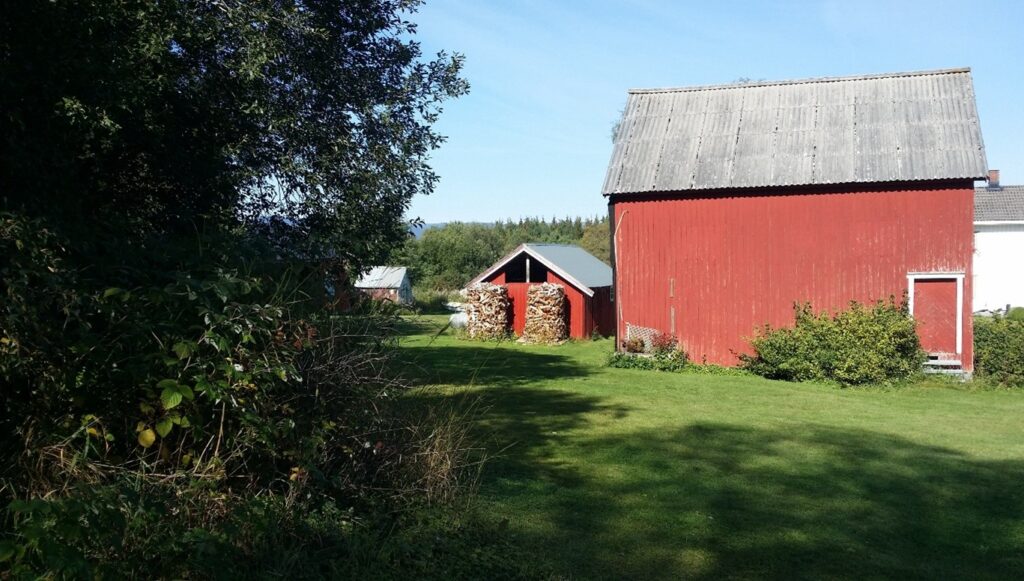
Not far from the swimming area, a couple of beautiful wood piles were revealed. We haven’t seen this stacking method anywhere else. Is it a specific Inderøy thing, this? Anyone who knows?

Wood stacking north of Inderøya.

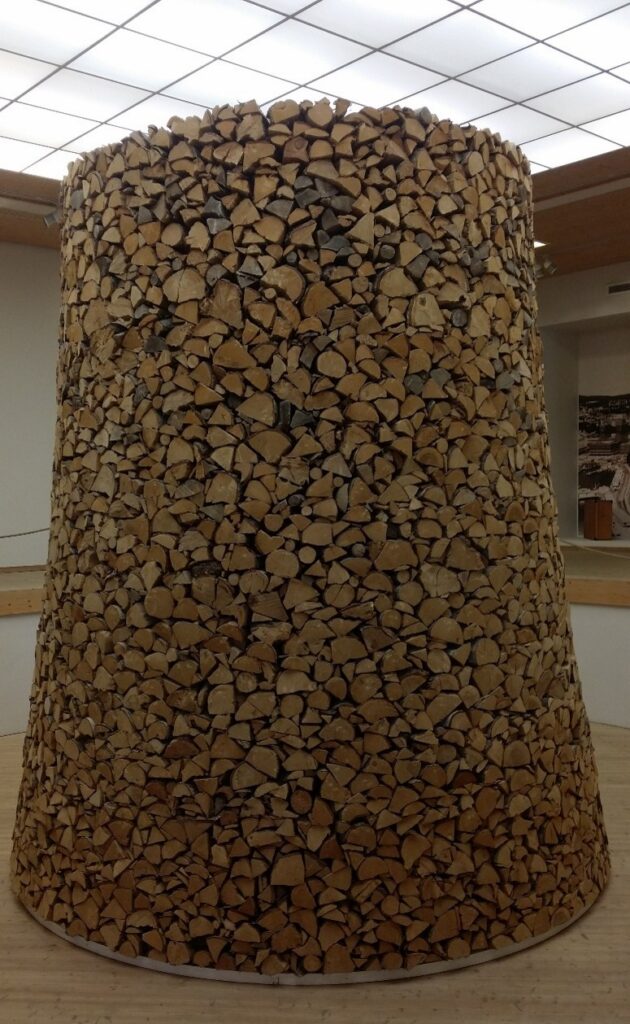
It may seem so, since the main art work in Nils Aas’s gallery is this sculpture:

Artificial wood stack

Idun wonders if her big brother Frode found the inspiration at Inderøya to build the world’s tallest woodpile during the UKA in Ås in 1988?

Anyway, a nice, golden detour and a wonderful swim!

A bath at Inderøya is just right!

At the Sawmill With the Guys

On the south side of the tidal stream Straumen in Inderøy lies Sundsøya. Long ago it was actually an island, but the small strait between Sundsøya and the mainland was later filled in and built up.

Below you can see an excerpt from an old map, where Sundsøya is the triangular island in the middle of the picture:

Sundsøya when it was an island. Photo from the information board.

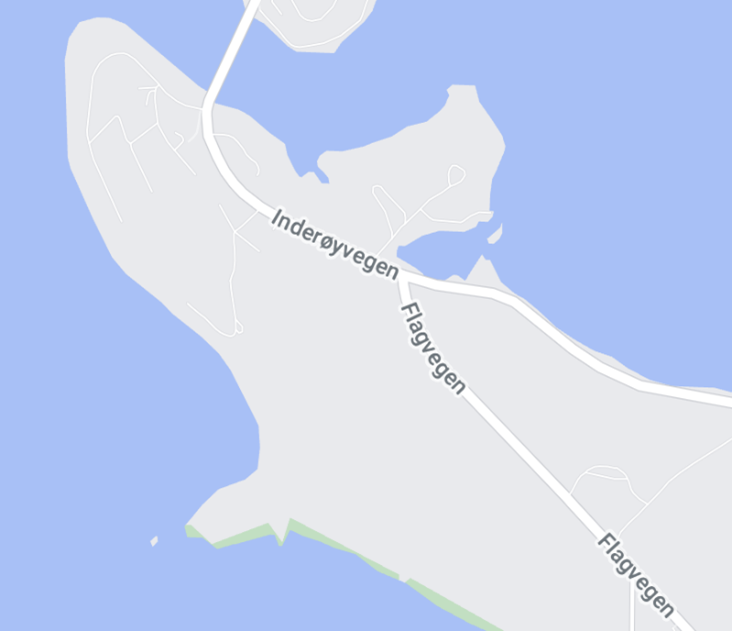
While this is how today’s map looks like:

Sundsøya today is not much of an island. Map: Google

Almost like in “Our pride and our water power!” by KLM: “Who knows where this strait will be tomorrow!“. It is recommended to check this out on YouTube for a good laugh (“Vår ære og vår vannmakt”)!

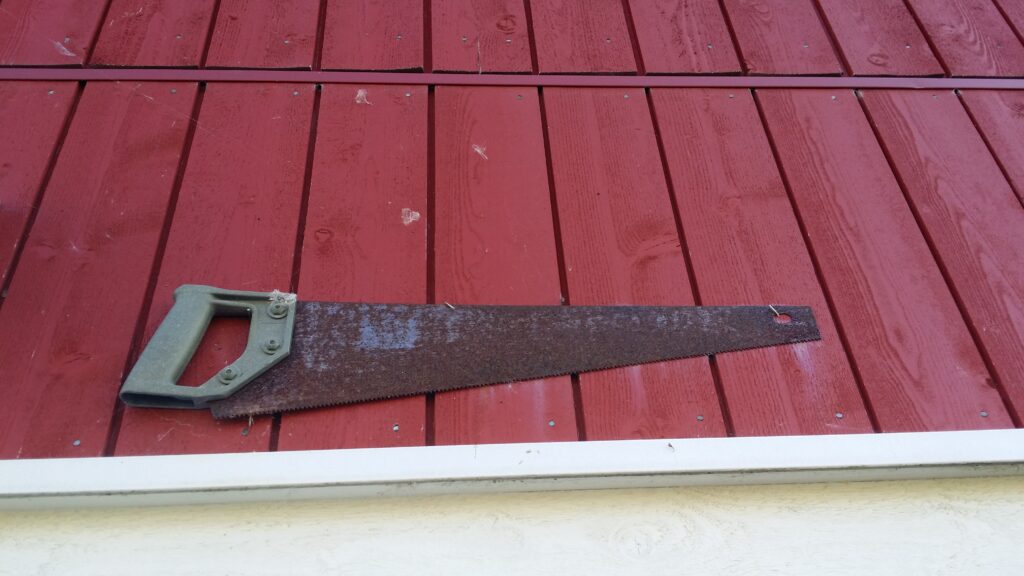
Among today’s buildings you will find what is now called Saga Hotell. The hotel is not named after the stories (Sagas) of the Viking Age, but because there was a sawmill here (“the saw” is “saga” i Norwegian), today called “Gammelsaga” (“The old saw”). They have a handsaw above the entrance door, but we are not entirely convinced that the production was carried out with such a tool?

Saw decoration at Saga.

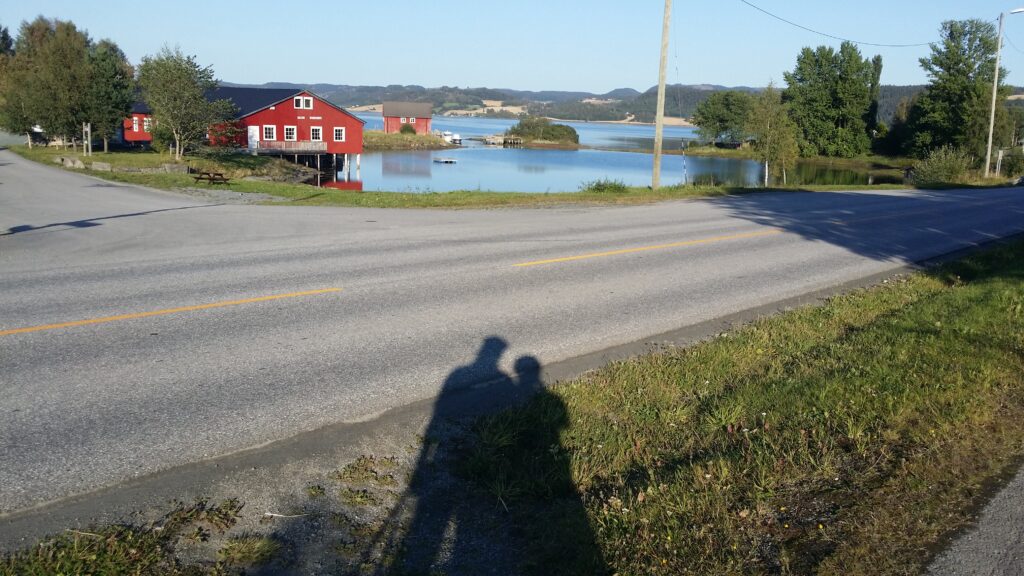
It’s nice here! In front of the hotel you see what is now a pond. The road to the left goes over what was previously a strait. Under the road there is a pipe, so the bay still has a flow of fjord water.

Hotel Saga.

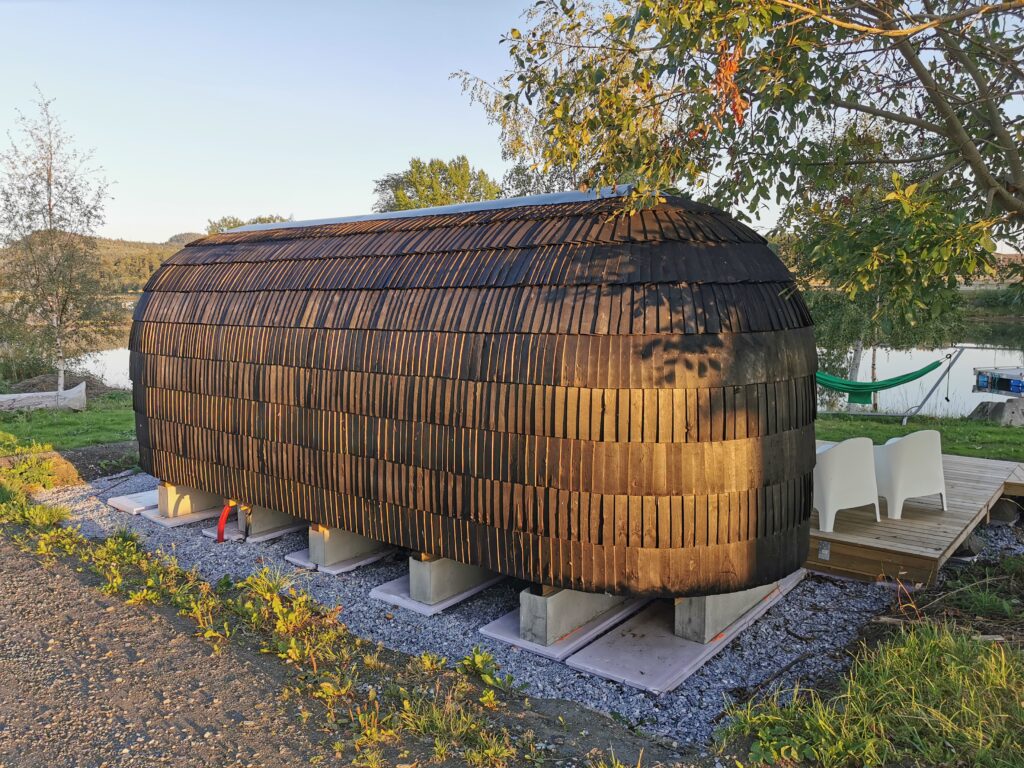
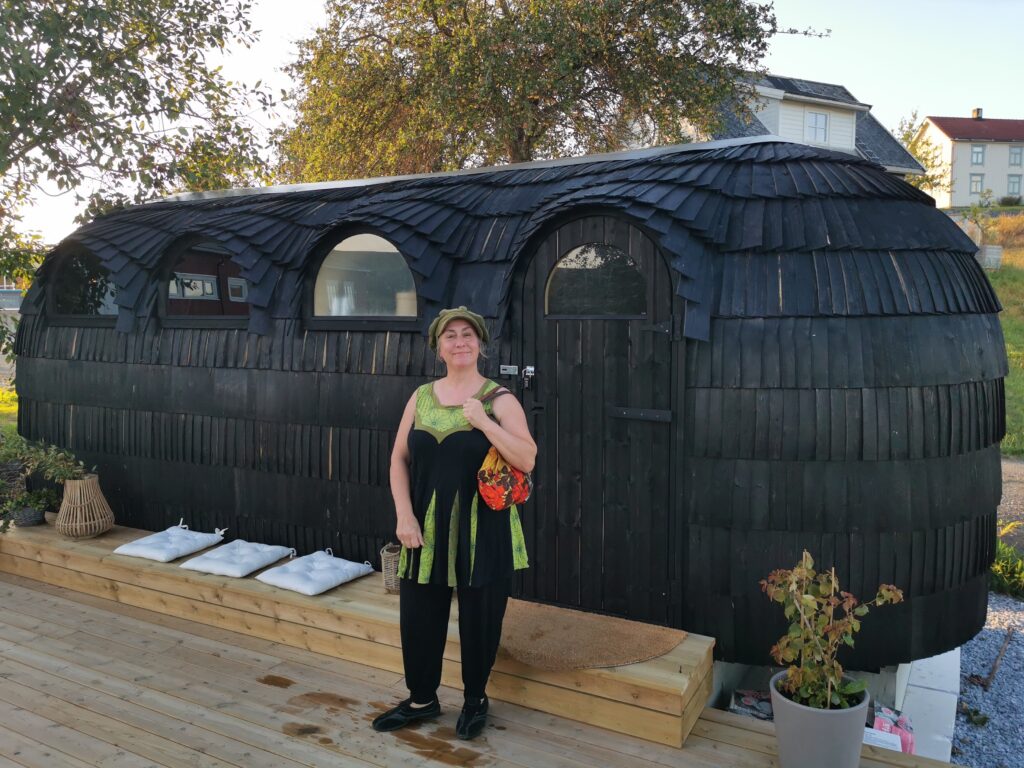
Hotels without a sauna are usually low on our priority list. No problem here, they have recently acquired a rather special sauna! The sauna is clad in clapboard on the outside and has wonderful shapes:

The beautiful, rounded shapes of the sauna.
Someone is looking forward to something!

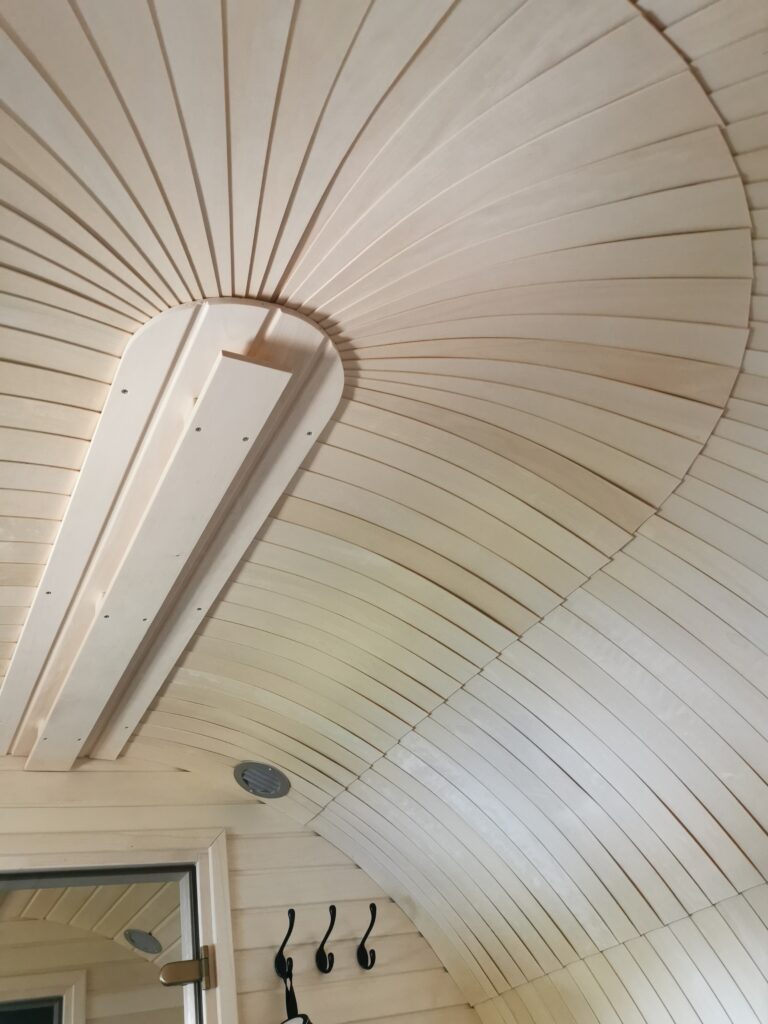
And it’s even clapboarded on the inside! Here’s the ceiling in the changing room:

What a splendid design!

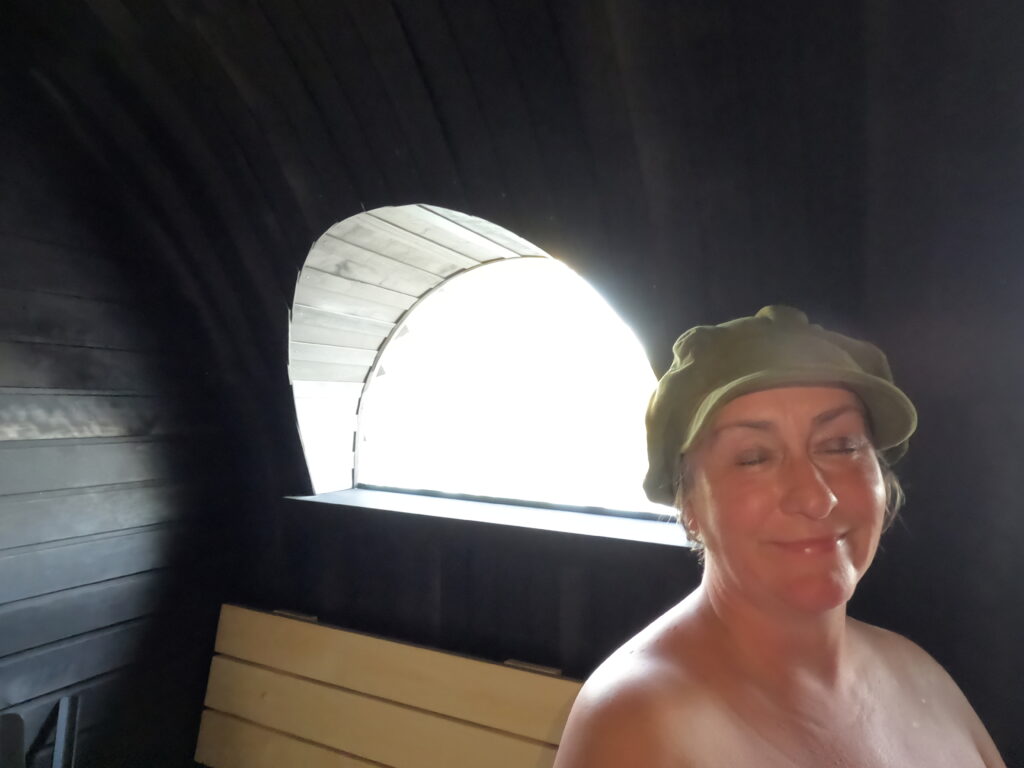
The sauna has some fixed opening hours for drop-ins, but you can also book it for yourself. So we did. The sauna has an anteroom, shower and then at the end the sauna itself – with dark walls, almost as if it was a Finnish smoke sauna! Only this time you didn’t turn black on your back. In fact, we had planned dark walls for our own sauna when we were remodeling the house, but we never figured out how to do it.

oh how lovely it is to have a sauna!

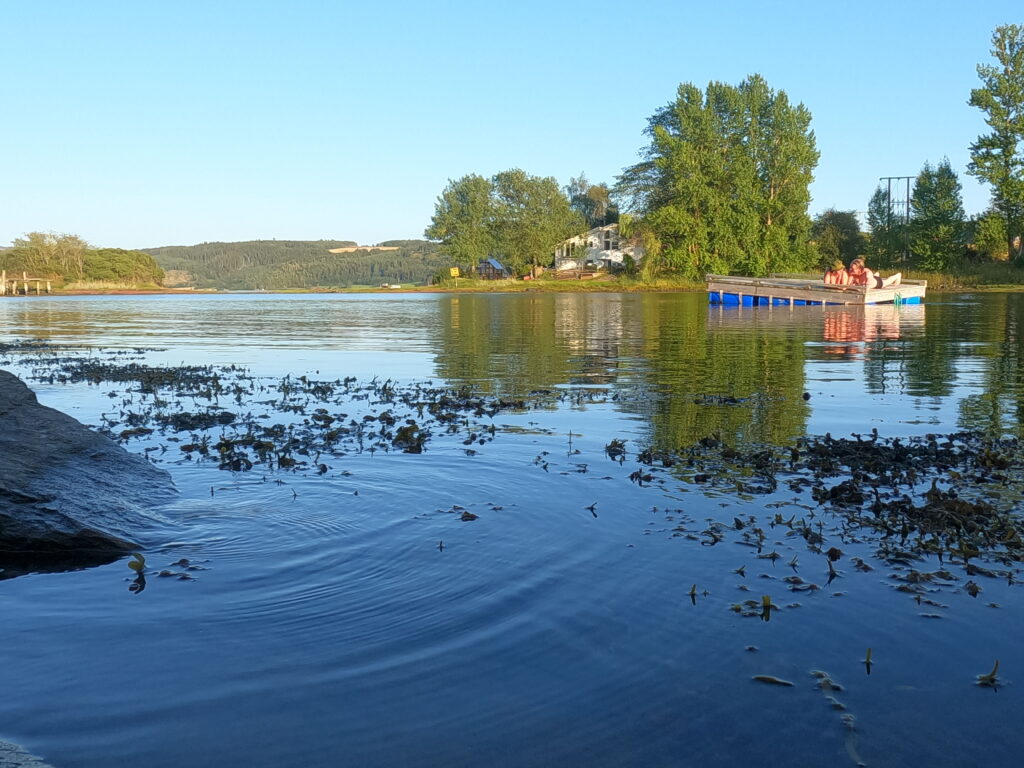
And after the sauna, a bath is a great idea! Just jump in, swim to the swimming raft and enjoy the sun.

Relaxed atmosphere on the raft.

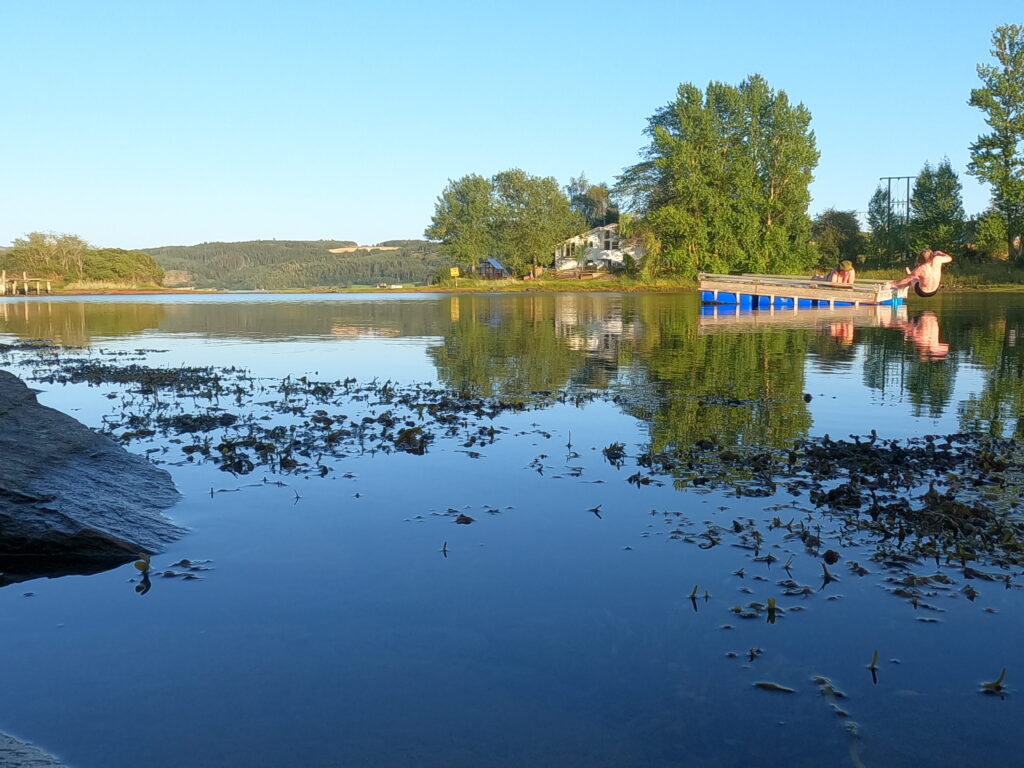
But that was just too boring for some people.

Relaxed atmosphere on the raft. NOT.

We are delighted that more and more saunas are popping up around the country (Norway), which are publicly accessible – and with swimming facilities next door! Hot and cold alternating, that’s the best!