Selbu Open Water Swim

Before Tobatheornottobathe goes on a trip, and as is well known, almost all trips can turn into bathing trips, a lot of preliminary research is done. Idun checks the relevant municipality’s website to see if the swimming spots are listed there, and both bathers Google around, on maps, with and without AI, for swimming tips. Knut also usually checks to see if there are any groups for ‘Open Water Swimming‘ in the relevant area, and there has been a lot of growth in the number of open water swimming groups the recent years.
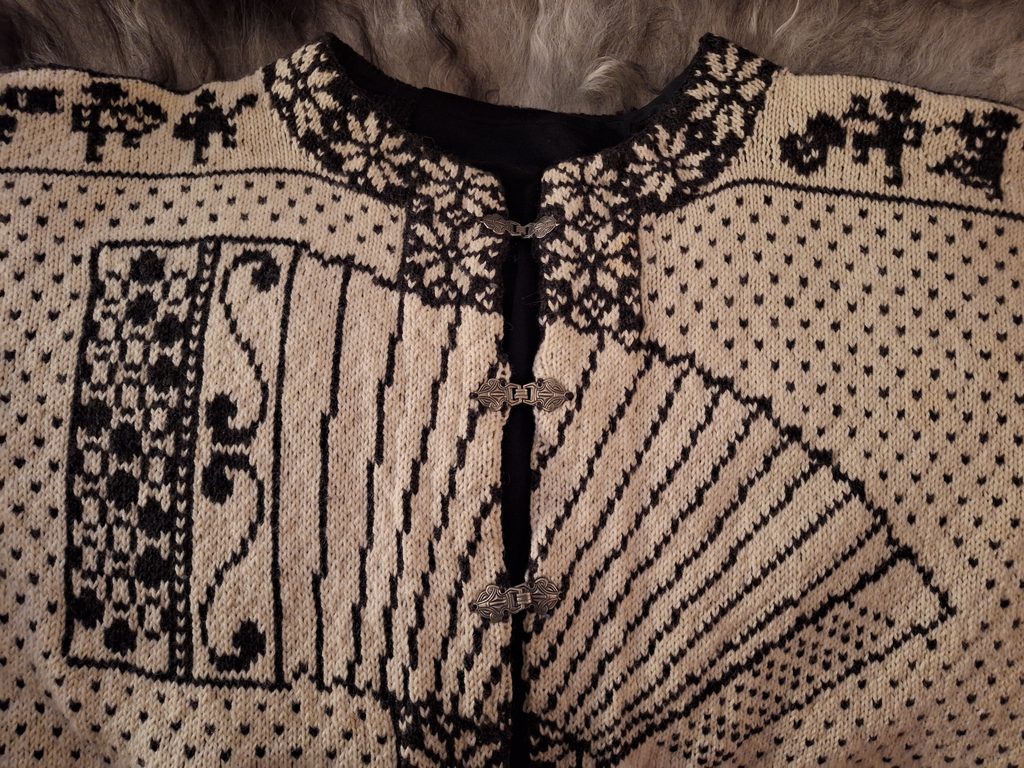
After a cold bath, wool is just right. Idun’s ‘Snaustrindakofte‘ is edged with ‘Selbu Roses‘.

Knut had signed up for the Trondheim Triathlon 2026 and needed swimming training. This can easily be done in Trondheim’s swimming pools, but then you don’t get to practice freezing. Another, easy alternative is the Sjøbadet in Trondheim (ref bad Sjøbadebadstue) and swimming west along the pier towards Skansen. We do this quite often, but in late summer, jellyfish can be a nuisance, and after passing 2 of them at the previous swimming training, Idun said stop: ‘I don’t like this. From now on, it has to be fresh water!‘
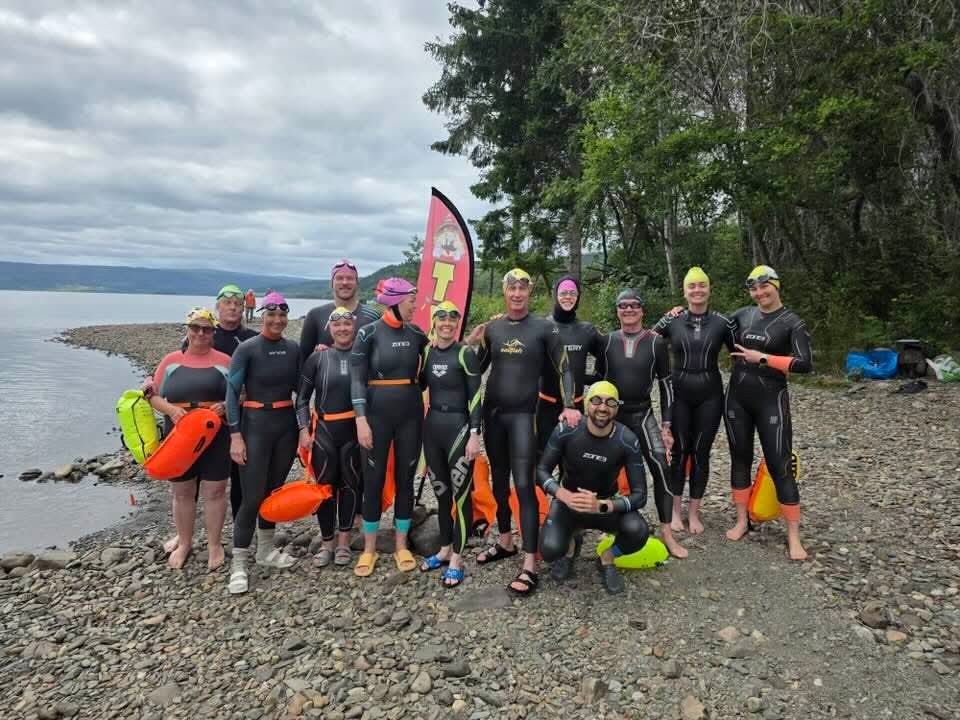
Sikk-Sakk (Zig-Zag) Open Water Swømming Photo: Marcelina Puzio

As said, so done. Knut was already a member of Sikk-Sakk (the name refers to the navigational skills many display when swimming in the open waters, without a black tiled strip on the pool floor to steer by), and when Sikk-Sakk invited to a swimming competition in lake Selbusjøen a month before the Triathlon, it was a perfect fit.
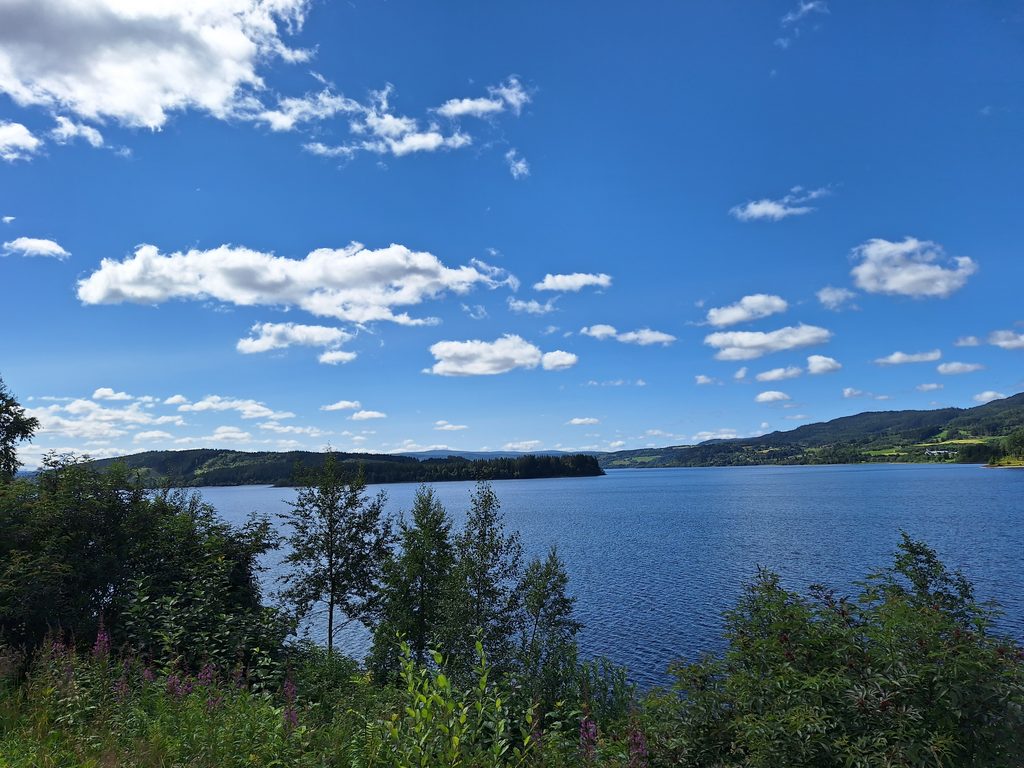
Setsås = ‘the hill that resembles a seat’ refers to the flat top of the hill Garberget – seen from the island of Sessåøya.

The longest swim route went from Strandveien (to the right in the picture above), around Sessåøya island and back, a total of 3.2 km. Those who were in good shape finished in about 55 minutes, Tobatheornottobathe took twice as long. Selbusjøen is large (at least long), and we felt the wind well when we were not in the lee behind the island. None of us had used the wetsuits during the last year, and it took time to get our breathing under control and reach ‘flow mode‘. We used mostly breaststroke this time, and that is not the fastest way of swimming. But that way we got to be in the water the longest time, at least!
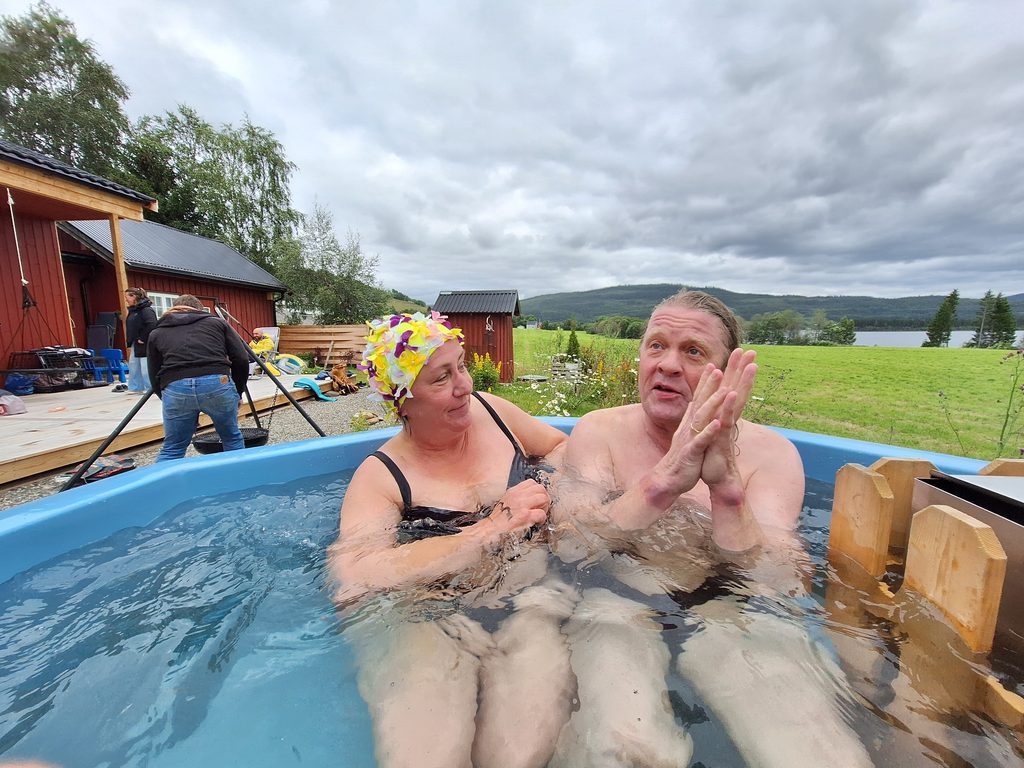
After a long and cold summer in Trøndelag, the temperature in Lake Selbusjøen was 14? degrees, and we enjoyed a warm bath in the jacuzzi afterwards.

The last swimmers took so long to swim that the fire in the stove in the jacuzzi was out long before we got in. The 32 degrees felt warm at first (we were probably quite chilled on the outside), but it gradually became clear that we couldn’t warm up that way. Wool was absolutely needed.

Many thanks to the organizers! Selbusjøen Open Water 2026 was a great event!

And – yes! Rumors is telling that Selbusjøen Open Water Swim 2027 might happen. We look forward to it already!
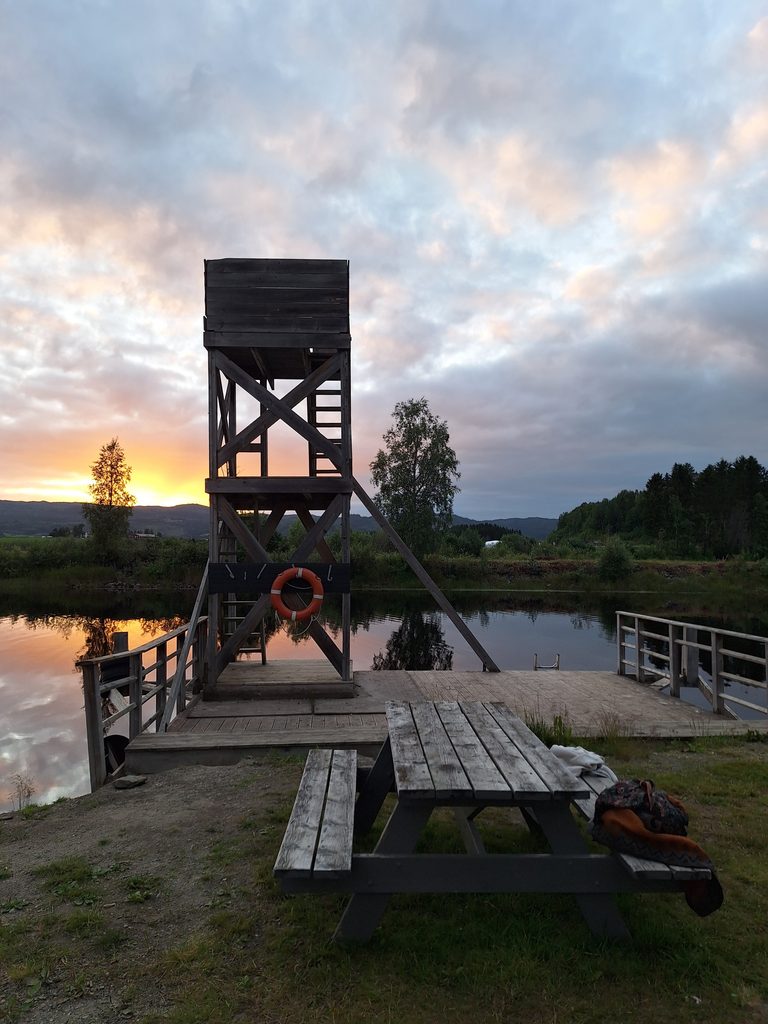
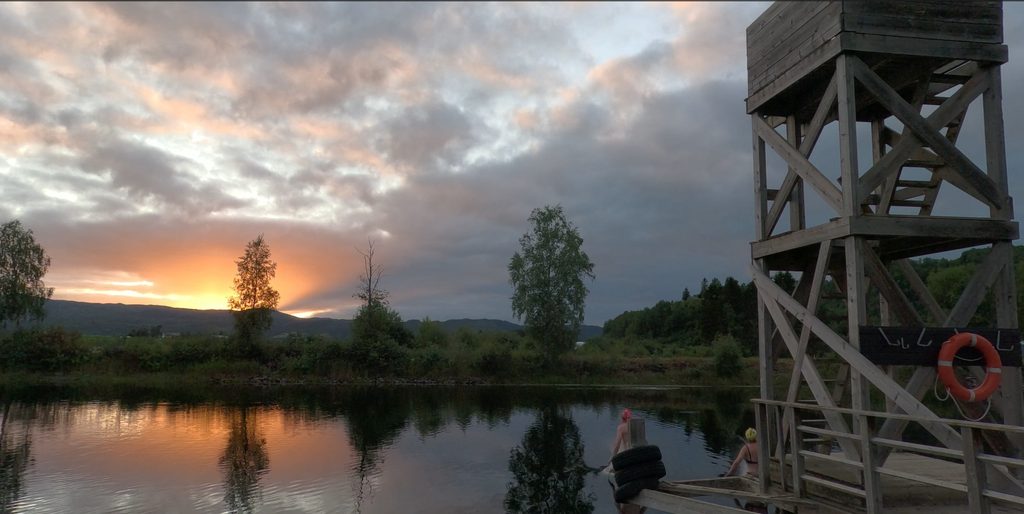
Even after 2 hours of swimming, an evening bath in the sunset is just perfect. However, this time, Knut had to be pushed a little for once.

Kjeldstadfossen

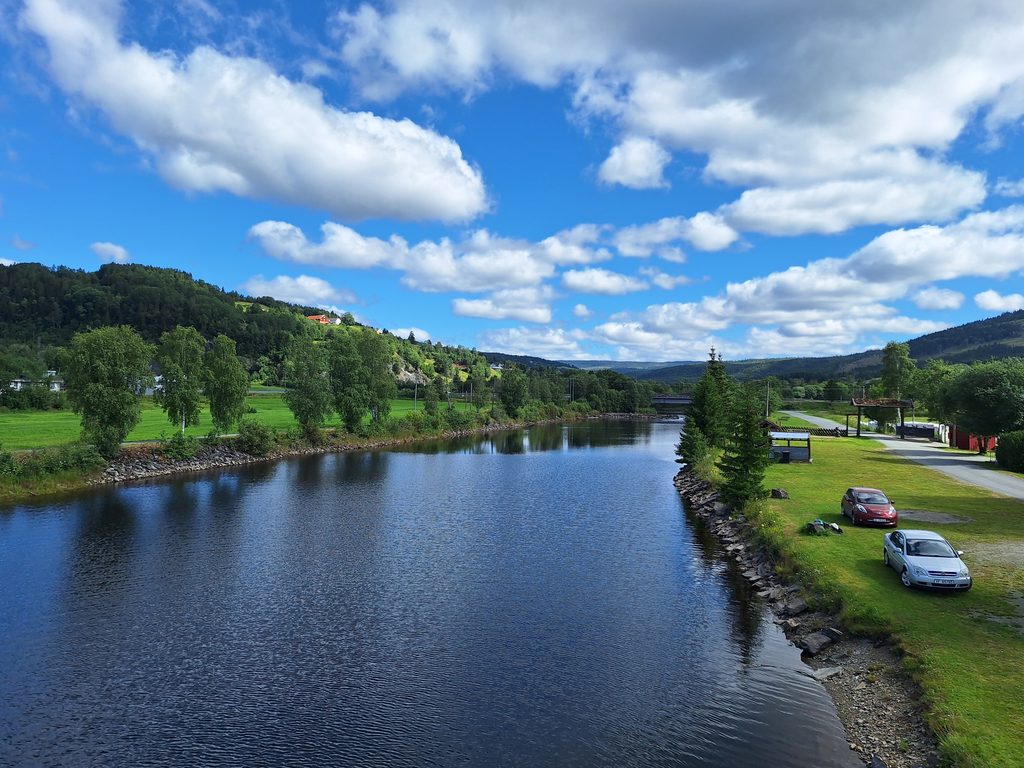
Tobatheornottobathe was in Selbu and stayed at the mouth of the Garbergselva River, it’s a great place!

Garbergselva’s mouth: Quiet and beautiful.

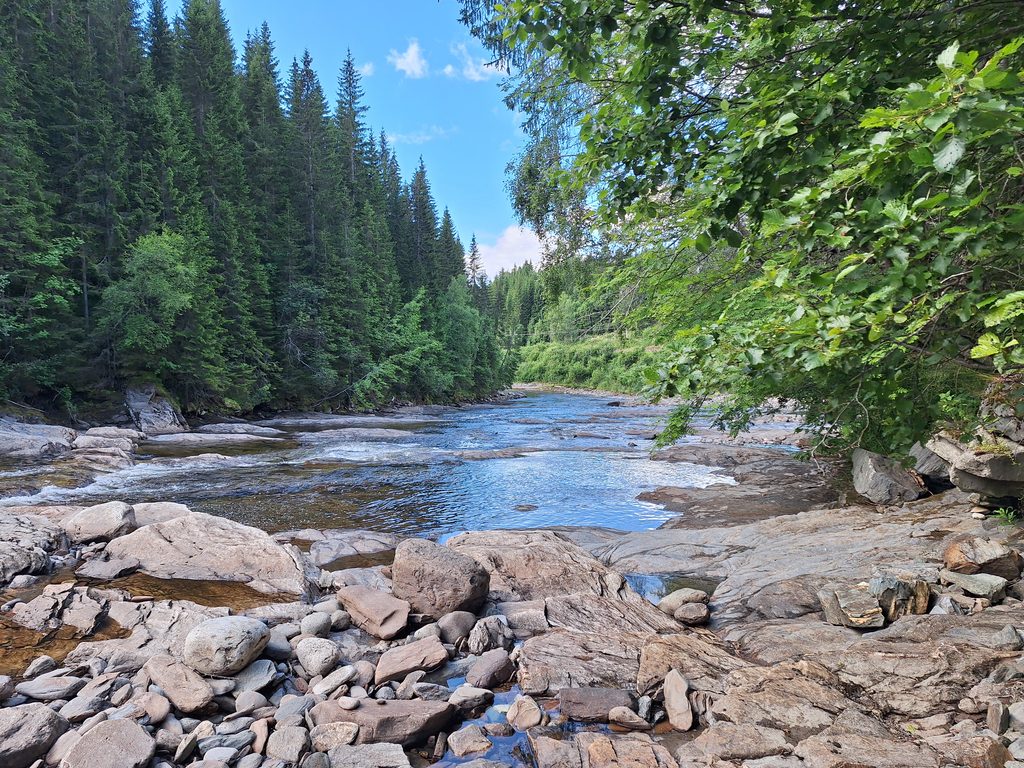
The Garberg River is 12 km long and has its source in Skarvan and Roltdalen National Park east of Selbusjøen. We had received tips about several swimming-friendly waterfalls in the river, and we had to check them out. Prestfossen in particular is much talked about. Not only as a swimming spot, but also in a controversial power development case.

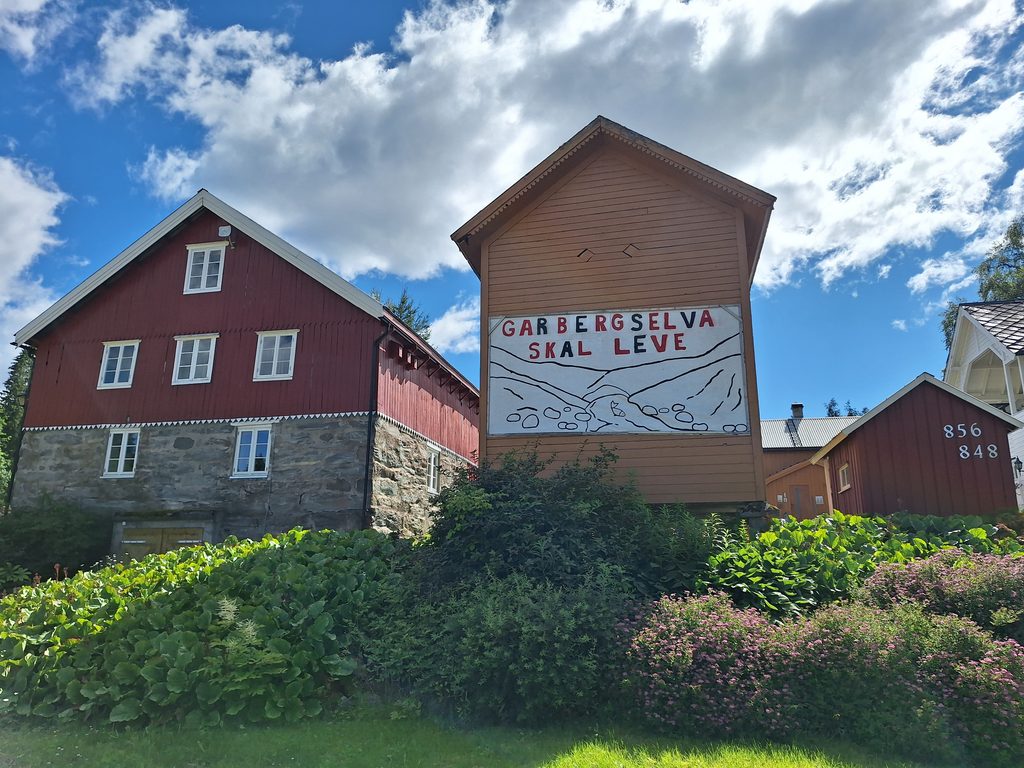
Let Garbergselva live!

Statkraft applied for a license to develop the Prestfossan power plant in 2011. The Garbergselva is the last untouched watercourse in Selbu, and the Norwegian Nature Conservation Association campaigned against the development. The case ended with a no to the Prestfossan power plant in 2019, and later also a no from the NVE to the construction of the Kjeldstadfossen power plant in 2023.

Garberg River seen from Kjelstadfossen.

The bathing tour didn’t go quite as planned. We drove up and down the Garbergselva several times but couldn’t find a passable road to Prestfossen. So when we passed ‘slarvkaillan’ at Stenstad for the 6th time, we gave up and swam at Kjeldstadfossen instead.

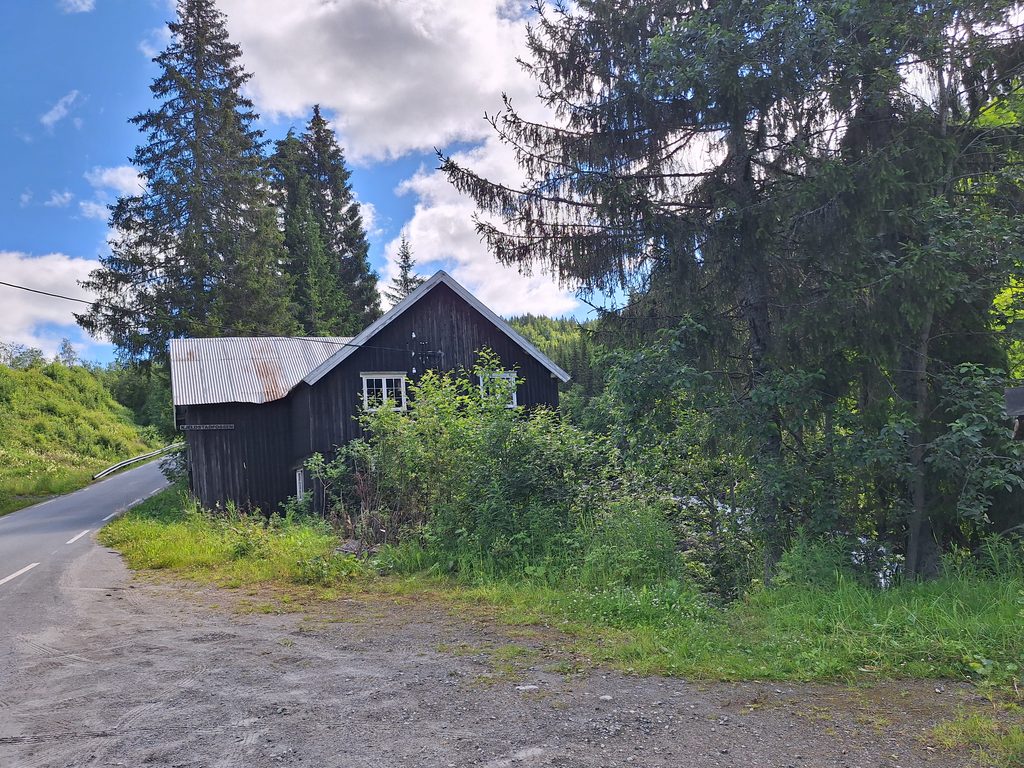
Kjelstadfossen sawmill and mill.

Kjelstadfossen has already been developed for many years! The millhouse is from 1850 and the mill can be driven electrically today, as a demonstration mill. From the 17th century there was a sawmill at Kjelstadfossen.

Inspecting Kjelstadfossen bathing spot.

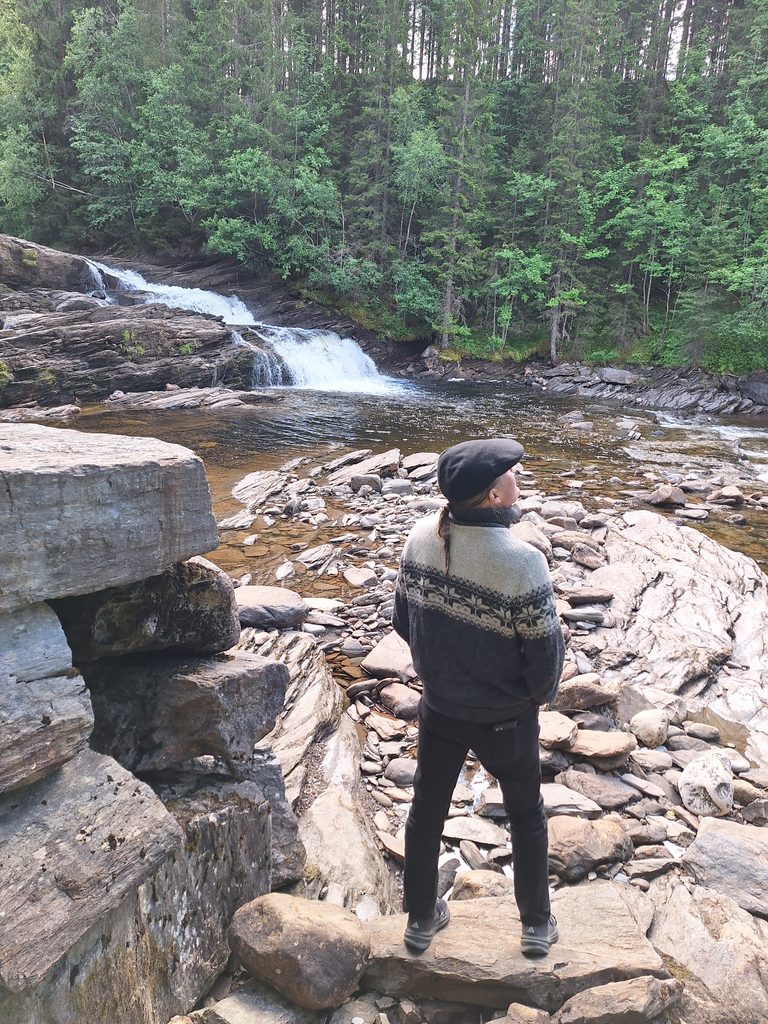
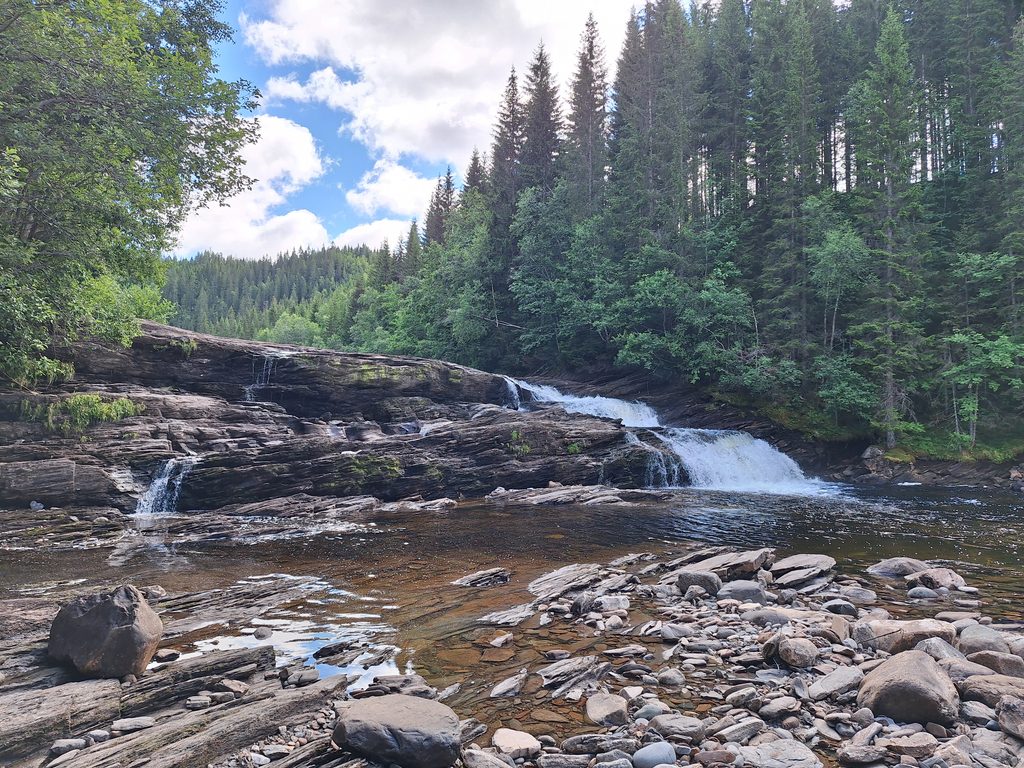
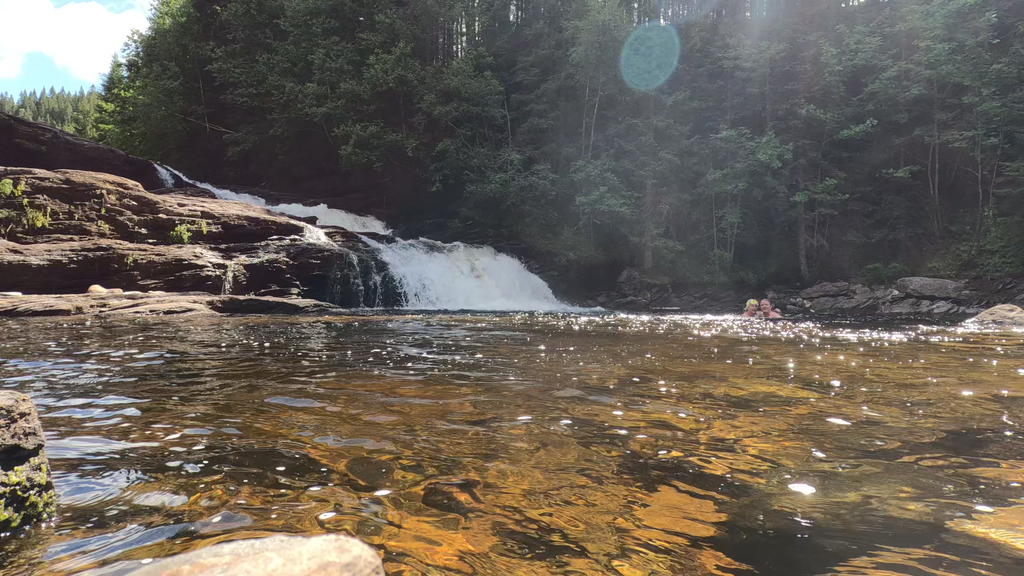
The waterfall was previously called Hampfossen, because the waterfall’s power was used to process textiles (hemp and wool). The Kjeldstad farm (Kjetil’s farm) owned a large resource in this waterfall, since the Garbergselva has such a large water flow that it does not freeze in winter. The mills elsewhere in Selbu were located by smaller streams and stopped during the winter.

Kjeldstad waterfall.

It was a great swim in glorious weather. But it must be noted that the water was quite fresh and cool, even in the middle of summer.

Thanks to the Norwegian Nature Conservation Association, who secured this gem of a swimming spot!

Selbusjøen

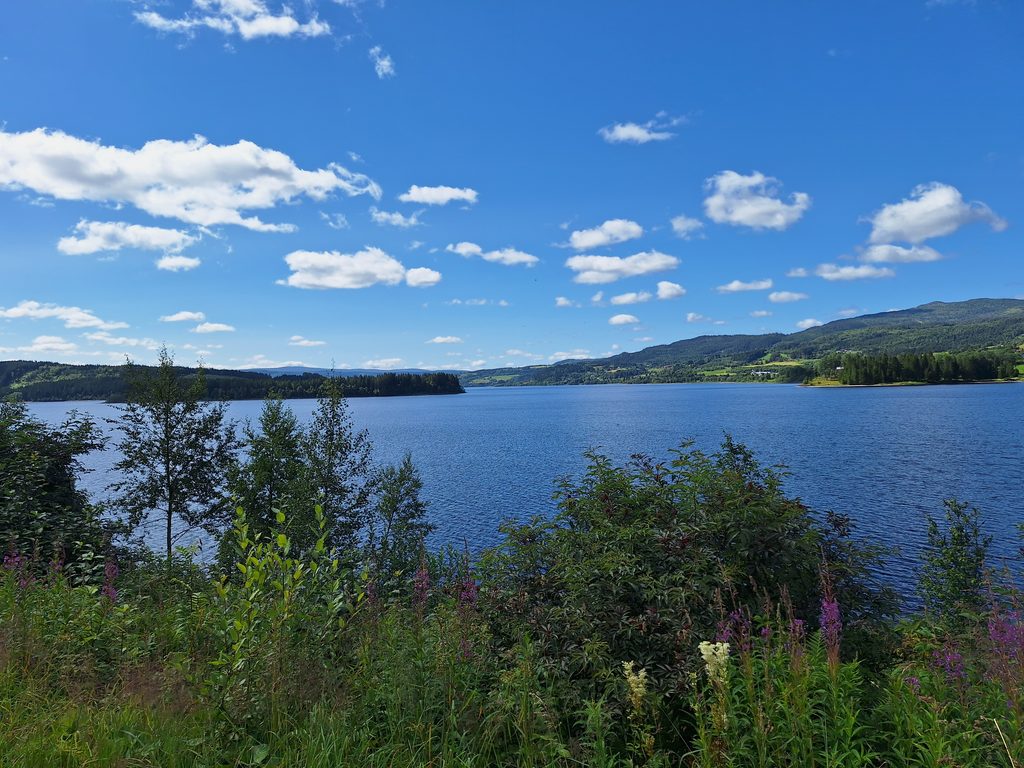
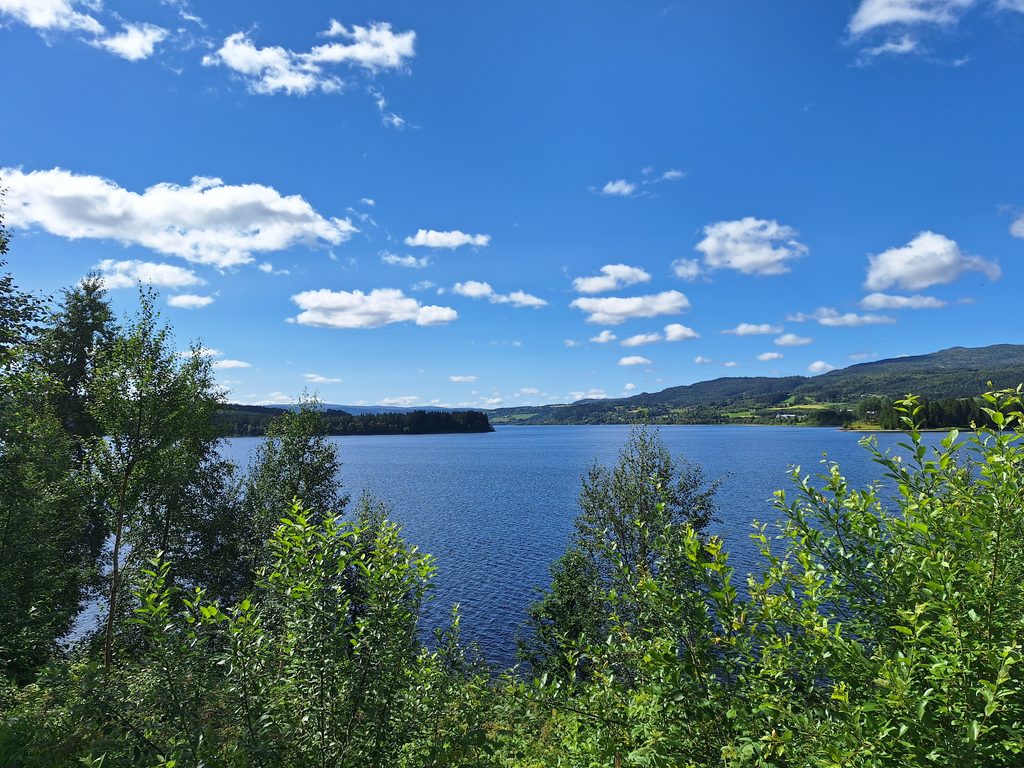
The settlement in Selbu is largely concentrated around Lake Selbusjøen, which with its almost 60 m2 has a length of 35 km while its greatest width is 4.5 km. It is so long and narrow that it was named Seli (strap). This is glacial work, and the ice has dug thoroughly, the lake is more than 200 m deep. When the ice age ended some 12,000 years ago, the sea flowed in, because the land uplift was much slower than the ice melting, and so Lake Selbusjøen became part of the Trondheimsfjord. With a sea level 200 meters higher than today, Selbu was at that time a coastal municipality!

Selbusjøen. Formerly a sea, now a lake.

Selbusjøen is filled by several rivers, of which Nea river is the largest. The outlet is in the west, where we find the source of the river Nidelva. At a critical time some 12-10,000 years ago, the water in Seli chose the longer route northwards to the sea (Trondheim) instead of the shorter route west towards river Gaula, at Ler. It was the hills in Kaldvelldalen (in Klæbu) that blocked the water. Without these, the Nidelva would have been only 15 km long and its mouth in Gaulosen. Imagine that!

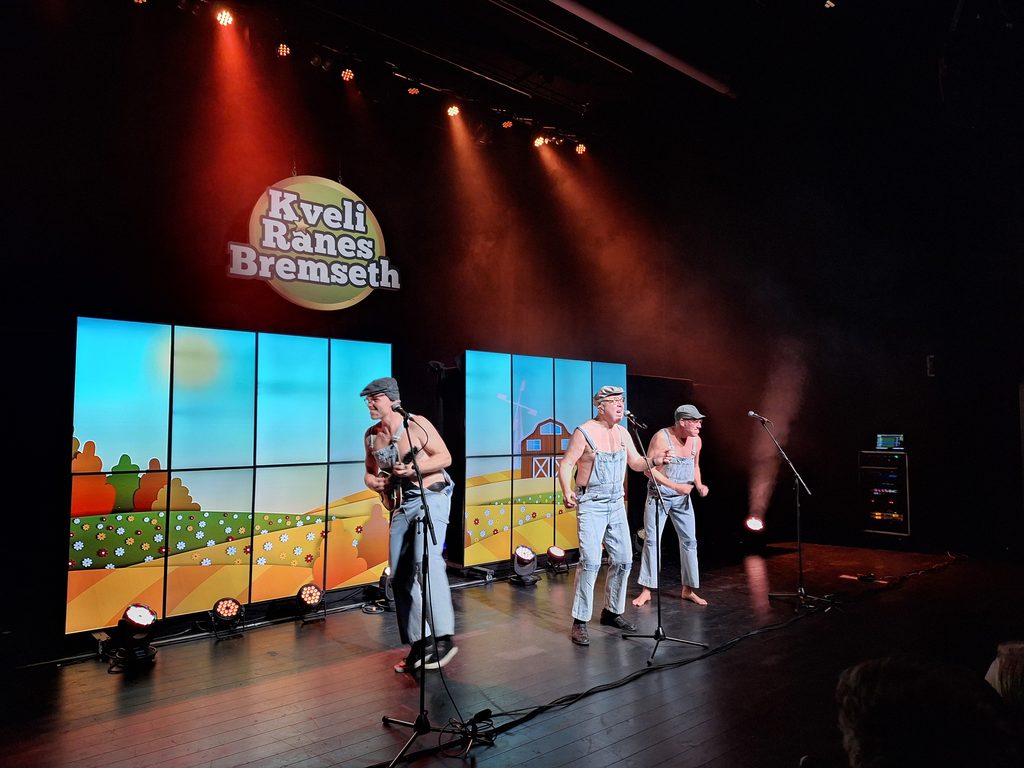
In the fall of 2023, we had heard that there would be a KRB revue in Selbu: Kveli, Rånes and Bremset. That’s fun! We wanted to go to the revue! So we fired up our little electric car and drove off. It was a cold November day, and range anxiety already took hold of us on the way up. Little Leaf didn’t exactly drive far between each fill-up… But we arrived and managed to put it on slow-charging before the show started.

KRB revue in Selbu.

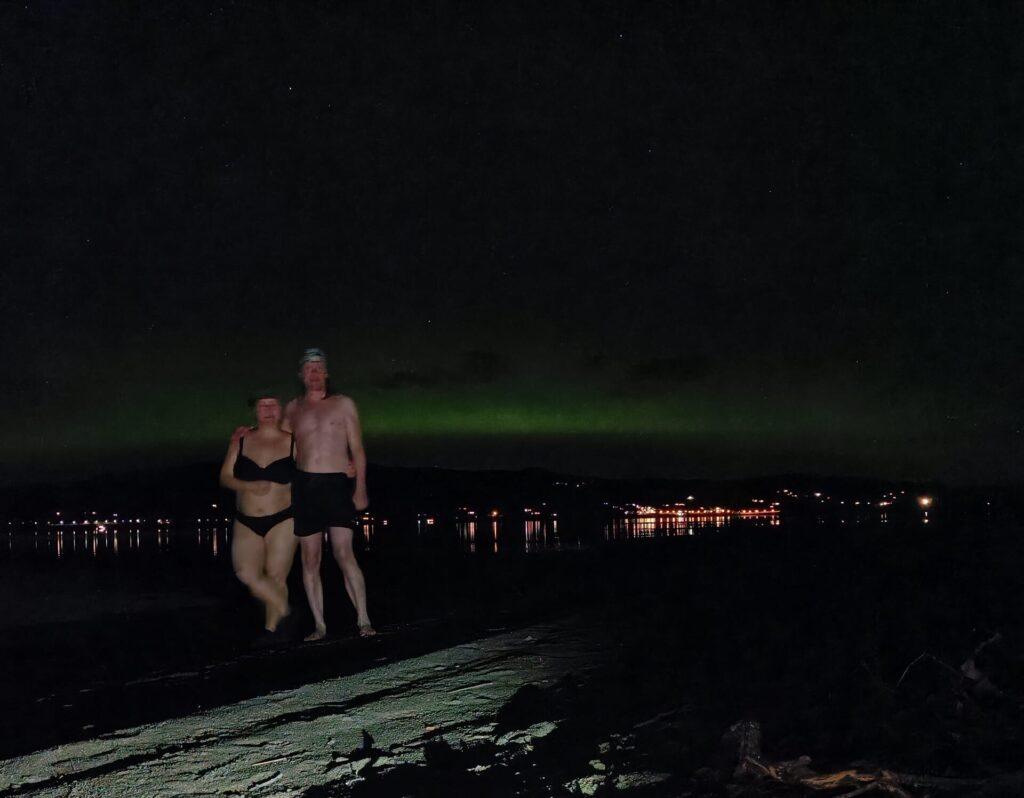
So far so good. Just a bath missing, once we were in Selbu. Where to swim in Selbu? Selbusjøen, of course. But where? Tobatheornottobathe believes that every municipality with self-respect should be able to list nice swimming spots on its website. Really! Truth be told, it wasn’t difficult to find Vikaunet as a good option, but seriously! Feedback has been sent, and the swimming has been done. It was a great, really cold bath on a great (but shallow) beach – with northern lights. Selbu delivered!

GoPro doesn’t perform at its best when it’s dark, so we didn’t get a swimming picture. But check out the Northern Lights!

A bath in lake Selbusjøen was just right – even in minus 10 degrees. And then it was just a matter of rolling home? Oh no, it’s not only downhill back to Trondheim. We barely managed to get to Stjørdal, but luckily – there we were able to fast charge.

And if anyone is wondering what it really looks like at Vikaunet?

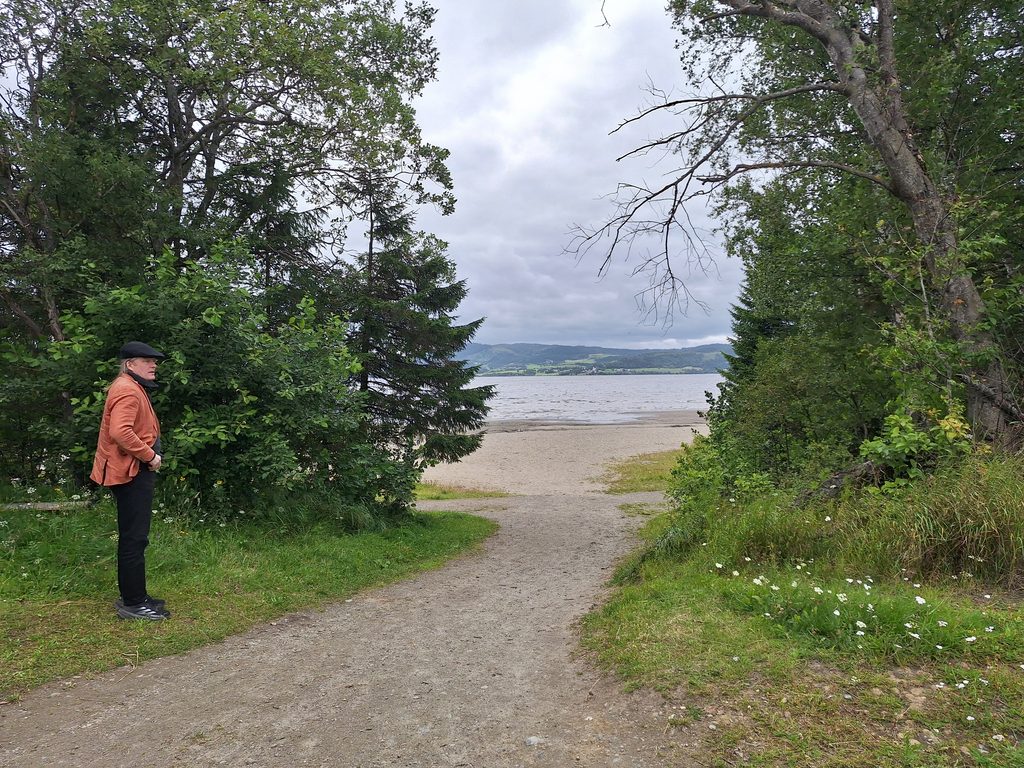
On the way to Vikaunet Beach in the summer of 2026.

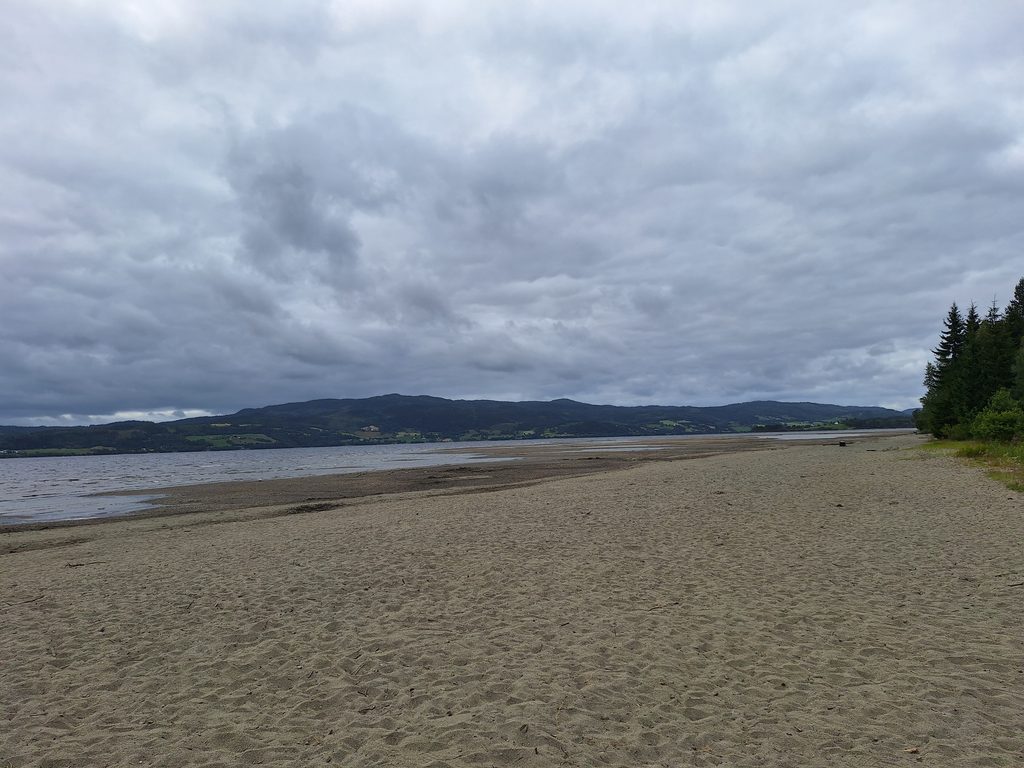
Vikaunet is a splendid swimming spot, although a bit shallow. Wading is to be expected. But for families with children – absolutely great..

Vikaunet and Lake Selbusjøen.

Selbu

Hm, it’s easy to wonder if the inland municipality of Selbu might have been named after the sea mammal seal (“Sel” in Norwegian), otherwise it must come from sel in the meaning of “seterbu” (shelter). But no, no, the name comes from neither of them. Seli was the Norse name for the lake around which the villages are built. Selbusjøen is long and narrow, and its shape has turned thoughts towards a harness or a strap (“Sele” in Norwegian).

The Strap village in Selabú has lived well by Lake Selisjøen for more than 6,000 years. 10,000 years ago, when sea levels were more than 100 m higher than today, this was an arm of the Trondheimsfjord, and the idea that the word Selbu could have come from the sea mammal is actually not so stupid. But wrong.

Tobatheornottobathe was going to be part of a swimming event in Selesjøen and we were looking forward to many new swimming experiences in a village that we haven’t visited often recently. However, Knut knows the village well, he had Micro Design in Selbu as his first employer after completing his master’s degree.

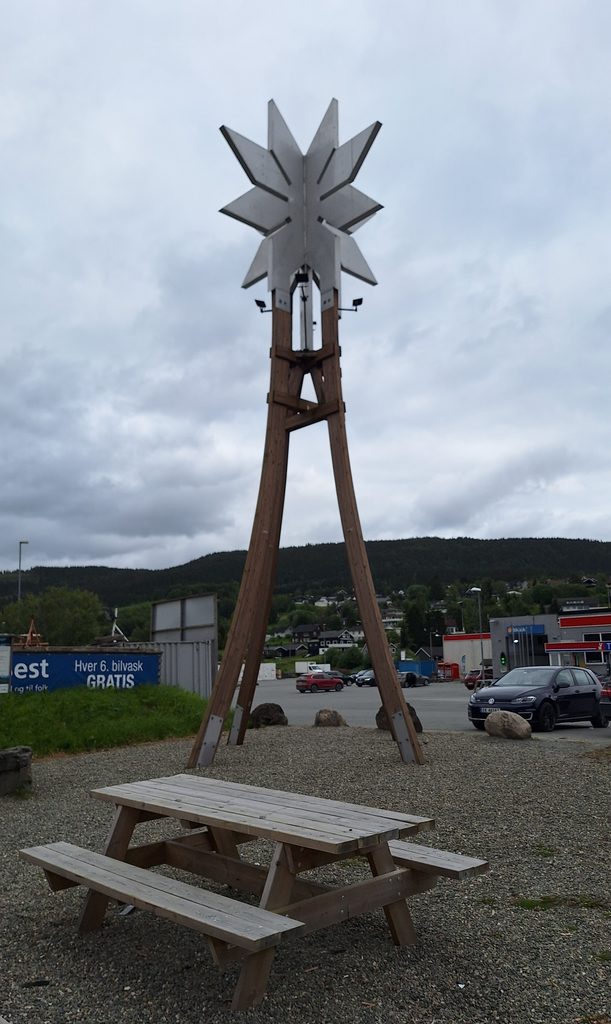
Selburosen in 3 dimensions. Apart from the millstone industry, forestry and agriculture of earlier times, knitting is probably what has made the municipality most famous.

Selbu is located southeast of Trondheim and currently has a stable population of just over 4,000. The landscape is varied, both flat and steep with many mountains, rivers and lakes. Put on your Selbu mittens and check it out for yourself!

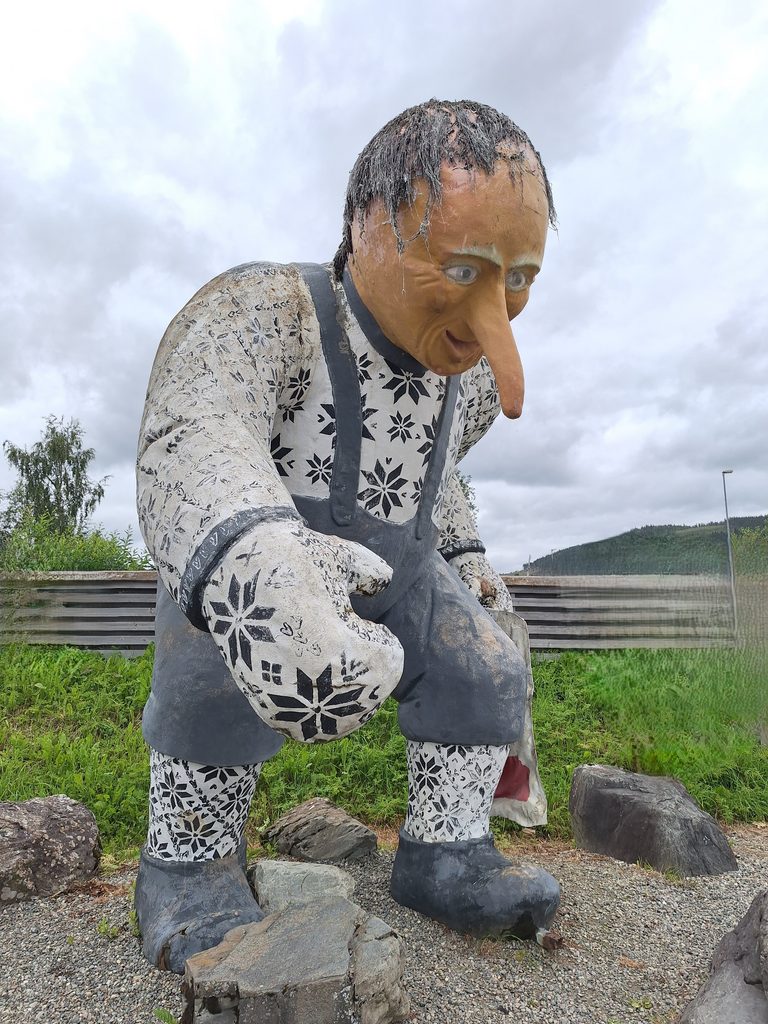
Even the trolls wear the Selbu mittens in Selbu. It was the artist Kjell Pedersen who was behind the creation of the Selbu troll in 2010.

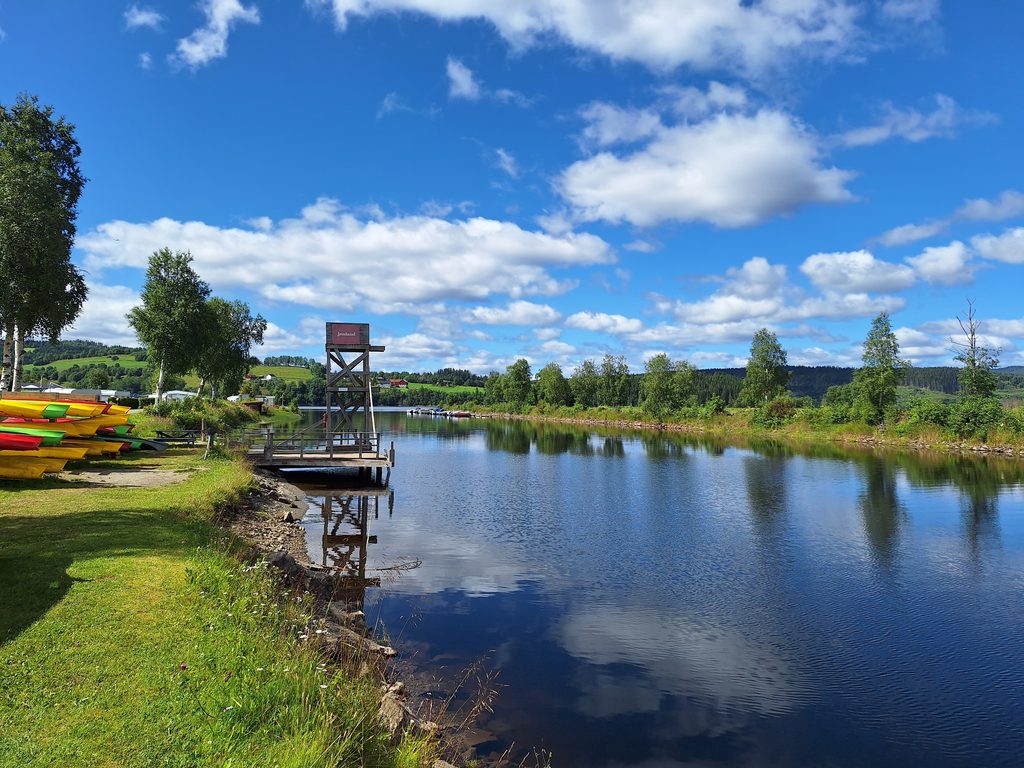
In the absence of relatives to crash at, we ended up camping this time. How sad is that? Not boring at all, as it turned out, we’re talking about cabin life just a few meters from the mouth of the Garbergelva river. A river mouth that turned out to be both quiet, beautiful and deep enough for diving.

River estuary with diving tower.

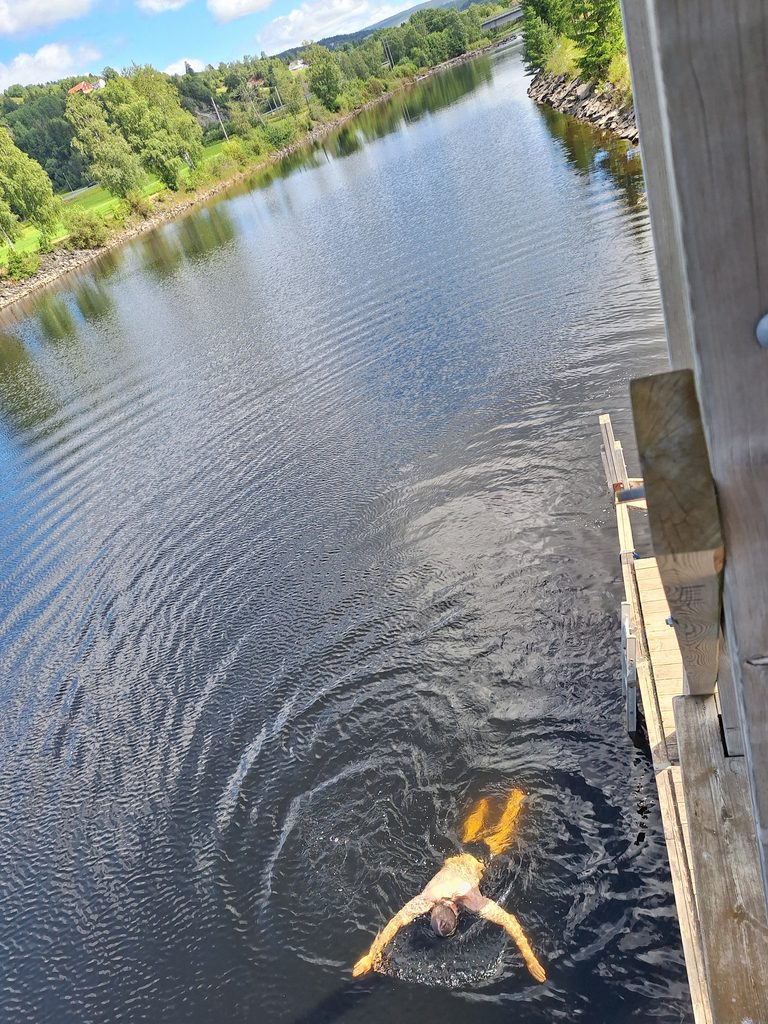
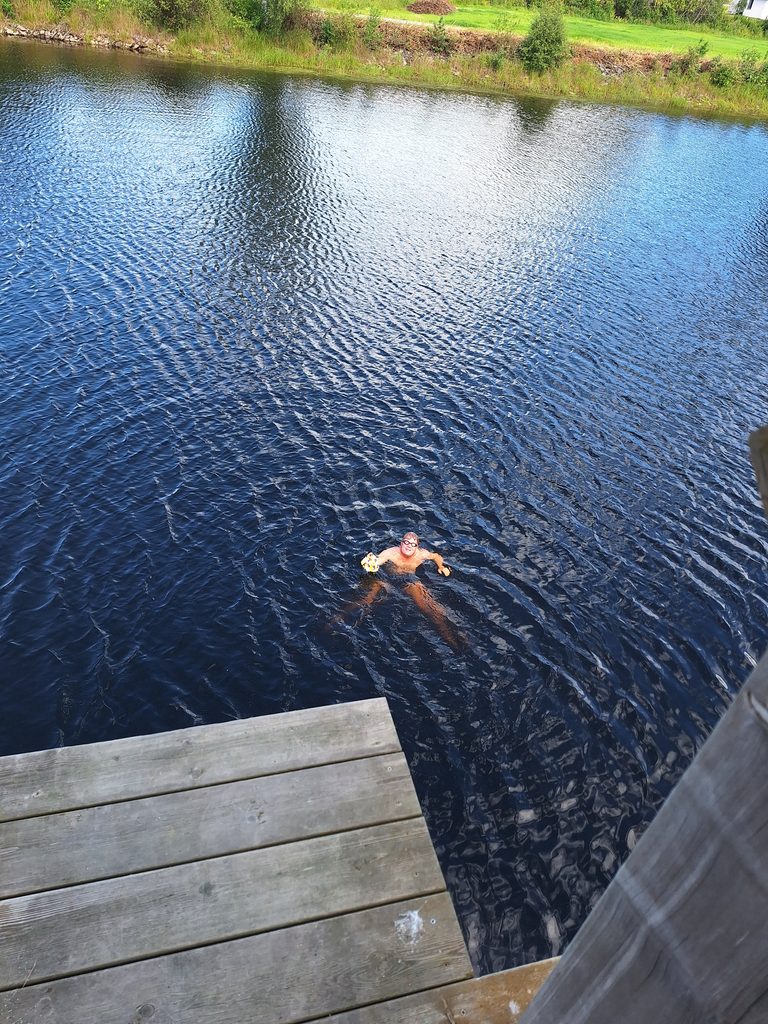
It had to be an evening bath even though we had already bathed enough on this August day in 2026. Idun was a little shaky in the knees in the tower but let it be. A great bath!

But the swimming cap was ripped off! What a shame! It’s fun, colorful and has been part of a lot of fun swimming. We swam back and forth in front of the diving tower many times. How strong was the current? Had the cap already drifted all the way to the sea? It didn’t help that it was colorful and bright, in the dusk we couldn’t find it.

The hunt for the bathing cap.

The next morning, however! Knut took on the job. With some directions to where we had jumped in, he found the bathing cap after only a few tries. It had sunk straight down! Big surprise. We didn’t know that bathing caps sink straight down.

I found, I found!

It is well suited for swimming both morning and evening in Garbergelva.