Gozo

Gozo’s good harbors have been known since ancient times, and according to Maltese tradition, Gozo corresponds to the island of Ogygia, where Odysseus was held captive (as a sex slave) for seven years by the nymph Calypso.
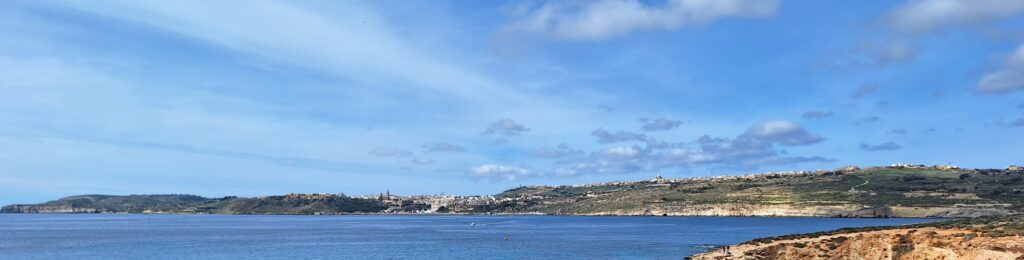
Gozo seen from Comino.

Arriving in Gozo by boat from Comino or Malta, you end up in a small town (Gozo’s fifth largest settlement), Ghajnsielem, which is nestled up the slope from the harbor. Idun made a futile attempt to make contact with the natives, but it was with little success.
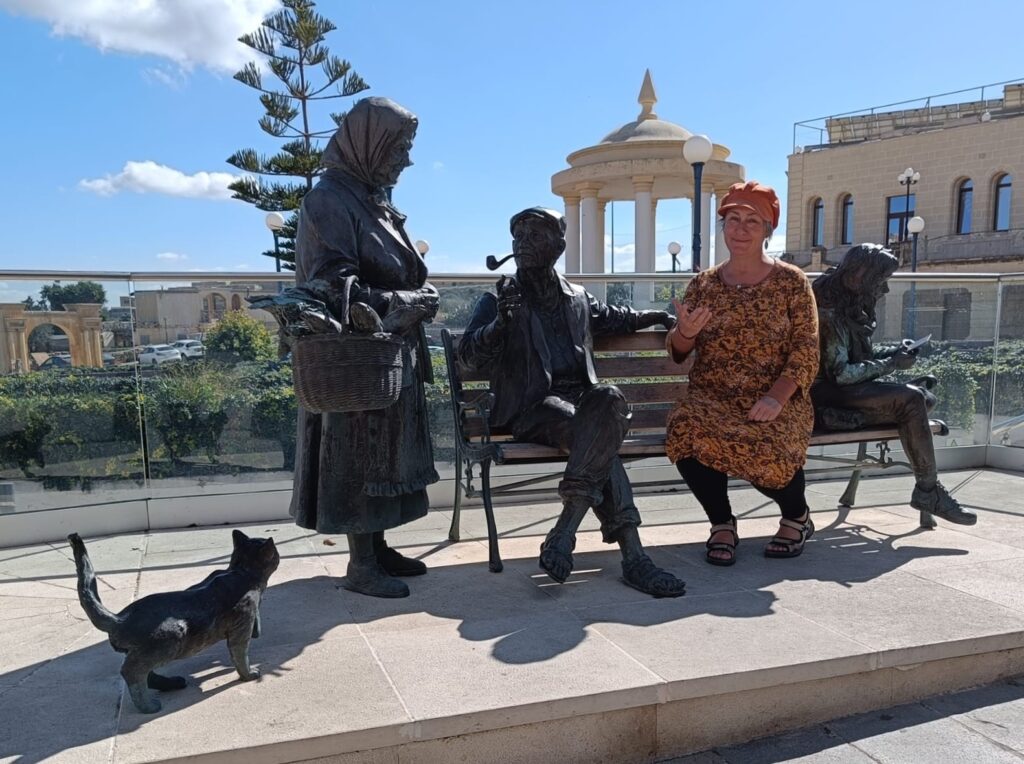
Idun on the bench in Ghajnsielem.

The capital of Gozo was originally called Rabat, like many Arab cities, but was given the name Victoria the 10/6-1887 by the British government, in commemoration of the Queen’s 50th anniversary as regent. The place has been inhabited since the Stone Age, and ancient monuments from the Bronze Age, Phoenician and Roman times have been found.
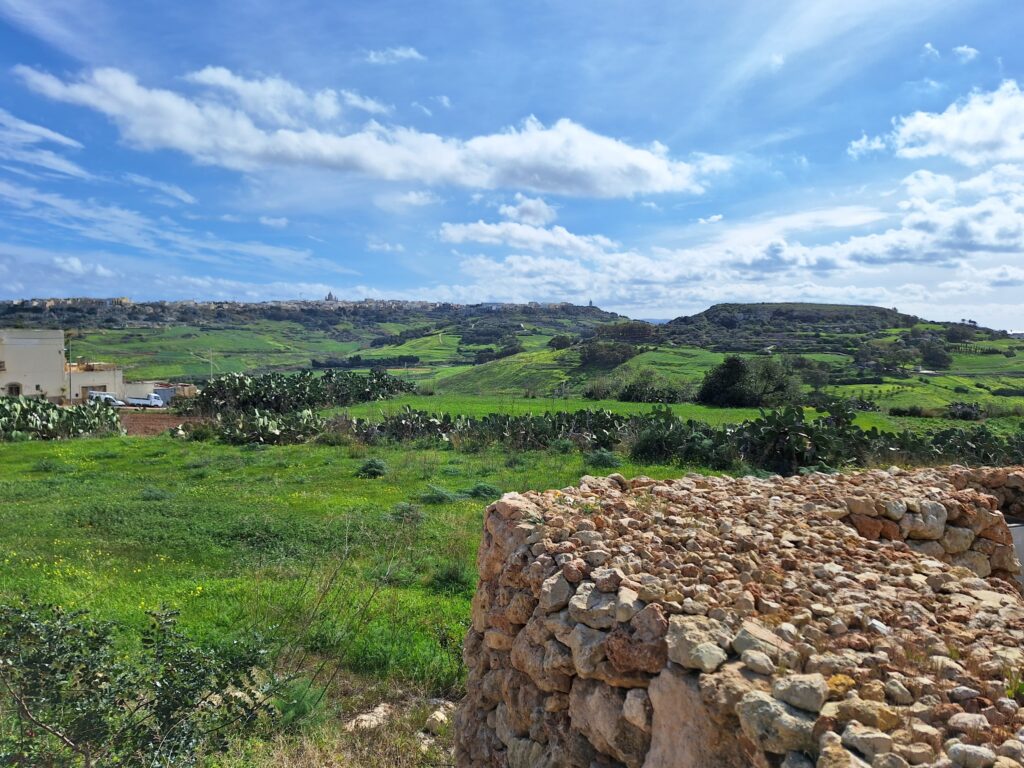
Città Victoria seen from Ġgantija.

In the Middle Ages, under Aragon, the fort on the hill was expanded into a citadel. This was not entirely successful, however, as the castle failed to withstand the Ottoman attack in 1551. As a result, almost the entire population of Gozo (5,000 people) was captured and transported to Turkey as slaves, never to return. The Order of St. John strengthened the citadel and gave it the appearance it has today.
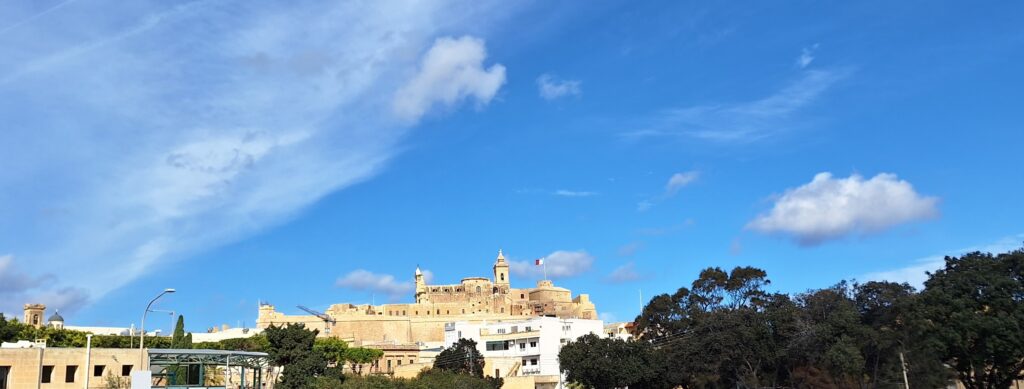
Il Castello in Victoria.

And what does this have to do with swimming? Absolutely nothing. Really! On Gozo, like on the island of Malta, there is a water shortage, and swimming inland does not happen – there are no rivers, waterfall or lake-type swimming spots. What do you do then? Well, the emergency solution for Tobatheornottobathe was an outdoor pool at a roof. Nice! And a great view when you get up from the bath.
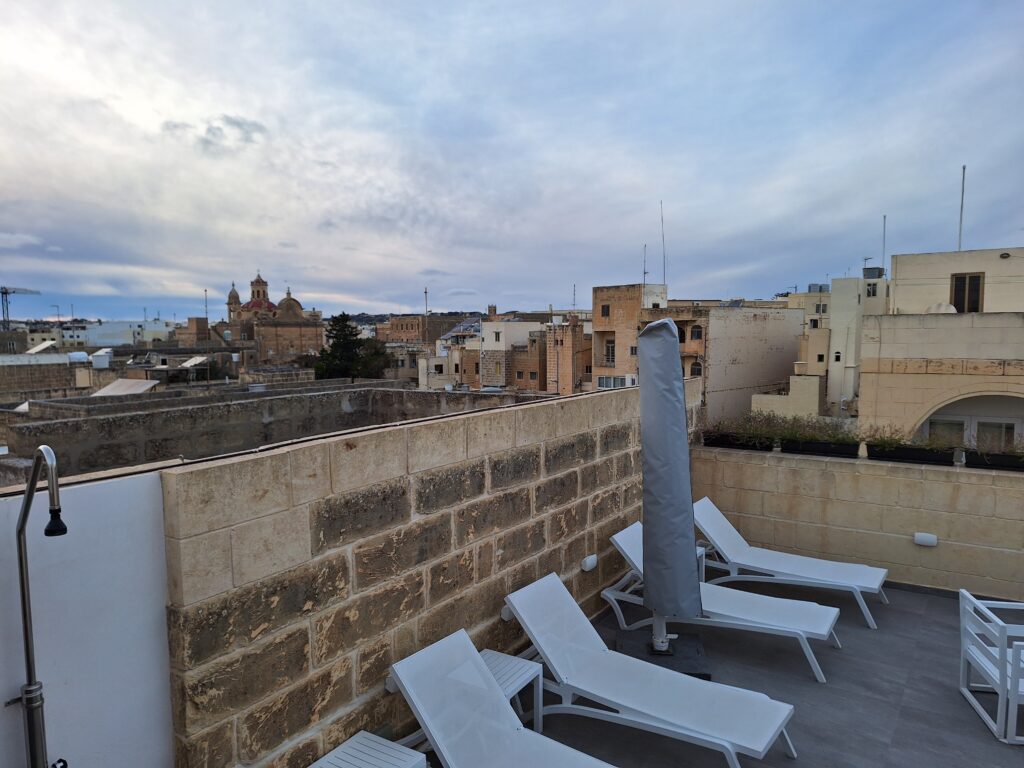
The view from the bathing roof in Victoria..

Swimming in Gozo should preferably take place in beautiful, crystal-clear sea with a wealth of exciting places in the form of caves, arches and beautiful rock formations. But you shouldn’t drop a cool, refreshing swim on the roof either!
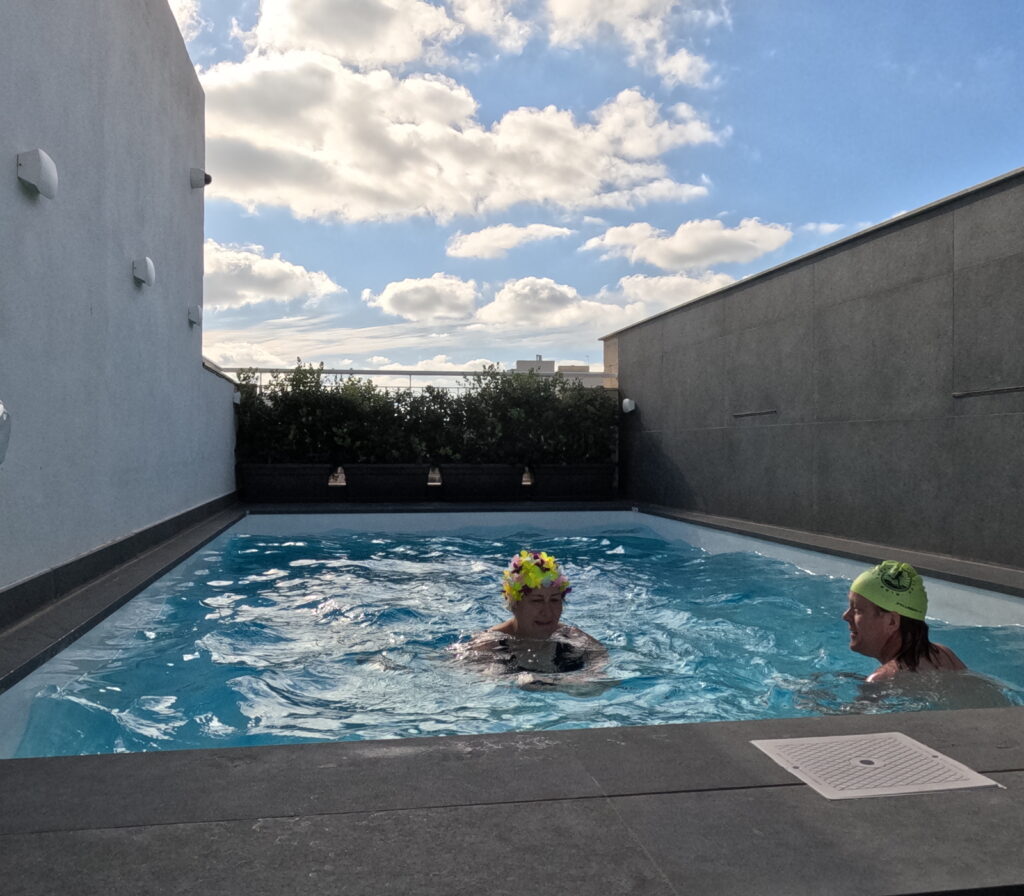
Roof bath.

Before or after the bath, maybe a party would be just right? During the carnival season, there are certainly possibilities! Check out Pjazza l-Indipendenza, Ir-Rabat, Għawdex, there are several good restaurants and cafes here. And if it’s a party, it’s a party. It doesn’t matter if children aged 0-14 are lying around sleeping. You’re absolutely not going home!
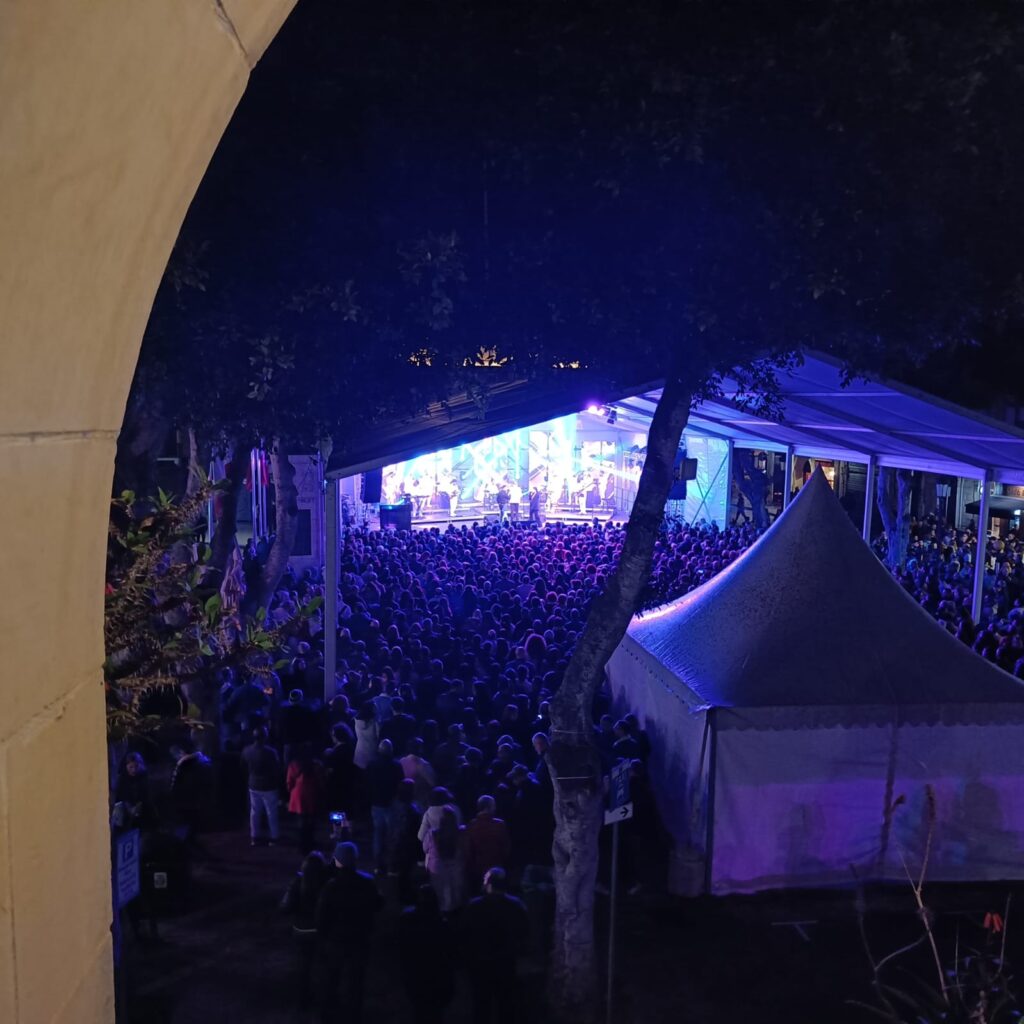
Party at Independence Square, Gozo.

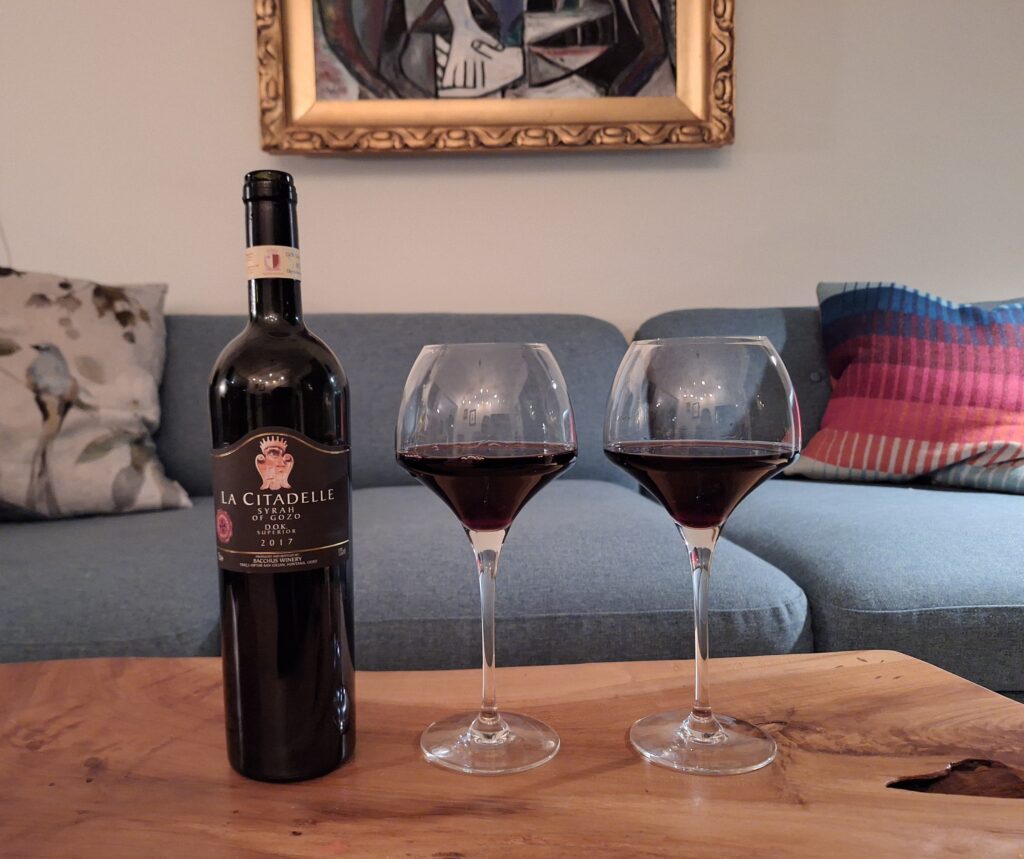
…but for those who want to go home, there are other options, of course. For example, we would like to give a boost to Gozo’s wine production. There is a lot of good stuff there!
The Blue Hole

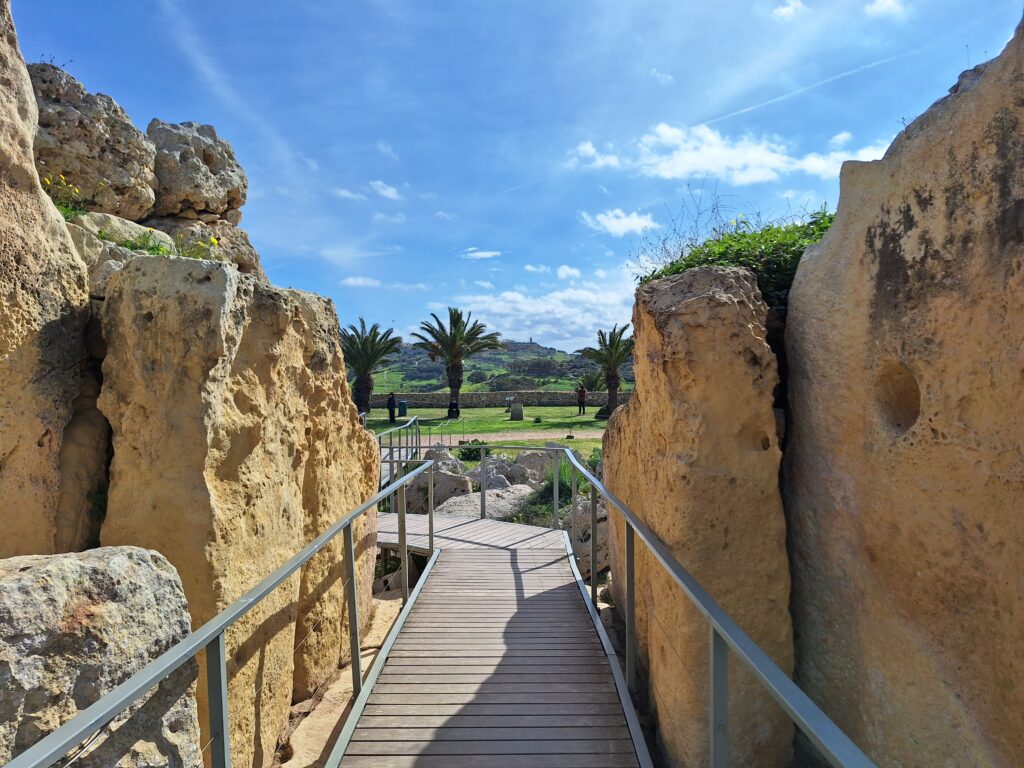
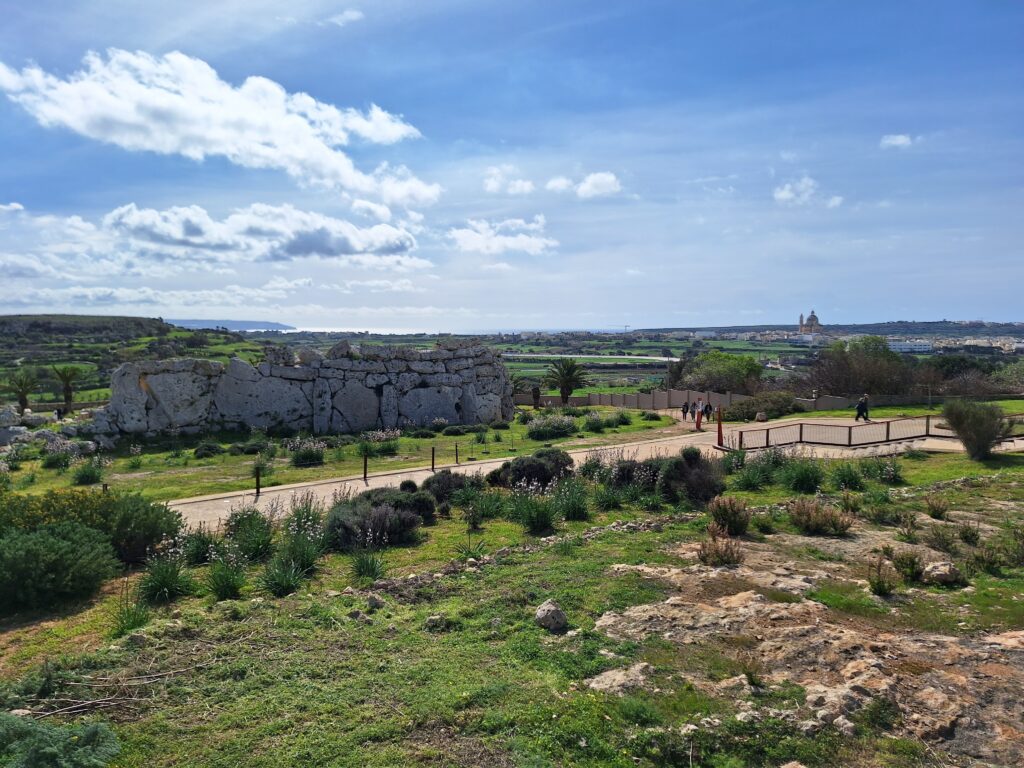
Gozos Ggigantija. View west towards the San Lawrenz coast.

Gozo (Maltese ‘Għawdex‘) is the second largest island of the Republic of Malta. It measures 14 km x 7 km and has a population of 40,000. The island was settled from Sicily, which lies 170 km to the north-east. Here you can find some of the largest human made structures in the world – from the Stone Age.

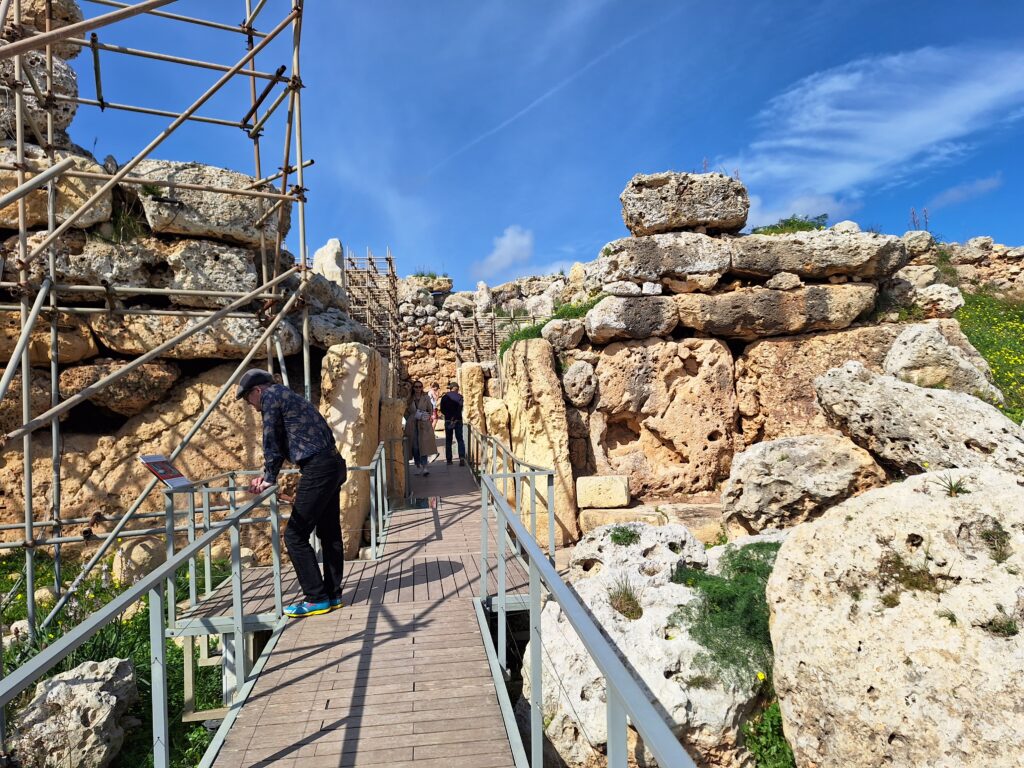
Yes, there are large dimensions in Ġgantija.

The walls of Ġgantija are semicircular (apse), built of durable coralline sandstone on the outside, and softer stone on the inside. The largest stones weigh 50 tons, and it must have been a feat to cut them and transport them to the building site without the aid of neither wheels nor metal tools.

Beautifully carved hole for door.

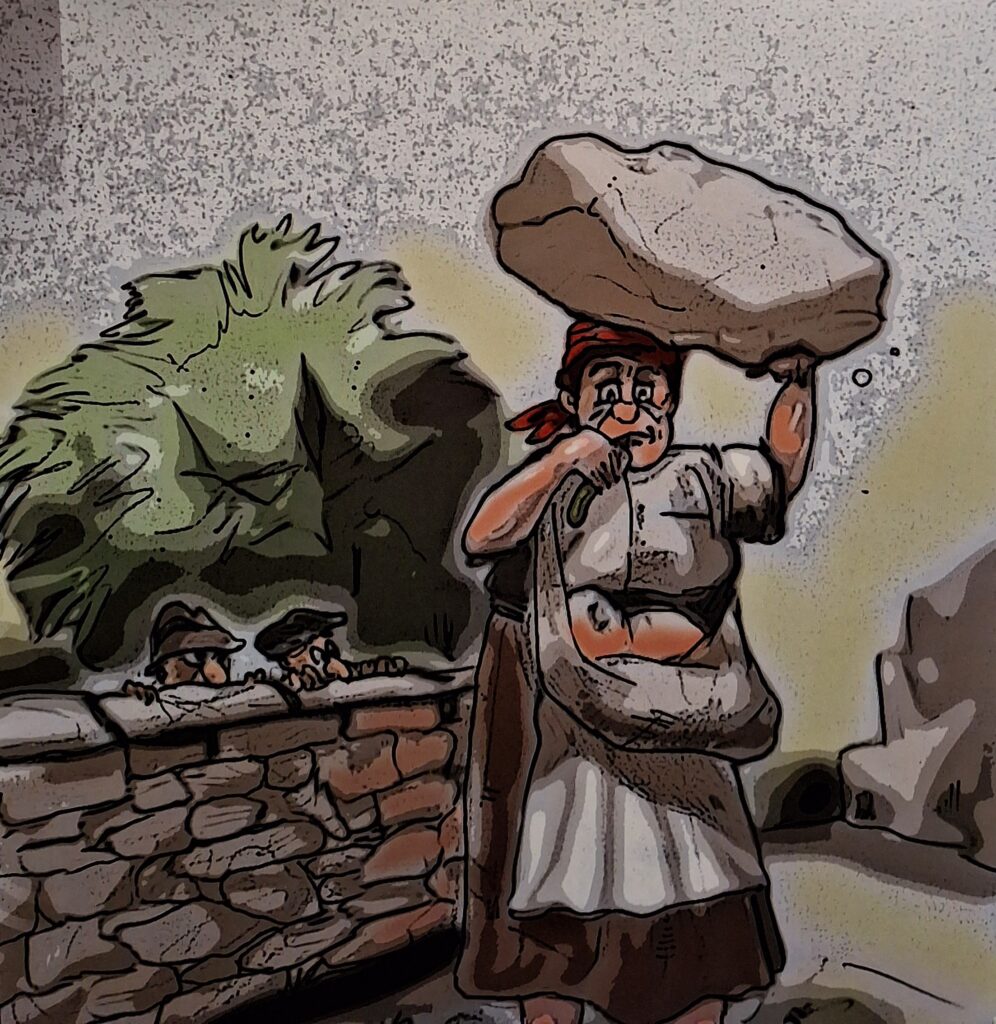
Well, actually, this was not a man’s feat. We are talking about a goddess culture, which had a taste for large women. According to local tradition, it was a giantess who transported the giant stones into place – while carrying her child and nibbling on beans. Easy peasy!

The giantess enjoys herself with her child, eating beans, while carrying stones. From the Ġgantija Museum.

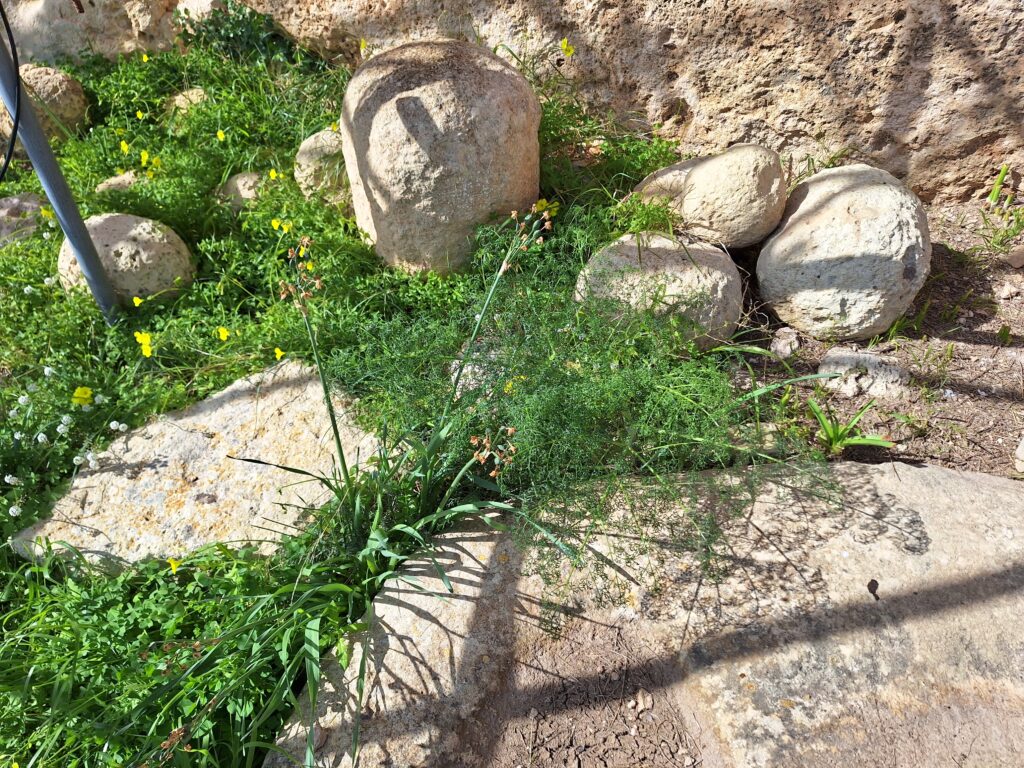
Modern thinking is a bit more prosaic. The discovery of a large number of spherical stones suggests that the large stone slabs were transported horizontally lying on spheres.

5,500 year old ball bearing balls.

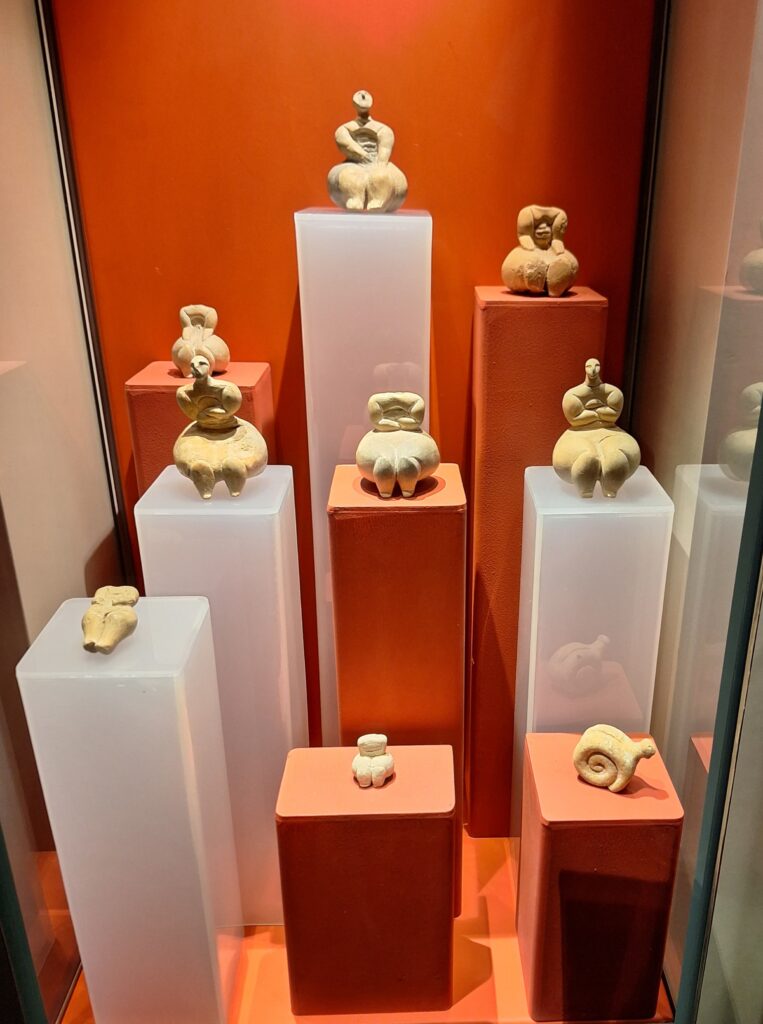
We are talking about a building from 3,500 BC. Wow! It is believed that Ġgantija was a sacred place, with altars, lots of bone remains from sacrificial animals and containers for water (purification). And fat female figures. Lots of them!

There are indications that the body ideal for women has changed slightly over the last 5,500 years.

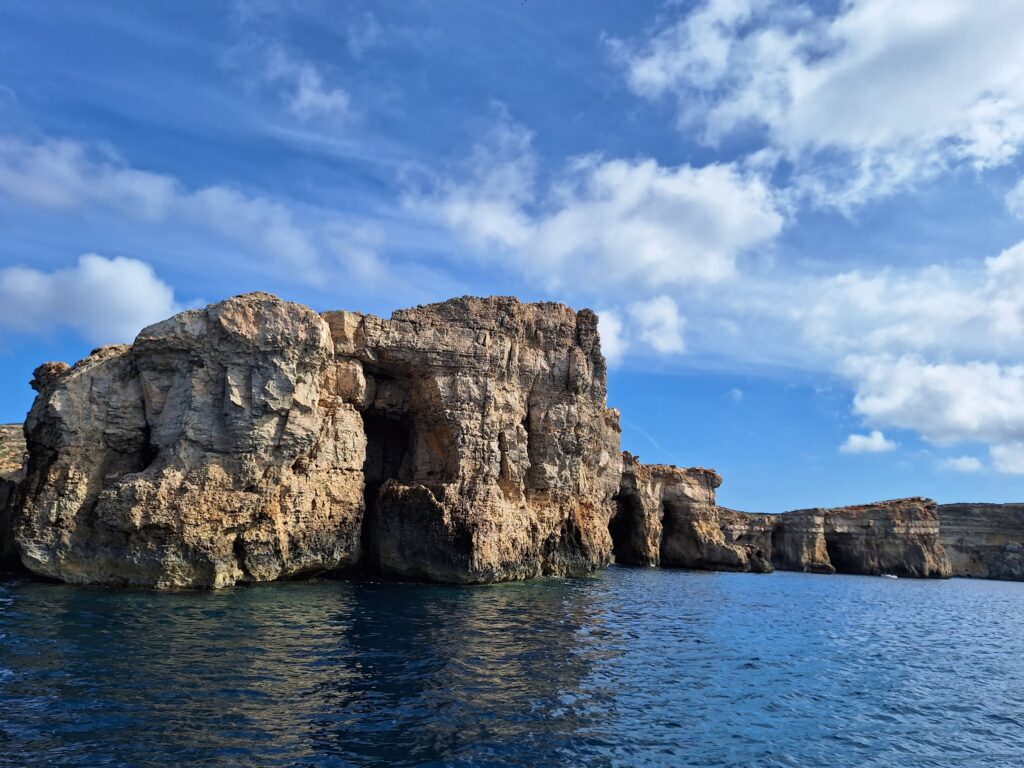
From Ġgantija it takes fifteen minutes to drive out to the municipality of San Lawrenz on the west side of the island. The weather is harsh here, and there are beautiful cliffs both northwards and southwards. When rain, wind and waves ravage the cliffs, cracks will form over the years, which will eventually expand into caves. The caves are dug out more and more by the waves, and eventually the roof collapses.

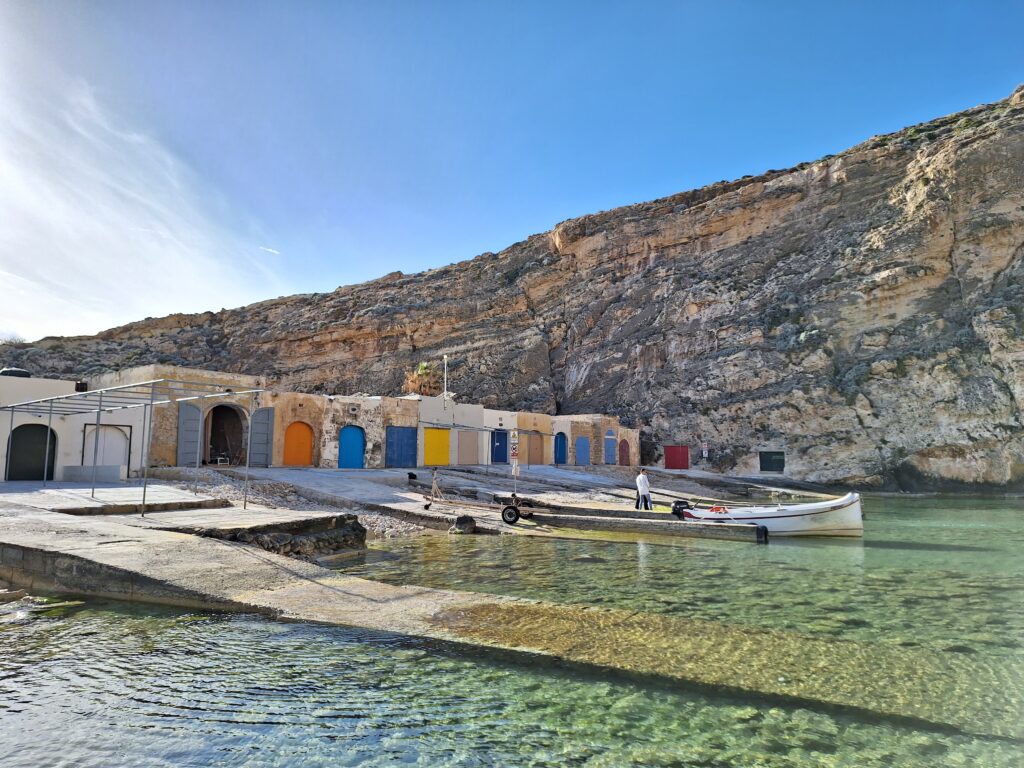
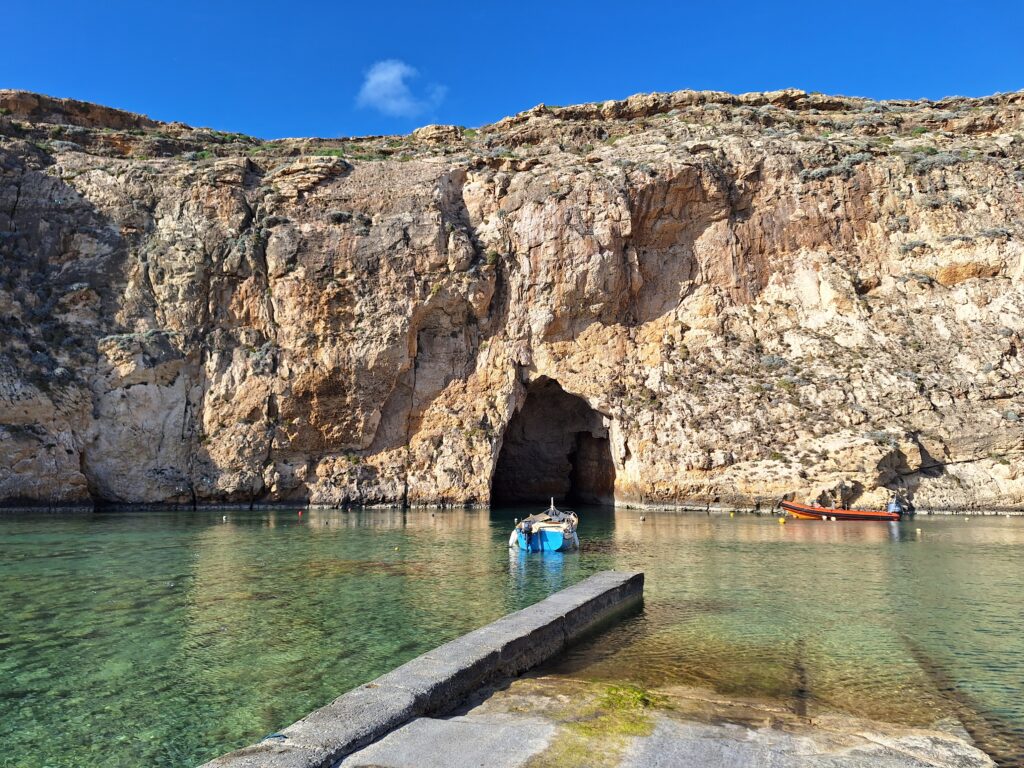
‘The Inland Sea‘ is the remains of a cave that collapsed thousands of years ago.

Such a cycle from a rift to collapse on the Maltese islands would take approximately 500 years. From the inland sea there is a natural, 35 m long tunnel out to the sea, where the traditional Maltese boats, the luzzijiet, can pass if the weather is good.

Believe it or not, we didn’t go swimming here. It was already late in the afternoon and we had other plans.

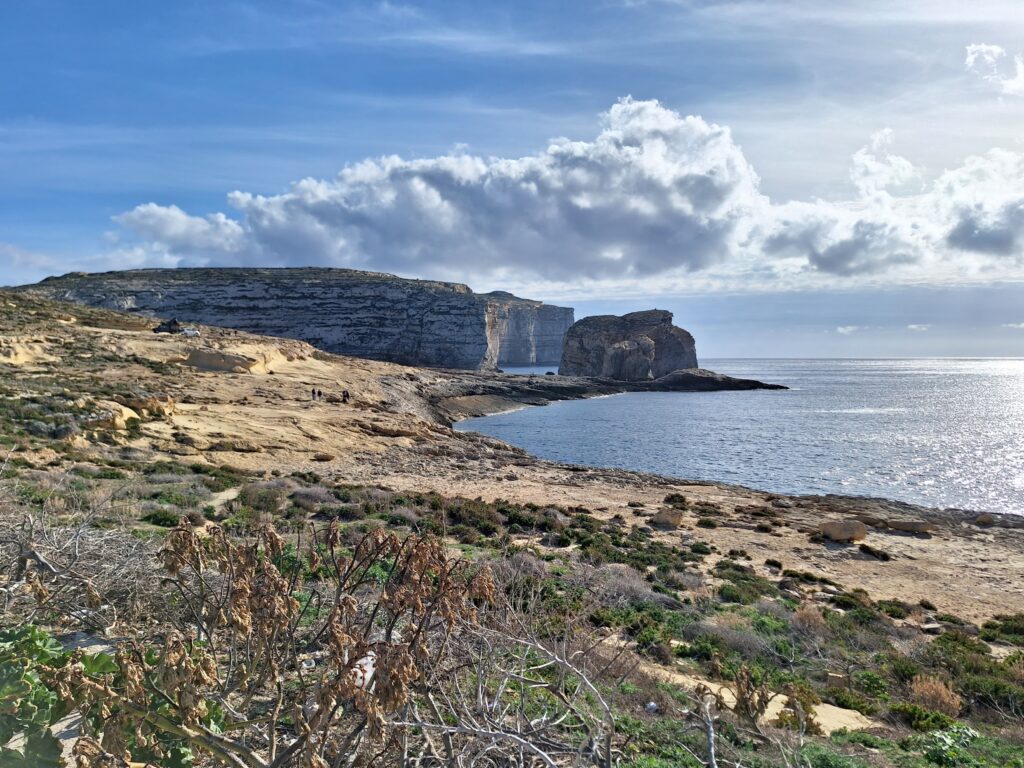
Depending on how the waves dig, some limestone caves will end up as arches. A legendary arch, ‘The Azure Window’, near the Inland Sea was located at ‘Fungus Rock’ a little further south. This arch collapsed in a major storm on 8/3-2017.

Fungus Rock with no trace of The Azure Window. There is still a small arch nearby that you can swim under.

The name ‘Fungus Rock’ comes from a parasitic, perennial vascular plant (Cynomorium coccineum), which grows, among other places, on the top of the rock it gives its name to. It produces a foul-smelling flower that looks like a mushroom. The Maltese believed it could both stop bleeding and cure dysentery, and in 1,746 the Grand Master Pinto, decided that the rock should be protected. This was so important that anyone who went ashore on Fungus Rock risked 3 years of penal servitude as a galley slave if they were discovered. Pinto also ordered the rock to be cut smooth, so that it would be more difficult to climb.

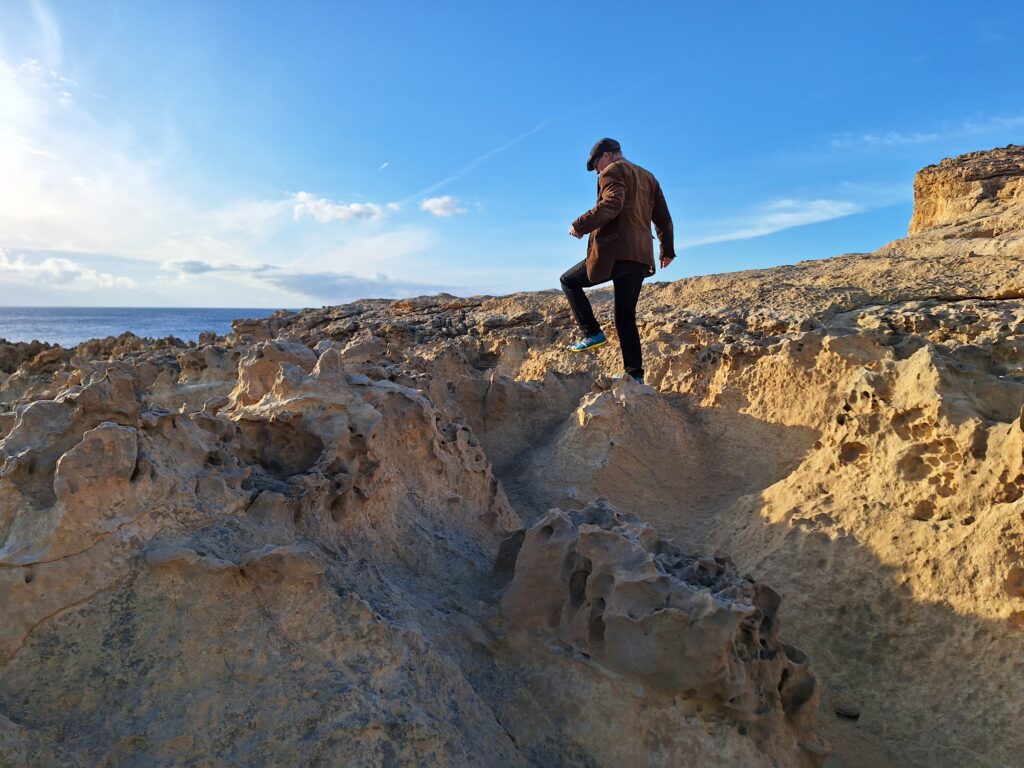
Knut in search of a blue hole.

Well then, what was actually the plan for swimming? We had read about ‘The blue hole’, which is located in the same area, and that was the swimming destination that day.

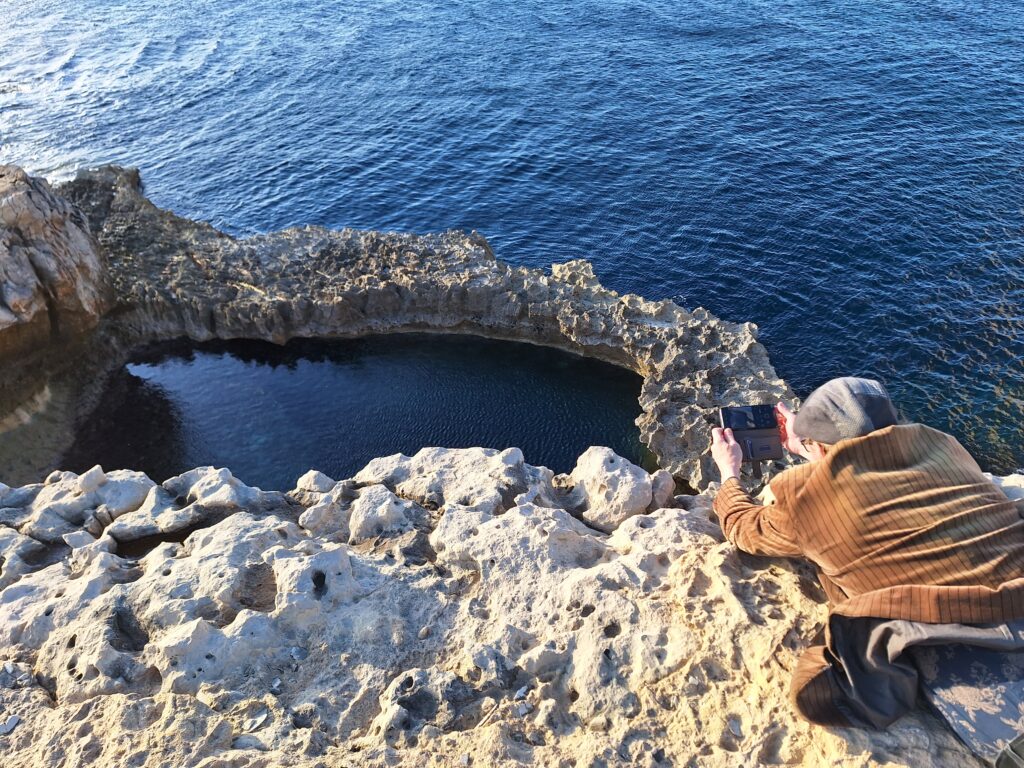
The hole has been found!

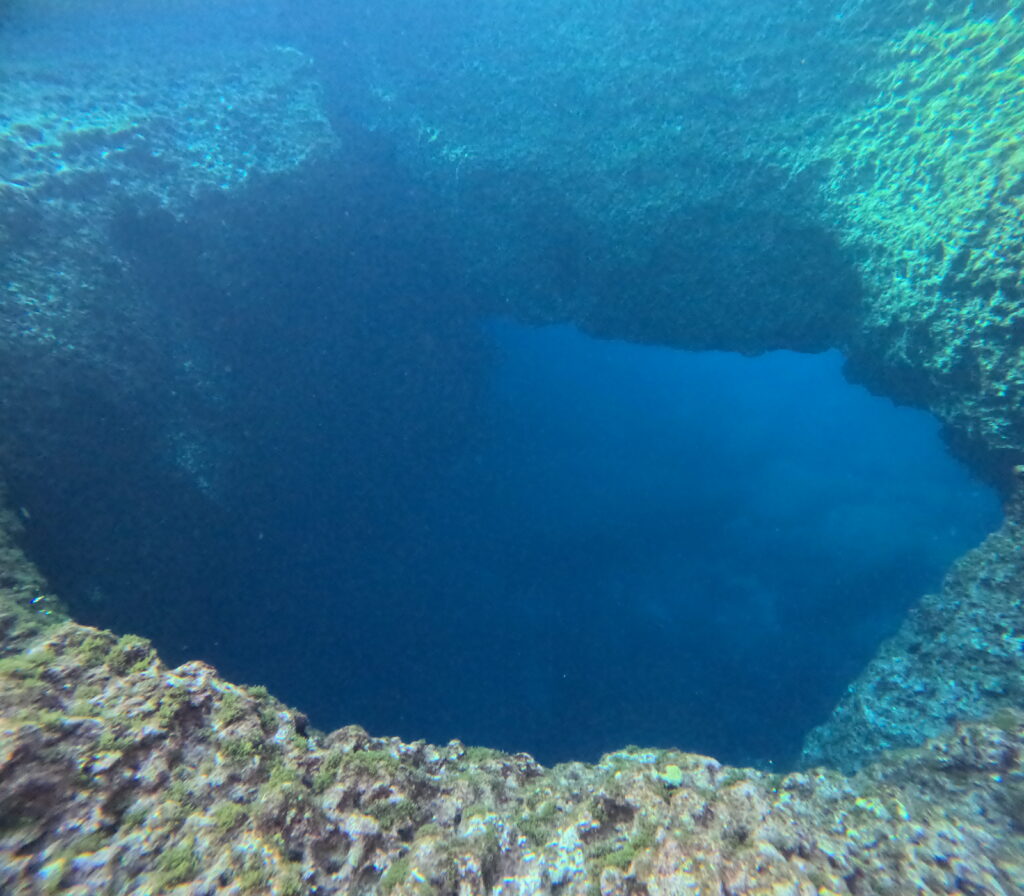
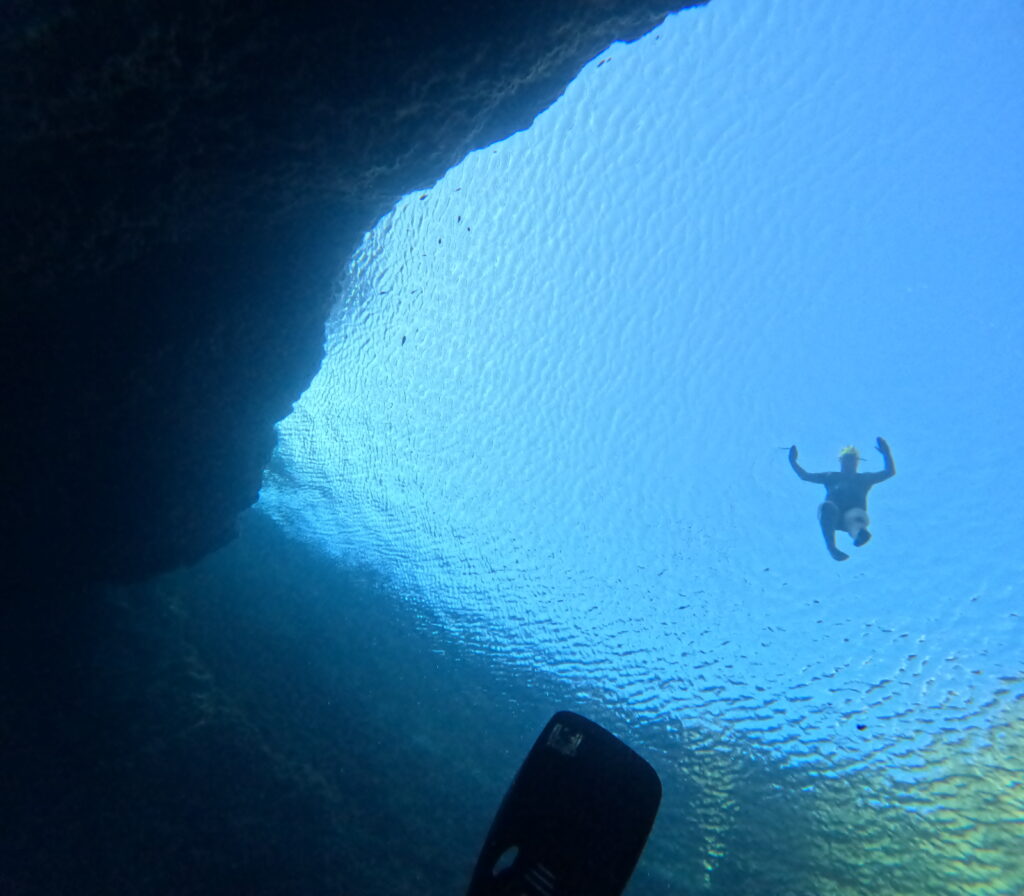
The Blue Hole is the remains of a cave that collapsed thousands of years ago. The cave goes straight down under water, and via an underwater arch you can swim directly from the hole to the sea.

The light falling into the hole transforms the hole into the most beautiful cathedral!
Tempting, but not this time.

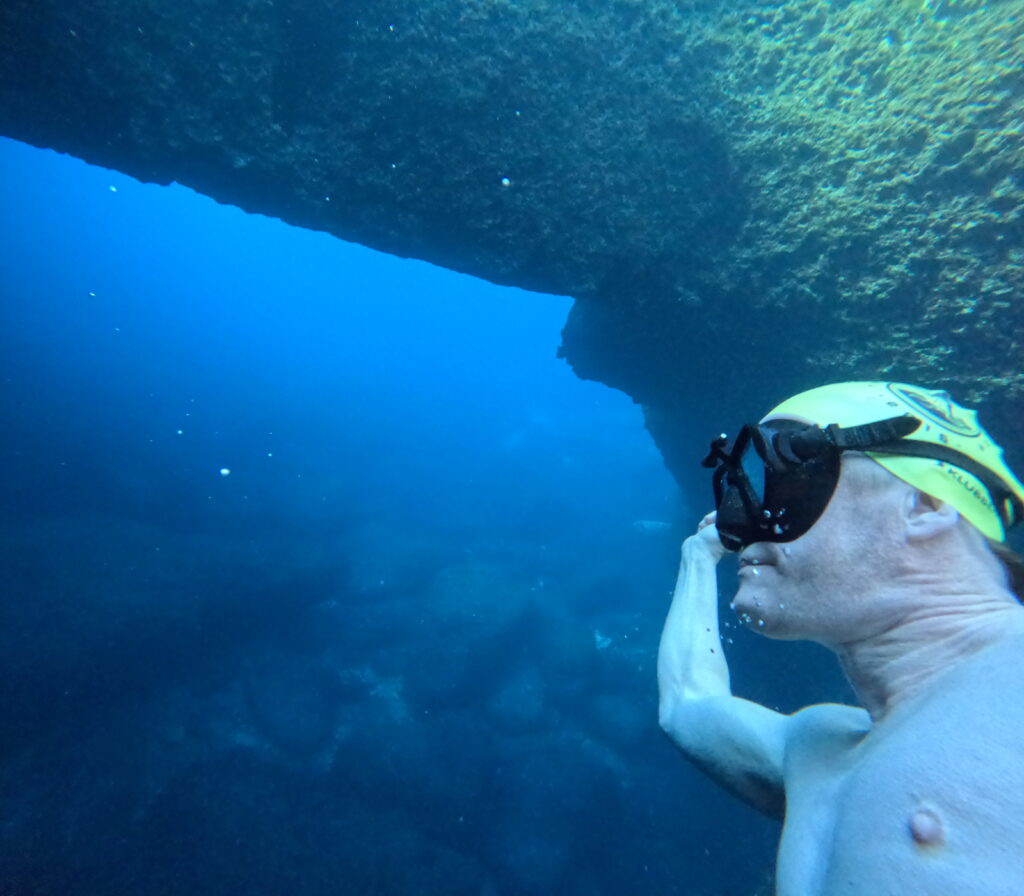
Idun doesn’t have a scuba diving certificate, and Knut had back troubles, so we skipped swimming through the underwater cave this time. But my goodness, what a great place!

Hi up there!

The west side of Gozo, it’s really worth a detour!

Blue Lagoon

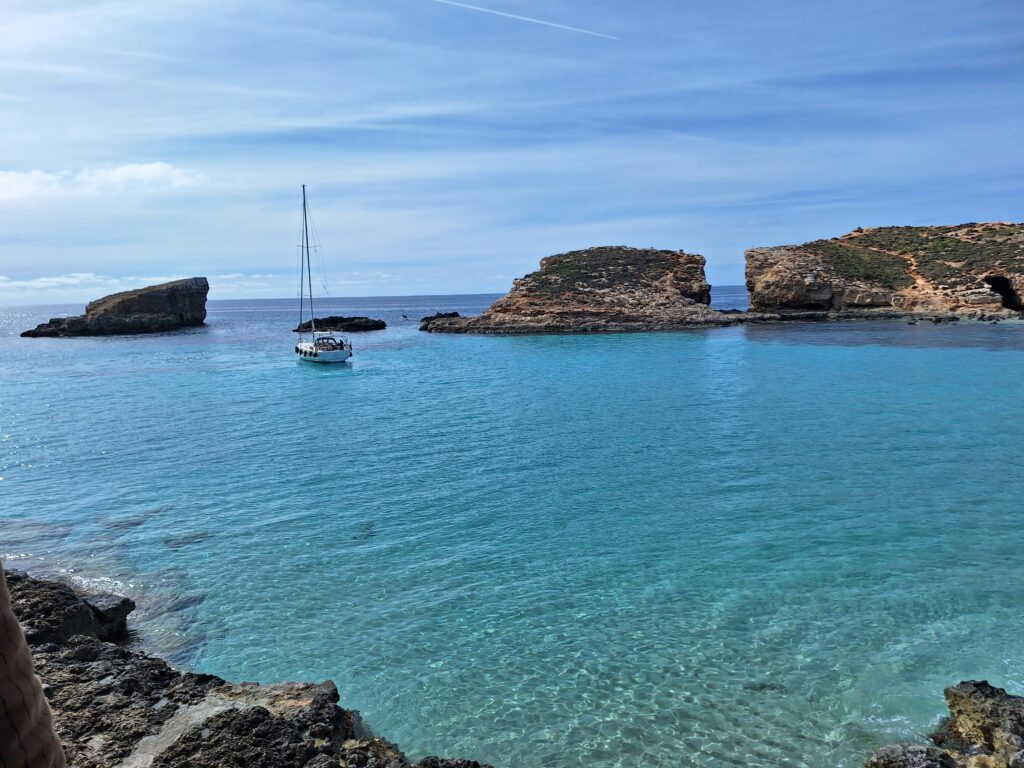
Finally we were there, at Malta’s 6th (the lagoon itself) and 20th (the caves around the lagoon) most popular destinations: the Blue Lagoon.

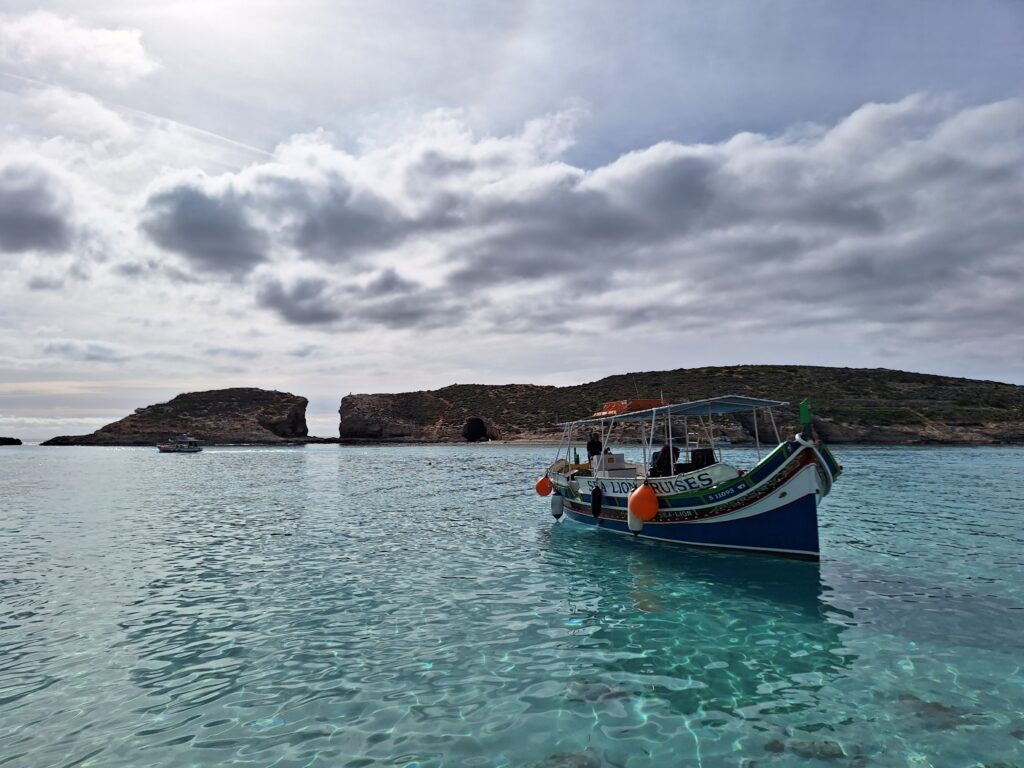
Comino’s Blue Lagoon.

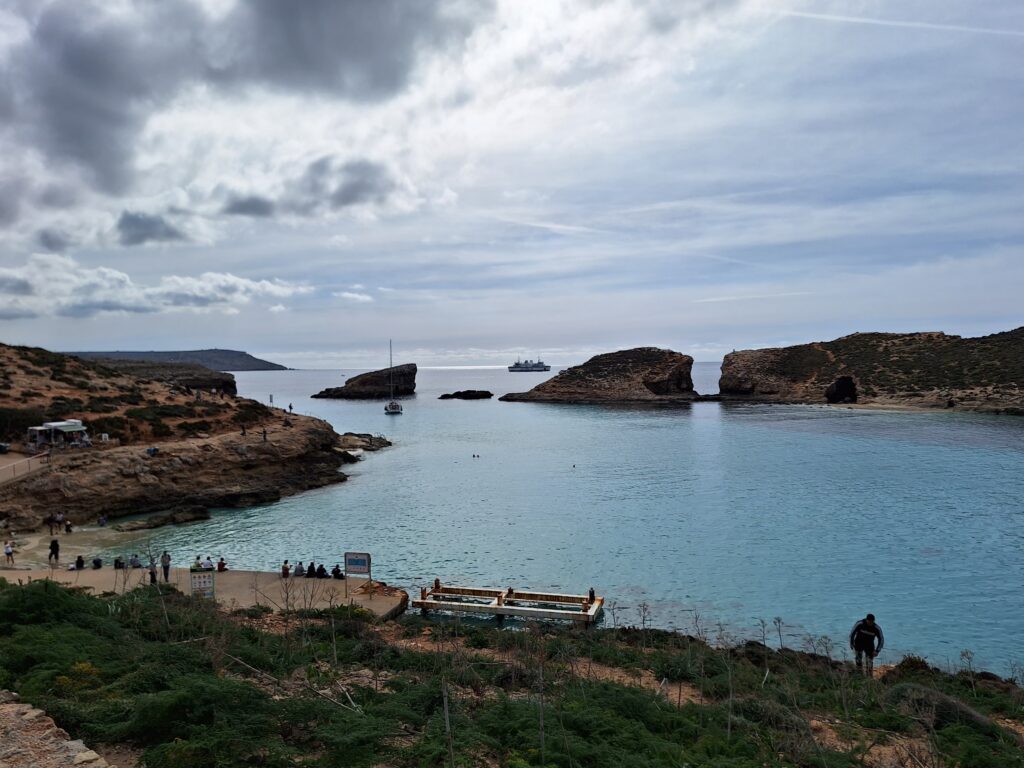
And yes, Blue Lagoon is truly magnificent! It is surrounded by Comino to the east and several islets and reefs to the west, one of which is called Cominotto, which is why it is said that the lagoon is located ‘between the 2 Cominos’. The water is turquoise and crystal clear, pure Paradise. Or is it?

Paradise out of season (February). Malta Island in the back.

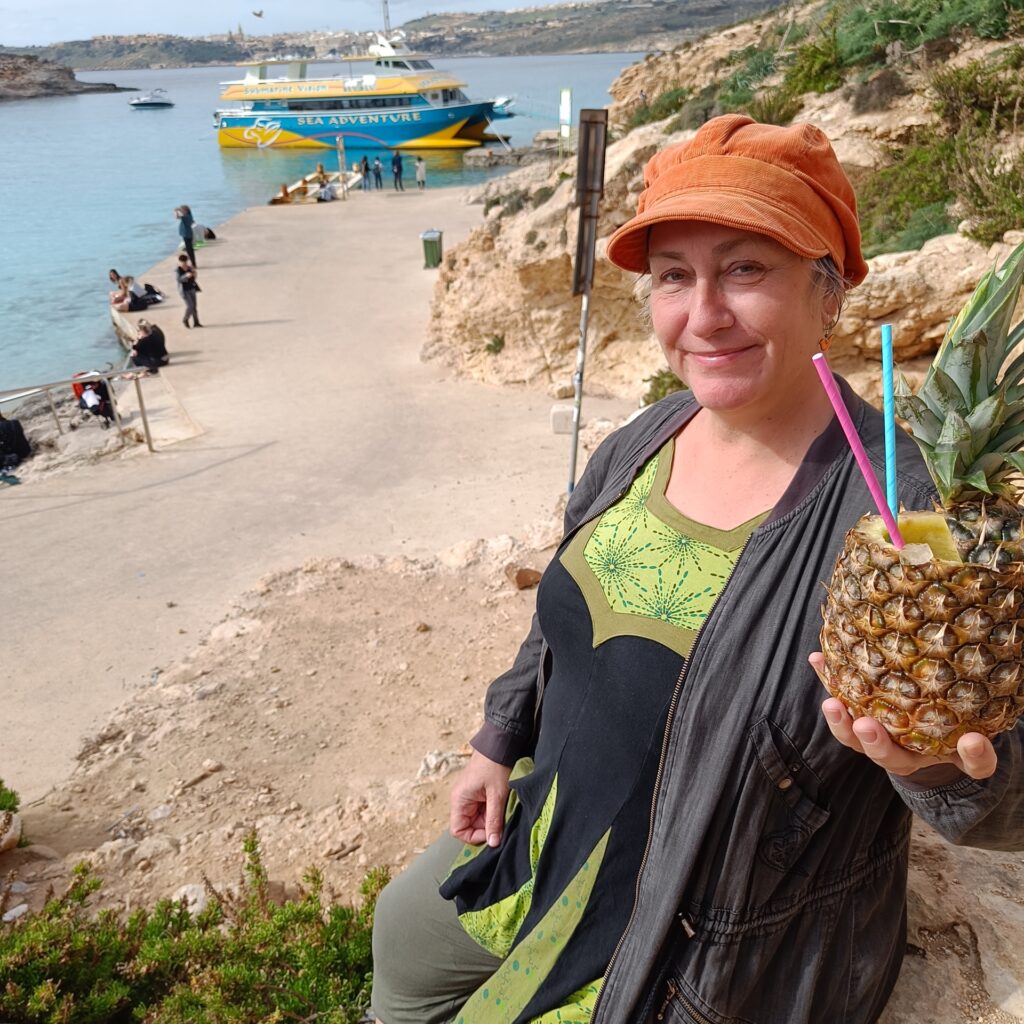
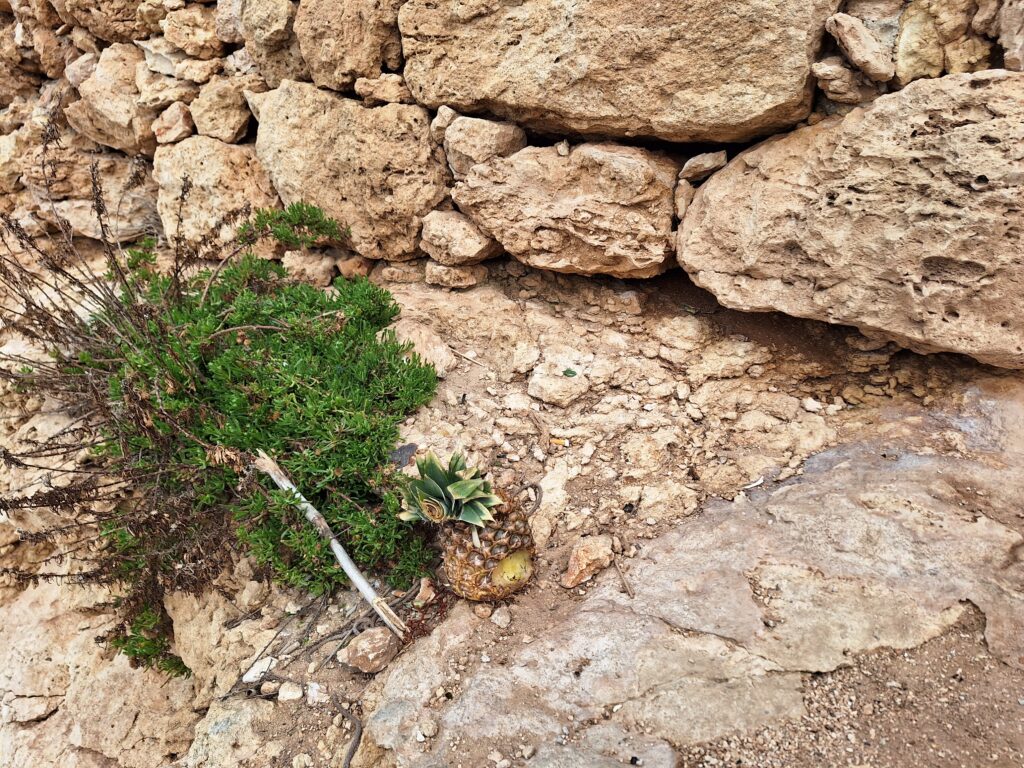
What will meet you upon arrival in Paradise? Partyyyy! There is loud music and kiosks selling fun drinks. During the high season, 10,000 party-party tourists arrive daily at this beautiful gem. Yes, you read that right: 10,000 people to an island of 3.5 km² and only one harbor – every day! Top trending in 2024: Hollowed-out pineapples. It’s Instagram-friendly, fun and actually really good.

Idun trying to be an Insta-Beib.

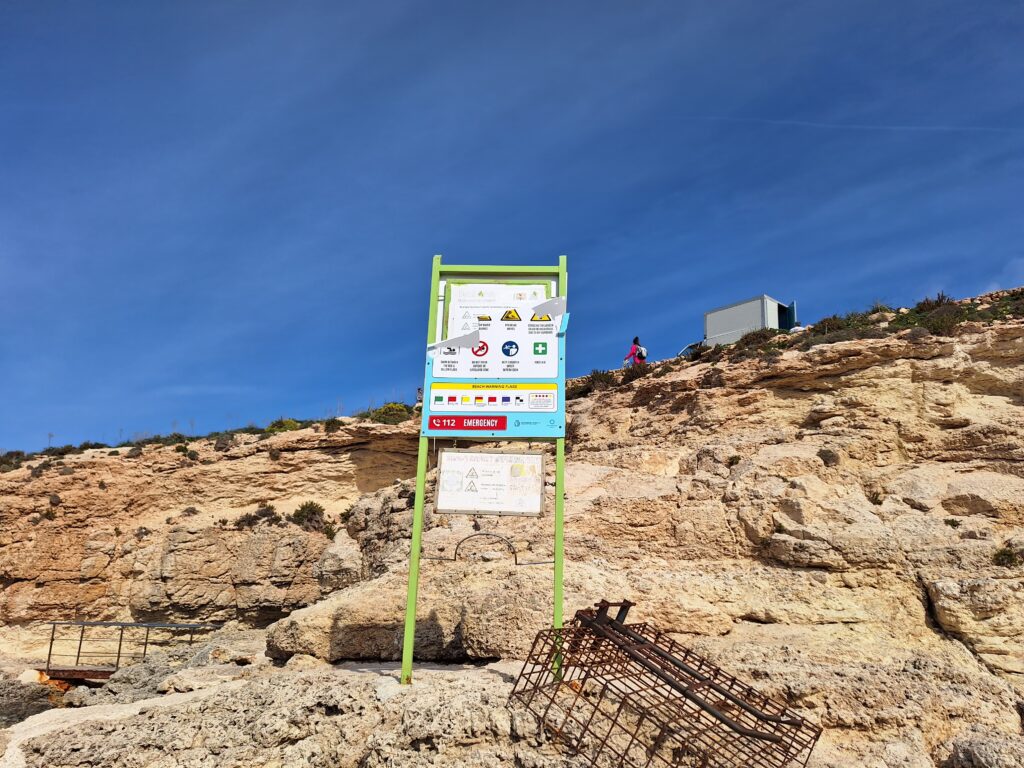
After major protests from environmental organizations, a number of regulations have been introduced to reduce the problem:
a) Limit the number of tour operators
b) The kiosks shall not be permanent installations or connected to shore power
c) The kiosks must be removed from the island every evening
d) No hotels (construction of a 200-room hotel is planned but not completed)
e) Limit the number of tourists per day (4,000 is proposed – and that is still a high number!)
f) Limit how long each tourist can stay on the island (will protect nature from trampling)
g) Ban sale and use of sunscreen that is harmful to corals

Garbage from tourists has led to a rat outbreak on Comino.

Why is nothing being done, one might ask, and the answers are obvious. There is big money in tourism. In addition, Malta is a small society where people know each other. When tour operators and politicians are family, it is not easy to stop the flood of tourists. Administratively, Comino is under Gozo (Għawdex municipality). There is one priest and one police constable dedicated to the island, but it will probably take more will than that to do something about the problem.

There was no indication that the kiosks were shipped from the island in the evening.

Considering all the suggested measures, it is really incomprehensible that nothing is being done. But here we are at the core of the problem: No one wants to take on the discomfort of actually enforcing the rules that have been proposed. Then things will just stay as they are, we suppose.

Caring for mother or caring for work?

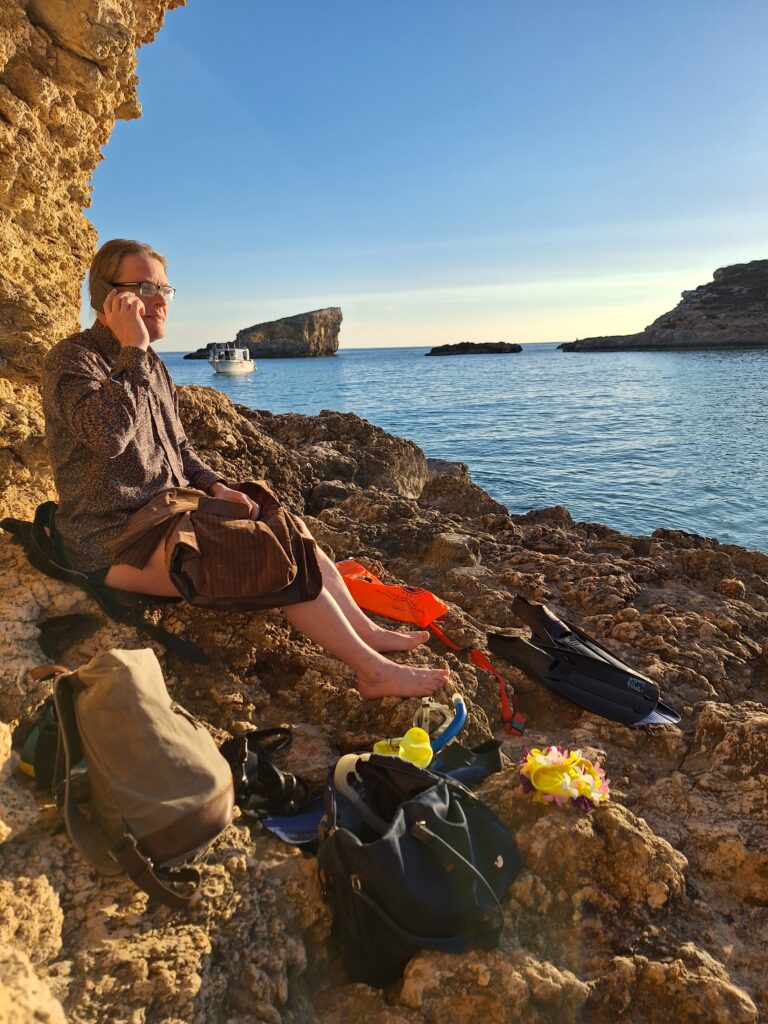
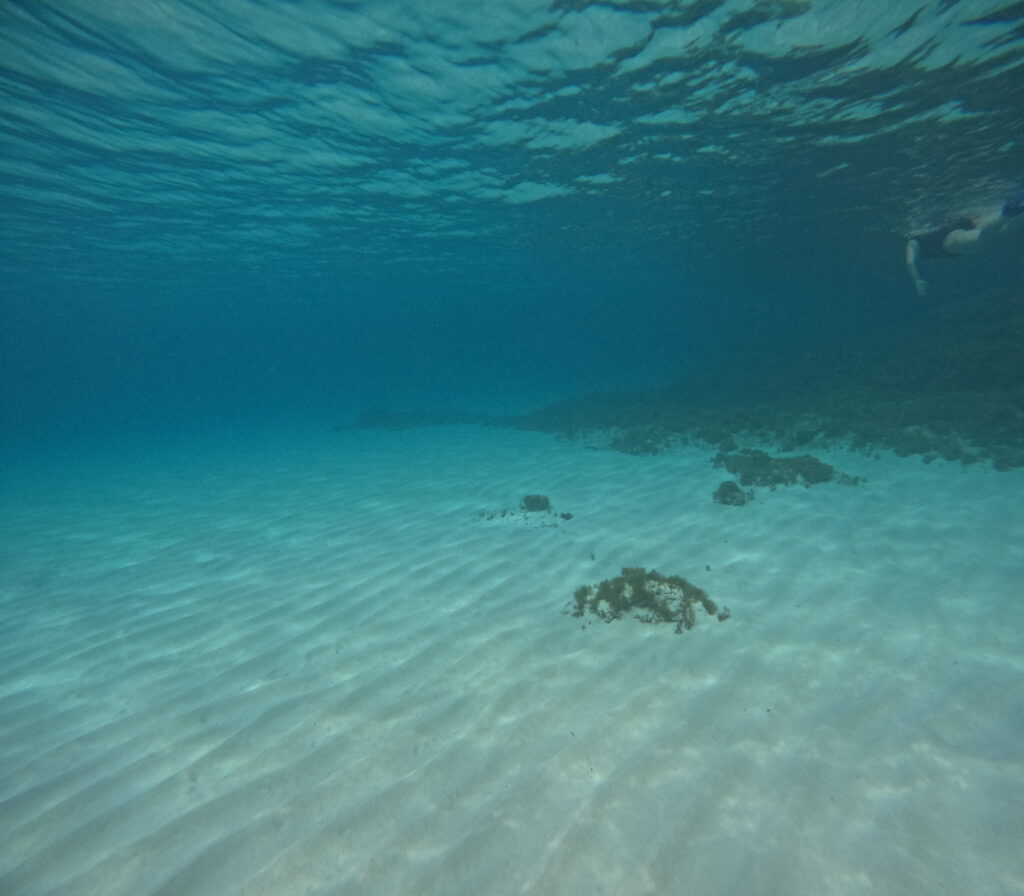
And Tobatheornottobathe, what did we do? Well… once in Paradis, we had to get something out of the visit. We enjoyed a long snorkeling trip after lunch, where we swam into several caves along the coast southwards. Idun was a little startled when she suddenly saw a person lying on the bottom of the sea. Could it be a refugee? No, luckily, it was just some clothing-trash from tourists.

No muddy water here!

And the trip home? We hadn’t actually planned how to go home, neither with which boat nor when it would leave. Suddenly we were close to alone on the island, and it was an exciting half an hour before we spotted the very very last boat…

Phantastic snorkeling opportunities at Comino.

For Tobatheornottobathe this was a bittersweet encounter with Paradise, we will probably consider closely before visiting another touristy place like this for bathing. We simply cannot recommend this pearl. Instead, take a movie night and watch Comino from home! Parts of ‘Troy’ (2004) and ‘The Count of Monte Cristo’ (2002) were filmed there.

The Pirate Island

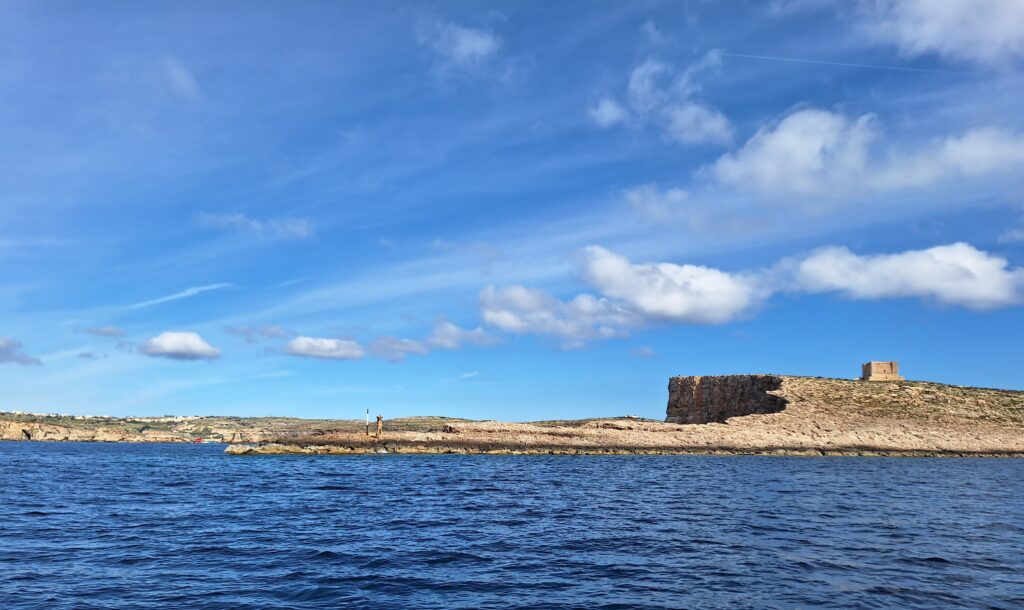
Comino with the larger island of Gozo in the background.

The Republic of Malta is made up of 3 inhabited islands; the larger Malta and Gozo, with a tiny island between them, Comino. With a population of almost zero, Comino can hardly be called inhabited, but yes, in 2025, 2 people actually lived permanently on the island. The name comes from the spice (cumin seed).

Upon closer inspection, the island is not as flat as one might think.

Comino has a long and varied history; from Roman times when the island was farmed, to periods when it was completely abandoned. In the Middle Ages, it was a port for pirates, who could easily hide in the island’s many bays and caves while waiting for unlucky passing ships.

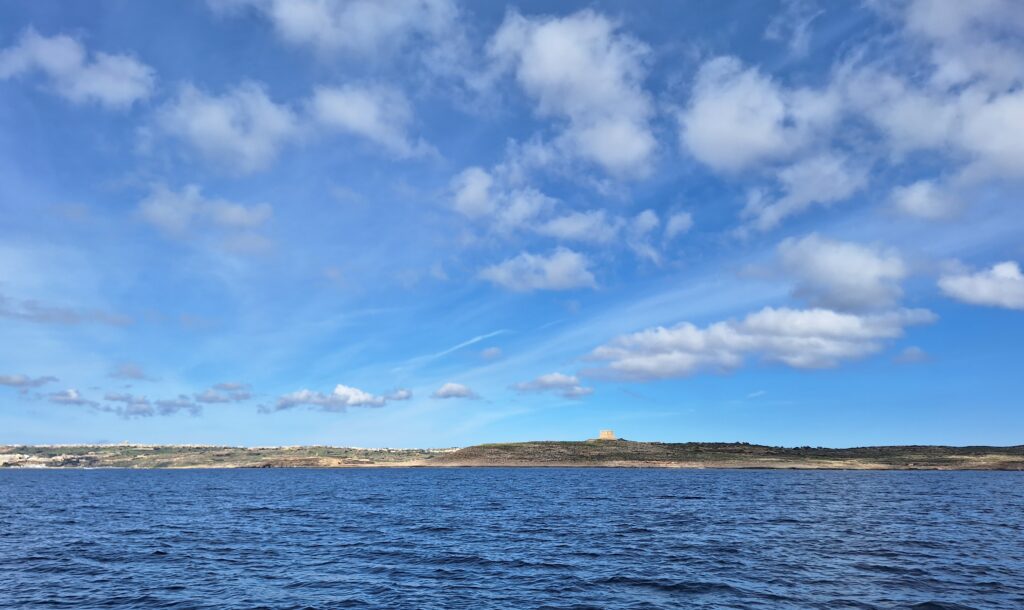
Comino with St. Mary’s Tower.

The Knights of St. John established themselves on Malta in 1530, and St. Mary’s Tower on Comino was built as part of the defences. The Knights hunted extensively on the island (wild boar and hare), and so important was this hunt that poachers caught red-handed risked 3 years as a galley slave as punishment. In the 17th and 18th centuries, the Knights of St. John used Comino as a penalty colony for minor offences (it is questionable whether both wild boar and hare had already been exterminated by then).

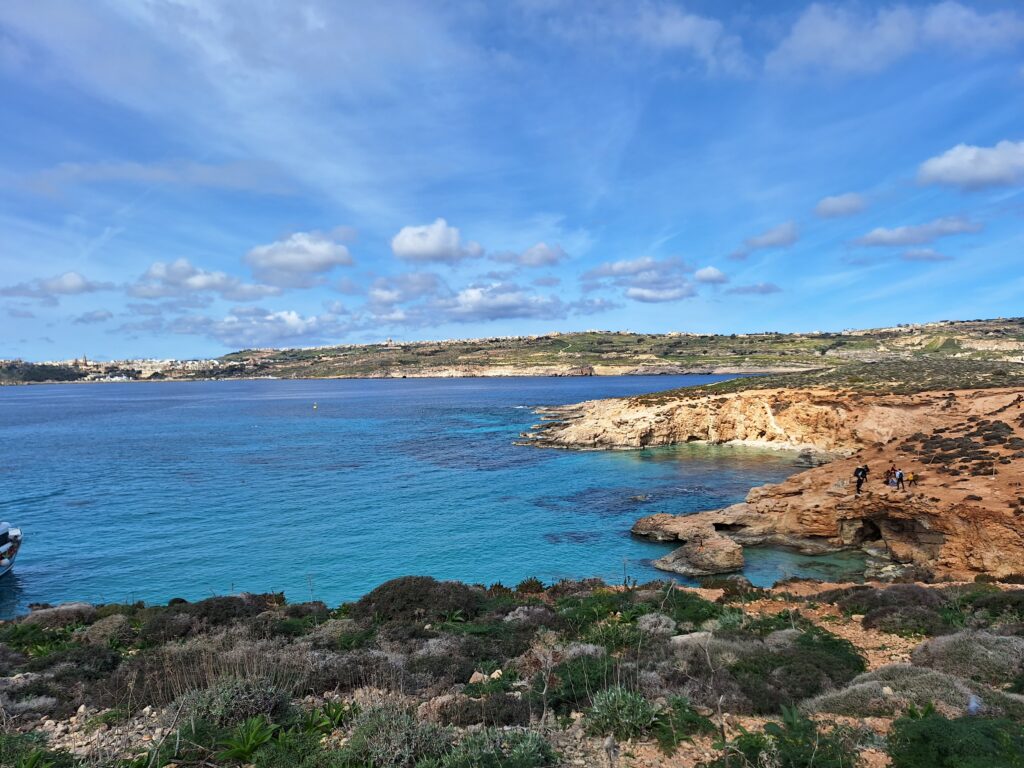
A few of Comino’s many bays, with Gozo in the background.

During the French occupation of 1798-1800, suspected infectious persons were quarantined on Comino, in addition to the island being used as a detention centre. When the British took over from 1800, various measures were taken to populate the island, including leasing the island to the Zammit Cutajar family in 1920, who established ‘The Comino Farming Company‘. This was a successful measure, and in 1940 the population reached a peak of 80 people (17 families), including some immigrants from Sicily. Today’s 2 permanent Comino residents are descendants of The Comino Farming Company’s families.

The barren karst landscape of Comino struggles when thousands of tourists hike in the same area every single day.

Tobatheornottobathe was on Comino for half a day. That gave time to go for a walk north (towards Gozo). We had seen pictures of an exciting bathing destination, but it turned out to be too demanding. You always have to be able to get back up after the bath!

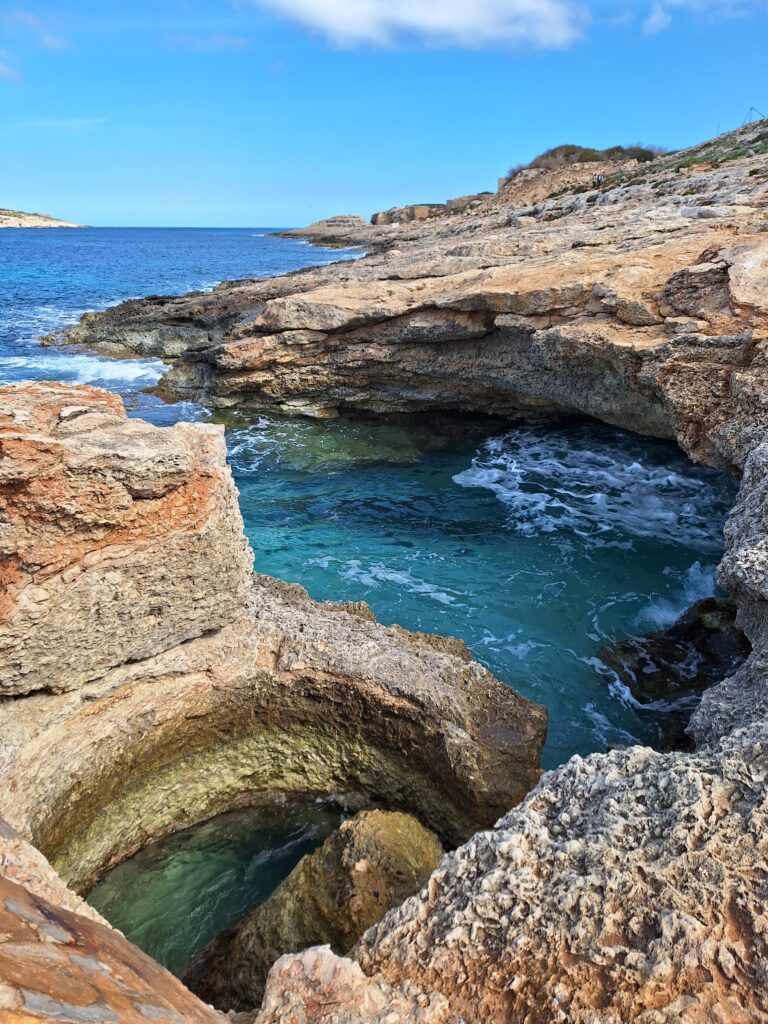
An interesting non-bathe on Comino. A bath here would have to be secured with a ladder, and that is not always included in the luggage on Tobatheornottobathe’s tourist trap tours. Unfortunately.

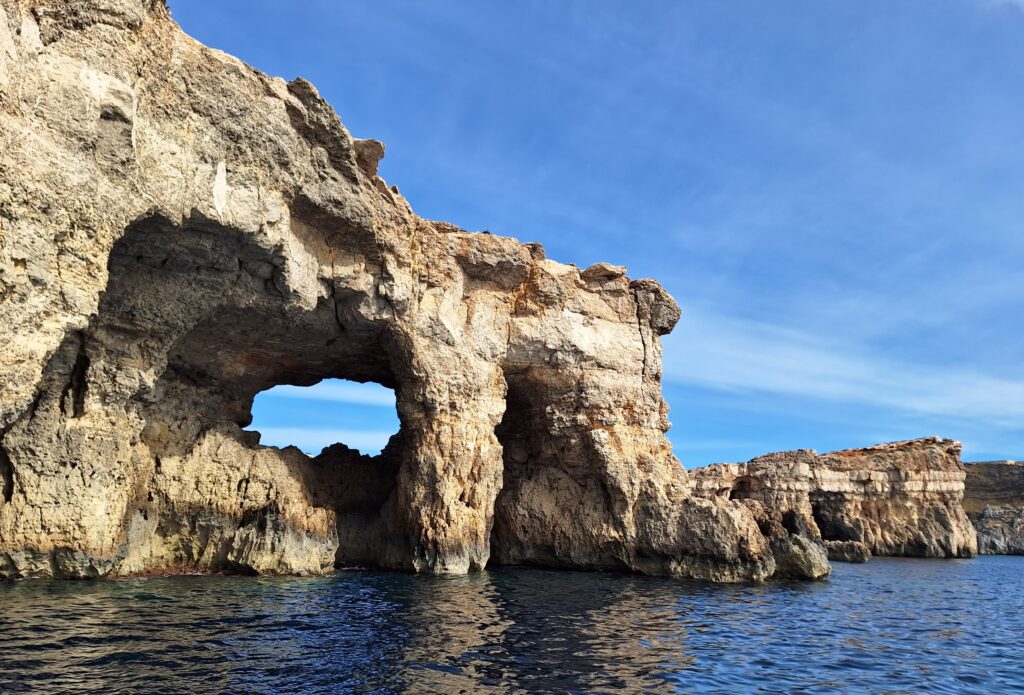
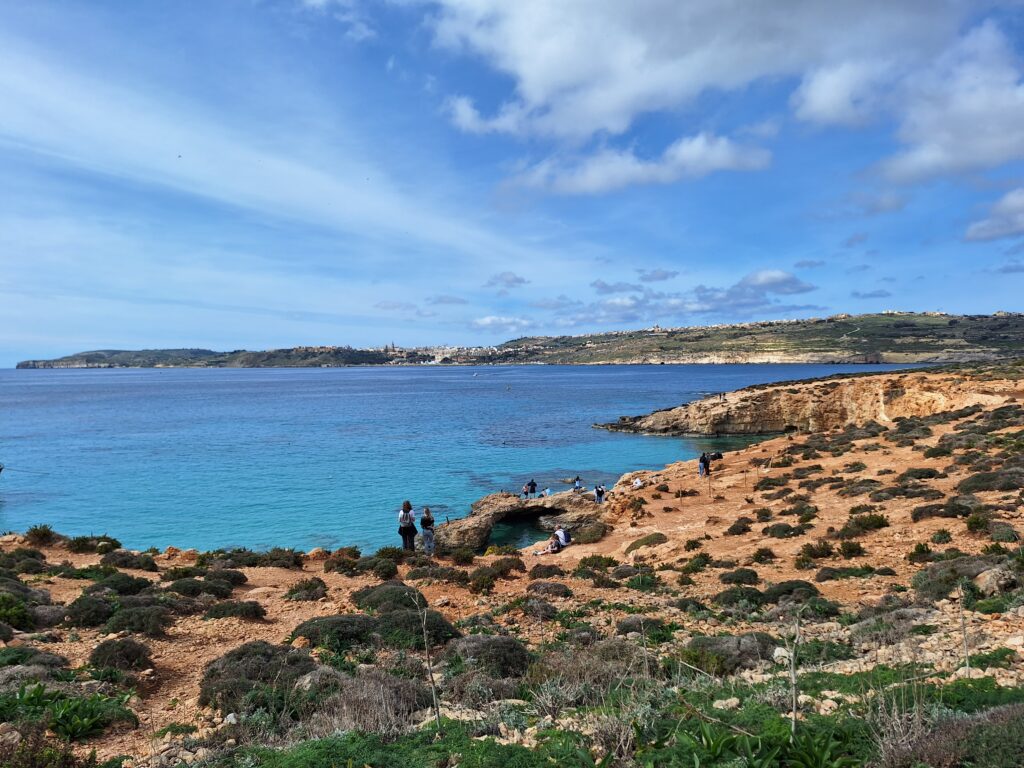
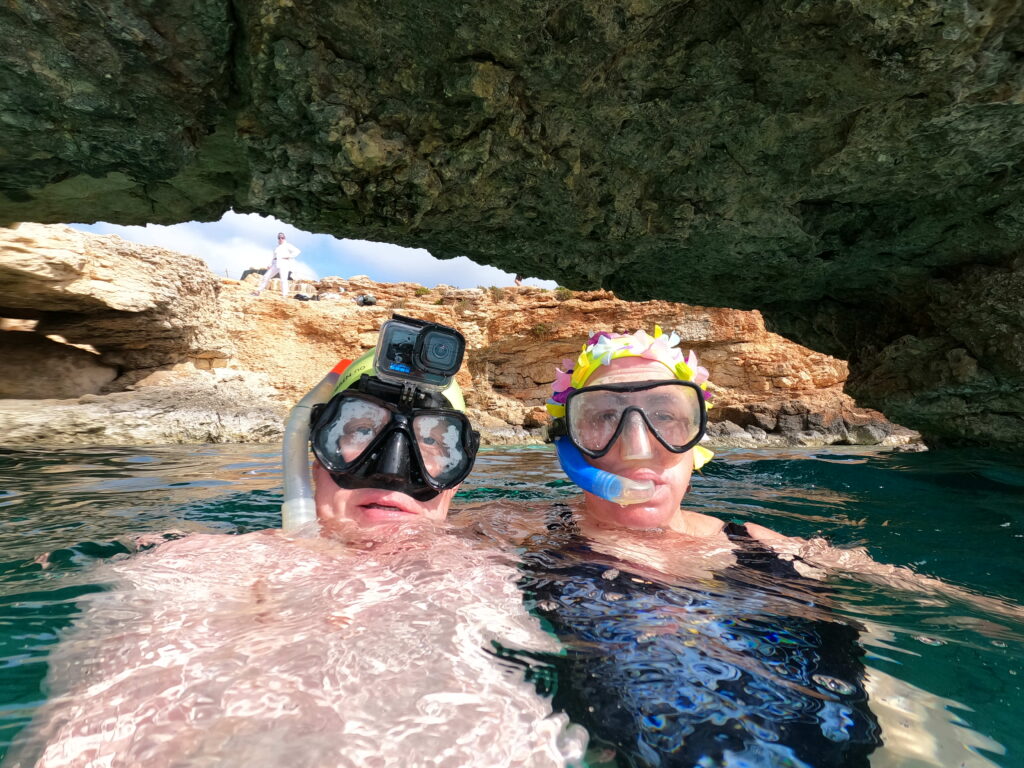
On the way to the non-bath, we noticed several smaller arches that could be submerged without any problems. We had to try that instead!

Under the arch.

Conclusion? Comino has plenty of swimming opportunities in the form of turquoise water, bays, arches and caves, but also a lot of visitors, even during wintertime. Don’t expect to be alone anywhere! We visited the island in February 2024, well out of season, even then there were people everywhere.