The Diving Tower

The project started as an idea by diving enthusiast and municipal council representative Geir Byberg in 2008. It shouldn’t be a big deal to have a diving tower set up in Lake Mjøsa, should it? The recommendation from the councilor stated the following (ref nrk.no):

“The goal is that the diving tower can be realized within a total investment framework of a maximum of NOK 1.5 million with the intention of a maximum of NOK 20,000 in annual operating expenses and a lifespan of 30 years without maintenance.“

Simple and straightforward, right? No… not really that simple. It became a big, long-term and very, very expensive affair.
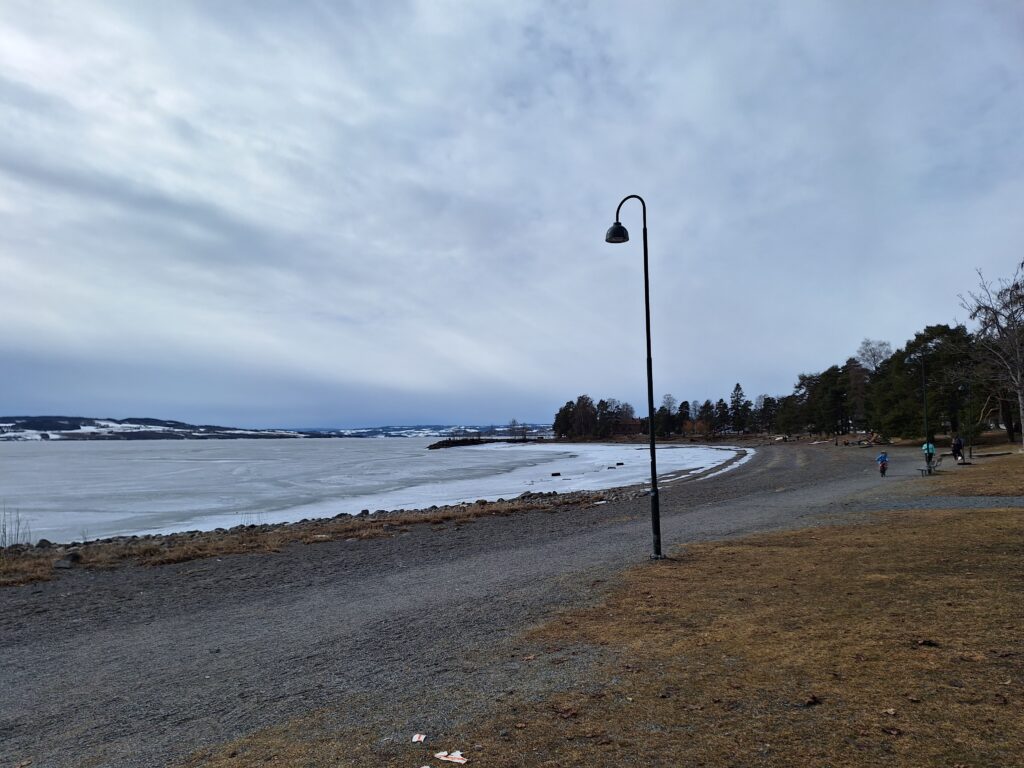
Koigen is a great area by Lake Mjøsa. The name is slang for ‘the cooking place’. The diving tower is located right next to the buildings of ‘The Norwegian Condensed Milk Company’, which was started by the Danish Thomsen brothers in 1874.

So what was the problem with the diving tower? Why did it become so expensive? One of the reasons is that the focus was quickly shifted from the councilor’s spec list. There was no will to stick to the idea of ​​a simple, cheap, maintenance-free project. When architect Tor Kraft was hired in 2009, it was based on Sandra Ødbehr’s children’s drawings. The diving tower was not only supposed to be functional, but also to express an atmosphere; it was supposed to be sculptural, aesthetically bold and iconic.
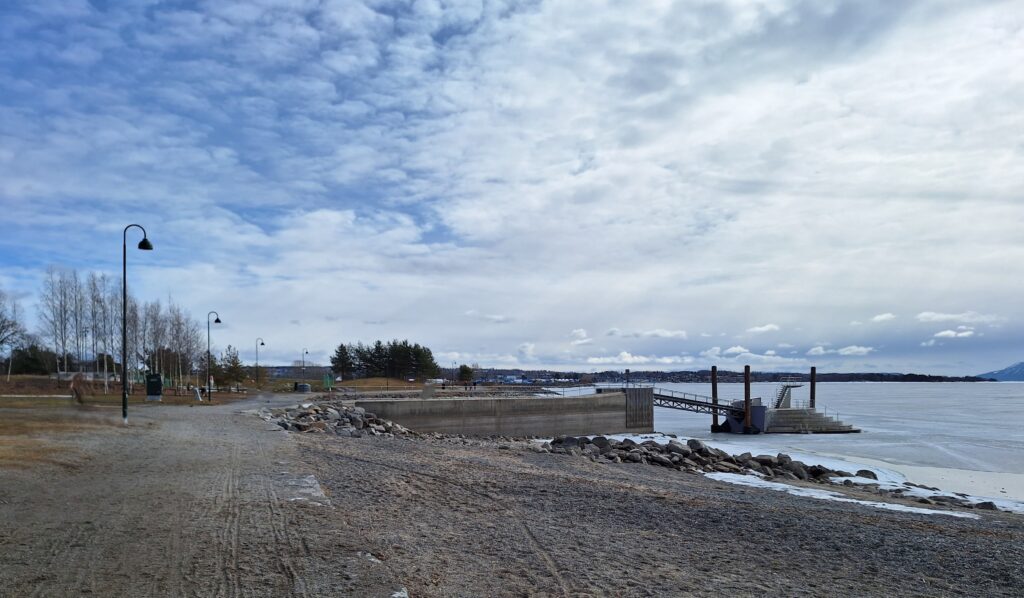
Yes! The diving tower has a splendid visual profile!

Building a diving tower permanently anchored in Lake Mjøsa presented a number of practical and technical problems: A floating concrete structure, difficult foundations, variable water levels, problems with frost, ice, wind and weather, to name a few. In 2011, the municipality noted the following (ref. nrk.no): ‘The diving facility will cost 7.4 million kroner’. After many delays, in 2013 it was actually put up for sale on Finn.no (by the comedy program and talk show on TVNorge Mandagsklubben (the Monday Club). Well… it did indeed put Hamar on the map! Several years before the opening!
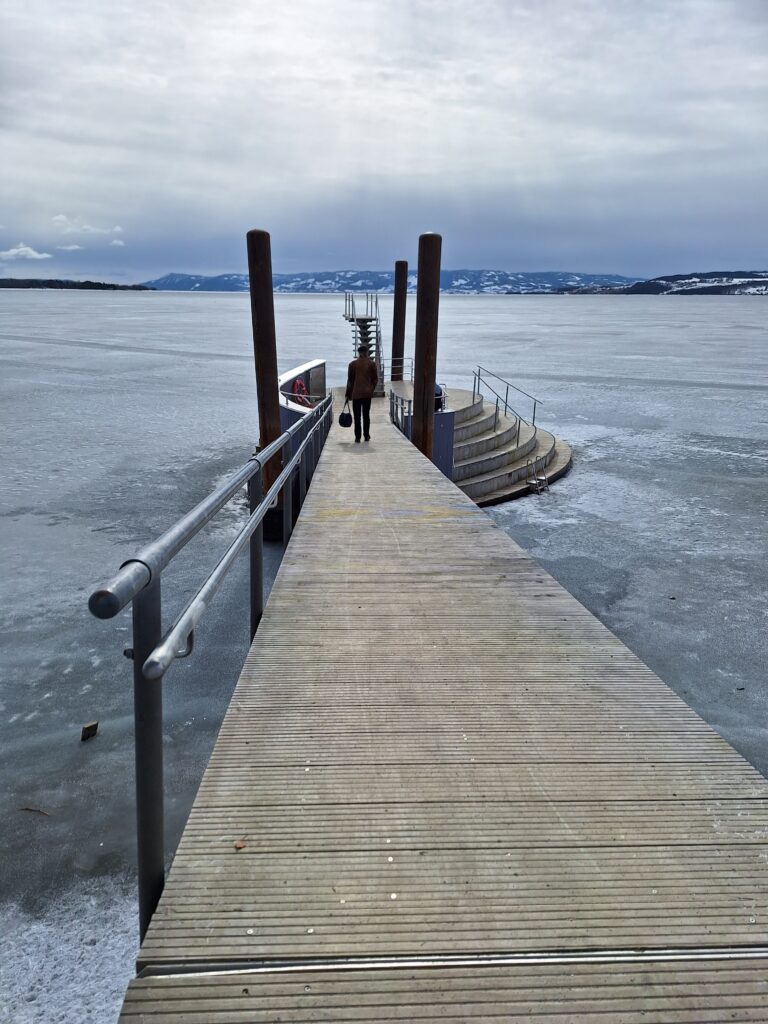
The diving tower is attached to 3 pillars to prevent it from floating away. The pillars had to be extended by use of helicopter during the flood caused by the extreme weather ‘Hans’ in 2023. It would be a shame if it ended up in Minnesund!

The final price came up to 28 million kroner, one of the largest budget overruns in Norwegian history. The plan was for it to cost 1.5 million, of which 500,000 was a gift from the bank. Of the 28 million final result, 13 million fell to Hamar municipality, 6 million was a refund from Sweco (councelling errors), while the rest was VAT compensation and betting funds (Norwegian official betting company ‘Norsk Tipping‘ is located in Hamar, so it was really good that something came from there too).
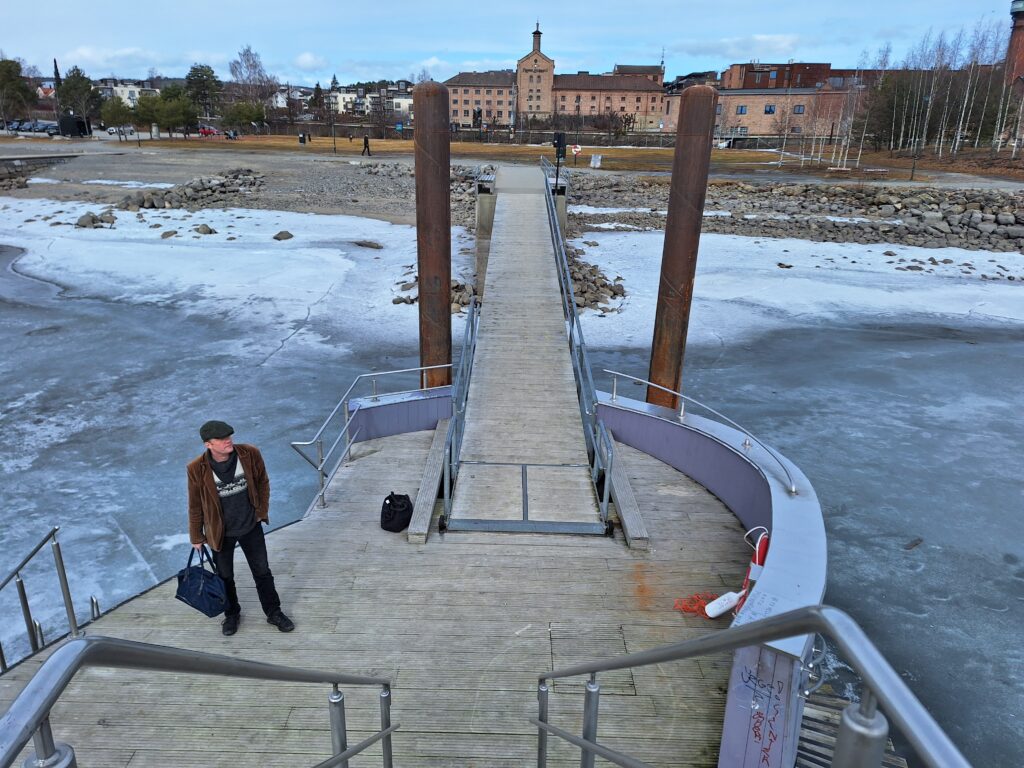
The highest level on the Stupetårnet is 5 m, but you can also jump from 2.5 meters. Basically, it is wrong to call it a diving tower, this is a facility for diving, swimming, hanging around – and selfies! The milk factory in the background.

What should we call this bathing facility? Success or failure? As a contributor to the book ‘The Road to Success – Stories and Reflections from Real Project Cases’ by Bassam Hussein, it pains Idun to call the Diving Tower a success. After all, there was a percentage overrun of almost 2000% of the budget, and the implementation time was 7 years instead of one. The councilor’s wish for a ‘30-year service life without maintenance’ has also been thoroughly crushed several times.
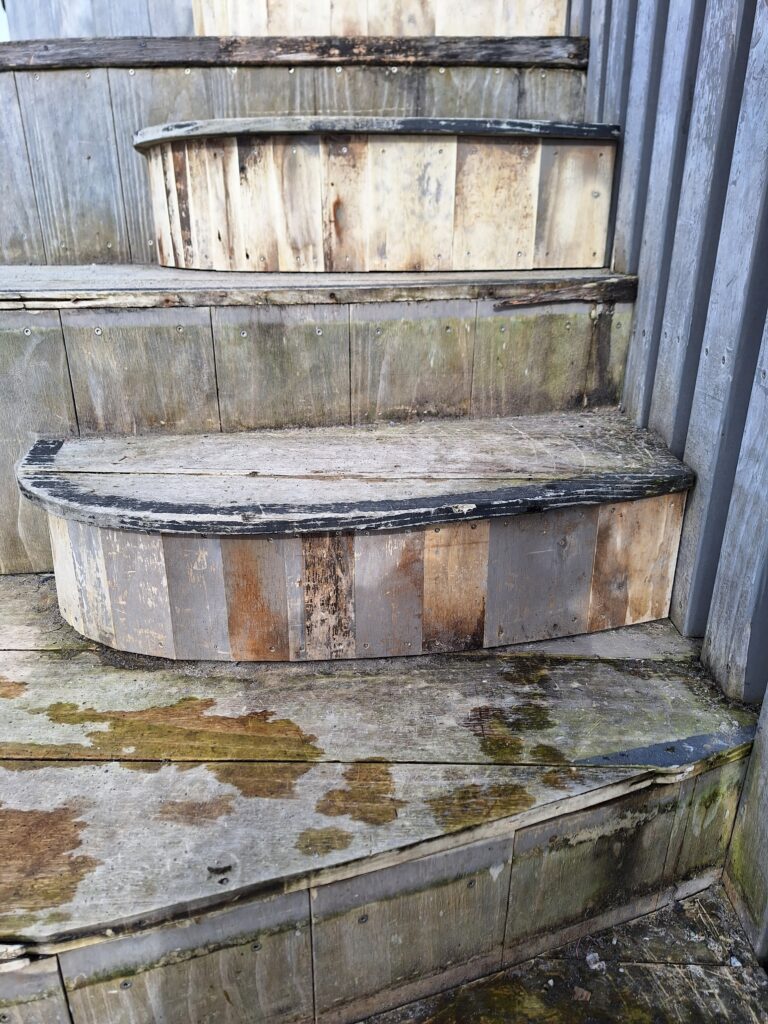
The diving tower is not maintenance-free. There have been reports of the need to repair the anti-slip coating, and screws and fittings that can cause cuts.

Those involved then – what do they say about the results? Already at the opening on June 10th, 2015, Hamar Municipality had decided that the Diving Tower was actually a success, and no one has had to leave their jobs despite all the excesses. Reason? Hamar is now famous throughout Norway for having Norway’s most expensive diving tower, the tower is widely used, people come from far far away to see and try it (all the way from Trondheim in fact…), it is Insta-friendly, and it brings increased activity to the entire Koigen area. The municipality itself has written this boast list (ref hamar.kommune.no):

The Diving Tower has:
o had its own song – Stupe tell vi stupe
o had its own feature on Nytt på Nytt
o had its own beer
o provided inspiration for a book
o had its own anthem
o been a location for filming with both Ylvis, Tryg insurance and TV Norge (Alt for Norge)
o been used in car decorations, window decorations and as an illustration for various advertising effects
o become a concert venue
o became a place to get married
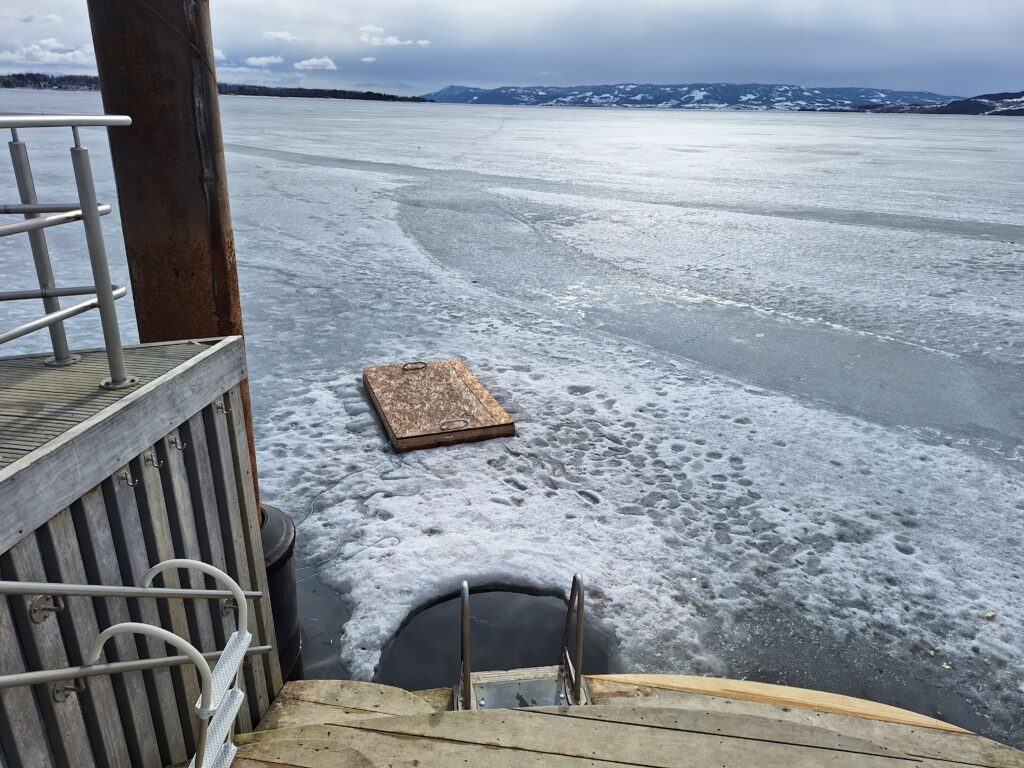
Diving tower adapted for winter swimming.

Unfortunately – The diving tower cannot be used for diving in the winter (then you would have to do as in the movie ‘Long kiss goodnight!’), everyone understands that. But bathing! And here, good preparations were indeed made!

Yes! We had a great bath in Lake Mjøsa in March 2024. And the diving tower has become exactly the icon that Hamar municipality wanted. For those who would like a mood report from the process, we recommend putting on the song ‘Sink The Tower‘, from the award-winning TV series ‘Stories from Norway‘ by the Ylvis brothers (aired on TVNorge in 2018). This is a magnificent little musical song, with intense emotions and a typically Norwegian, pragmatic solution to the problem. Wonderful!

Tynset

In the north end of Østerdalen lies Tynset, 493 m above sea level. This is so high that you cannot expect matured grain every year. Agriculture is therefore dominated by cattle and sheep, with forests in addition. The name comes from the river Tunna = ‘the one that swirls‘. Of the municipality’s 5,500 inhabitants, more than half live in the Tynset village.

Tynset bridge over the river Glomma. The Tunna river, from which the municipality takes its name, flows into the Glomma southwest of the settlement.

A number of beautiful rivers flow through Tynset municipality, so Tobatheornottobathe was hopeful for some waterfall bathing possibilities here. And yes, from highway 3 there is a good view of the beautiful Magnillfossen. But who was Magnill? Or was it a Magne that originated the name ‘Magnill waterfall‘? Comments are gratefully received. However, the first attempt at Magnillfossen ended with a visit to Tunnfossen instead.

Tunnfossen under Highway 3. Should we really pass this before turning right? We never found out what the description meant!

On a general basis, we at Tobatheornottobathe would like to thank Tynset Municipality so much for taking the trouble to list bathing places on their website. If only all Norwegian municipalities did the same! BUT – there was the small practical inconvenience that we didn’t understand how to get to Magnillfossen, despite the waterfall being on the list. The description was extremely simplified, and we didn’t get any help from the natives either, when we asked. We conclude that waterfall trips are not common here. It is described that you should drive past the waterfall on your way to Trondheim, and then turn right. But then you pass Tunnfossen first – and it was not mentioned even though it is both large and beautiful (but not really accessible for bathing, unfortunately).

Cranes above Magnillfossen.

Our next attempt at Magnillfossen was therefore in the opposite direction of the description. We arrived high up in the valley. Here there’s a nice cultural landscape with horses – and cranes. We parked above the waterfall and began the descent along a field. Pretty soon we ended up in a magical, old pine forest – much to Idun’s frustration. In this warm, south-facing hillside, the whole ground was alive – with ants. They crawled up over the sandals – and bit. Every attempt to brush them off ended up with even more crawling up the legs, you shouldn’t make any stop here! It wasn’t long before the waterfall trip was interrupted, and we made a new attempt below the waterfall.

High pine forest in Magnilldalen. An unbelievable large number of ants effectively shot down the excitement.

The third attempt was better. We parked at ‘Midteng’ below the waterfall, there is a bridge over the Tunna. But Idun was still a little stressed. This time not so much by ants, but by necrophilic flies, intensely concerned with the scab on Idun’s ancle after a bicycle fall a couple of weeks earlier.

Easy to get over the fence here.

From Midtenget it is about one kilometer to Magnillfossen. The path is obviously not much in use, but it worked well, and we had a varied walk by meadow, river and forest.

Magnillfossen is a beautiful waterfall with a deep pool. Here you can jump in when there is high water flow, and the pool functions as a fabulous counter-current pool. Highly recommended!

Magnillfossen delivers, well worth the trip!

After a swim in Magnilla, it’s a good idea to visit Tynset. Here you can climb the world’s (unofficially) biggest ‘spark‘ (kicksled/kicker). The kicksled is placed in front of the municipality building ‘Brunosten‘ (the Brown cheese), in 2010 winner of the award ‘Norway’s ugliest town hall‘. The first magnum kicksled (4 times larger than a normal one) came into place in connection with ‘Sparkens dag‘ (Kicksled’s Day) at Tynset in 1994. Both Sandefjord and Farsund have since constructed larger kicksleds, but today’s kicksled at Tynset (6 times larger than normal) is said to be the world’s largest (2023).

Knut and the kicksled. The giant kicksled weighs 2 tonnes and is almost 12 meters high.

As always, it’s not just about climbing, there has to be music too.

If you come to Tynset, you will enjoy yourself! (the municipality slogan).

As always, a kick bath in Tynset is just right!

Cat’s Eye and Opera in the Highlands

When the glaciers disappeared after the Ice Age, large blocks of ice remained here and there. Some of these were covered by sand or gravel, and therefore melted down quite slowly. The result was so-called dead ice pits, or pot hole formations, which filled with water became more or less circular lakes or ponds, connected to each other via the groundwater. Kattjønna (The Cat Lake) south of Kvikne was formed in this way.

Knut in full speed across Kattjønna. The pond is circular like a cat’s eye.

Kattjønna has neither inlet nor outlet, the water level depends on the groundwater. But charming, yes indeed! This lake is 4-5 meters deep, it does not freeze 100 % in winter and it is really generously filled with trout. We had a very pleasant stop at Uncle Jon’s in Kvikne, with prawn dinner, quiz and swimming. Kvikne is nice!

Lovely morning bath in Kattjønna with cousin Kristine.

‘A lot of work with the blog!‘ said Kristine, when we asked for a few more photos before the end of the bath.

The goal for the trip was Svarthammerlia and ‘Opera di Sætra 2023‘. The first performance at this mountain farm in Tylldal was in 2010, and it is something we would really recommend. Adventurous experiences in wonderland. This year’s show was based on people and stories from the comic newspaper “Pinchcliff Times’ (‘Flåklypa Tidende‘). What could possibly be better than playing on an old farm?

Everything’s just right at Opera di Sætra.

We had booked seats on the bus from Tynset, and it was great fun. The party was ongoing already as we arrived on the bus for the first time, and we were lucky enough to end up in the middle of a bunch of happy ‘Østerdøler’, who kindly guided us during the trip.

On the way up: ‘Here I shot my first moose!‘.
On the way down: ‘Here I shot my first moose!‘.
Comment from the sideline: ‘Here too?‘

It was a great show. Everyone, including singers and musicians, were really good. A splendid atmosphere with lots of humour. Especially the guys making ‘moonshine’ were a hit.

Good feelings on set. The guys with the ‘Moonshine’ had their own party on the right flank.

What about swimming, you think? Well, yes, the Svarthammerlitjønna is just right for a bath, but then you actually have to drive yourself. Since we went by bus, we didn’t have time to swim neither before nor after the show. We just had to be satisfied with the breakfast bath at Kvikne. Next time!

Lots of inspiring details at Sætra di Tylldal.