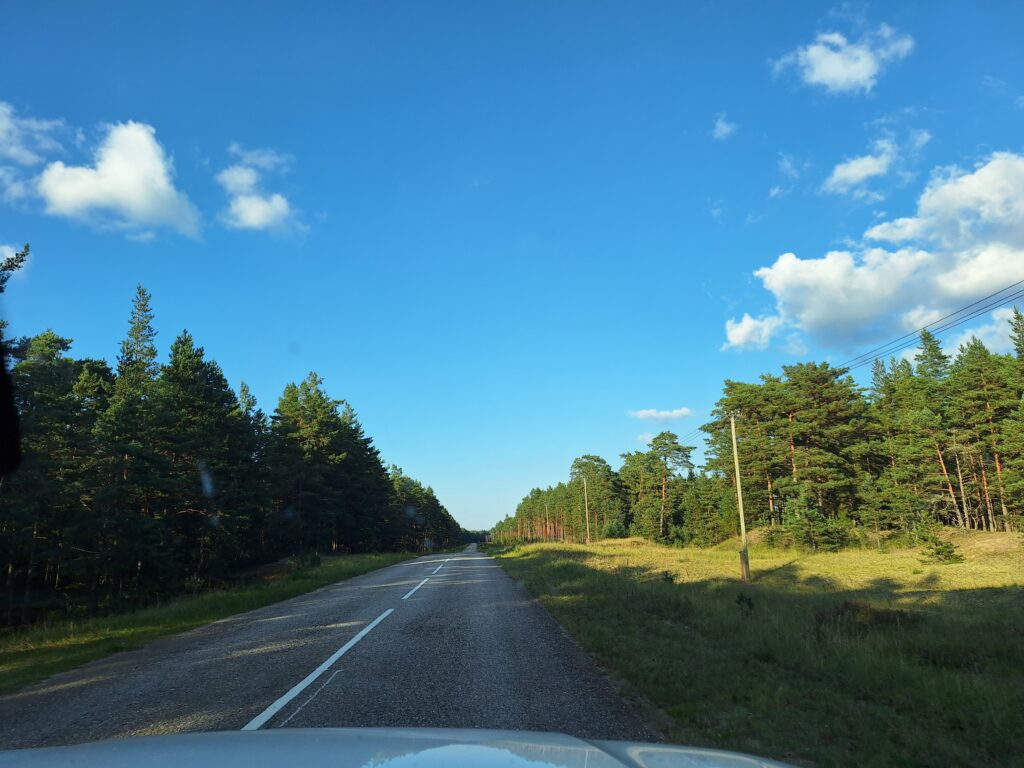
On our way to Riga from Ventspils, we were faced with the obvious choice: Take the ‘straightest road’ through the middle of (Kur)land, or the somewhat smaller country road along the beautiful coast. We naturally chose the latter, it had to be splendid, right?
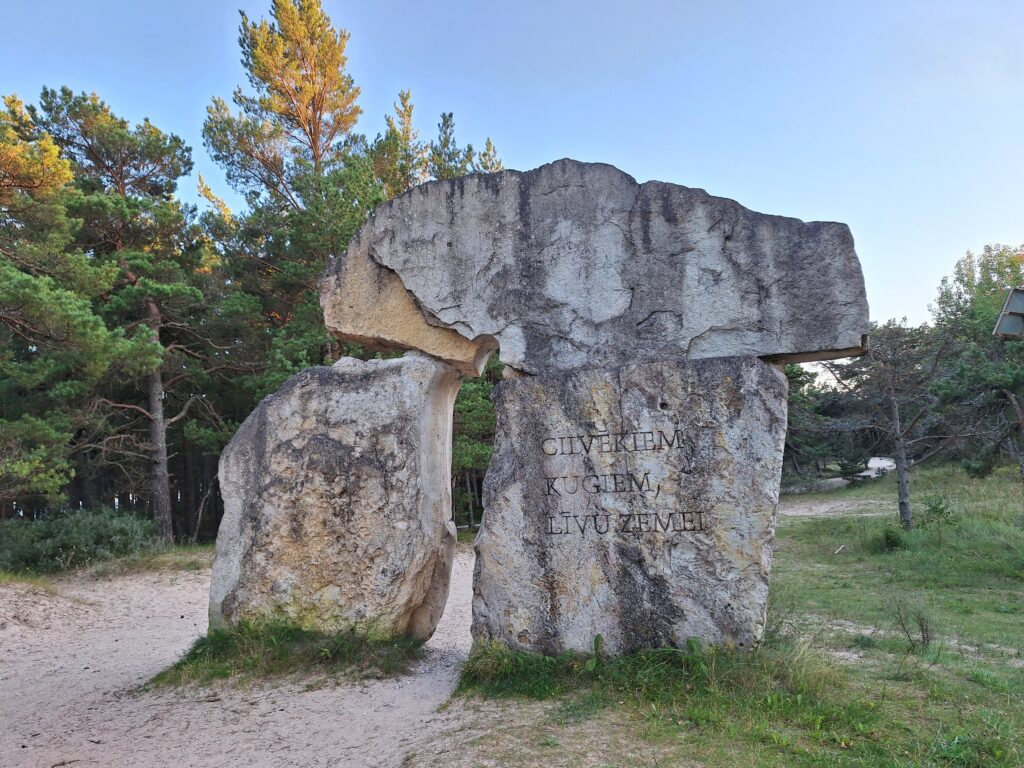
The population density northwards along the Kurzeme coast is very sparse, but in total there are (traces of) 12 villages along the 75 km long coastal strip that once was the last outpost of the Livonian language area.
Livonian is a Finno-Ugric language, related to Estonian. Latvian, on the other hand, is an Indo-European language and completely incomprehensible to Estonians and Livonians. The main area of the former Livonia was on the north-east side of the Gulf of Riga, including south-western Estonia. There were two varieties of the language: East Livonian, which died out in the 19th century, and West Livonian, which has barely survived to this day, between Ventspils and Latvia’s North Cape (Cape Kolka/Kolkasrags).
The area has been invaded with varying degrees of success by Vikings, Germans (Teutonic Knights), Swedes, Danes, Poles, French (Napoleon), Russians and Germans (Nazis). After World War II, the Soviet Union annexed all of Latvia, and the Livonians were forcibly removed from their villages. The Soviet Union wanted full control of the coast, and set up listening posts and border guards. Most of the Livonians moved away to Ventspils and Riga, and without access to the coast and their villages, they could not maintain their way of life based on fishing, logging and boat building, nor their language.
Livonian language went extinct in 2013, when the last native speaker, Grizelda Kristina, died. ‘That was it!’ as the Norwegian comedian Fleksnes would have said. But no! The language has come back to life! Language advocates Renāte Medne and Jānis Mednis are raising their daughter Kuldi Medne (born in 2020) with Livonian as her only mother tongue (this is a bit reminiscent of how Eliezer Ben-Yehuda brought modern Hebrew to life). This appears to be a bit lonely, since they live in Helsinki. But an exciting project, for sure! On the other hand; Finnish is in the same language group, and when you look at the numbers, the difference from Finnish may not be so dramatic:
1 – ikš – Yksi
2 – kakš – Kaksi
3 – kuolm – Kolme
4 – nēļa – Neljä
5 – vīž – Viisi
6 – kūž – Kuusi
7 – seis – Seitsemän
8 – kōdõks – Kahdeksan
9 – īdõks – Yhdeksän
10 – kim – Kymmenen
And of course, you can always take your vacation on the Livonian coast and talk to older people who speak Livonian as a second language (the sample is about 40 people). But we can only hope that the daughter has the humor to bear the fact that she was raised as an experiment.
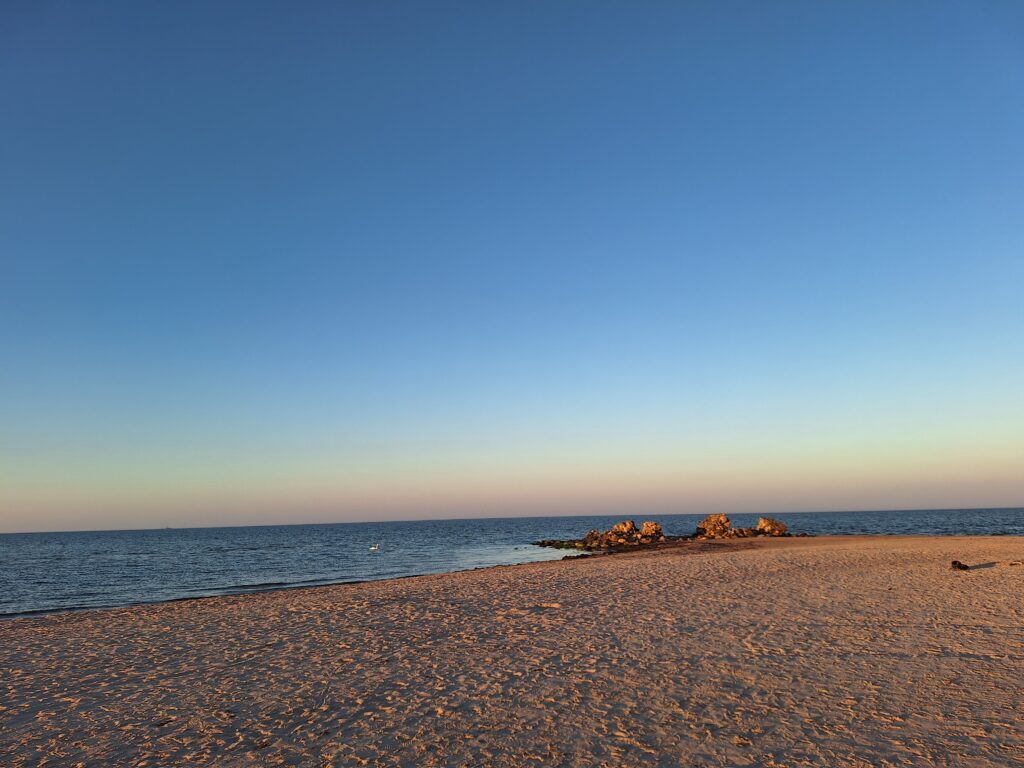
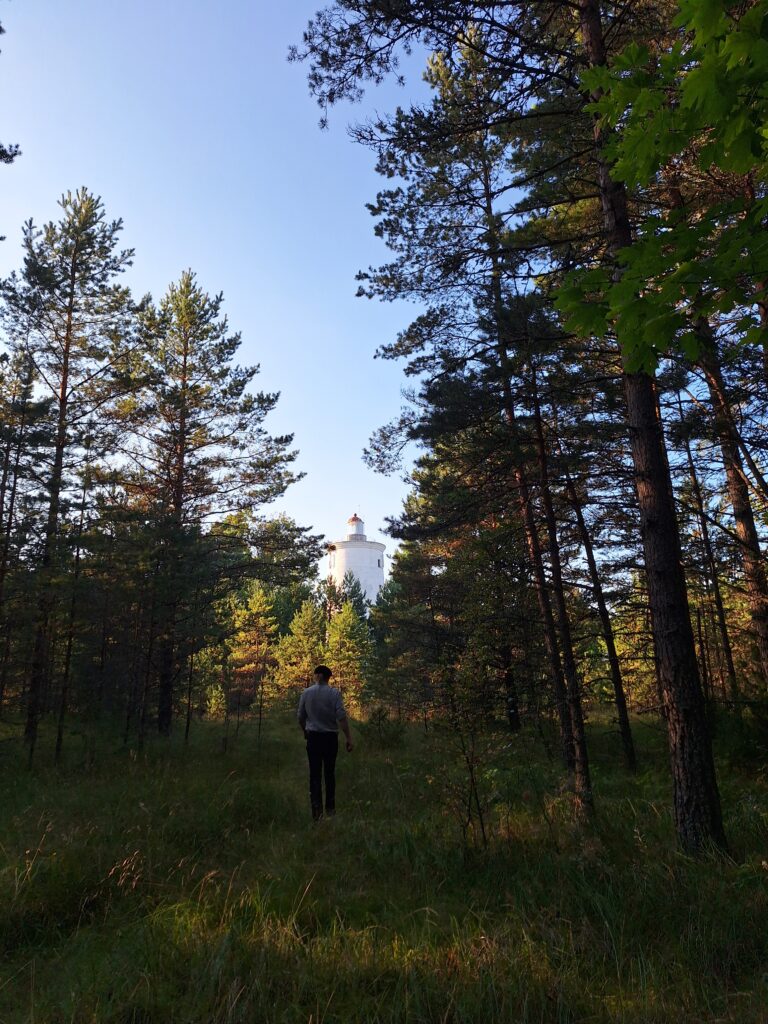
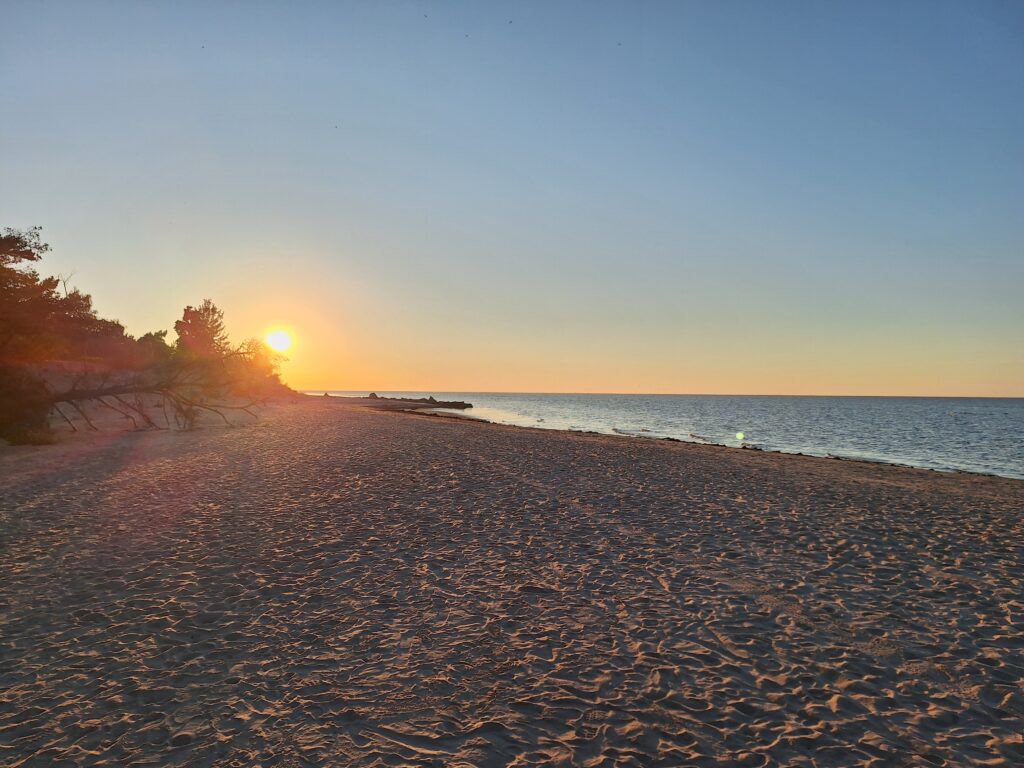
It turns out that the headland where the ‘Big Sea’ (the Baltic Sea) and the ‘Little Sea’ (the Gulf of Riga) meet is not suitable for swimming. Massive warnings! The sandbank extends several kilometers into the Baltic Sea (underwater), and the oncoming water masses create waves and whirlpools, which have sunk many ships throughout history. Unfortunately, this turned out as a ‘No-swimming’ bath! On the other hand – with a support boat, wetsuits and nice weather, it should be possible to take a swim here. Not that we know anyone with a boat around here. But it could be a fun project to swim out to Kolkas bāka. The lighthouse is 6 km from Kolkasrags and was completed in 1875 (at that time 5 km away – the erosion is working fast here).
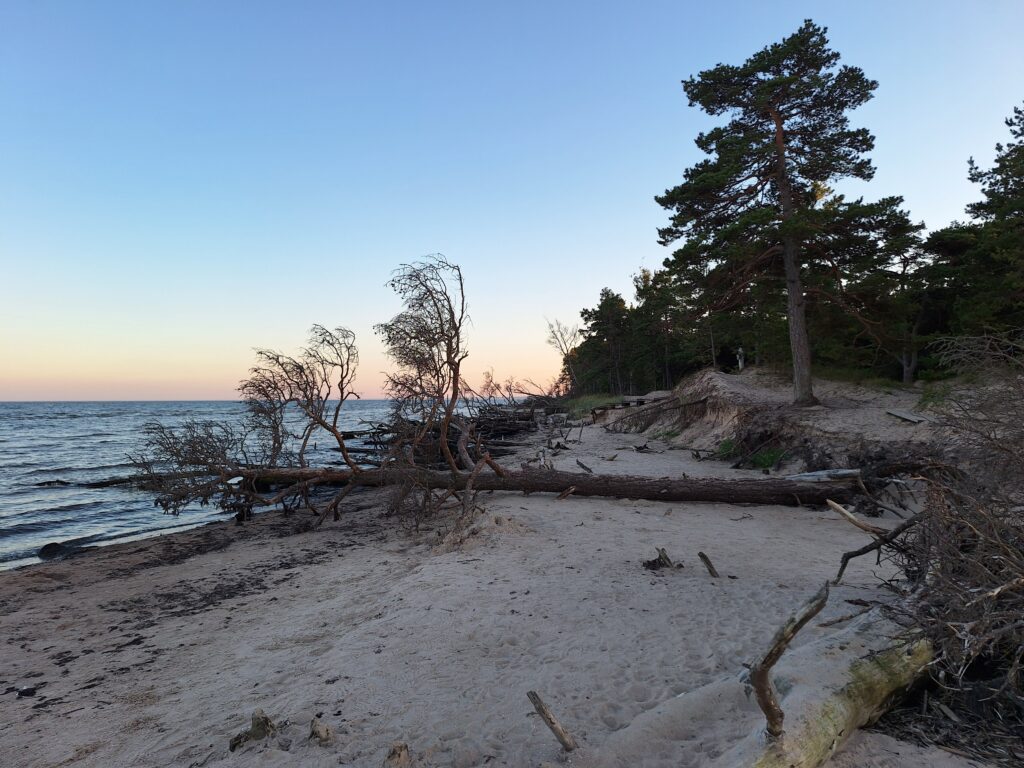
As of now (2025), it was basically not right to bathe at Cape Kolka.
Then it’s time to say like the Livonians: Tienū! (Thank you!)