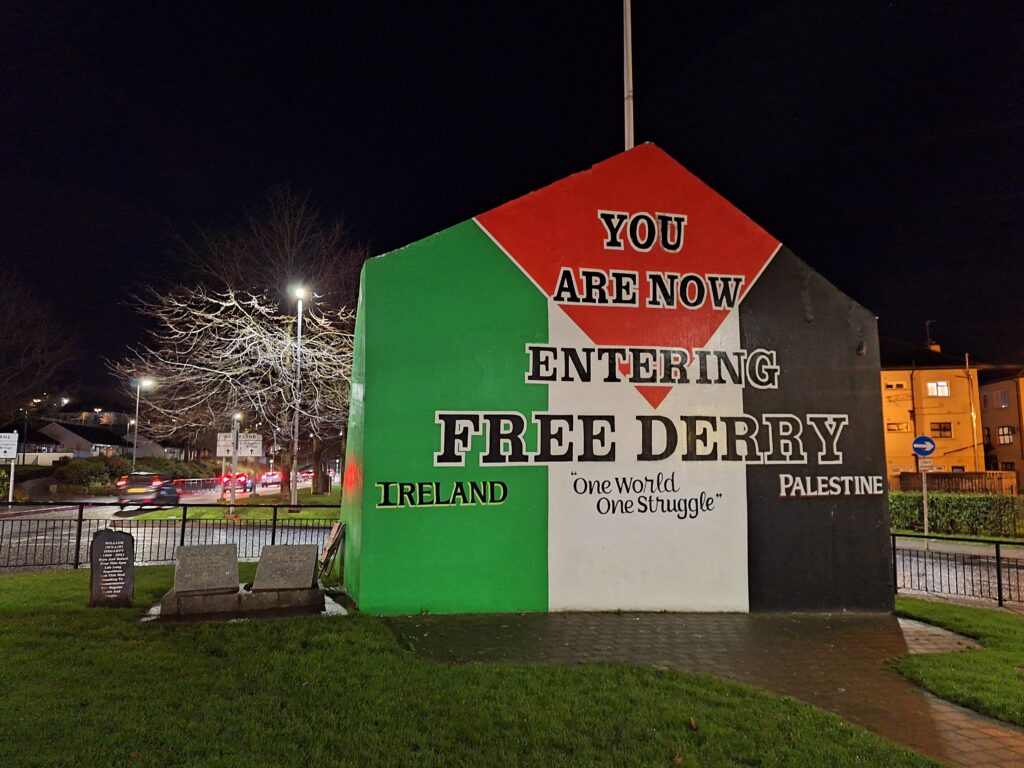
6 counties in the northeast of the island of Ireland were separated from the rest in 1922 without becoming part of the Free State/Republic of Ireland. Derry is located right on the border between Ireland and Northern Ireland, and the proportion of Catholics – Protestants is approximately 2:1. The division between nationalists (who want a united Ireland) and unionists (who want to remain in the United Kingdom) has largely followed the religious divide, but not 100%. In Northern Ireland, the Catholic part of the population has long been systematically discriminated against, be it prohibitions on education (leading hedge schools), unfair electoral systems (gerrymandering and single-member districts) or where people chose to invest in housing and jobs – or not. Around 1968 a civil rights movement started in Derry/Londonderry, inspired by the USA. Despite a Catholic majority, the city was always governed by Protestants, and in 1968 a second university in Northern Ireland was established, but not in the second largest city. The choice fell on Coleraine, a small town between Derry and Belfast, and not in Derry, which was twice as large.
There were riots and marches, the police were deployed – but they sided with the unionists and became a target for the rebels. Later, the authorities deployed military forces. In August 1971, a law (the Internment) was introduced that gave the authorities the power to arrest people without trial and to keep them imprisoned indefinitely. Just off Magilligan Point, 6 Nissen Huts (ref Icelandic bath WWII) were set up. This led to an increased influx of new members to the IRA (the Irish Republican Army, described by the British authorities as a terrorist organization) – you might as well join, if you were considered a terrorist anyway. Magilligan Point is a narrowing of Lough Foyle (the fjord north of Derry).
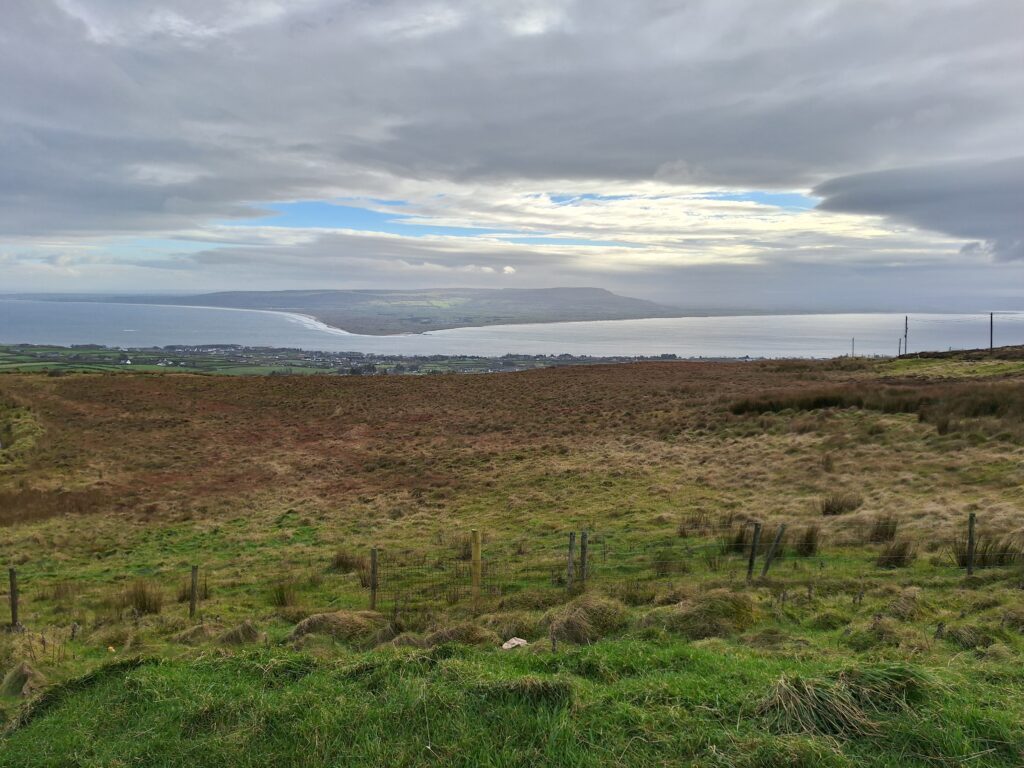
From Magilligan Point, 1,500 people marched towards HM Magilligans Prison on January 22th 1972, protesting against ‘the Internment‘. The authorities had set up barricades all the way into the water, and a confrontation broke out between British paratroopers and the demonstrators. John Hume also marched, but chose not to join the next one because the fronts were so steep.
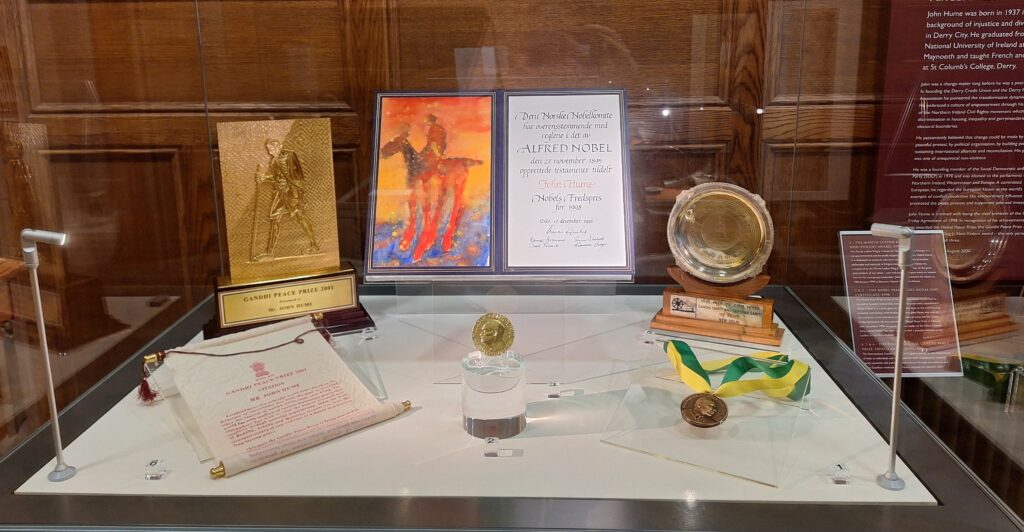
On January 30th 1972, thousands of people took part in a protest march in Derry (some estimates are 10,000!). It ended in a massacre, also known as ‘Bloody Sunday‘, in which British military forces killed 14 demonstrators. The Widgery Report, delivered 11 weeks later, exonerated the soldiers. A later report, commissioned by Tony Blair in 1998 and delivered by James Cameron 12 years later, found that all those killed were innocent (unarmed) civilians.
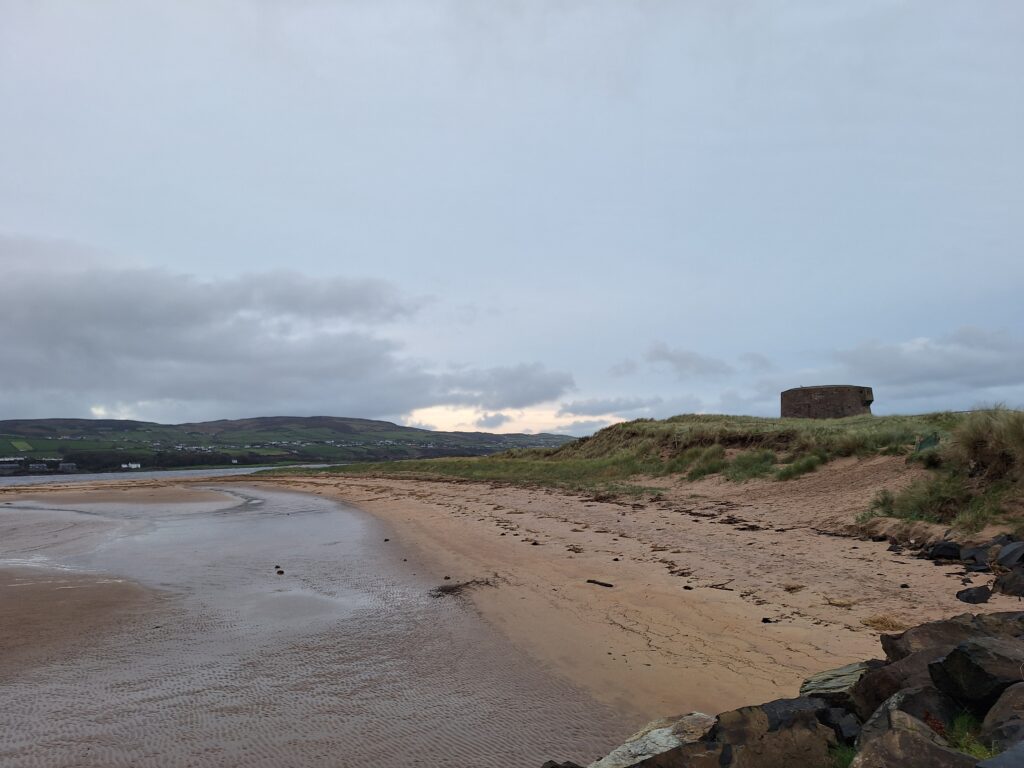
Tobatheornottobathe had given up on swimming in the River Foyle (Derry is situated at the mouth of this river) due to our hosts’ warnings, and we were looking for alternatives. At Magilligan point there is ‘open water swimming‘ going on every Wednesday all year round, and we wanted to try that! However, our swimming day was not Wednesday, so we picked up a random American guy from a bogsidepub the night before and drove off to swim on our own.
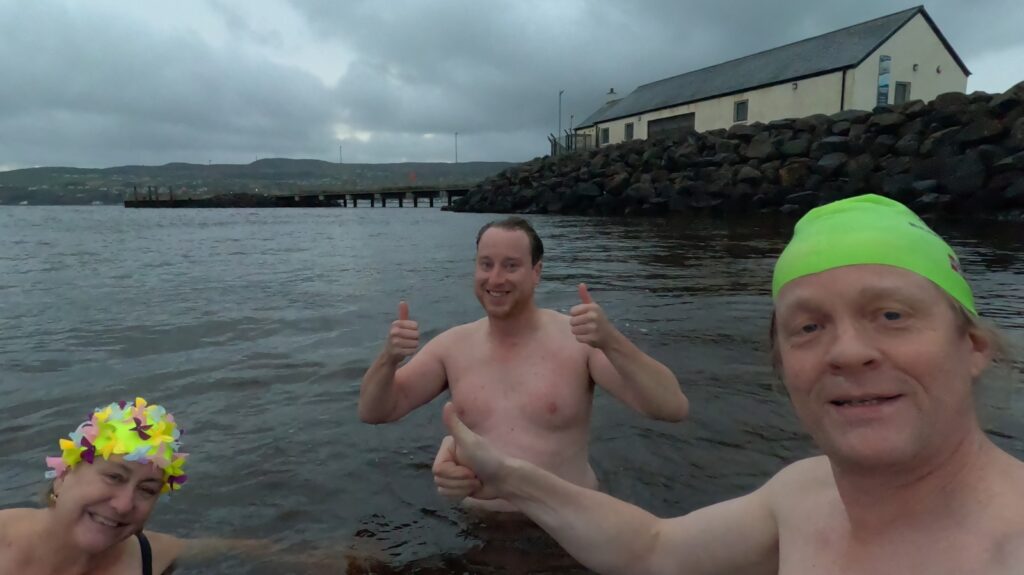
It was a semi-dark, gray and rainy evening, and the current was strong, so we didn’t get many meters of progress, even though we swam as fast as we could. But still a nice bath!
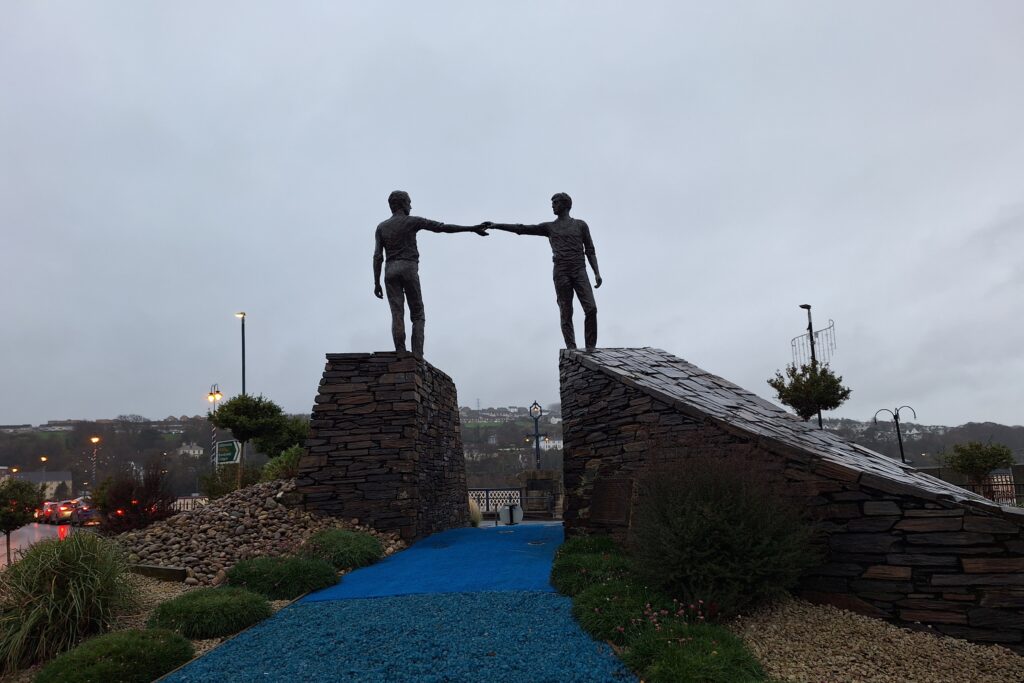
Magilligan Point Prison is now (2026) a regular prison for male criminals with less than 6 years left to serve. Following the 1994 ceasefire and the subsequent Good Friday Agreement in 1998, the violence in Derry has stopped. The focus is on peace and reconciliation, and we want to let the peace monument at Craigavon Bridge speak for itself.