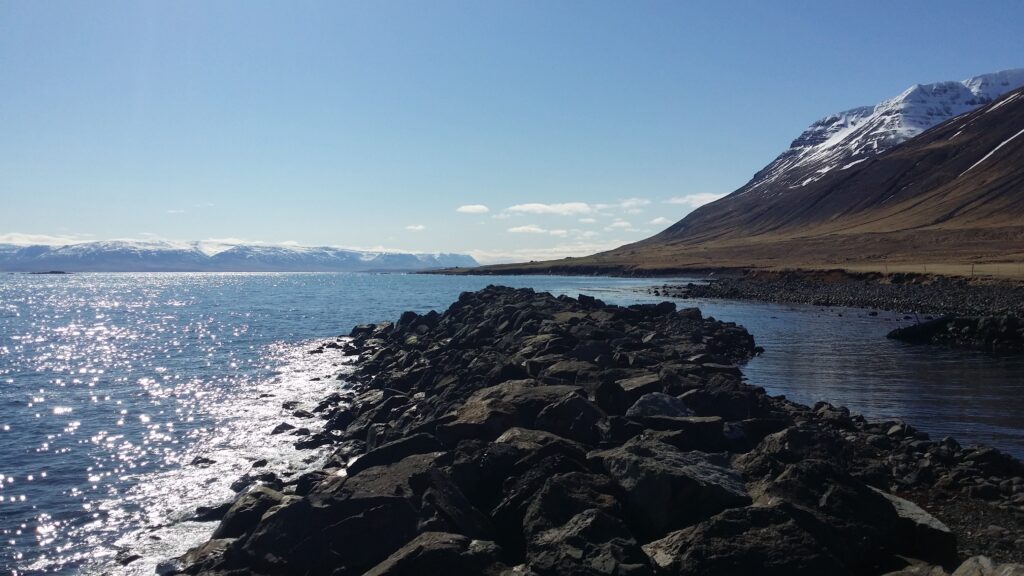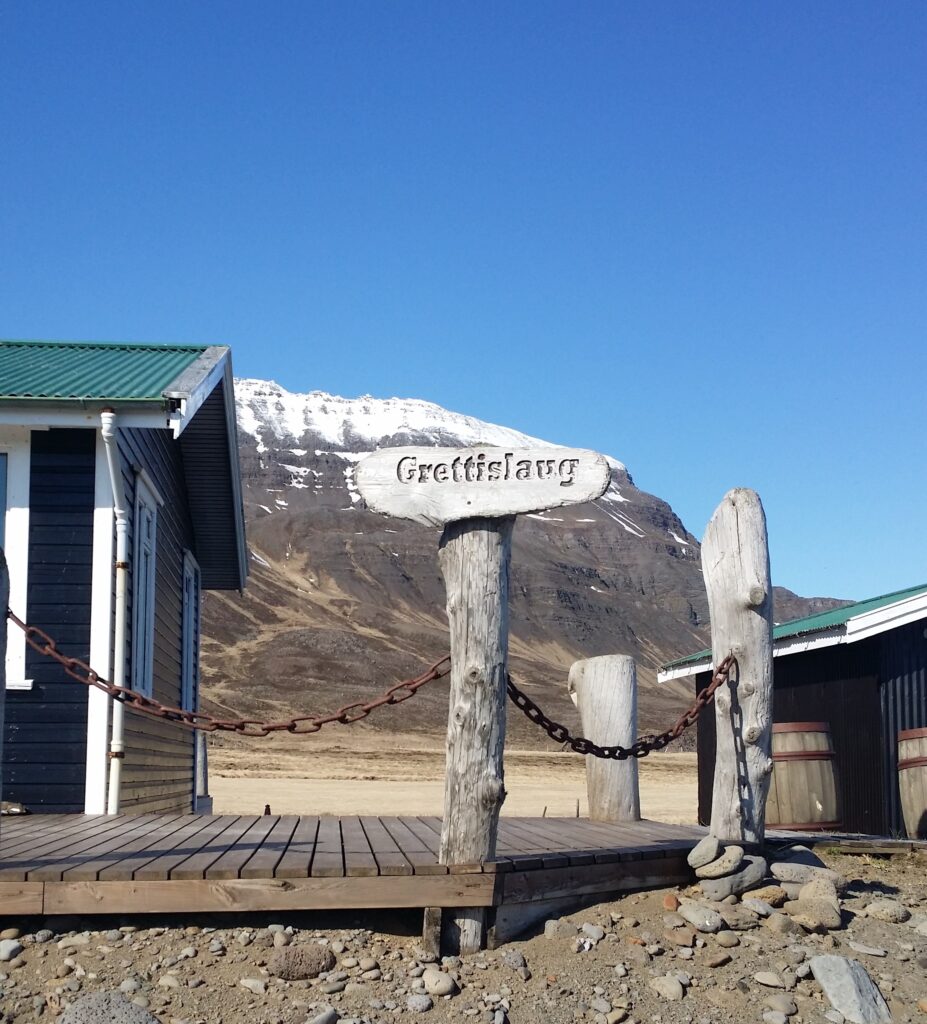
A hardhouse who got his own saga is Grettir the Strong Ásmundarson, who lived around the year 1030. Grettir and his saga are very popular in Iceland. He was constantly in battles and killed several men both in Norway and Iceland, and he accidentally caused arson in Norway – to name just some of it. As a child he abused and killed animals, and his first homicide was at the age of 14. The saga describes battles against trolls, ghosts, goblins, berserkers and ordinary people. Grettir is described as combative, fierce, brave, and very strong, which is a potent combination. During a battle against the ghost Glám (which he actually defeated), he had a curse cast upon him: Grettir would be pursued by misfortunes, an outcast and afraid of the dark. Nevertheless, Grettir managed to survive 19 years as an outlaw, even though a good price was placed on his head and many expeditions were sent out to kill him. At the same time, there were also many people who helped him.
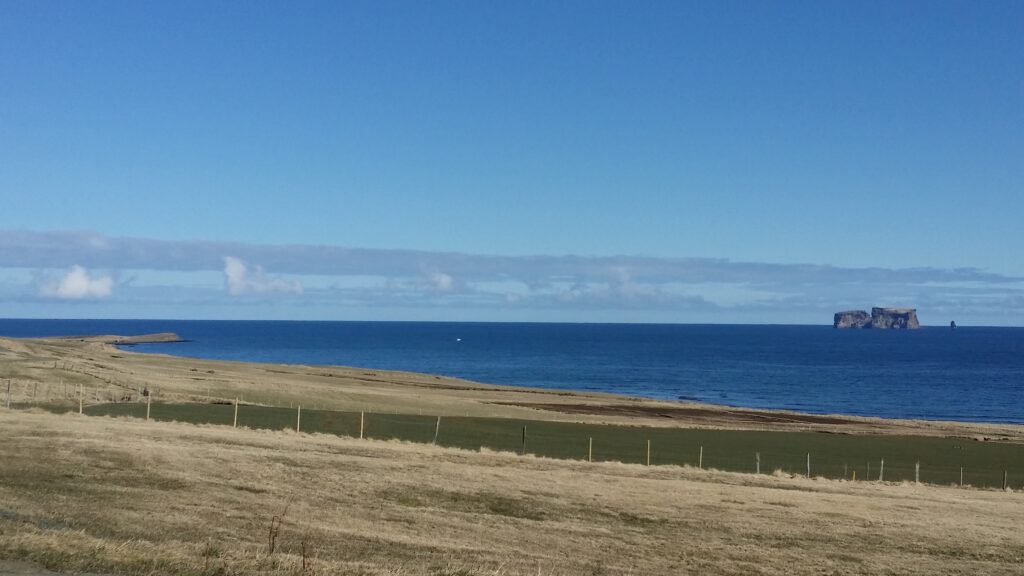
The outlaws were a nuisance in the area, who had to steal to survive. Sheep disappeared and all travelers risked being attacked when passing through their territory. After 16 years as an outlaw, Grettir had drawn what was left of goodwill from notables in various districts throughout Iceland, and he then accepted the advice to move out to the rocky island of Drangey at the far end of Skagafjörður in Northwestern Iceland.
With him he had Illuge, his brother, and a slave, Glaumir – Grettir had become afraid of being alone. There they lived on birds, fish and the villagers’ sheep. The plateau at the top could not be reached without the ladder that hung there. Grettir only had to pull up the ladder and he was safe (who had climbed up in the first place and made the rope ladder is not mentioned in the saga…). One winter day the fire in the hut went out, and Grettir had to swim ashore for fire. The swim was a struggle, it is 7 km from Drangey to land! Fortunately he was able to warm up again in Reykjaströnd, where there is a hot spring. As the saga puts it: ‘He baked for a long time in the bath, for he had become cold from the swim‘.
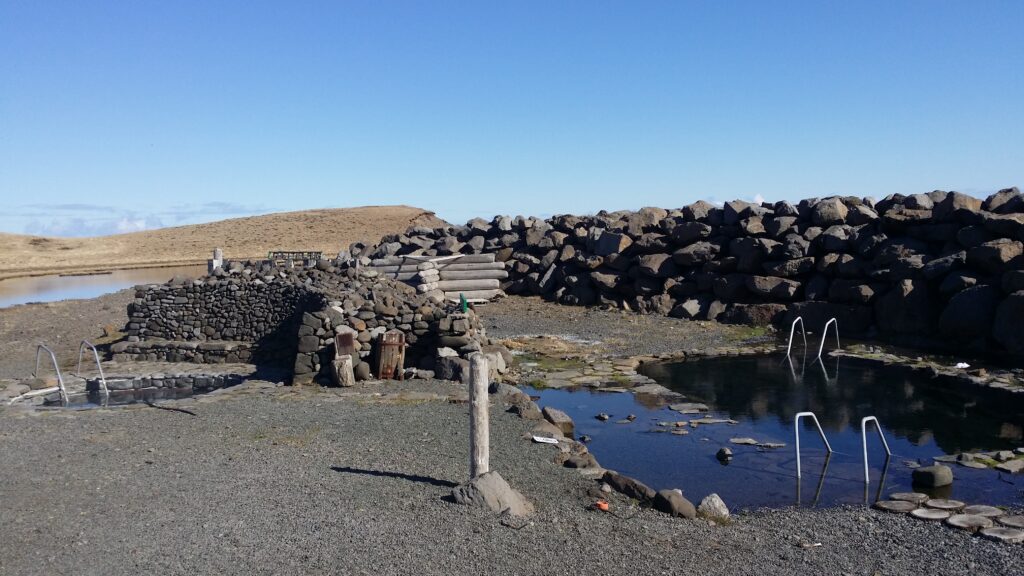
Then it was just a matter of swimming back with the fire. The Vikings had a separate chamber in their fireplace, for storing fire at night. It was obviously time-consuming to make a new fire. Such a fireplace was found in the Norse settlement at L’Anse of Meadows in Canada (This may have been Guðriður’s fireplace, as a handrail for spinning wool was also found at the same site). Ref the bath ‘Leifur Heppni Eiríksson’).
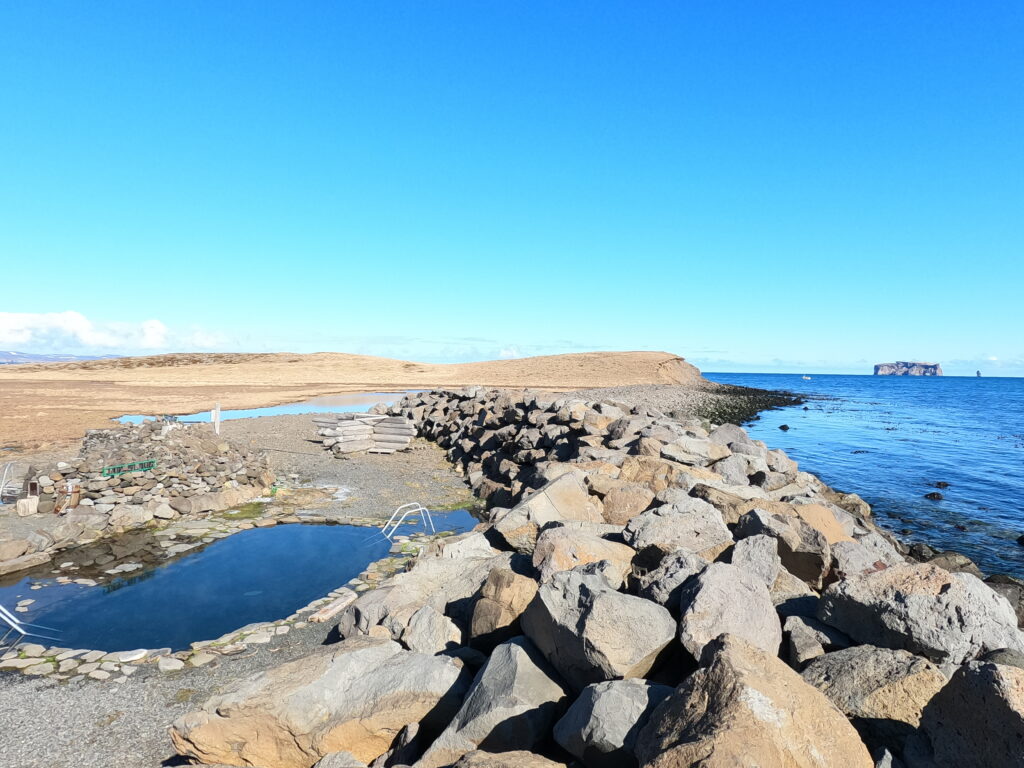
troll man’s cliff fell in an earth quake in 1755.
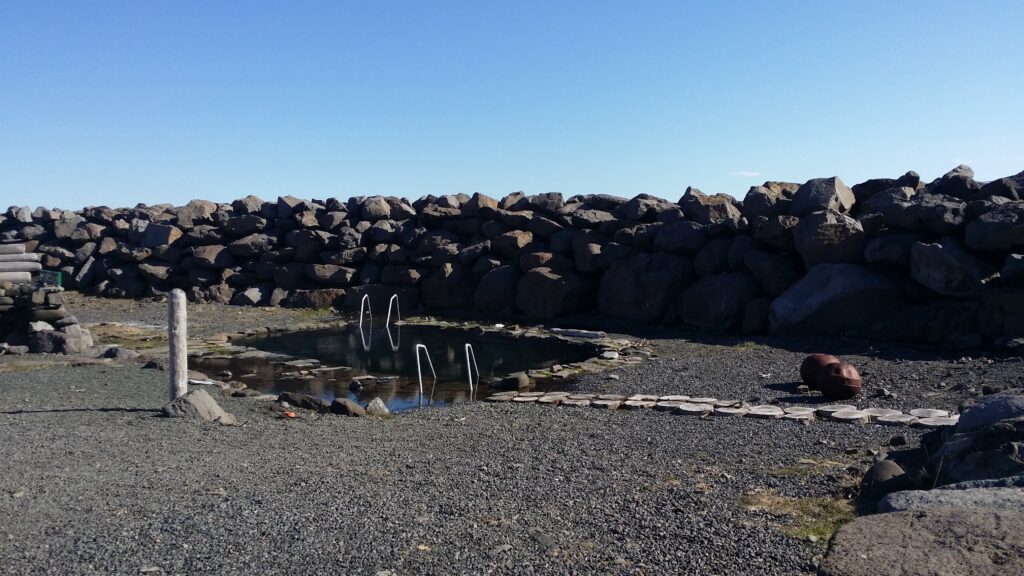
Originally there were two pools here. One was called Reykjalaug and was used for washing, while the other is described as a mud puddle. The pools were destroyed in a storm in 1934, after which the spring water came up into the fjord. Farmer Jón Eiríksson Drangeyjarl restored the bath in 1992. The bath is protected by a rampart, so unfortunately you cannot see Drangey from the bath.
Check if the baths are open if you want to go there. Actually, physically they are always open, the question is if you are allowed to use them (signs will tell you). This is private property, so taking a bath when it says you’re not allowed would not be very respectful. Tobatheornottobathe actually respects that kind of regulations and has been there twice without bathing. Did we take a bath the third time? That is the topic of an internal debate, memory is a difficult thing. But since there are no pictures, it can’t have happened?
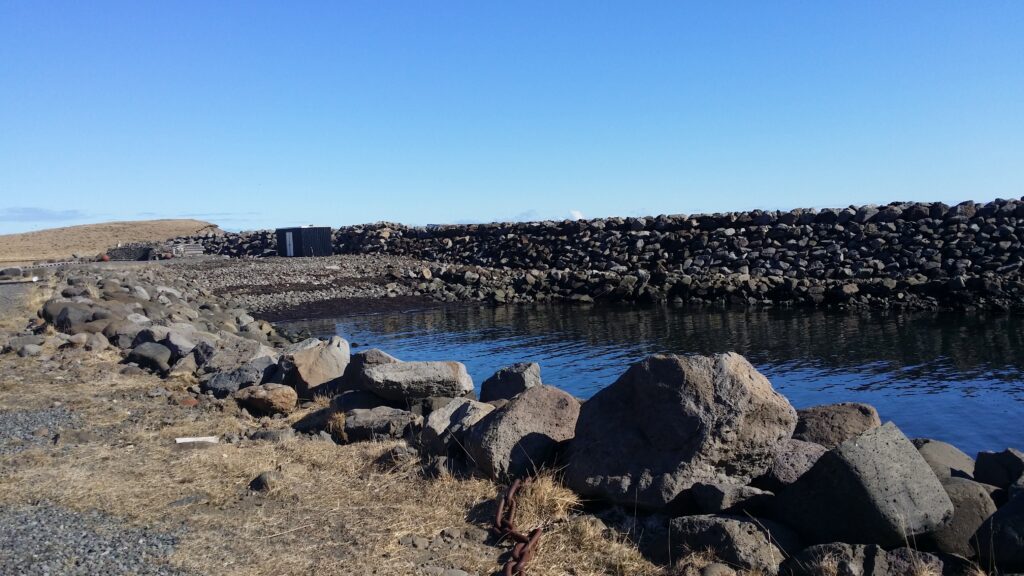
The bath is now called Grettislaug and consists of two stone-lined hot pools, with a small black beach next to it for cold swimming. Highly recommended!
Bring cash to this bath, in case there is no one else there, they ask for a small contribution to keep everything nice. We have visited Grettislaug several times. One late autumn evening in rain and storm, Knut got to help drive sheep into a truck. This is what happens when you drive on narrow, bumpy country roads in Iceland.