In the north of Iceland, a 40 km long and 15 km wide fjord runs into the country, called Skagafjörður. The name comes from ‘skaga’ which means peninsula, i.e. the headland that separates Skagafjörður and Hunafjörður to the west.

Here the river Hofsá flows into the sea on the east side of the fjord, at what is today the small, charming town of Hofsós. We don’t see anything of the ‘hof’ (norse temple) today, but there are some older log houses by the fjord, which were built during the time when Denmark had trade monopoly here.

Hofsós is one of Iceland’s oldest trading posts. Trade began here in the 16th century, due to its good harbor. The population today is around 150, half of its top around 1950.

At Hofsós, there is an emigration museum, Vesturfarasetrið, in memory of the 16,000 Icelanders who emigrated west to the USA in the period 1870-1914. The most important reason for the emigration was ash fallout from Öskjugosið, the large volcanic eruption in Asjka vulcano on 23rd March 1875. The eruption lasted only a few hours, but it is considered Iceland’s largest volcanic eruption in historical times. Most of the people who emigrated in this period moved from eastern Iceland, and it may seem a little strange that the Emigrant Museum is located in Hofsós, in the north of the island. But remember the story of Guðríður Þorbjarnardóttir (born on Snæfellsnes) and Þorfinnur Karlsefni (from Hofsós) , who joined Leiv Eiriksson’s second travel to Vinland (USA). They lived in Vinland for 3 years between 1003 and 1006, and their eldest son Snorri was born there. The first European immigrants to America in historical times!

Einar Jónsson’s statue of Þorfinnur exists in two copies: one in Reykjavík and one in Philadelphia (in the Ellen Phillips Samuel Memorial collection). The Philadelphia statue has been subject to much attention. It has been vandalized by white supremacists, resulting in counter-demonstrations, and is currently not on display.
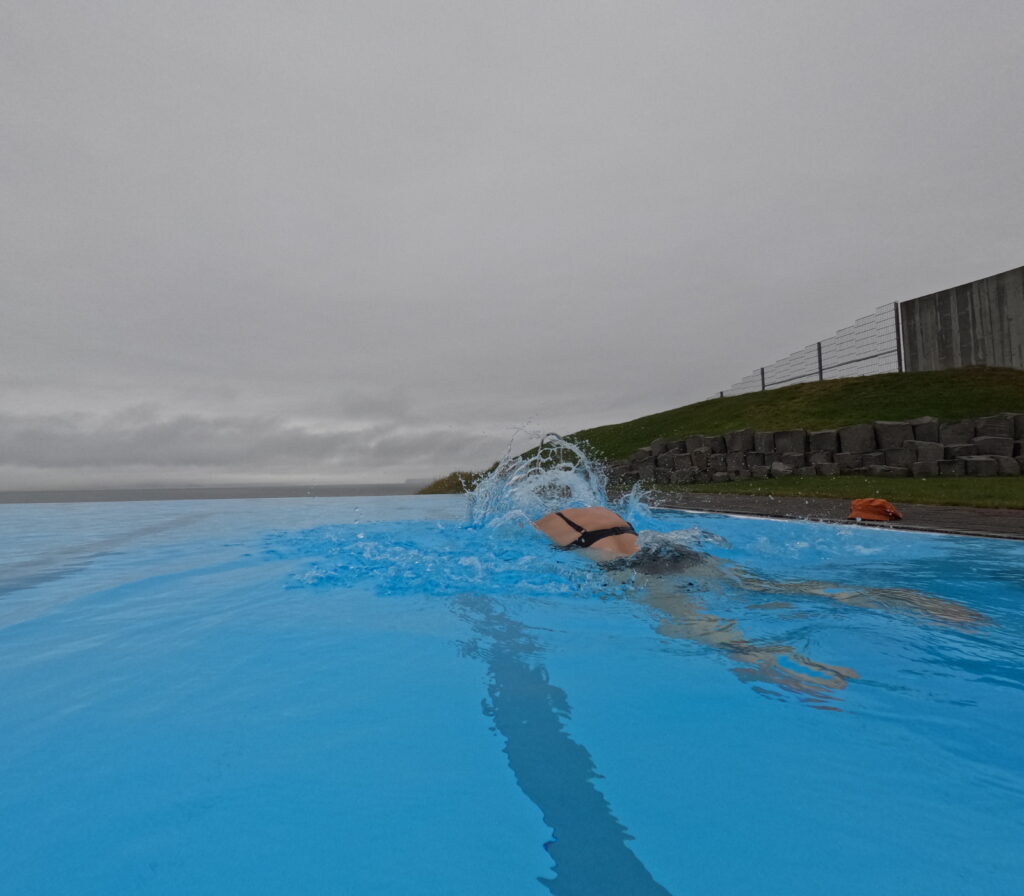
After visiting the museum, a bath will be just right, and Hofsós has a fantastic swimming facility from 2010, beautifully situated on top of the basalt cliffs.