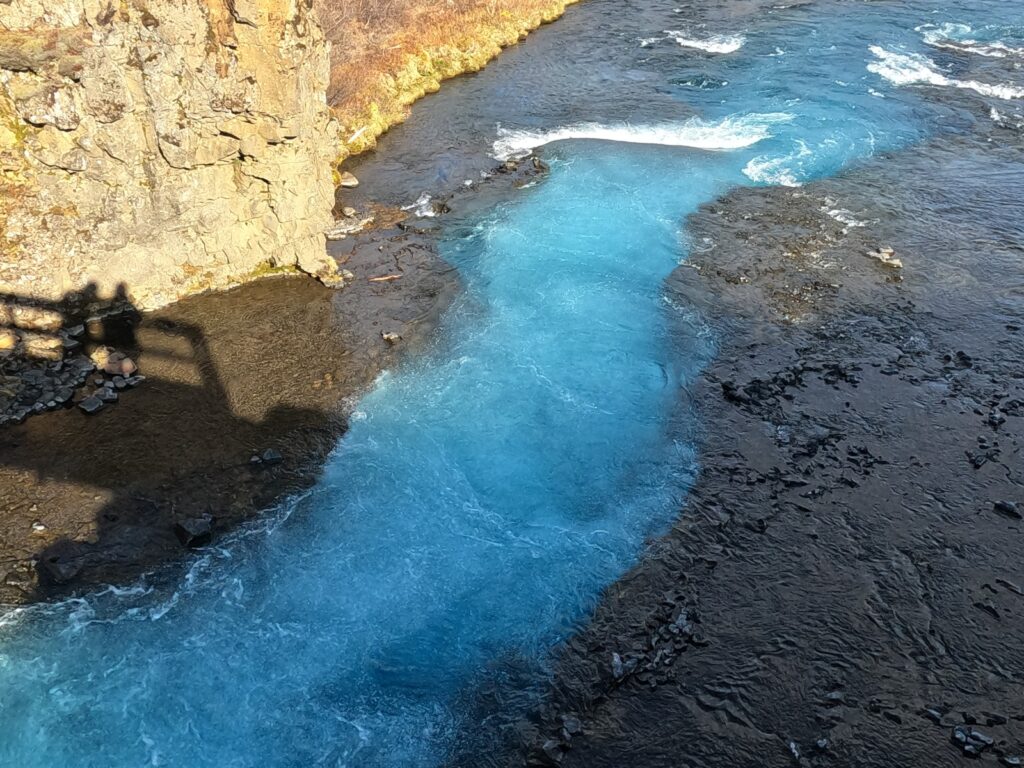
Iceland has many rivers, caused partly by a steady humid climate, but also because many of them come from glaciers. The color of the rivers varies greatly, from clear or whitish-gray to blue or green.
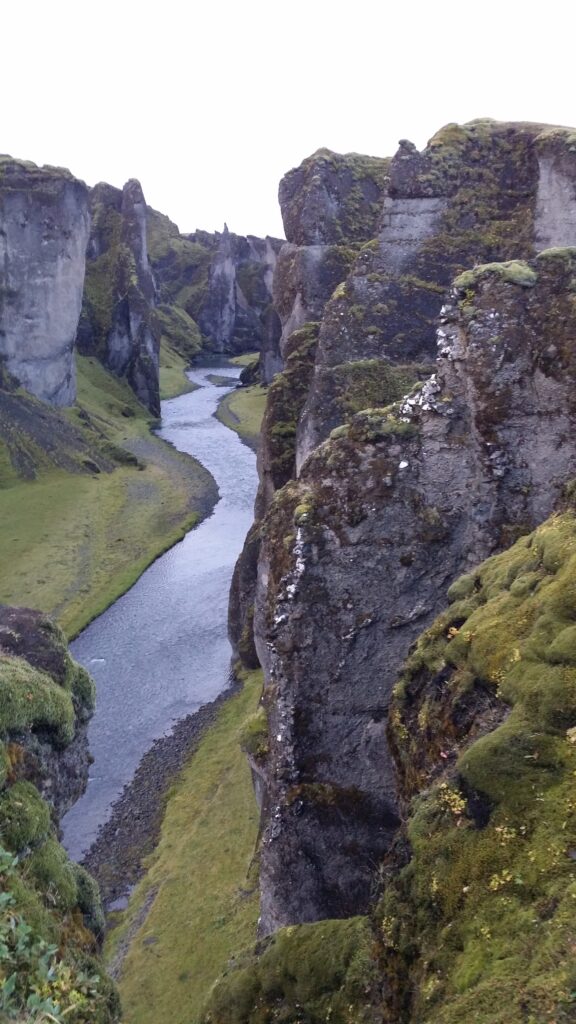
The rivers are colored in many ways, for example by algae, particles or air bubbles. The importance of the rivers in Iceland is made concrete by the fact that each one of them is marked with their name by the road (not all churches are granted such an honor!).
In Iceland they use the word á for river (pronounced as the diphthong ao), as in the Norwegian word ‘å‘. The longest Icelandic river is Þjórsá (The Bull river). It flows south from the Hofsjökull glacier, is 237 km long and has a catchment area of 8,000 km2. From the Book of Settlements (Landnámabók): ‘There was a man named Torarin who was the son of Torkjell from Alver (West Norway). He came with his ship into river Þjórsá’s estuary. He had a bull’s head in the prow, and after this the river got its name.‘
When it comes to swimming, rivers are not so easy. Either they are too shallow, too muddy, the riverbank can be uncertain, the current is too strong, or it is simply too steep.
There are therefore very, very, very many Icelandic rivers that we have not bathed in. When we stayed overnight in Hvammstangi, just above the church, we immediately saw that there was a path along the river, and a morning bath was put on the program. Yes! A dip in Hvammsá before breakfast was just right. So refreshing! So simple! And no. It was not a river, it was a stream. It should have been called Hvammslækur (The Hvamm Stream)!
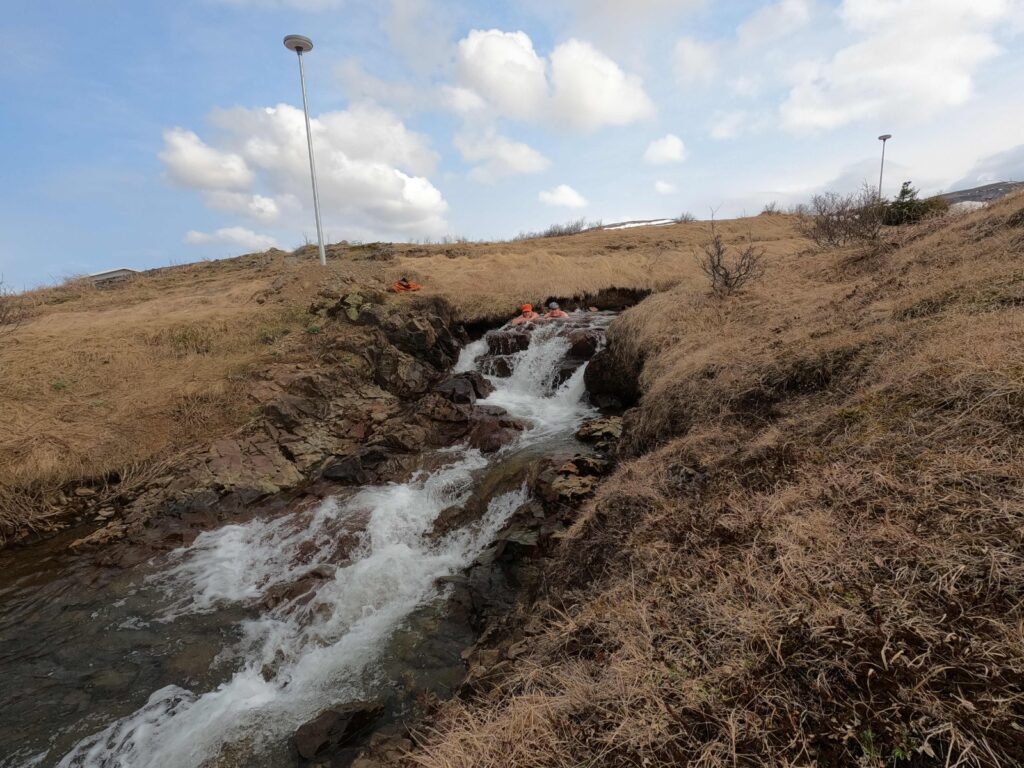
Then Knut discovered that there were several pools that could be used for bathing. As said, so done.
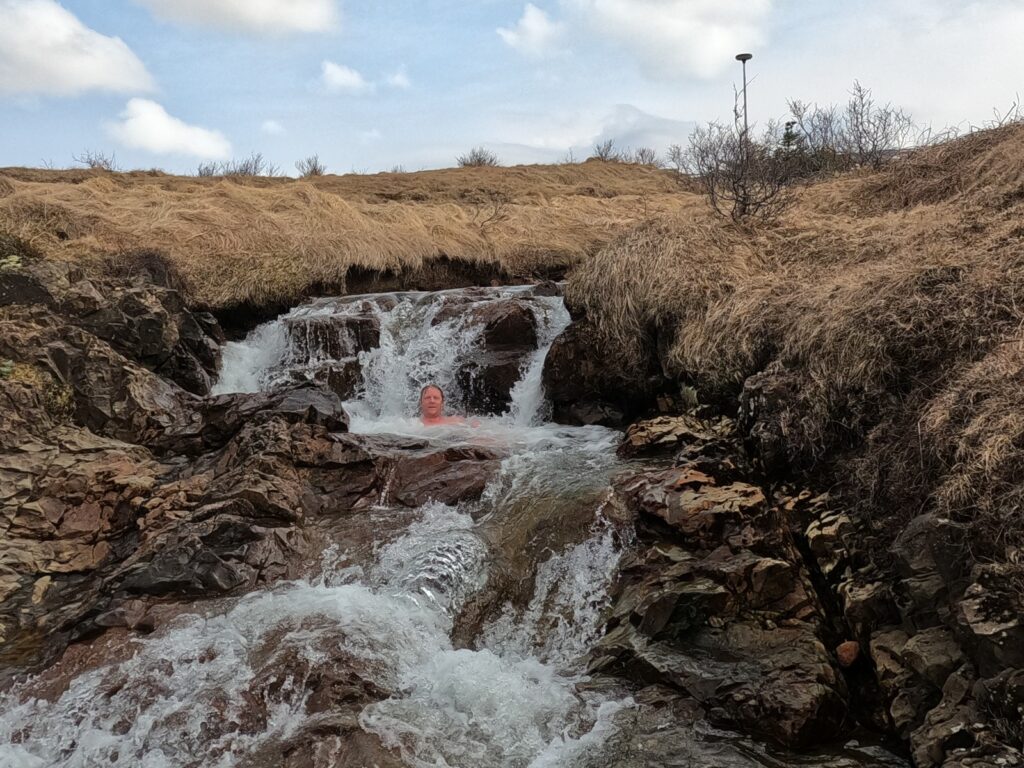
As bathingtimes go by…