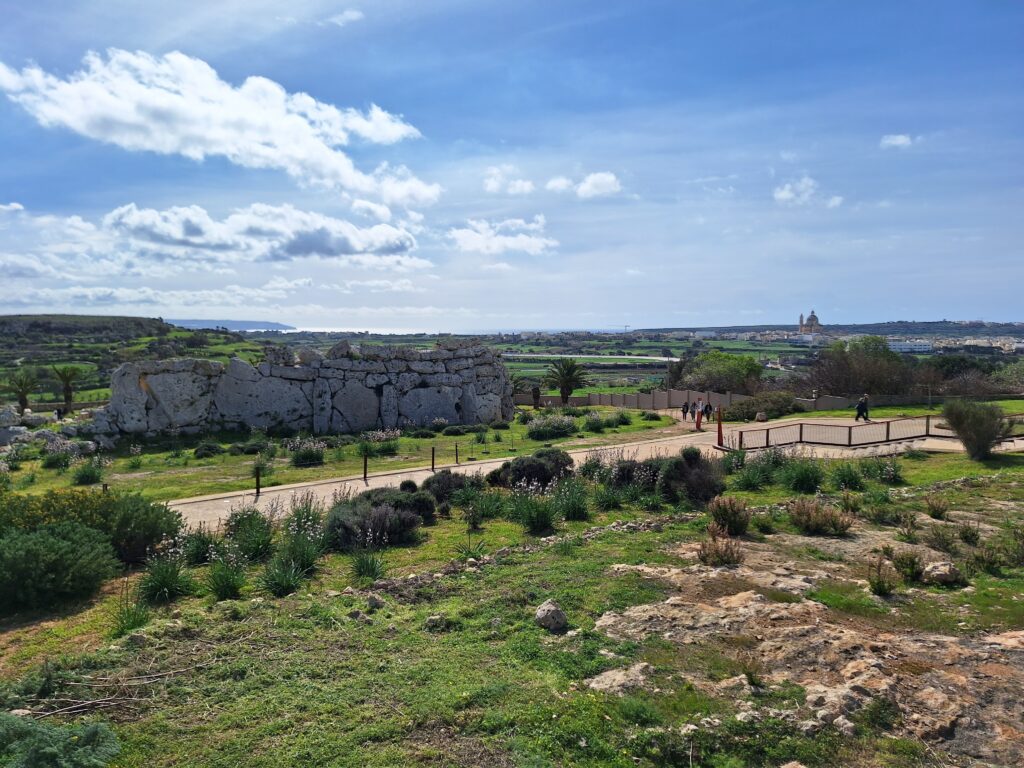
Gozo (Maltese ‘Għawdex‘) is the second largest island of the Republic of Malta. It measures 14 km x 7 km and has a population of 40,000. The island was settled from Sicily, which lies 170 km to the north-east. Here you can find some of the largest human made structures in the world – from the Stone Age.
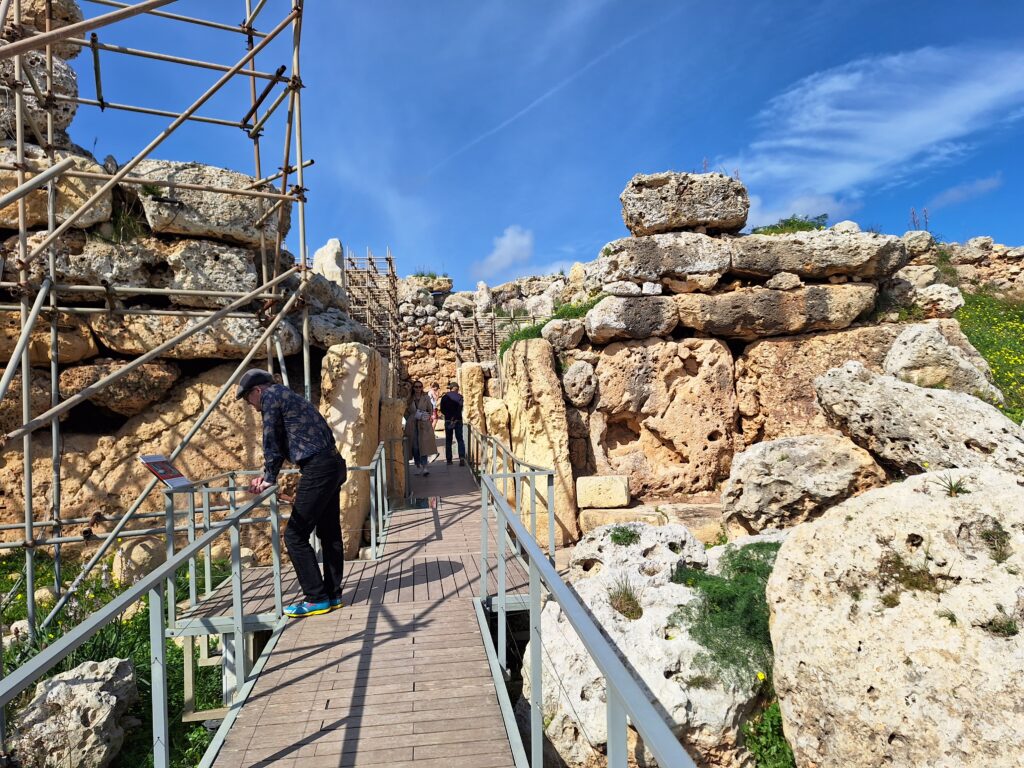
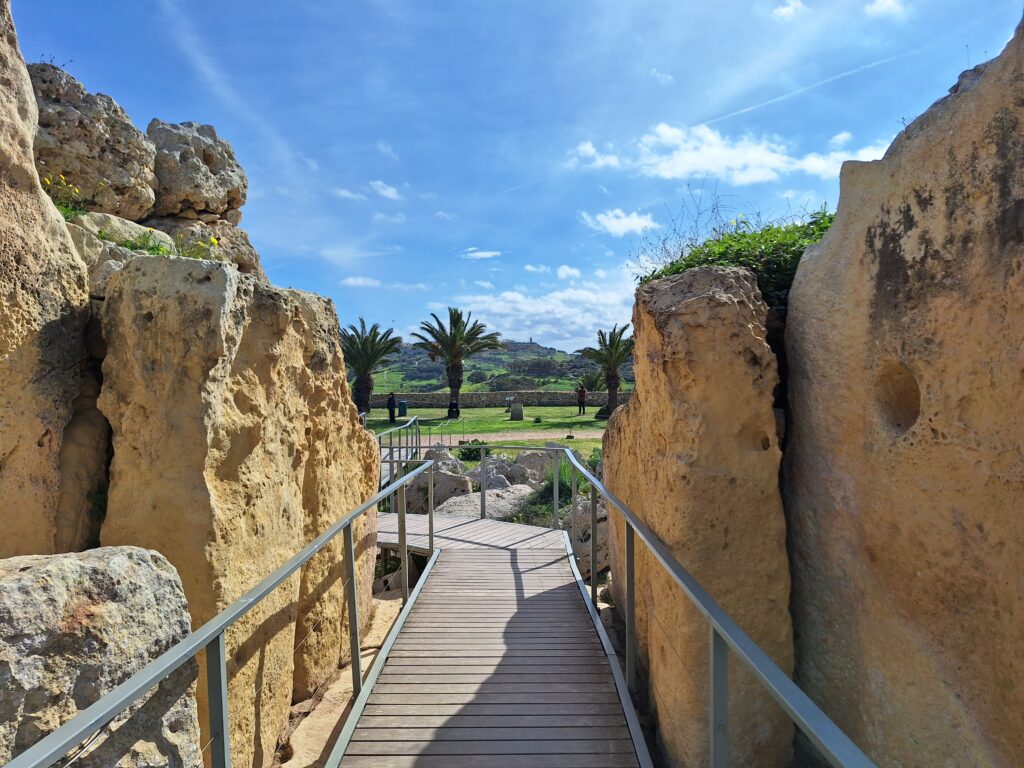
The walls of Ġgantija are semicircular (apse), built of durable coralline sandstone on the outside, and softer stone on the inside. The largest stones weigh 50 tons, and it must have been a feat to cut them and transport them to the building site without the aid of neither wheels nor metal tools.
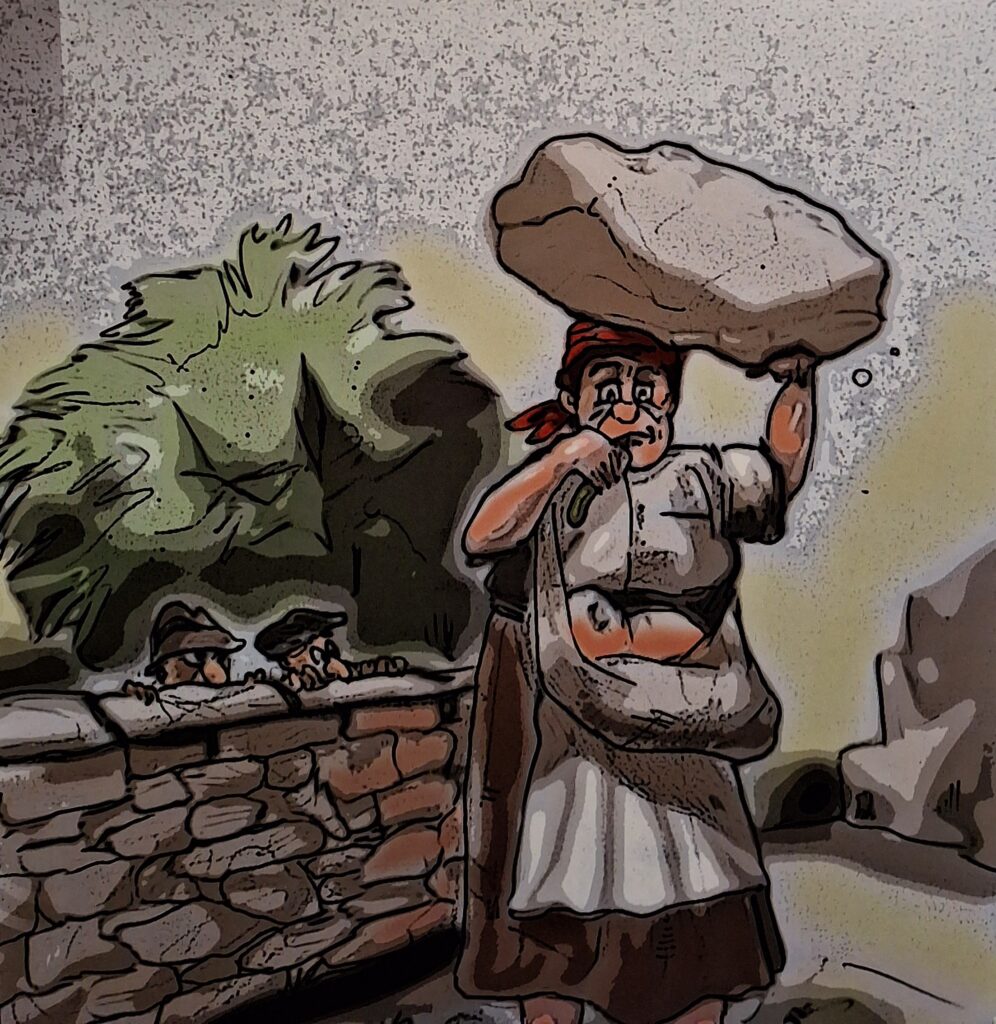
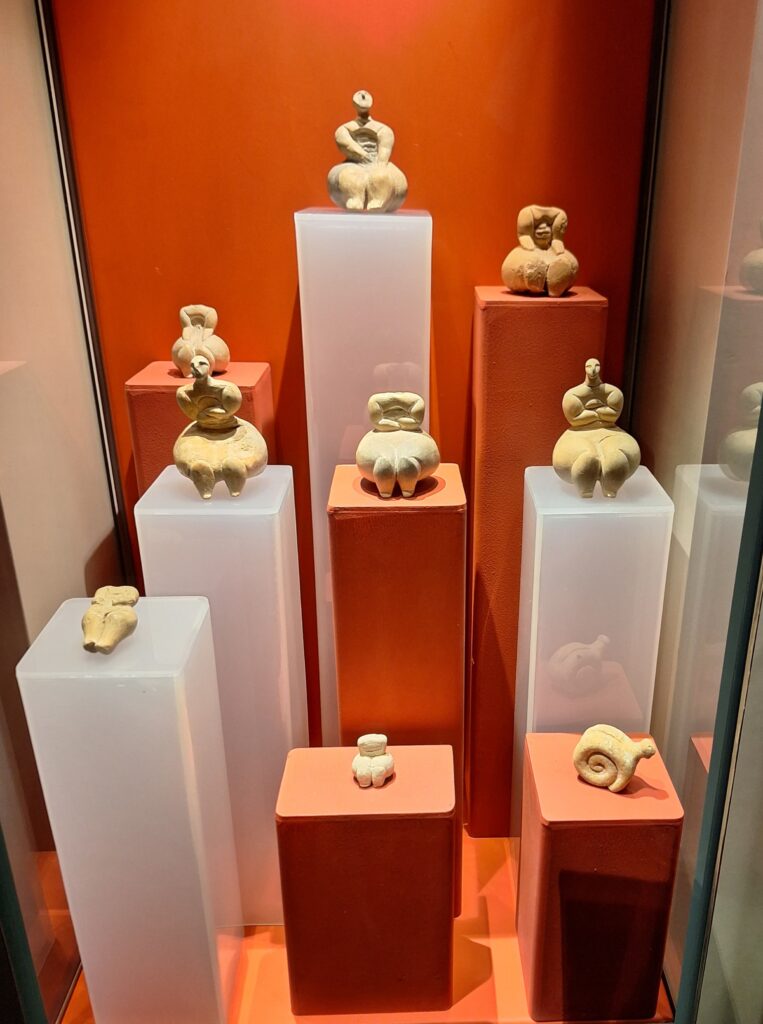
Well, actually, this was not a man’s feat. We are talking about a goddess culture, which had a taste for large women. According to local tradition, it was a giantess who transported the giant stones into place – while carrying her child and nibbling on beans. Easy peasy!
Modern thinking is a bit more prosaic. The discovery of a large number of spherical stones suggests that the large stone slabs were transported horizontally lying on spheres.
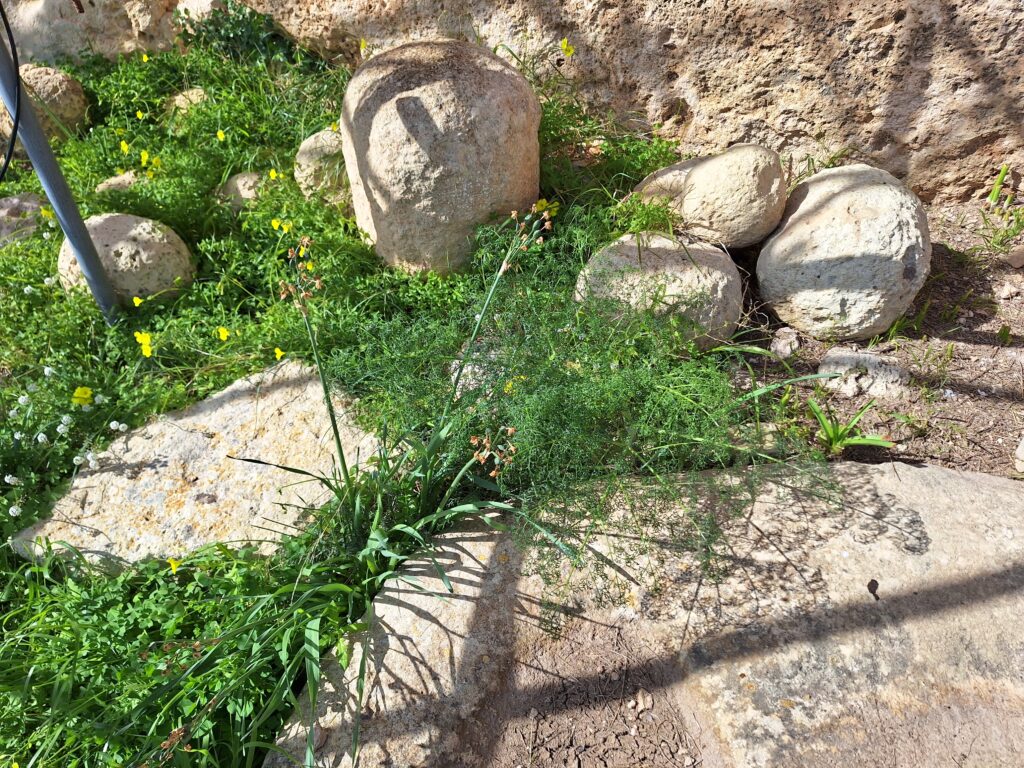
We are talking about a building from 3,500 BC. Wow! It is believed that Ġgantija was a sacred place, with altars, lots of bone remains from sacrificial animals and containers for water (purification). And fat female figures. Lots of them!
From Ġgantija it takes fifteen minutes to drive out to the municipality of San Lawrenz on the west side of the island. The weather is harsh here, and there are beautiful cliffs both northwards and southwards. When rain, wind and waves ravage the cliffs, cracks will form over the years, which will eventually expand into caves. The caves are dug out more and more by the waves, and eventually the roof collapses.
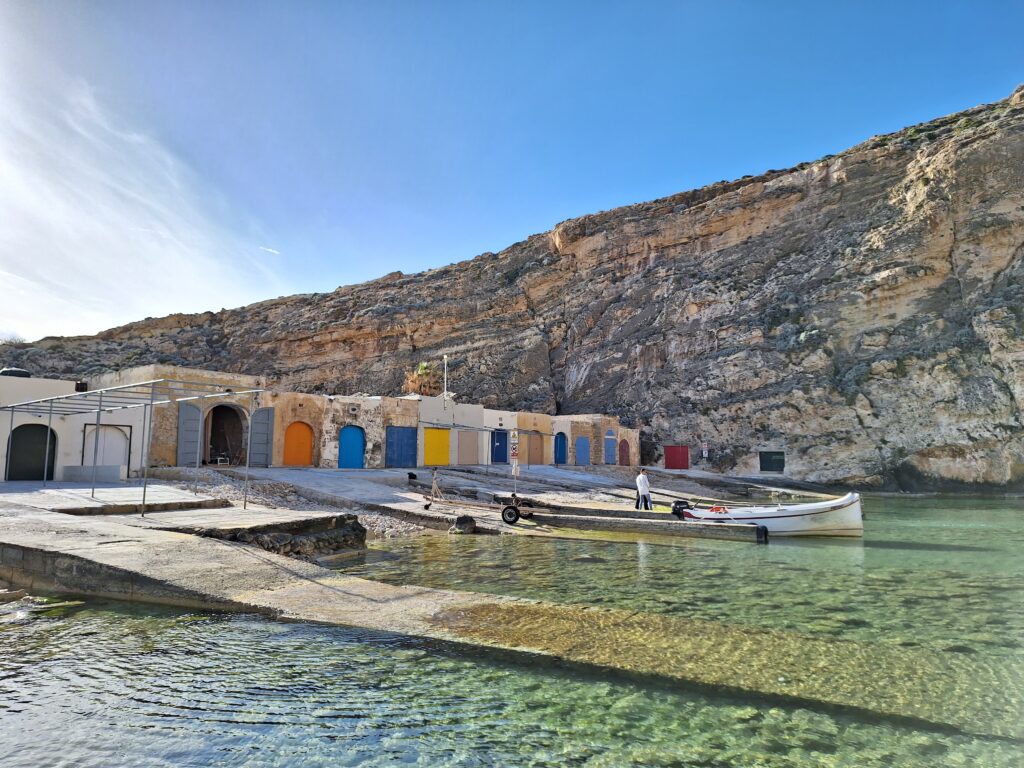
Such a cycle from a rift to collapse on the Maltese islands would take approximately 500 years. From the inland sea there is a natural, 35 m long tunnel out to the sea, where the traditional Maltese boats, the luzzijiet, can pass if the weather is good.
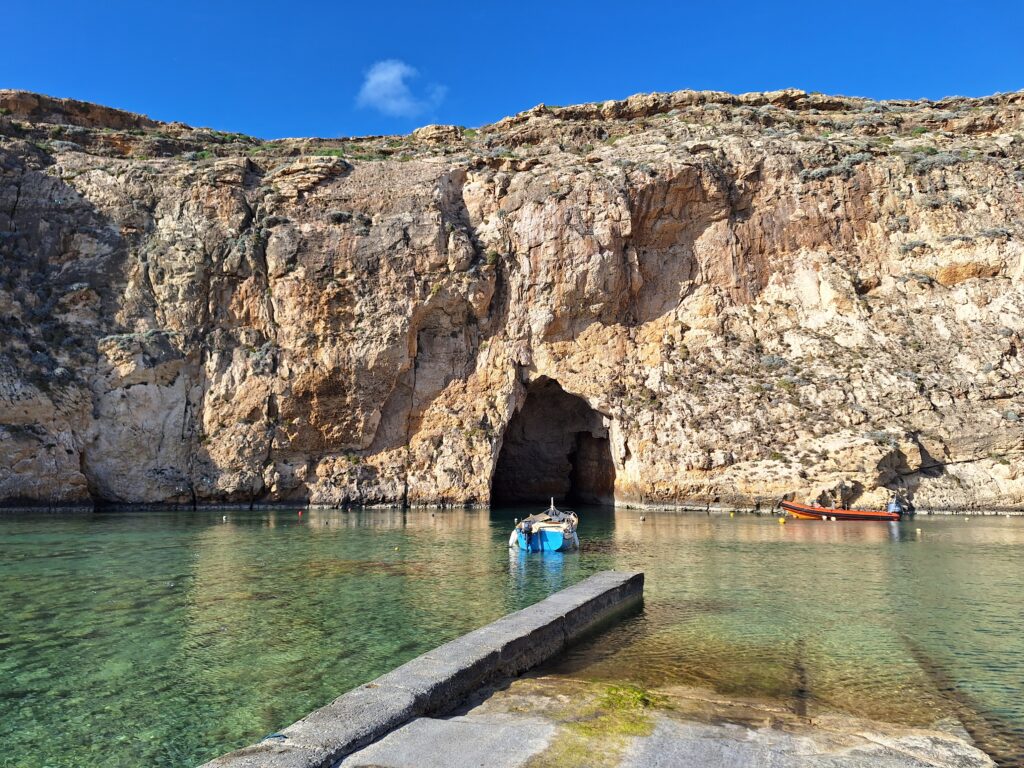
Depending on how the waves dig, some limestone caves will end up as arches. A legendary arch, ‘The Azure Window’, near the Inland Sea was located at ‘Fungus Rock’ a little further south. This arch collapsed in a major storm on 8/3-2017.
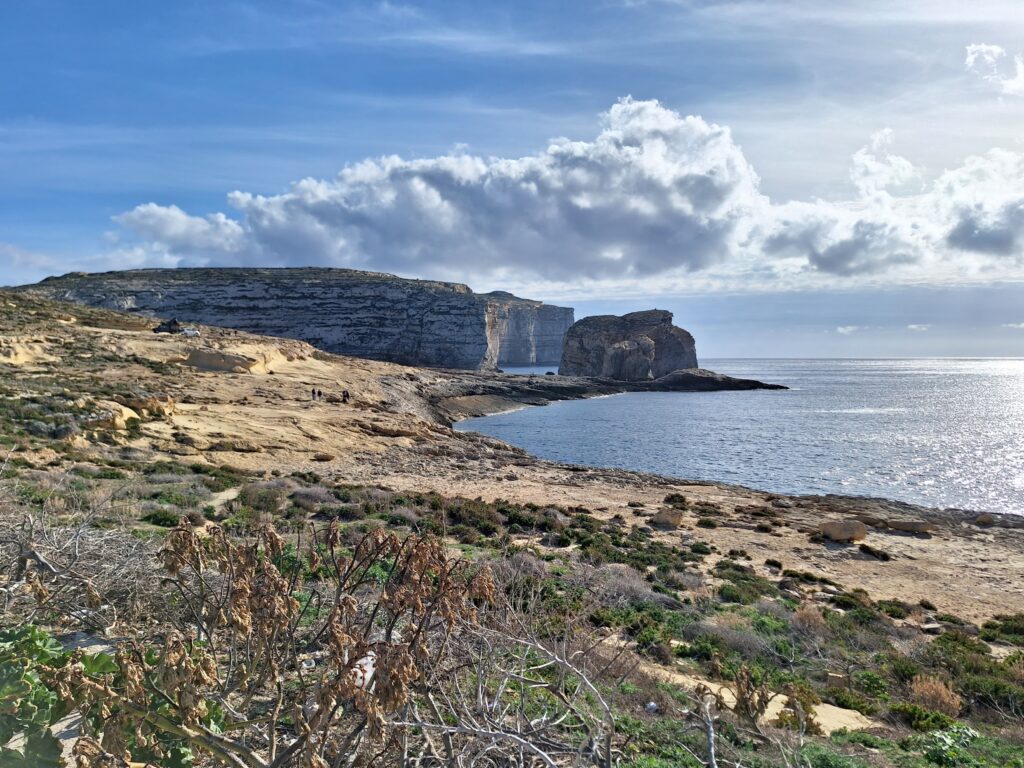
The name ‘Fungus Rock’ comes from a parasitic, perennial vascular plant (Cynomorium coccineum), which grows, among other places, on the top of the rock it gives its name to. It produces a foul-smelling flower that looks like a mushroom. The Maltese believed it could both stop bleeding and cure dysentery, and in 1,746 the Grand Master Pinto, decided that the rock should be protected. This was so important that anyone who went ashore on Fungus Rock risked 3 years of penal servitude as a galley slave if they were discovered. Pinto also ordered the rock to be cut smooth, so that it would be more difficult to climb.
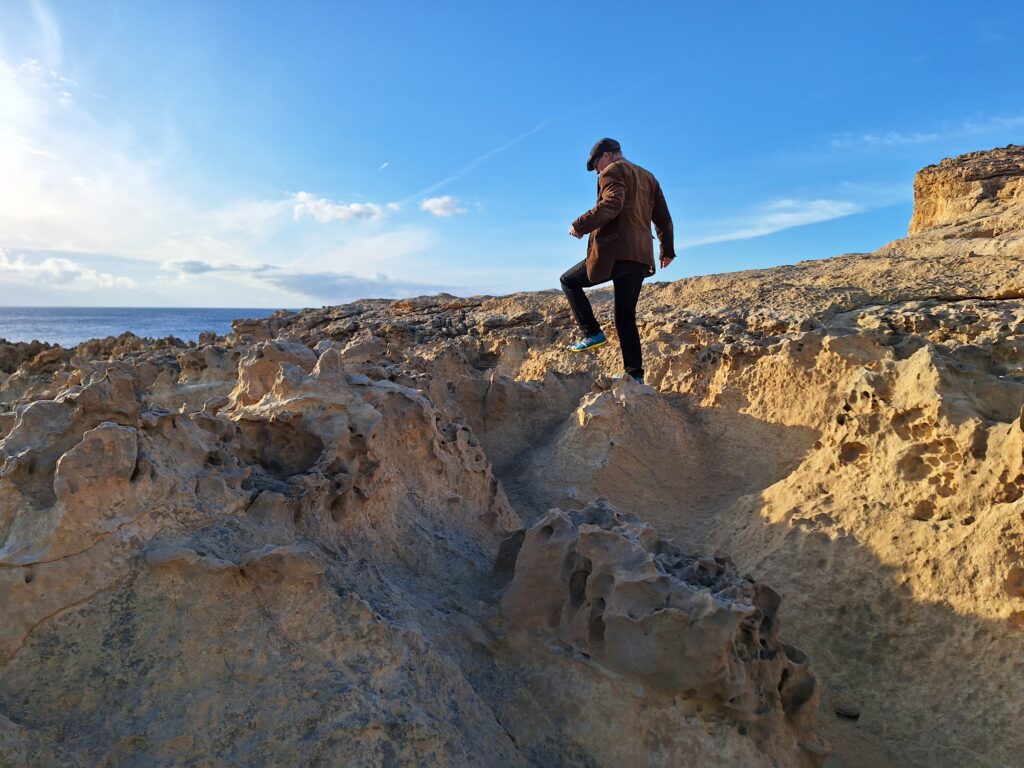
Well then, what was actually the plan for swimming? We had read about ‘The blue hole’, which is located in the same area, and that was the swimming destination that day.
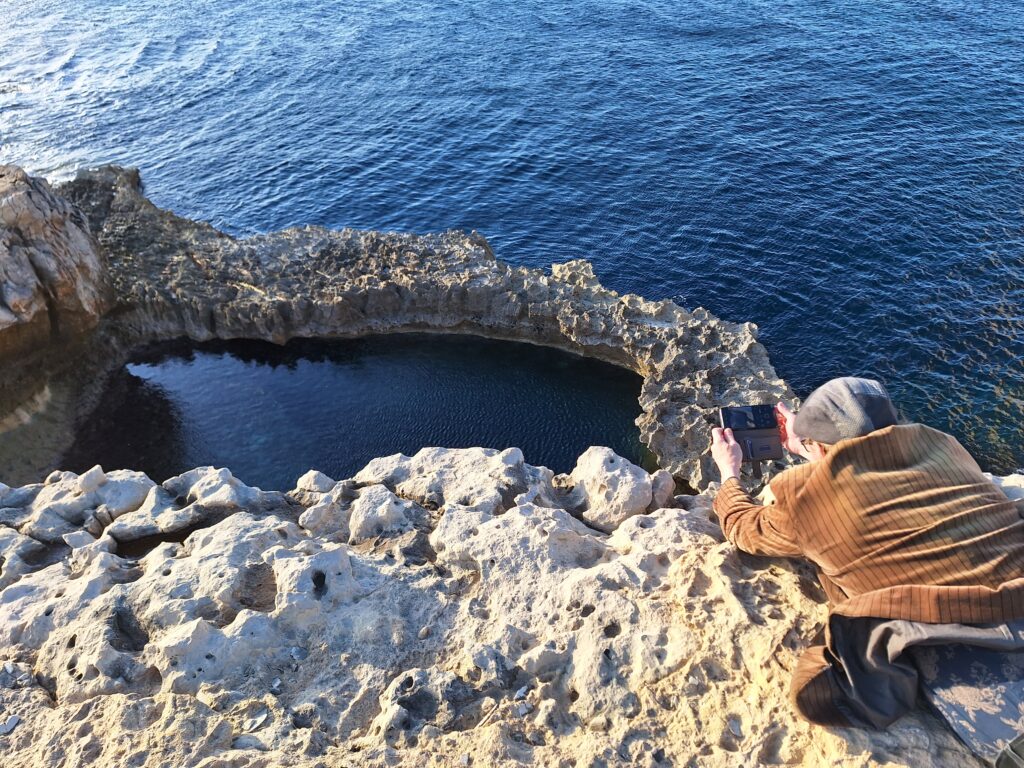
The Blue Hole is the remains of a cave that collapsed thousands of years ago. The cave goes straight down under water, and via an underwater arch you can swim directly from the hole to the sea.
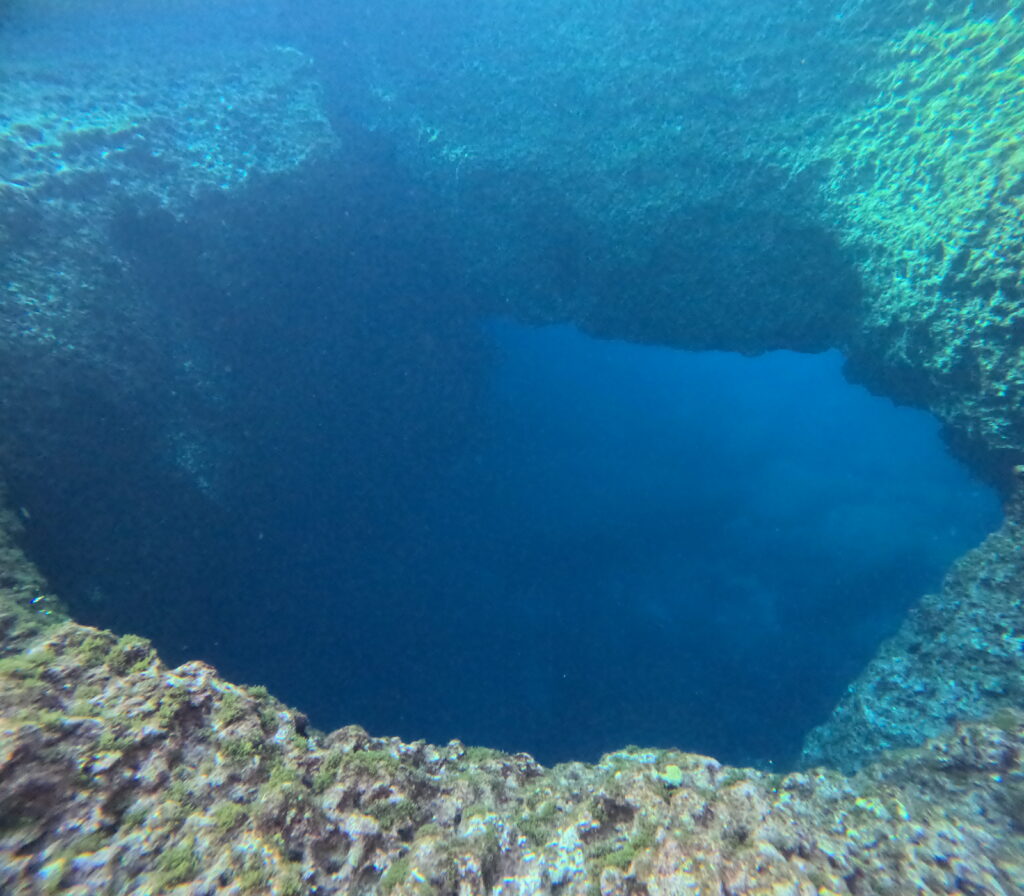
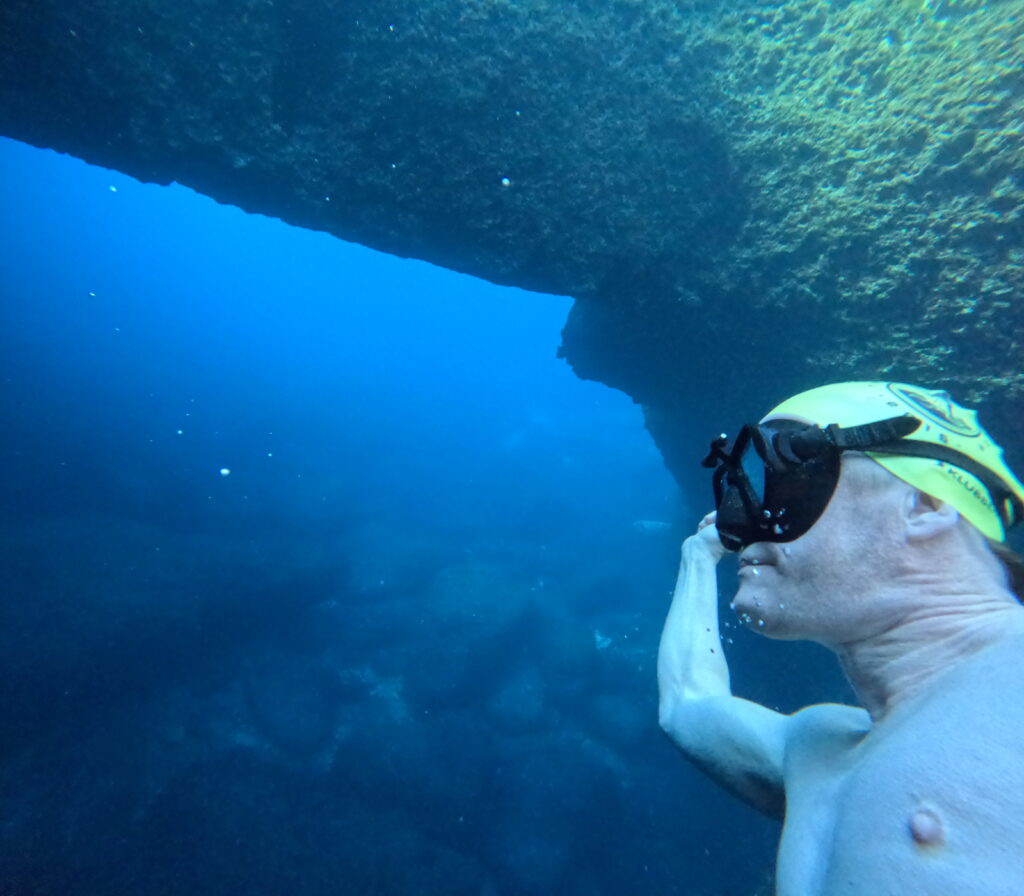
Idun doesn’t have a scuba diving certificate, and Knut had back troubles, so we skipped swimming through the underwater cave this time. But my goodness, what a great place!
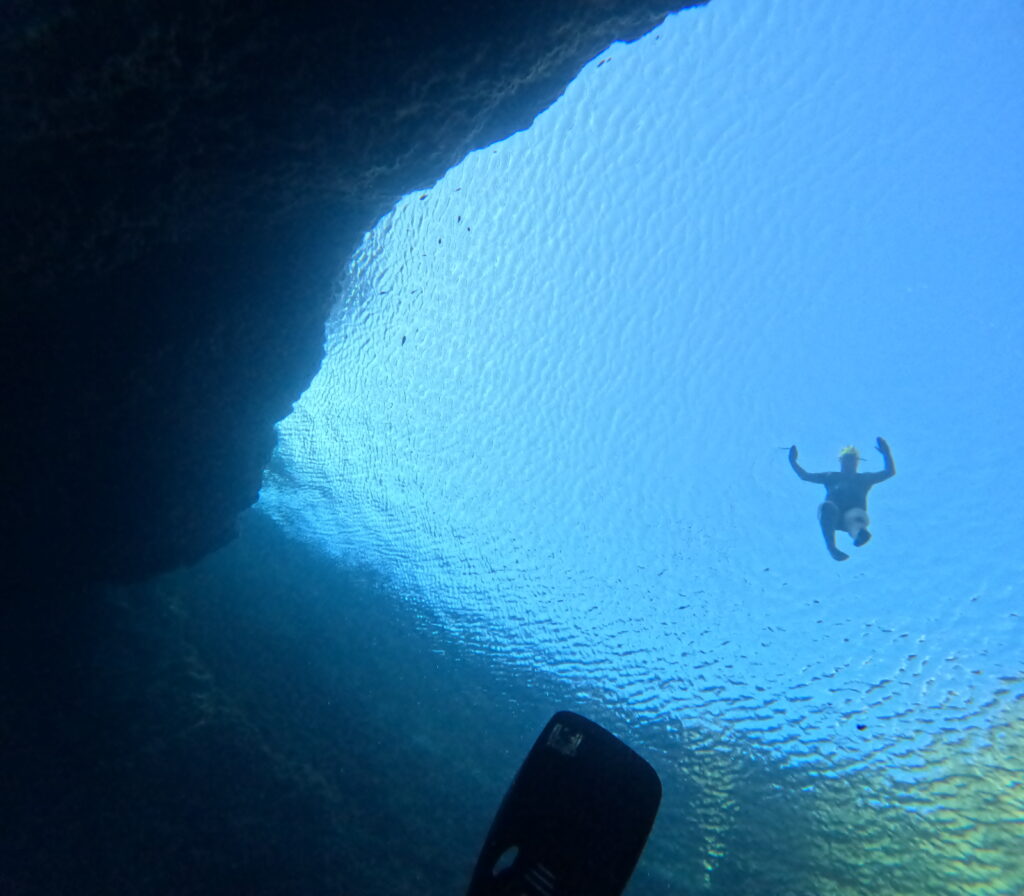
The west side of Gozo, it’s really worth a detour!