In the north of Malta island is the small town of Mellieħa with 10,000 inhabitants. The fjord with the same name houses Malta’s longest beach, Għadira, 2 km long.

The name Mellieħa comes from the Semitic m-l-ħ and means salt. In Roman times, salt was extracted from seawater here. The former salt pools are now protected as the Għadira Nature Reserve, where you can see chameleons, among other things.

Mellieħa has been inhabited some 5,000 years. Dwellings have been found here in the form of caves from the Stone Age right up to the early Middle Ages.

When Saint Paul was shipwrecked on Malta AD 60, he was accompanied by Luke, the apostle. According to local tradition, Luke painted an image of the Virgin Mary on the wall of one of Mellieħa’s caves, and this cave was later converted into a church: ‘The Sanctuary of Our Lady of Mellieħa‘.

The area was abandoned around AD 1500 due to the danger of Turkish invasion, but rebuilt 100 years later, including the church. St Mary’s Church has been a popular pilgrimage destination in Malta. Not only when you had to ask for something, but also official greetings: After several years of drought, that you had survived a siege, etc.

Il-Madonna tal-Għar (Our Lady of the Grotto) is a small grotto chapel below the road that passes the two churches. This crypt was carved in 1644, and is today a pilgrimage destination. On the wall by the stairs you will find several thankgivings, and also children’s clothes and pictures of children who have been conceived with the help of ‘Our Lady of the Grotto‘.

The population growth in the 19th century required bigger stuff, and in 1844 the new parish church in Mellieħa was consecrated.

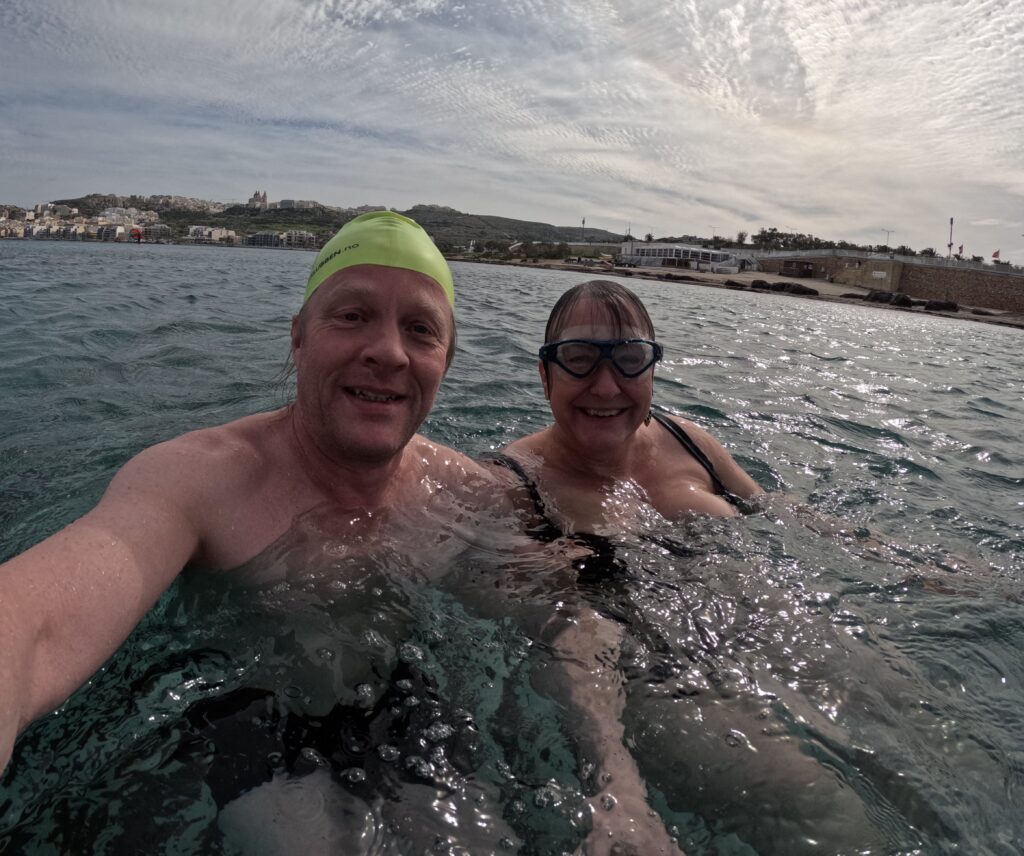
After a pilgrimage or two, time is just right for a bath, and Għadira Bay (Lake Bay) is the perfect place.

It was a great bath! In this bay, there is plenty of space, it is family-friendly, and you can always enjoy the beginners’ struggle to get different types of windsurfing to work. Here you can bathe, and here you can swim!
In hindsight, Tobatheornottobathe really do not recommend using the seagrass heaps as changing rooms. The night got itchy… Bird fleas, maybe?

If you follow the old pilgrimage route north towards Mellieħa, you will pass an impressively large carob tree, which is 1000 years old. The tree is evergreen, and the edible pods (also called St. John’s bread) have been popular among people and cattle since the Stone Age. The word carat is supposed to come from the Arabic ‘Qirab’ and the use of carob seeds when weighing gold.

What’s better after a pilgrimage than a small glass of carob liqueur?
